
READINGS IN EARLY MORMON HISTORY
(Newspapers of New England)

Misc. New England Newspapers
1845-1879 Articles
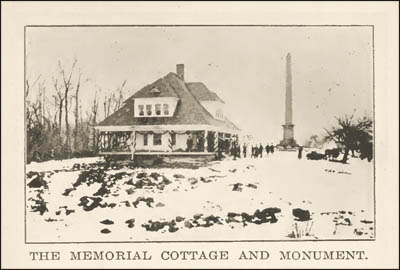
Joseph Smith, Jr. Birthplace, Windsor Co. Vermont (1905 photograph)
1800-1829 | 1830-1839 | 1840-1844 | 1845-1879 | 1880-1920
1845
MNews Jan 20 '45 | BInv Jan 29 '45 | BInv Feb 12 '45 | DAE Mar 24 '45 | MSpy May 07 '45 | BPat Jun 13 '45 | DET Jul 02 '45
DAE Jul 09 '45 | BCW Jul 17 '45 | NLNews Jul 21 '45 | JoM Jul 30 '45 | BCW Jul 31 '45 | UWat Aug 02 '45 | UWat Aug 09 '45
UWat Aug 16 '45 | VtChr Oct 01 '45 | UWat Oct 18 '45 | VtChr Oct 22 '45 | UWat Oct 25 '45 | BPat Nov 11 '45 | BGaz Nov 15 '45
VtChr Nov 19 '45 | BDA Dec 17 '45 | UWat Dec 20 '45
1846-1849
UWat Jan 03 '46 | TFC Jan 08 '46 | UWat Jan 31 '46 | BAtl Mar 05 '46 | BCltv Mar 07 '46 | BInv Mar 26 '46 | BBee May 04 '46
UWat May 09 '46 | VtChr May 13 '46 | UWat May 16 '46 | SpRp Jun 13 '46 | BBee Jun 20 '46 | SpRp Jun 27 '46 | SpRp Jul 04 '46
UWat Jul 04 '46 | SpirM Jul 15 '46 | BBee Jul 25 '46 | BBee Aug 03 '46 | BBee Sep 05 '46 | BInv Sep 16 '46 | BBee Sep 18 '46
WMr Sep 25 '46 | GFre Oct 23 '46 | BDA Jun 28 '47 | PAdv Oct 06 '47 | DET Jul 18 '49 | NHP Nov 01 '49
1850-1859
BCltv Aug 24 '50 | BRec Oct 03 '50 | BRec Oct 10 '50 | BJour Jul 17 '51 | BDA Nov 26 '51 | BGaz Jan 30 '52 | WMr Feb 26 '52
OBrn Aug 14 '52 | NHP Sep 15 '52 | DLM Jun 04 '53 | BRec Feb 08 '55 | BDT May 23 '56 | LDC Nov 10 '56 | BInv Apr 01 '57
BInv Jun 24 '57 | SpRp Jul 11 '57 | BWS Aug 06 '57 | BRec Dec 03 '57 | BWS Dec 04 '57 | BWS Dec 18 '57 | VPat Jan 22 '58
VPat Jan 29 '58 | SpRp Jun 12 '58 | LDC Apr 09 '59 | BDA Nov 17 '59
1860-1869
BInv Jan 26 '60 | BDA Mar 22 '60 | BDA Mar 23 '60 | BTrn Aug 08 '65 | SpRp Jan 02 '69 | BJour Jan 02 '69 | BJour Jan 09 '69
BJour Jan 16 '69 | BJour Jan 23 '69 | BJour Jan 30 '69 | BJour Feb 06 '69 | BJour Feb 13 '69 | BJour Oct 13 '69
1870-1879
BTrn Oct 02 '70 | BInv Jan 04 '71 | CChrn Jul 27 '72 | NStar Mar 27 '74 | BEJ Jul 25 '76 | LDC Jul 27 '76
SpRp Aug 31 '77 | SpRp Sep 01 '77 | CtPal Sep 03 '77 | TFC Oct 09 '77 | BCong Oct 24 '77 | BDA Jun 11 '79
Old Newspaper Articles Index | Maine Newspapers
 Vol. I. New London, Conn., Monday, January 20, 1845. No. 62.
==> The St. Louis Reveille says that Sister Emma. (Widow of Joe Smith,) recently gave birth to a fine boy. The Mormons now have farther capital to work miracles with. |
 Vol. XIV. Boston, Mass., Wednesday, January 29, 1845. No. 39.
For the Investigator.
MR. EDITOR, -- In endeavoring to fulfil my promise in furnishing a little portable laughing-gas for the columns of the Investigator, I have met more difficulties than I at first anticipated; not from the want of material, but having too much of it. I am bewildered, like Francis the waiter, in Shakspeare's tragedy of Henry the Fourth, or to use a Portlander's similitude, "like a cow between many hay-stacks" -- at a loss which to begin at. |
|
Vol. XIV. Boston, Mass., Wednesday, February 12, 1845. No. 41.
For the Investigator.
Mr. Editor, -- I return you my sincere thanks for your liberality in offering the use of your columns to any Mormon wishing to reply to any of my communications. In writing against the Mormons, I feel no ill will towards any of them; neither do I fear their abuse. Let them honorably defend their doctrines; prove, also, of I have made any charges unsustainded by evidence; if I have, I will "own up." It is my firm, honest belief, that Mormonism is calculated to uphold the worst vices of our frail nature, and as such, is an incubus on society. My object us, to show it in its true colors; and in striving to do so, I shall strictly adhere to what I know to be true, and what can be sustained by a hundred witnesses. |
Vol. I. Boston, Mass., Monday, March 24, 1845. No. 96.
WILLIAM SMITH ARRESTED FOR LIBEL. -- The brother of Hiram Smith and Joseph Smith (deceased) was arrested in Philadelphia on a charge of publishing a libel on Benjamin Winchester of N.Y. |
Vol. 74. Worcester, Mass., Wednesday, May 7, 1845. No. 19.
THE MORMON TROUBLES.
|
|
Vol. I. Barre, Mass., Friday, June 13, 1845. No. 47.
THE MORMON TRIALS. -- On the 21st ult., the trial of persons charged with the murder of Hiram and Joe Smith, commenced at Carthage, Illinois. The prisoners, J. C. Davis, late an lllinois Senator, T. C. Sharp, editor of the Warsaw Signal, Mark Aldrich, Wm. N. Grover, and Col. Levi Williams, compained by affidavit of the partial manner in which the jurors had been selected, and prayed the Court that Elisors be appointed to select a jury, was nor entirely empanelled at the last accounts. A correspondent of the St. Louis Republican says: |
Daily Evening Transcript. Vol. XVI. Boston, Mass., Wednesday, July 2, 1845. No. 4581.
Bill Smith, brother of Jo and Hyrum, (murdered) has succeeded to take the office of Patriarch of the Mormons, and is so acknowledged by the Nauvoo Neighbor. Bill is the last of the family. |
Vol. I. Boston, Mass., Wednesday, July 9, 1845. No. ?
The two Hodges have been found guilty of murder in Iowa, after a hard trial, and were sentenced to be hung on the 15th of July. The jury 'were only a few minutes in making up their verdict. Another brother was suspected of being concerned in the murder and robbery, and was about to be arrested; but was found wounded and nearly dead in Nauvoo. He stated that he had been killed by his best friends, and it was supposed that he was murdered to prevent him from being used as a witness against other persons connected with the transaction. A fourth brother is confined in jail in Nauvoo on a charge of larcency. This is a specimen of the scale of morality among Mormons. |
|
Vol. V. Pittsfield, Mass., Thursday, July 17, 1845. No. 228.
William Smith, brother of the renowned Joe has assumed the mantle of the murdered Mormon. The editor of the Nauvoo Journal [sic - Neighbor] says: 'William is the last of the family, and truly inherits the blood and spirit of his father's house, as well as the priesthood and patriarch office from his father and brother legally and by hereditary descent.' |
|
Vol. I. New London, Conn., Monday, July 21, 1845. No. 214.
NAUVOO. -- William Backenstoss, late Sheriff of Hancock, has been ordered to leave the holy city. He is accused of being the correspondent of the Warsaw Signal. Patriarch Bill Smith of Nauvoo, brother of the Prophet, whose wife died about four weeks since, was again married on last Sunday week -- having been a widower about 18 days. His bride is about 16 years of age and he is 35. The split between the Nauvoo Saints is growing wider. Bill Smith heads one party, the 12 disciples the other -- |
|
Journal of Music AND MUSICAL VISITOR. Vol. IV. Boston, Mass., Wednesday, July 30, 1845. No. 13.
The Warsaw Signal contains numerous statements of violence in or about Nauvoo. Wm. Backenstos, late sheriff of Hancock, has been ordered to leave the holy city. He is accused of being the correspondent of the Warsaw Signal. Patriarch Bill Smith, of Nauvoo, brother of the prophet, whose wife died about four weeks since, was again married on last Sunday week having been a widower about eighteen days. His bride is about sixteen years of age, and he is thirty-five. The split among the Nauvoo saints is growing wider. Bill Smith heads one party, the twelve disciples the other. |
|
Vol. V. Pittsfield, Mass., Thursday, July 31, 1845. No. 230.
The split among the Nauvoo saints is growing wider. William Smith, brother of the prophet, heads one division, the twelve disciples the other. |
AND CHRISTIAN REPOSITORY. Vol. XVII. Montpelier, Vt., Saturday, August 2, 1845. No. 3.
NAUVOO. -- The Warsaw Signal contains numerous statements of violence in or about Nauvoo. Wm. Backenstos, late Sheriff of Hancock has been ordered to leave the holy city. He is accused of being the correspondent of the Warsaw Signal. Patriarch Bill Smith, of Nauvoo, brother of the prophet, whose wife died about four weeks since, was again married on the last Sunday week -- having been widower about eighteen days. His bride is about 16 years of age and he is 35. The split among the Nauvoo saints is growing wider. Bill Smith heads one party, the twelve disciples the other. |
AND CHRISTIAN REPOSITORY. Vol. XVII. Montpelier, Vt., Saturday, August 9, 1845. No. 4.
Sketch of the Life of Joe Smith The death of a prophet in any country would be considered an epoch in its history, but the death of a prophet in this country, and the 19th century, is a matter of as much surprise, as that we should have had a special prophet at all in a country where every man is free to predict and to prophesy whatever he pleases. The world for centuries has been annoyed by fanatics of every class, and of every grade, and all their mischiefs and delusions have been presented under the mask of religion. Powerful Monarchies have promptly disposed of political fanatics, -- they soon found themselves in a prison or in a hospital; but in matters of faith, in colleges, -- sectarianism and prophesies, the strong arm of the law is seldom lifted against them, and in this country, where all are free to follow any faith, and where new sects and new doctrines always find followers and disciples, no one interferes to check delusion. The violent death of Joe Smith, the Mormon Prophet, under all the circumstances of the case, cannot avoid making a serious impression upon the many thousands of his deluded followers, where they at present reside, and such was his power and popularity, that we look with some interest, to learn the effect which his death will produce, among those who conscientiously believe in his great mission. |
AND CHRISTIAN REPOSITORY. Vol. XVII. Montpelier, Vt., Saturday, August 16, 1845. No. 5.
Sketch of the Life of Joe Smith The immediate cause of Joe Smith's recent difficulties was the destruction of a press in Nauvoo, to which he was opposed; but he found like Charles the 19th that putting down the liberty of the press was the greatest calamity which could have befallen him. He was compelled to take refuge for safety in the jail, guarded by a body of troops which had been placed there by the Governor of Illinois to protect him; but a band of men, no doubt a party, which considered him a dangerous man to the public safety, broke into the prison and murdered him and his brother. It was a base act under any circumstances, but one that in the course of time must have been expected; he was a man without a redeeming quality, a knave, a hypocrite, and destitute of religion or virtue. It is an old saying, "de mortuis nil nisi Bonum,: -- "of the dead speak nothing but good." The principle it conveys is unsound. It is the fear of what men may say after death, which sometimes makes men careful in life. We have no right, morally, to speak in favor of a man after death, when we could not do so during this life, and it is the exposure of bad men's lives, which operates as a caution to the living. Gen. Bennett, in the work alluded to gives the following description of Nauvoo: -- |
 Vol. XX. Windsor, Vt., Wednesday, October 1, 1845. No. 40. From the St. Louis Republican, Sept. 16. MORE TROUBLE WITH THE MORMONS. Our correspondent at Warsaw sent us by the La Clede, which arrived this morning, the following account of serious outbreaks between the Mormons and their opponents in Hancock county: |
AND CHRISTIAN REPOSITORY. Vol. XVII. Montpelier, Vt., Saturday, October 18, 1845. No. 14.
THE MORMONS. -- Mr. Worrell, who was in command of the guards at Carthage when the Smiths were murdered, has been killed by the Mormons, and a letter from Warsaw, dated Sept. 17th expresses the opinion that a battle must ensue in a few days, and before the state authority can interfer with any adequate force. |
|
Vol. XX. Windsor, Vt., Wednesday, October 22, 1845. No. 43.
THE MORMON CIVIL WAR. The latest accounts give no further details of the destruction of property and life in the Mormon war. Up to the 26th ult. Sheriff Backenstos remained at Carthage, fortified in the court-house and surrounded by armed men. The St. Louis Republican of the 29th says: -- |
|
AND CHRISTIAN REPOSITORY. Vol. XVII. Montpelier, Vt., Saturday, October 25, 1845. No. 15.
The Mormons, in reply to a communication from the citizens of Quincy, Ill., declare their intention to emigrate to remote parts next Spring, provided they can obtain necessary means by selling or renting their property, and providing they are allowed to make preparation unmolested by a repetition of those incendiary outrages of which they have recently been the victims. -- Mail. |
|
Vol. II. Barre, Mass., Tuesday, November 11, 1845. No. 17.
MORMONISM. -- William Smith, the Mormon Patriarch, has addressed a long letter to his brethren, in which he dissuades them from listening to the counsel of Brigham Young and his associates at Nauvoo. The Patriarch expresses the opinion that Young and those acting with him have been privy to all the crimes which have been perpetrated at Nauvoo and that their object in collecting at that place this Winter all of the Mormons in the United States, for the purpose of moving to California in the Spring, is merely to enrich themselves and perpetuate their power. When the Mormons gather at Nauvoo they will be required to surrender all their property into the hands of the Twelve, and, if their expedition to California should prove dangerous, the Twelve will desert their followers; if, however, they should reach their destined home West of the Rocky Mountains, the power of the leaders through their secret organizations, will be made despotic, and be exercised for the benefit of the few to the degradation and ruin of their followers. |
|
Vol. XII. Barre, Mass., Saturday, November 15, 1845. No. 27.
Flight of the Mormon Prophet from Nauvoo. William Smith of the patriarch's family, has fled from Nauvoo. The St. Louis papers publish his "faithful warning to the Latter Day Saints" against the unrighteousness of the elders who have usurped the patriarchal chair, of which he is the only legal occupant. He counsels peace, love to all men, and a restoration of confidence between the Mormons and their neighbors; opposes emigration to Oregon, and promises further exposures of the unrighteousness of the wicked." |
|
Vol. XX. Windsor, Vt., Wednesday, November 19, 1845. No. 47. The Mormons. The Mormons have doubtless suffered gross wrong at times; but they have also themselves been very gross wrong-doers. The history of the troubles that they have occasioned is full of instruction and warning. The power of religious imposture -- the perversion and blinding of the moral sense by fanaticism -- the danger of putting into office men who are so strongly partisan as to be influenced in the discharge of official duty by a regard for the votes of law-breakers -- the necessity of an energetic and equal administration of law, so as to make it a reliable protection to life and property and a terror to all evil-doers alike -- are subjects that are urged most impressively upon the public attention by the events alluded to. We collect here a few facts by way of illustration. |
Vol. XIV. Boston, Mass., Wednesday, December 17, 1845. No. 144.
The Albany Evening Journal, after publishing the letter from Mrs. Emma Smith, wife of the late "Prophet Jo Smith," indulges in the following remarks: |
AND CHRISTIAN REPOSITORY. Vol. XVII. Montpelier, Vt., Saturday, December 20, 1845. No. 23.
NAUVOO. -- The census just taken makes the population of Nauvoo proper to consist of 11,067 souls; without the limits it is supposed there is a third more. About fifteen thousand individuals, it appears from this, are to be banished from Illinois because the Governor is too disregardful of his duty to protect them in their rights. The court sitting at Carthage, we see, has commenced the trial of some of the persons engaged in the recent outbreak. Five of the persons charged with the destruction of the press at Nauvoo have been acquitted. Their plea was -- Instruction from the city council. In the case of Backenstos (the sheriff) a jury was procured, and the trial was expected immediately. |
AND CHRISTIAN REPOSITORY. Vol. XVII. Montpelier, Vt., Saturday, January 3, 1846. No. 25. A Letter from Joe Smith's Widow. The New York Sun publishes and vouches for the authority of the following letter from the wife of the Mormon impostor... |
Vol. 44. Amherst, N. H., Thursday, January 8, 1846. No. 291.
|
AND CHRISTIAN REPOSITORY. Vol. XVII. Montpelier, Vt., Saturday, January 31, 1846. No. 29.
THE PURCHASE OF NAUVOO. -- The Warsaw Signal says: Two Catholic Priests passed through this place on Monday last, on their way to Nauvoo. Their object was to ascertain the particular nature and amount of property which the Mormons wish to dispose of to their Church and on what terms it can be bought. |
Vol. XIV. Boston, Thursday, March 5, 1846. No. 211.
ANOTHER CHAPTER IN MORMONISM. -- The Cincinnati Commercial furnishessome new and curious information of the affairs of Mormondom. It appears that on Friday week, M. Searls, a messenger from the new Mormon prophet, James J. Strang, at Voree, Wisconsin, arrived in Cincinnati, and on Sunday both branches of the Mormons at Cincinnati, the Rigdonites and the Twelveites, disbanded, and all but three individuals acknowledged the power and glory of the new prophet. The messenger brought the news that Emma Smith, wife of Joseph, and her son, Joseph the second, acknowledged Strang as the Lord's anointed. One of the Smiths came from Voree, a few days since to Nauvoo, and proclaimed Strang the head of the Church in the Temple, at that place, without molestation. The Saints are flocking to Voree in great numbers; it is to be the gathering place of all this strange people, except the Twelve and their adherents, now on their way to California, over the Rocky Mountains, or to some other country. The Commercial adds -- |
 Vol. 8. Boston, Saturday, March 7, 1846. No. 10.
The Mormons. We gather from several articles in the Warsaw Signal and other quarters, that a portion, if not the whole of the Mormons, intend soon to commence their pilgrimage for California From ten to twelve hundred have already crossed the river from Nauvoo, and are encamped on Sugar Creek, Iowa, seven miles distant. Among them were the Twelve, the High Council, all the principal men in the Church, and about one hundred females. -- They were several days and nights in getting across the river. It is said to be the plan of the leaders to send this company forward as a pioneer corps. They are to proceed about five hundred miles Westward, where they are to halt, build a village, and put in a Spring crop. They are to remain there until those who follow in the Spring reach them -- when another pioneer company will start for a point five hundred miles still farther West, where they will stop, build a village and put in a Fall crop. The company remaining behind will in the Spring, move on to this second station and in this manner they hope to accomplish the long journey which is in contemplation. Many of them who now go as pioneers are to return as soon as their crop is in, for their families. |
|
Vol. XIV. Boston, Mass., Thursday, March 26, 1846. No. 47.
FOR THE INVESTIGATOR.
MR. EDITOR, -- Having waited with the patience of an of an Infidel for some of the "Elders of Israel" to offer a reply to my former communications, I feel disappointed at not being ranked among the "murderers of the Saints and Prophets," as the Autocrat of the Mormons (ycleped "I, Parley P. Pratt ") terms the "Mormon Come-outers." The "saints," (God bless them!) in the fulness of the Gospel meekness and humility, after being smitten on one cheek, have turned the other, -- well, here's at it -- always keeping in view the critic's motto -- |
 Vol. IX. Boston, Mass., Monday, May 4, 1846. No. ?
THE MORMONS. -- More Trouble Anticipated. -- Governor Ford, of Illinois, has authorized the troops at Hancock to be disbanded on the 1st of May. The Hancock Eagle says, according to this proclamation, after that day, the Governor will refuse to protect the Mormons against their enemies. The consequence will be a bloody struggle between those Mormons who have been unable to leave Hancock county and their persecutors. The Eagle says five thousand Mormons have already left that county, and others are hastening to leave as fast as possible. They have paid extravagant prices for wagons, &c., and those remaining only ask for sufficient time to make the necessary arrangements for their departure. Some are too poor, and others are too infirm to get away; and if they are to be given over to an indiscriminate destruction before they can raise the means of moving westward, it is expected that many who have already left will return determined to fight and die, if necessary, with their brethren and kinsman. |
AND CHRISTIAN REPOSITORY. Vol. XVII. Montpelier, Vt., Saturday, May 9, 1846. No. 43.
The Nauvoo Eagle of April 17 was much astonished by a letter from Major Warren, announcing that Gov. Ford had determined to disband the troops on the 1st of May, when the time stipulated for the removal of the Mormons is understood to expire. |
|
Vol. XXI. Windsor, Vt., Wednesday, May 13, 1846. No. 19.
THE MORMONS. Major Warren, who has been in command of the State troops, to keep order in Hancock county, has made public his determination to disband the troops on the first of May, in pursuance of orders from the State Executive -- that being the day on which the term stipulated for the removal of the Mormons will expire. The Nauvoo Eagle states that about 5,000 Mormons have already left, some for Wisconsin, some for other States, some with the camp of Israel. There are many who, it is represented, are unable to get away for want of means, but will go if sufficient time is given to make the necessary arrangement. |
AND CHRISTIAN REPOSITORY. Vol. XVII. Montpelier, Vt., Saturday, May 16, 1846. No. 44.
In Nauvoo, Apr. 24, tranquility was restored; the Mormons had recommenced preparations for removal; strangers were flocking into the city, and property changing hands. |
 Vol. 32. Springfield, Mass., Saturday, June 13, 1846. No. 24. From the Nauvoo Eagle, May 22 MORMON AFFAIRS, &c. -- A large majority of the mormons have already left the State, and those who still remain are husbanding their resources and working hard in order to procure an outfit. Most of the farmers have either disposed of their property or left it in the hands of agents. The city is half deserted, the bulk of improved property having been sold and the houses vacated. Hundreds of families are preparing to occupy the former homes of the Mormons, as soon as it becomes apparent that mobs have been suppressed and order predominates over anarchy. We know of many who are but waiting for the restoration of tranquility to move in; and under the better auspices which now begin to shed their influence upon the place, it cannot be doubted that Nauvoo will command a large population and enjoy a permanent prosperity. |
Vol. IX. Boston, Mass., Saturday, June 20, 1846. No. 47.
NAUVOO. -- The Warsaw Signal says that a great number of robberies have been committed in Nauvoo within a week previous. The annoyance has become so great as to determine the citizens to organize under the general incorporation law of the State, and establish a municipal police for their own protection. |
|
Vol. 32. Springfield, Mass., Saturday, June 27, 1846. No. 26. THE MORMON WAR RENEWED. The Western mail received at Baltimore on tuesday night, brought information of disturbances in Nauvoo. It appears that the regulars (or Anti-Mormons) have determined that every Mormon shall leave that place, and measures have been adopted to drive off such as are not disposed to go. |
|
Vol. 32. Springfield, Mass., Saturday, July 4, 1846. No. 27.
==> The threatened renewal of hostilities against the Mormons at Nauvoo, has subsided without coming to an open fight. The anti-Mormons who gathered around that place to the number of several hundred, in a menacing attitude, have become frightened at their own valor, and retreated without carrying into execution their purposes. "The war is now over and peace is again restored," says the St. Louis Reveille of the 19th. |
AND CHRISTIAN REPOSITORY. Vol. XVII. Montpelier, Vt., Saturday, July 4, 1846. No. 51.
LATER FROM NAUVOO. -- Baltimore, Thursday Night. -- The Western mail brings us two days' later intelligence from Nauvoo. The officers of the steamboat Monona arrived at St. Louis on the 17th and reported having passed Nauvoo on the 15th, up to which time there had been no acts of violence committed. Nearly 400 men were stationed in Nauvoo, awaiting the anticipated attack under arms. The new citizens (who are not Mormons) have united to repel the lawless invaders of their homes. |
SPIRITUAL MAGAZINE Vol. I. Putney, Vermont, Wednesday, July 15, 1846. No. 5.
==> SECEDING MORMONS. -- We learn from several correspondents that a body of Mormons who have seceded from the adherents of Jo. Smith, with Sidney Rigdon at their head, have lately settled at Greencastle, Pa. Though they refuse to bear the name of Mormons, and call themselves 'the Church of Christ of the latter-day saints,' yet we are told they preach the same doctrines that others called Mormons do. They regard Rigdon as a prophet, and as the visible head of their church. one of our correspondents writes that they have purchased a large farm on Conecocheague Creek, about two miles from the village of Greencastle; that they are about to put up some kind of factory there; and report says they have contracted for the building of 40 houses. They have brought a printing press with them, and publish a paper, as we understand, monthly. They are making furious war on Perfectionism, and are laboring especially to disprove our doctrine of the Second Coming. They have even challenged a public discussion with Perfectionists. |
Vol. IX. Boston, Mass., Saturday, July 25, 1846. No. 103.
THE MORMON CALIFORNIA EXPEDITION. -- The advance company of the Mormons was at Council Bluffs on the 26th ult. the twelve had a train of 1000 wagons with them, and were encamped on the East bank of the Missouri river, in the vicinity of the Bluff. The whole number of teams attached to the Mormon expedition, is about three thousand seven hundred, and it is estimated that each team will average at least three persons, and perhaps four. -- The whole number of souls now on the road may be set down in round numbers at twelve thousand. -- From two to three thousand have disappeared from Nauvoo in various directions. Many have left for Council Bluffs by way of the Mississippi and Missouri rivers -- others have dispersed to parts unknown; and almost eight hundred or less still remain in Illinois. This comprises the entire Mormon population that once flourished in Hancock County. In their palmy days they probably numbered between fifteen and sixteen thousand souls, most of whom are now scattered upon the prairies, bound for the Pacific Slope of the American Continent. The health of the travelling Mormons is good, considering the exposure to which they have been subjected. They are carrying on a small trade in provisions with the settlers in the country, with whom they mingle on the most friendly terms.... |
|
Vol. IX. Boston, Mass., Monday, August 3, 1846. No. ?
NAUVOO AND THE MORMONS. -- A messenger from the Mormon camp brings information that Col. Kearney has mustered into the service of the United States five hundred Mormons, who are probably ere this on their march to Santa Fe. -- The accounts from Nauvoo are of a distressing nature. The villains are now destroying property in all directions. The prisoners taken by the new citizens, on account of the alleged riot of Saturday last, seventeen in number, are still in custody. -- Each party holds prisoners as hostages; the Anties have only five; each demand an exchange. |
|
Vol. ? Boston, Saturday, September 5, 1846. No. ?
NEWS FROM NAUVOO. -- The Hancock Eagle of the 14th inst., states that another armed mob had collected for the destruction of that city; they were under the leaders who are already pretty notorious, Williams, McHaley and Brattle. The editor of the Eagle states that "the object of the mob is to plunder and destroy the city of Nauvoo, if they can get into the city under any pretence; and that they avowedly intend murdering several obnoxious new citizens, after the plan this same gang got the Smiths into their possession." In return the citizens of Nauvoo held a meeting, appointed a judiciary committee of seven, composed exclusively of members of the bar, who are to prosecute all offenders engaged in lynching and kidnapping; and also a military committee, whose duty is to superintend the arrangements making to defend the city. From all we can gather from the expression of feeling on both sides, we fear that serious troubles will yet arise, and much blood be shed before quiet can be restored. |
|
Vol. XVI. Boston, Mass., Wednesday, September 16, 1846. No. 19. THE BOOK OF MORMON AND THE BIBLE. In Barber's history of New England, we have about two pages (379 and '80) on the Mormons. Speaking of the Mormon Bible, after giving a brief history of Smith, he says: --"The Book is mostly a blind mass or words, interwoven with Scriptural language and quotations, without much of a leading plan or design. It is one of the weakest productions ever attempted to be palmed off as a Divine revelation. It is in fact just such a Book as might be expected from a person of Smith's abilities and turn of mind."Now let us put down just what in substance he advocates as a proof of his assertion, and afterwards take the same amount on the side of Jesus and the New Testament, bearing in mind that each superstition is to be regarded in their infancy, and see which assumes the most dignified and commanding form.... |
Vol. IX. Boston, Mass., September 18, 1846. No. ?
By Magnetic Telegraph. -- Reported for the N. Y. Herald.
By accounts received at Baltimore Monday evening, we learn that the excitement in the Mormon region was becoming more intense, and that the Anti-Mormons were flocking towards Nauvoo from both sides of the Mississippi, in great numbers, with the determination of totally expelling or exterminating the followers of the deceased prophet, Joe Smith. |
|
Vol. ? Woodstock, Vermont, Friday, September 25, 1846. No. ? BATTLE AT NAUVOO. By the St. Louis Republican of the 14th inst. we learn that a battle took place on the 11th, between the Mormons and anti-Mormons, near Nauvoo. The latter, who were encamped within three miles of this city, took up their line of march on that day. On ascertaining their movements the Mormons in the city mustered between three and five hundred men, and went forth to meet them. About one mile east of the Temple the parties fired upon each other for hours, but the distance was so great between them that the fire produced no great effect. Each party then drew off, apparently by common consent, and returned to its original position. The Mormons had one man killed, and two badly wounded. The anti-Mormons, numbering about eight hundred men, lost from eight to fifteen killed. Great excitement prevailed in all the region about Nauvoo, and it was supposed the battle would be renewed that evening or the next morning. -- Mail. |
Vol. I. Concord, N. H., October 23, 1846. No. 5.
==> NEWS FROM NAUVOO. -- By the last advices from Nauvoo, we learn that the Temple had not yet been sold. The Anties having every thing now their own way, of course will act accordingly. The Mormons in the vicinity are represented as being in a most pitable condition. |
Vol. LXIX. Boston, Mass., Monday June 28, 1847. No. 152.
SYNOPSIS OF THE
The first and main branch of the Western expedition, commanded by Colonel, now Brigadier General S. W. Kearny, commenced its march by detachments of the 22d of June, 1846. This expedition was fitted out at Fort Leavenworth, and consisted entirely of volunteers from the State of Missouri, excepting about 300 of the 1st Dragoons. The whole command numbered 3300 effective, well-armed men, cavalry, except two companies of infantry employed as flankers to the artillery in difficult passes, and 500 Mormons destined for California... |
THE PEOPLE'S ADVOCATE, AND NEW-LONDON COUNTY REPUBLICAN. Vol. VIII. New-London, Ct., Wednesday, October 6, 1847. No. 8.
William Smith, who succeeded to the saintship of his brother Joe, and assumed the title of "Patriarch" among the Mormons, when that dignity became vacant by the murder of the original incumbent, has been suspended from the patriarchal functions, during his trial on a charge of gross immorality. It would be a choice spectacle to look upon a man after he had been deposed from office for a breach of Mormon morality! |
Vol. XX. Boston, Wednesday, July 18, 1849. No. 5825.
Rev. William Smith, brother of the celebrated Jo Smith, the founder of the Mormon persuasion, has established a church in Covington, Ky, of that sect. A newspaper devoted to their interest is published in the same place. |
Vol. ? Concord, N. H., Thursday, November 1, 1849. No. ? The State of Deseret. The Mormons are destined to be a great and flourishing people. They have borne unmurmeringly the persecutions of their opponents. They have retired from the populous towns and settled communities of the older States, and in the extreme north-west, where for unwritten centuries, has rolled the Oregon, and heard no sound save its own dashings, they have sought and found a home. From every part of the civilized world, wherever their strange faith has found a devotee, the tide of Mormon emigration is setting towards their mountain Commonwealth. Many thousands already congregate in this rural State. A vast city has been foumded in the lovely valleys of the Great Basin, and peace and plenty have bounteously blessed their perseverence and courage. Situated as their settlement is, on the line of march between the western States, and the valleys of Upper California and Lower Oregon, it will be the beginning of a new tier of confederacies, and in due time a flourishing and populous part of the Union. Wisely and skilfully have they chosen their refuge and their asylum. The Great Basin, in which they have founded their dwelling place, is five hundred miles in diameter every way, between four and five thousand feet above the level of the sea, shut in all round by mountains, with its own system of lakes and rivers, and having no connection whatever with the sea. Partly arid, and sparsely inhabited, the general character of the great Basin is that of desert, but with great exceptions, there being many parts of it fit for the residence of a civilized people. Of these productive parts, as we learn from Fremont, the Mormons have established themselves in the largest and the best. |
Vol. 8. Boston, Mass., Saturday, August 24, 1850. No. 10.
The Mormon Colony, Beaver Island. -- We have conversed with a gentleman who has just returned feom a visit to Beaver Island, at the head of Lake Michigan, upon which the Mormon Colony is located, headed by their prophet James Strang. They number about siz hundred and have a farm on the island, which is cultivated by them. They have also engaged to a limited extent in taking white fish and trout, which constitute their chief means of subsistence. the Temple, 100 by 60 feet, is in progress at their settlement; one-sixth of the labor of the colony being required upon it weekly. At present, this labor is diverted to the building of a printing office, the press and materials for a weekly paper being on the ground. Semi-occasionally, the portion of the Temple which is finished is used as a theatre, Mr. G. J. Adams, one of the leaders, acting as manager. This room is also used as a ball room, where the faithful chase the giddy hours, and also as a place of worship on Sundays. Strang is at present deeply engaged in deciphering the plates found by him, as indicated by a vision, back of Kenosha, some time since. They are of copper, and are engraved with cabalistic characters, supposed to relate the interests of the "church of the latter day," by his followers. He is decribed as a hard-working, industrious man, but most of those on the island are indolent and adverse to labor. (Chicago Ill. Journal, Aug. 3) |
Vol. XXXV. Boston, Mass., Thursday, October 03, 1850. No. 40.
FOR THE PURITAN RECORDER.
The following interesting article has been necessarily deferred for two weeks, during which time it has been on hand. |
Vol. XXXV. Boston, Mass., Thursday, October 10, 1850. No. 41.
THE MORMON BIBLE.
Your paper of the 3d inst., contained an article from a correspondent relative to the Mormon Bible. |
 Vol. XVI. Boston, Thursday, July 17, 1851. No. 11. Origin of the Mormon Imposture. The Rochester American publishes the following from a forthcoming work by Mr. Turner, entitled "History of Philip and Gorham's Purchase. " -- Though not entirely new, it is succinct, and communicates some facts, coming within the author's personal knowledge. |
Vol. ? Boston, Mass., Wednesday November 26, 1851. No. ?
THE MORMONS. -- The following extract from a letter "from a judicial officer of the government, at Great Salt Lake," dated Sept. 20, gives an authentic exposition of the state of things at the seat of the Mormon government, confirmatory of accounts already published. |
|
BARRE GAZETTE. Vol. XVIII. Barre, Mass., Friday, January 30, 1852. No. 30.
MORMONISM EXPOSED -- BY AN EX-MORMON. -- To the Editor of the Boston Transcript -- The late high handed and treasonable proceedings of the Mormons in the territory of Utah, as shown by the official reports of the United States' officers returned therefrom, however strange and startling they may appear to the uninitiated, form no new development to those who have had an opportunity of scrutinizing and observing them, and their doctrines and practices, and designs; but are in perfect keeping with the character of the sect, openly avowed by them to most of their members for some ten years or more. |
|
Vol. XV. Woodstock, Vermont, Thursday, Feb. 26, 1852. No. 50. Mormonism Exposed by an Ex-Mormon. The late high-minded and treasonable proceedings of the Mormons in the territory of Utah, as shown by the official report of the United States officers returned therefrom, however strange and startling they may appear to the uninitiated, form no new development to those who have had an opportunity of scrutinizing and observing them, and their doctrines and practices and designs, but are in perfect keeping with the character of the sect, openly avowed by them to most of their members for some ten years or more. |
Vol. ? Boston, Saturday, August 14, 1852. No. ? Mormons Impurities. That polygamy and kindred vices are corrupting the heart of Mormon society at the new territory of Utah, cannot be longer doubted. The news is forced upon us from a hundred sources. Added to this social corruption, there is little doubt but that the Mormons contemplate declaring, or in some way making themselves independent of the Federal government. |
Vol. ? Concord, Wednesday, September 15, 1852. No. ? The Mormons. Lieutenant J. W. Gunnison, of the Topographical Engineers, who was employed upon the survey of Utah, and acquired by his residence among and near the Mormons, a full knowledge of their history, creed, character, institutions and habits, has embodied the results of his inquiries in a small volume, recently issued from the press of Lippincott and Grambo of Philadelphia. From this valuable little work we select a few passages: -- |
|
LITERARY MUSEUM. Vol. VI. Boston, Saturday, June 4, 1853. No. 28.
==> William Smith, brother of the Mormon prophet Joe, has some peculiar notions about spiritual wife-ism. He is now before the Circuit Court of Illinois, sitting in Lee County, on a charge of having more wives than the law allows. One of the members of the church has made affidavit that she had been induced to believe that it was necessary for her salvation that she should become his spiritual wife; the result of which was just the same as usually accompanies cases where no spiritualism is claimed. Smith has himself now pending, in the same court, an application for a divorce, on the ground that his wife, while at Nauvoo, was initiated into the mysteries of, and as he says, 'took seven degrees' in spiritual wifery. So that it seems, according to the ideas of the doctrines of that particular branch of the church militant, what is sauce for the goose is not 'sauce for the gander.'" |
Vol. XL. Boston, Thursday, February 8, 1855. No. 6.
FOR THE PURITAN RECORDER. The plot in this strange drama is thickening, and no one can foretell the catastrophe, whether it ends in a civil war, and their arrogant pretentions be put down by force, or whether all the arts of diplomacy be put in requisition, and peace somehow be maintained. We hope the former, rather than that any compromise should be made with so detestable and destructive a doctrine and practice as polygamy. If the Government say that it owes care and protection to all sections of the country and all classes of people, then it owes to the Mormons the coercion of power for their own existence. No community can long survive committing commonly, such atrocities of lust as are perpetrated there. How long could Sodom have stood, if the Lord had not made a short work of it, and burnt them with fire and brimstone from heaven? They would have perished by receiving the due reward of their deeds in their own bodies, and by mutual violence inflicted on themselves, This must be the end of the Mormons, continuing such as they are, and therefore the Government ought to coerce them. |
|
Vol. ? Boston, Mass., Friday, May 23, 1856. No. ?
Those Four Hundred Mormons. --The Cleveland papers notice the arrival there of the four hundred Mormons who recently arrived from England on the ship Enoch Train, which, it will be remembered, was followed to sea from Liverpool by a distracted father, who succeeded in carrying back on a steam tug a portion of his family. Two daughters who remained with the Mormons are among this party, and are noticed by the Clevelander as beautiful girls. The party was closely watched, one of the faithful being constantly stationed outside each car, to prevent their communication with the worldly-minded. |
|
Lowell Daily Citizen & News. Vol. VI. Lowell, Mass., Monday, November 10, 1856. No. 166.
William Smith, brother of the Mormon prophet, writes to the Erie Dispatch declaring that his brother is not responsible for polygamy as practised in Utah, but that Brigham Young and his "administration" are. He, however, defends polygamy on patriarchal and scriptural grounds, although he believes the excess to which it has run will result in infamy and ruin. |
|
Vol. XXVI. Boston, Mass., Wednesday, April 1, 1857. No. 49.
For the Boston Investigator.
Mr. Editor: -- You did well in publishing the Mormon's reply to my article. His tirade is so "big in charity," so purely sectarian, and so every way characteristic of the Mormon delusion, that its publication must, I think, do good... |
|
Vol. ? Boston, Mass., Wednesday, June 24, 1857. No. ?
For the Boston Investigator.
Mr. Editor: -- It seems to me that all Liberals, all Infidels, all of every class in the community who are opposed to fanaticism, must join with me, in the exposure of Mormonism; an exposure, bear in mind, provoked and called for by a defiant challenge, published in the columns of this paper. |
|
Vol. ? Springfield, Mass., Saturday, July 11, 1857. No. ?
A Sketch of Brigham Young.
Brigham Young rules supreme. His power is undisputed and unquestioned. He collects all the money he chooses, seizes all the land that he fancies, and takes all the women that please his eye. He commands, and his trembling followers obey. The Mormons being for the most part an illiterate and uneducated set, they are wont to regard Brigham as a superior being who has power to accomplish anything he desires, and who will fearfully avenge any infringement on his power, or any questioning of his authority. Brigham claims to be worth $250,000, and holds himself out as a pattern and example for "his flock." (Severe irony, this, by the gods!) He has at present but forty-three wives, quite a large number having been by him cast off of late, in consequence of a slight dissatisfaction which began to develop itself. |
|
Vol. 57 Burlington, Vermont, Aug. 6, 1857. No. 32.
BRIGHAM YOUNG A NEW YORKER. -- Both Brigham Young and Heber C. Kimball are New Yorkers. Brigham lived near the line dividing Ontario and Monroe counties, in the town of Victor, at the time he became a Mormon. He had always manifested a proclivity to religious fanaticism, or rather he was a lazy rapscallion, good for nothing except to howl at a camp meeting. He lived in a log shanty, with a dilapidated, patient, suffering wife, surrounded by a host of tow headed children. Occasionally he made up a lot of axe helves and traded them off for sugar and tea; in other fits of industry he would do a day's work in the hay-field for a neighbor, hoe the potatoes in his own little patch, or pound clothes for his wife on a washing day. But his special mission was to go camp meetings and revivals, where he managed to get his daily bread out of the more wealthy brethren, in consideration of the unction with which he shouted "ga-lo-rah!" On such occasions Brigham took no thought of the morrow, but cheerfully putting on his old wool hat, would leave his family without flour in the barrel or wood at the door, and telling his wife that the "Lord would provide," he would put off for a week's absence. |
Vol. XLII. Boston, Thursday, December 3, 1857. No. 49. FROM CALIFORNIA. The Steamship Northern Light arrived at New York on the 29th ult., with sixteen days later intelligence from California... |
|
Vol. 57 Burlington, Vermont, Friday, Dec. 4, 1857. No. 49.
Mormon Fanaticism. -- ...President Filmore's plan, viz., appointing Young Governor, would have been excellent, if Young had been a demagogue, and not a fanatic. But he was the latter, and therefore peace is impossible with him, except on his own terms. Lying and falsehood are sanctified in the eyes of a fanatic, if they aid his purpose. In virtue of being a fanatic, he dispises all law except what his fanatical idea sanctions. No treaty will bind him; no morality will guide him. And when organized into a community, it is for the very purpose of keeping distinct from and living in opposition to all other communities. What can be done? The organization must be annihilated, at all hazards. The nuisance is too horrible to be tolerated.... |
|
Vol. 57 Burlington, Friday, Vermont, Dec. 18, 1857. No. 51.
The Policy of Our Government Towards the Mormons. -- ... Hitherto Young's policy has been to profess obedience to the laws of the United States, and whilst the Government had no official notice of any overt act of rebellion against its authority, its policy has not only been right, wise and prudent, but masterly and energetic. It has not only planned, but carried into execution a peaceful policy which deserves the hearty commendation of the whole United States. And now that the arch fanatic Young has struck the blow which makes him an outlaw and a traitor, we have no doubt that the same prudence, energy and determination will characterize Buchanan's future Mormon policy. Under that policy we confidently expect to see the utter annihilation of that terrible fanaticism which has so long been a curse to our nation.... |
Vol. ? Montpelier, Vermont, Friday, January 22, 1858. No. ?
MORMON SPY. --... the celebrated Jim Lane.. is now, and has been for some months, in collusion with the Mormons. The exact character of the information is not known, but trie impression is that an express between Brigham Young aud Lane has been intercepted on the plains by the United States forces. It is probable that this matter will be called to the attention of Congress. |
Vol. ? Montpelier, Vermont, Friday, January 29, 1858. No. ?
MORMONS IN KANSAS. -- ...The mail which left the States on the 1st of February, arrived here on the evening of the 21st instant. We were much surprised to find that Congress had not, up to the last dates, taken any decisive action in regard to Utah affairs. It is strange that a momen-tous difficulty, the importance of which cannot be overestimated, in which prompt, energetic action is required, is allowed to pass almost unnoticed by our Legislators. We are not surprised to hear that it has been discovered that [Jim] Lane and his "Danite" band in Kansas Territory, are combined with the Mormons. It is said in the papers that Eldridge, the Financial Agent of the Emigrant Aid Society in Kansas, is a Mormon. It is a fact that Horace Eldridge, one of the Mormon leaders, and a Bishop in the Church, went to St. Louis last Spring as the financial agent of the Mormon Church, and purchased goods there for the Church, which were sent out last Summer. He is rather a tall, slim man, with wiry, black hair and beard, and sharp gray eyes; he has, we are informed, a daughter in the States. Eldridge, a week, before starting from Utah, although he had already several wives, married two young girls at Provo City... |
|
Vol. ? Springfield, Mass., Saturday, June 12, 1858. No. ? The Peaceful News from Utah. Brigham Young and his followers have tempered their valor with discretion, and the president is doubtless correct in announcing to Congress and the country that the Mormon war is over. What the Mormons propose to do -- whether they will retain any degree their hold on Salt Lake City and the other settlements in the territory -- or, deserting all, concentrate elsewhereoutside our present limits; and whether, or not, we are fully and forever rid of them, are all points of public interest. They receive little or no elucidation either in the president's message or Gov. Cumming's dispatches. The governor seems to have been greatly impressed with the ovations in his honor from the Saints, and his dispatches are occupied more with details of these, than with an intelligent statement of the terms of the capitulation of the Mormons, and their and his own future purposes. We gather from the dispatches, in addition to what has been already published, that the people themselves seemed cordially to approve of their leader's course and recognize Gov. Cumming with all the honors and respect due to his authority. Complaints were made that the Indian Agent, Mr. Hart, in that region had incited some of the Indian tribes to acts of hostility against the Mormons, and Gov. Cumming promises to investigate and redress these. He gave notice that people in Salt Lake City, who deemed themselves aggrieved by the government of Brigham Young, or illegally restrained of their liberty among the Mormons, should receive protection from him; and in response 56 men, 33 women and 71 children came forward, and evinced a disposition to be separated from the Mormons and become citizens of the United States. They were mostly English people, some of the late emigrants to Salt Lake. |
|
Vol. VIII. Lowell, Mass., Saturday, April 9, 1859. No. 903.
More Knavery -- At the last session of Congress Senator Johnson of Arkansas smuggled into some bill as appropriation of $10,000 for removing from Utah to Arkansas several children of emigrants who had been slain by Indians on the route. Before this grant was passed, arangements had been privately made for removing them at an expense of about $600, but Johnson's Democratic backers at home wanted a job and so the treasury had to "suffer some." Commisioners have been appointed to expend this appropriation and they have already pocketed $2200 as an outfit for the journey. Thus to help the disunion negro democracy of Arkansas pay their electioneering expense the whole nation is taxed $10,000 for the performance of a $600 job that humane persons are willing to do for nothing. |
Vol. 94. Boston, Mass., Thursday, November 17, 1859. No. 119.
From Utah.
|
|
Vol. XXXI. Pittsfield, Mass., Thursday, January 26, 1860. No. 37.
HOW TO CIRCUMVENT THE MORMONS. -- Judge Cradlebaugh, who is on his way home from Utah, by way of California, had a plan for getting the upper hands of the Mormons, which he will lay before the administration. He will urge the extention of the preemption laws over the territory, so as to secure a large Gentile emigration at once, sufficient within a year to out-vote the Mormons. A Gentile Legislature would take from Young the power of marriage and divorce, and secure the supremacy of law. The gentile population in the territory is already large, and five or six thousand more voters would be sufficient to carry Judge Cradlebaugh's plan into effect. It is believed that the Mormons will retire into Mexico, or some island in the Pacific Ocean, as soon as their supremacy in Utah is broken. They are now engaged in a movement of importance, the object of which they keep to themselves. By orders from Young all the Mormon settlements are organizing military companies, which are supplied with arms and ammunition from Salt Lake City. It is now believed that they intend to renew the war with the United States, but the more general supposition os that they forsee that they must eventually leave Utah, and are preparing to take possession of some of northern Mexico. The annual message of Governor Cumming to the Mormon Legislature, treats the Mormon outrages in a very mild and gingerly manner, to the great disgust of the Gentiles. |
|
Vol. ? Boston, Mass., Tuesday, March 22, 1860. No. ?
THE UTAH TROUBLE. -- The New York Tribune prints a long letter addressed to the President by Judges Cradlebaugh and Sinclair, late of Utah Territory. It has been known for some time that there was a difference between the executive and the judicial officers of the United States in that territory, Governor Cummings being on excellent terms with the Mormons and sympathising with them, while the judges, as well as the military, have found reason for regarding most of the Mormons as little better than rebels, and many of them no better than murderers and robbers. An attempt made last year by the Federal judges to press on the trial of offenders with what was deemed undue rigor, led to an open collision between the Governor and the Judges. An appeal was made to the authorities at Washington, and the Attorney-General sided with the Governor, rebuking the Judges in a published letter. Judges Cradlebaugh and Sinclair resigned their positions and replied to the Attorney-General in a joint letter. That letter is now published, being dated July 16, 1859. It is dignified and respectful in language, but tells a story which reflects no credit upon our government, which is content to let this disgrace remain without an effort for reform. |
|
Vol. ? Boston, Mass., Wednesday, March 23, 1860. No. ?
CONFLICT OF AUTHORITIES IN UTAH. -- Just at this moment when Congress is proposing to annihilate the fiction of popular sovereignty in Utah, by prohibiting polygamy in that territory, it is worth while to keep in mind the attitude which the executive preserves among the Mormons. What sort of foundation has the alleged pacification of Utah laid for the execution of the federal laws, what power is there, disposed and able to carry out those laws?... |
|
Boston Evening Transcript. Vol. XXXVII. Boston, Mass., Tuesday, August 8, 1865. No. 10,827.
THE MORMON "NEW ORGANIZATION." Joseph Smith, of Nauvoo, son of the founder of Mormonism, publishes in the Council Bluffs (Iowa) Nonpareil, a long letter defending the Mormon New Organization against the charge of believing in polygamy. Smith quotes from the "Book of Covenants" of his church, showing that it teaches and requires that the husband shall have but one wife, and he challenges a public discussion of the subject, to be held in Council Bluffs, Iowa. Of the "Old Organization" -- that a Salt Lake -- he says it does not and cannot defend the doctrine of polygamy, by evidence from the Book of Mormon and Book of Doctrine and Covenants. |
|
Vol. XLVI. Springfield, Mass., Saturday, January 2, 1869. No. 1. RELIGIOUS INTELLIGENCE. ...President Smith of the Mormon church lately ptreached a sermon at Salt Lake City, in which he denied a current report as to the origin of the Book of Mormon. He said: "It has been claimed that a Presbyterian minister, named Solomon Spaulding, wrote the Book of Mormon; but the very language and style of the book are abundant evidence that it never was written by a learned man, and that it never was written by a man who designed to make a romance or novel. It is very well known to hundreds and thousands that this statement in relation to Solomon Spaulding is entirely false, and that no such man ever had any acquaintance with Joseph Smith. It is also known to hundreds that the Book of Mormon was written by Oliver Cowdery, word for word as dictated by Joseph Smith, and that the original copy of that work was in Cowdery's handwriting. * * * |
|
Supplement to The Boston Journal. Vol. XXXVI. Boston, Mass., Saturday, January 2, 1869. No. 11,088.
ROUND THE WORLD SKETCHES.
From the top of an overland stage-coach we have our first look at the chief city of the Latter Day Saints as we approach it from the west. We behold a beautiful panorama. Northward is the Great Salt Lake, calmly reposing beneath an autumnal sky, not a ripple on its surface, not a living thing in its transparent waters; a solitude as profound as that brooding over the Dead Sea of Palestine. Eastward rises a mountain wall, white with snow at the top, with hues like the ever-changing aniline dyes upon the slopes and in the ravines and gorges. Southward is the Salt Lake valley, through which flows the Jordan, -- not the stream dear to the Church Universal, but the Jordan of this Latter-Day Church, flowing through a valley ten or fifteen miles wide. |
|
Boston Daily Journal. Vol. XXXVI. Boston, Mass., Saturday, January 9, 1869. No. 11,094.
ROUND THE WORLD SKETCHES.
Brigham Young is the head of the Church Militant of the Latter Day Saints. Of course he is kindly affectioned toward his flock. Most of the Mormons believe in him to the death, for they believe him to be the prophet of the Lord. Their sincerity is as true, their zeal as fervent as that of Presbyterian, Episcopal, Baptist or Methodist. No sect or denomination can surpass them in religious zeal. Having the confidence and love of his flock, the prophet, the revelator of God's will, is supreme in his realm. |
|
Boston Daily Journal. Vol. XXXVI. Boston, Mass., Saturday, January 16, 1869. No. 11,100
ROUND THE WORLD SKETCHES.
The population of the Territory of Utah is probably about one hundred and fifteen thousand. Will it increase? Is this still to be the paradise of the Latter Day Saints? Is this earthly Zion to grow in the future as it has grown in the past? Throw out of the question for the moment the influences resulting from contact with the outside world, and look at the resources of the Territory. The present population is scattered over an area larger than New York and Pennsylvania combined, though nearly half of the people are in three counties around the Lake. |
|
Boston Daily Journal. Vol. XXXVI. Boston, Mass., Saturday, January 23, 1869. No. 11,106.
ROUND THE WORLD SKETCHES.
"Is polygamy dying?" I put the question to a leading Mormon at Salt Lake, the other day. |
|
Boston Daily Journal. Vol. XXXVI. Boston, Mass., Saturday, January 30, 1869. No. 11,112.
ROUND THE WORLD SKETCHES.
In the Orient there is one institution which has long been established -- concubinage. The modern Turk, the Arab, Hindoo, Feegian, and King of Ashantee all follow the footsteps of their fathers. They keep concubines by the score. The harem never has flourished under the Christian civilization of Europe, but, it has been transplanted from the Orient to Salt Lake City by the prophet and apostles of the Church of the Latter-Day Saints, and is thriving with great vigor. In the city of the Sultan and everywhere else in the East it is established in lust, but in the saintly city of Utah it is held to be ordained of God for the welfare of the human race and the glory of God through time and eternity. |
|
Boston Daily Journal. Vol. XXXVI. Boston, Mass., Saturday, February 6, 1869. No. 11,118.
ROUND THE WORLD SKETCHES.
In the sketches which have already been given of Mormon life, it has been my aim to set forth fairly the situation of affairs in the territory of Utah, not forgetting that the Mormons are industrious and enterprising, and that they have built up a prosperous, thriving and rapidly increasing community in what not long since was a desert; neither have we left out of mind, on the other hand, that the church of the Latter Day Saints is founded on belief and practice abhorrent to Christian civilization and antagonistic to the law of the United States. |
|
Boston Daily Journal. Vol. XXXVI. Boston, Mass., Saturday, February 13, 1869. No. 11,124.
ROUND THE WORLD SKETCHES.
It was in January, 1868, that the first stroke of work was done at Sacramento... |
Vol. XXXVI. Boston, Mass., Wednesday, October 13, 1869. No. 12,233.
Parker Fraternity Lectures.
The twelfth annual series of the Fraternity Lectures commenced at Music Hall last evening by a lecture by Miss Anna Dickinson on the subject of her recent visit to Salt Lake City. The building was crowded in all parts. Previous to the address Mr. Eugene Thaver performed a choice selection of music on the Great Organ. Afterward one of the managers of the course came forward and made a brief introductory speech, in which he alluded to the success that had attended the efforts of a few earnest men, eleven years ago, who asked the favor of the public for a platform on which men and women might make themselves heard without any questions of what church they belonged to or in what college they graduated. |
Boston Evening Transcript. Vol. ? Boston, Massachusetts, Sunday, October 2, 1870. No. ?
BIRTHPLACE AND EARLY RESIDENCE OF
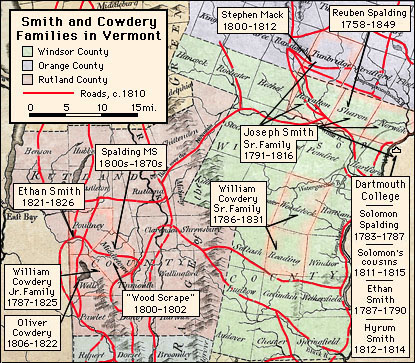
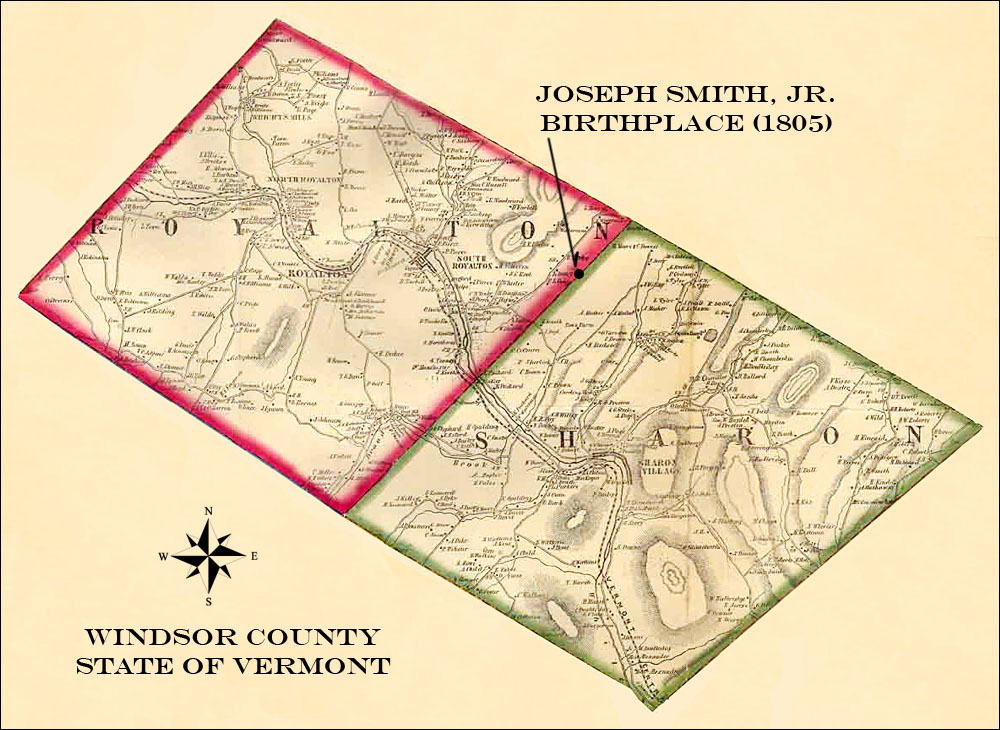
To the Editor of the Transcript: The different authors who have given biographical notices of the above noted individual disagree in relation to the place of his nativity. Coolidge and Mansfield, in their "History of New England," say that Joe Smith, the founder of Mormonism, was born and spent his youthful days in Sharon. Mr. Tucker, in his "History of the Rise and Progress of Mormonism,' says, that "Joseph Smith, Jr., was born in Sharon, Windsor County, Vermont, Dec. 13, 1805. He was the son of Joseph Smith, Sr., who removed from Royalton, Vermont, to Palmyra, N. Y., in the summer of 1816." Mr. Drake says that Joseph Smith, Jr., was born in Sharon. Other notices say that Joe was born in Royalton. I am a native of Royalton, Vt., and resided in that town for a long period. A short time since I had an interview with John L. Bowman, who was formerly a constable and collector of taxes in Royalton. I inquired in relation to the farm and house of Joseph Smith, Sr., and he answered that it was his opinion that the house lot and the buildings of Mr. Smith were in Royalton, near Sharon line, and the farm partly in Sharon. Not feeling quite satisfied, I wrote to the Hon. Daniel Woodard, formerly a judge of the Windsor County Court, and received the following information; |
|
Vol. XL. Boston, Mass., Wednesday, January 4, 1871. No. 36.
For the Boston Investigator.
|
|
Vol. ? Cambridge, Mass., Tuesday, July 27, 1872. No. ?
Written for the Cambridge Chronicle.
The annals of the world do not present a more marked and extraordinary case of unblushing effrontery, of impudence and boldness, than was exhibited by that notorious imposter, Joseph Smith, Jr., in introducing a new religion, where there was not the slightest portion of extract or tincture of common sense in either the foundation or base, for the superstructure which he successfully raised. |
|
Vol. 68. Danville, Vermont, Friday, March 27, 1874. No. 13. Joseph Smith, Jr., the Mormon Prophet. A correspondent of the Green Mountain Freeman says: -- |
|
Vol. XLIII. Boston, Mass., Tuesday, July 25, 1876. No. 14,356.
DEATH OF A NOTORIOUS AND
The Pittsburgh (Penn.) Telegraph says that the Book of Mormon was first printed [sic] in that city and that its author, Solomon Spalding, a half-crazy preacher; and Sidney Rigdon at the time resided there: |
|
Vol. XXVI. Lowell, Mass., Thursday, July 27, 1876. No. 6290. The Early Days of Mormonism. The death of Sidney Rigdon, one of the founders of Mormonism, recalls the early days of that wonderfully successful imposture. Rigdon was born in St. Clair Township, Pa., 1793, and was employed in the Pittsburgh printing office [sic] in which the manuscript which afterwards formed the basis of the Book of Mormon was set up. After possessing himself of a copy of this manuscript he left the printing office and became a preacher of the doctrines afterwards promulgated as Mormonism. He gained small numbers of converts, and in 1829 became associated with Joseph Smith, who first obtained the scheme of his new faith by gaining possession of Spalding's manuscript through Rigdon. The Mormon Church, or, as the preferred to style the,selves, the Latter Day Saints, was first regularly organized by Smith and Rigdon at Manchester, N.Y., in 1830. The removal to Kirtland, Ohio, followed, where a year or two later the two prophets were tarred and feathered by a mob, not so much on account of their unorthodox opinions as because they had started a bank without a charter and flooded the country with notes of a doubtful value. Rigdon was a member of the church government, consisting of three presidents, the others being Smith and Frederick G. Williams. In 1838, they took refuge in Missiuri, but were speedily driven thence by the hostility of the people, and shortly afterwards established themselves in Nauvoo. After the tragedy which resulted in the death of Smith, Rigdon aspired to succeed him as head of the church, but was defeated by Brigham Young. Rigdon proving contumacious was cut off from the church and duly delivered over to Satan. He returned to Pittsburg, where he attempted to establish a church, but not succeeding, removed to Genesee Valley, where he has kived a comparatively uneventful life for the past thirty years, supported by lecturing on geology. He was in his eighty-fourth year, and is stated to have been highly respected by his neighbors. |
|
Vol. ? Springfield, Mass., Friday, August 31, 1877. No. ? The Origin of Mormonism. Remarkable local testimony has been discovered by The Republican sustaining the charge that the religion of Joe Smith and Brigham Young had its origin in a romance written by Rev. Solomon Spaulding of Ohio of half a century or more ago. the story is furnished by Mr. J. A. McKinstry of Longmeadow, a son of the late Dr. McKinstry of Monson, and grandson of Rev. Mr. Spaulding. Mr. McKinstry is employed in the Main street store of Newsdealer Brace. Rev. Mr. Spaulding's widow, who afterward became Mrs. Davison, came east from Ohio to live with her daughter at Monson many years ago, bringing the manuscript of his romance with her. She died some 23 years ago, but before her death a plausible young man from Boston came to Monson to see and get the Spaulding writing. It was a time of considerable excitement concerning the Mormons, and he claimed to represent some Christian people who wanted to expose Mormonism. He therefore begged the loan of the manuscript for publication. Much against the wishes of Mrs. Dr. McKinstry, Mrs. Davison consented to let her husband's unpublished romance go. Nothing was ever heard from it again, and the family have always considered that the bland young gentleman was an agent of Brigham Young's to destroy the convicting evidence that Joe Smith's Mormon Bible was of earthly origin. |
|
Vol. ? Springfield, Mass., Saturday, September 1, 1877. No. ? The Origin of Mormonism. THE MAN WHO GOT REV. SPAULDING'S ROMANCE, which was the real foundation of the Mormon Bible, away from his widow at Monson some 40 years ago, as described in the Republican yesterday, called himself Dr. Hurlbut. Requesting the manuscript for publication in the interest of certain Christian people, he brought with him letters, afterward found to have been forged, from the gentlemen associated with Mr. Spaulding in his antiquarian research in Ohio, and from other correspondents. The "doctor" was short and stout, of rather muddy complexion, and evidently coarse and illiterate. After obtaining the book, which he promised to return as soon as possible, he owned up that he was not a doctor, but a seventh son, which he appeared to think just as good. The manuscript was never returned, and nothing was heard from it, except a brief note stating it was entirely dissimilar from the Mormon Bible. It was afterward reported that Hurlbut got $500 for obtaining the book, and procured a western farm with it, where he afterward lived. Mrs. Dr. McKinstry of Monson was young when she saw the manuscript, and of course has no very definite knowledge of it, but recognizes the similarity of the Mormon gospel to it, and says both books had two names in common, "Nephite" and "Lamanite." The family have always, of course, regretted that they parted with the manuscript, but, under the circumstances, could hardly avoid it. Mr. Spaulding was evidently a man of remarkable literary power, although he never wrote for publication, and was also fond of antiquarian research. He was located at New Salem on Conneaut creek, near Lake Erie, when he wrote his romance, and was the first to broach the theory that the mound-builders of the West were one of the lost tribes of Israel. It was accounted rank heresy at the time, and he consequently never made it public, reserving it for discussion among his chosen friends. |
Vol. ? New Haven, Conn., Monday, September 3, 1877. No. ?
The Origin of Mormonism. Remarkable local testimony has been discovered by the Republican sustaining the charge that the religion of Joe Smith and Brigham Young had its origin in a romance written by Rev. Solomon Spaulding of Ohio of half a century or more ago. the story is furnished by Mr. J. A. McKinstry of Longmeadow, a son of the late Dr. McKinstry of Monson, and grandson of Rev. Mr. Spaulding. Mr. McKinstry is employed in the Main street store of Newsdealer Brace. Rev. Mr. Spaulding's widow, who afterward became Mrs. Davison, came east from Ohio to live with her daughter at Monson many years ago, bringing the manuscript of his romance with her. She died some twenty-five years ago, but before her death a plausible young man from Boston came to Monson to see and get the Spaulding writing. It was a time of considerable excitement concerning the Mormons, and he claimed to represent some Christian people who wanted to expose Mormonism, He therefore begged the loan of the manuscript for publication. Much against the wishes of Mrs. Dr. McKinstry, Mrs. Davison consented to let her husband's unpublished romance go. Nothing was ever heard from it again, and the family have always considered that the bland young gentleman was an agent of Brigham Young's to destroy the convicting evidence that Joe Smith's Mormon Bible was of earthly origin. |
|
Vol. 76. Amherst, N. H., Tuesday, October 9, 1877. No. 14.
THE MORMON BIBLE. -- The Book of Mormon, or Mormon Bible, was claimed by its author Joseph Smith, to have been a copy of writing which he found on some shells [sic] which he dug from the earth in New York. It is, however, generally believed to have been a plagarism on a historical novel published [sic] by Solomon Spaulding, a native of Connecticut, and a graduate of Dartmouth College. He wrote a romance to account for the peopling of America, deriving the origin of the Indians from the old Hebrews, and Smith and his partner Rigdon, having possession of the book, rewrote and changed it, making it into a Bible upon which their sect is founded. Polygamy was the result of "special dispensation" in 1852. |
Vol. XXIX. Boston, Wednesday, October 24, 1877. No. 43.
THE BOOK OF MORMON.
The death of the late Brigham Young suggests that the real origin of the Mormon imposture ought to be kept fresh in the memory of the people, and especially that the rising generation should know the utter want of foundation for its false and absurd claims. |
|
Vol. 133. Boston, Mass., Wednesday, June 11, 1879. No. 139.
"ST. JOHN'S ROD."
I have long intended to give to the public some well-attested facts in regard to the origin of Mormonism, antedating its usually recognized beginnings, but have hitherto neglected it. These facts exist in a thoroughly reliable form, and came into my possession directly from an eye and ear witness, -- a man of superior intelligence, caution and discrimination. My uncle, the Rev. Laban Clark, D. D., founder of the Wesleyan University, in whose family it was my privilege to spend nearly four years, entered the Methodist ministry in the autumn of 1800, and for a number of years traveled large circuits in Vermont. Mr. Clark was a very acute observer, of superior practical judgment, and possessed a very accurate memory. The following statement has been compiled from data several times repeated to me in personal conversations, and from a manuscript sketch prepared by him about twenty years before his death, and is believed by those who knew Mr. Clark well to be worthy of the fullest confidence. |
Back to top of this page.
Articles Page | Articles Index | History Vault
Oliver's Bookshelf | Spalding Library | Mormon Classics
last updated: Oct. 22, 2014