READINGS  IN  EARLY  MORMON  HISTORY
(Newspapers of New York)



Misc. New York Newspapers
1900-99 Articles


1795-1825  |  1826-28  |  1829-46 (tabulated)  |  1847-1869  |  1870-1899  |  1900-1999


WEST NY BATAVIA ROCHESTER PALMYRA EAST NY
1829-31 1829-31 1829-31 1829-31 1829-31
1832-33 1832-39 1832-33 1832-33 1832-39
1834-39   1834-39 1834-39  
1840-46 1840-46 1840-46 1840-46 1840-46


RDC Feb 26 '00  |  RDC Nov 07 '00  |  RDC Mar 10 '01  |  UOb Oct 19 '01  |  AWB Jan 07 '02
AEJ Oct 29 '02  |  SyJor Dec 06 '02  |  SyPost Feb 13 '03  |  GDT Apr 05 '03  |  ODP Sep 23 '03
WDT Nov 28 '03  |  UHD Nov 28 '03  |  SyJor Dec 02 '03  |  RDC Mar 15 '04  |  RDC Mar 16 '04
GDT Mar 16 '04  |  SyJor Mar 17 '04  |  SyJor Mar 18 '04  |  SyHer Mar 18 '04  |  BPr Apr 14 '04
RDC Apr 28 '04  |  SyJor Apr 28 '04  |  BPr May 20 '04  |  BPr Dec 12 '04  |  RDC Feb 25 '05
GDT Feb 25 '05  |  RDC Mar 13 '05  |  CDH Sep 06 '05  |  CTm Sep 14 '05  |  SDN Aug 16 '06
WDT Mar 23 '07  |  BPr Jun 21 '07  |  UST Aug 29 '09  |  SyJor Sep 08 '10  |  Fair Nov 08 '11
BPr Feb 16 '12  |  SyJor Feb 07 '13  |  UHD Mar 11 '13  |  SyJor Dec 19 '13  |  Fair Jan 24 '17
RDC Mar 18 '17  |  BME Mar 04 '18  |  BME Mar 10 '18  |  BME Sep 26 '20  |  GDT Apr 08 '21
RDC Jul 17 '21  |  GDT Apr 26 '23  |  RDC Sep 17 '24  |  OPal Sep 17 '24  |  JCJ Dec 10 '24
SyPost Apr 04 '25  |  RDC Apr 18 '26  |  OPal Dec 23 '26  |  RDC Aug 21 '27  |  WDT Jan 26 '28
RDC May 19 '29  |  SyPost Mar 09 '30  |  SyHer Apr 06 '30  |  RDC Mar 17 '35  |  RDC Apr 10 '39
HAm Sep 23 '45  |  DemC Nov 18 '51  |  PCJ Aug 06 '59  |  UDP Aug 08 '63  |  TU Apr 25 '74
SyPost May 01 '74  |  PCJ May 01 '74  |  SyPost Jul 12, '77  |  SHA Jul 01 '77  |  SHA Jan 15 '78
SHA Jul 06 '80  |  SyHJ Jul 14 '85  |  SHA Mar 09 '86


News Articles Index  |  New York City Papers  |  Otsego Co. Papers



Democrat  [     ]  Chronicle.

Vol. LXVIII.                             Rochester, N. Y., Mon., February 26, 1900.                             No. ?


REVELATIONS  OF  THE  MORMONS
AT  NAUVOO.

______

Murder of Joe Smith Saved Mormonism as a Body.
______

SHARP  BRIGHAM  YOUNG
______

His Strong Hand Rapidly Welded the Body Together Which
Smith's Arbitrary and Lawless Acts Had Threatened to Disband.
______

Written for The Democrat and Chronicle.

In the course of some investigations into the origin of Mormonism, the writer has had placed in his hands some carious and interesting documents. No one of them has added much to what is common property, in the various histories of this movement, but some of them have a local color and contemporary freshness which gives them special interest. Among these have been several old and rare papers which contain much concerning the Mormons at Nauvoo, Ill.

It is, of course, well known that the Mormons settled first at Kirtland, Ohio; from there they migrated to Independence, Jackson county, Mo.; driven from here they went into Clay and Cass [sic - Caldwell?] county, until in 1838, driven from Missouri, they settled in Illinois on the Mississippi river at the place subsequently known as Nauvoo. Both political parties tumbled over one another in their zeal to push through the legislature a bill granting to Joe Smith and other incorporators, a city charter with unheard of privileges, an act which lay at the bottom of much of the later trouble. Here then a city was laid out, and soon contained several thousand inhabitants with every outward sign of prosperity. Better still, the leaders, especially Joe, were growing rich, for whenever it was necessary he had a new revelation which commanded them to furnish "my servant Joseph" with what he desired. June 27, 1844, Joseph and his brother Hyrum were murdered, shot by a mob. The papers from which I quote have to do with this important period in Mormon history.

A correspondent of the St. Louis Weekly Gazette, of May 18, 1844 gives a long account of a personal interview with the prophet. He devotes much of his space to a description of the prophet.

Joseph Smith -- Prophet, Priest, Prince of Mormonism and generalissimo of the armies of the faithful: To this high and mighty magnificate had I the honor of presentation, on the day and year first above written (April 26, 1844). My first impression was by no means satisfactory to myself and certainly not flattering to my host. General Smith is in stature and proportion a very large man; and his figure would probably be called a fine one, although by no means distinguished for symmetry or for grace. His arms and hands seemed never to have been developed by physical toil, and the latter are quite small for his proportions.

And so on through most of a column. There was something about the prophet's eye which seemed to fascinate the writer as it did many others. It was not "very bright," nor "very thoughtful," but "quite as crafty as I ever beheld."

Considerable interest attached to the prophet at this time, for he had been nominated by his friends for the presidency to run against Clay and Polk. To both these distinguished men Joe had written letters demanding of them a categorical answer to certain questions, among them what they would do with or for the Mormons if elected. Their answers were not satisfactory, and so the prophet became a candidate and issued his manifesto announcing his policy on national questions if elected. But the rifles of the mob removed him from the necessity of carrying out that policy for a presidential term. The editor says:

Our correspondent at Nauvoo gives rather a minute description of General Joseph Smith. Should the great Mormon ever find himself in prison bounds -- which he probably never will -- this description of his person will save the turnkey some little trouble, if he chooses to avail himself of it, for his prison books.

The correspondent also gives an account of his meeting Joe's mother, who was a sharp, shrewd old lady, with apparently implicit faith in her son, whom she had been fond of declaring to be the "genus" of the family. She discoursed to him on the Egyptian mummies then in her care, and showed him the translations made by Joe from the papyri wrapped around the bodies. These detailed the history of the kings who were contemporaries of Abraham and other Old Testament worthies, and they gave considerable information about them, all of course in striking confirmation of the prophet's previous discoveries at the hill Cumorah. Palmyra. The correspondent confesses that he does not know how the prophet came into possession of these things. It is a curious story and illustrates, as almost everything connected with this arrant humbuggery does, the gullibility of many people.

It was 1833, when the Mormons were still at Kirtland, that a traveling showman, Michael H. Chandler, visited the place with a collection of curiosities, among them some mummies, then a rare thing in America. Chandler's goods were for sale, and the church, under Joe's direction, purchased the mummies. Joe at once proceeded to read the papyri upon the bodies, and the showman gave him this unique indorsement:
This is to make known to all who may be desirous concerning the knowledge of Mr. Jos. Smith. Jr., in deciphering the ancient Egyptian hieroglyphic characters in my possession, which I have in many cities shown to the most learned, and from all the information that I could ever learn or [meet] with, I find that of Joseph Smith, Jr., to correspond in the most minute matters.
            MICHAEL H. CHANDLER.
Traveling with, and proprietor of, Egyptian Mummies. *

It will be noticed that the genial showman apparently told the truth in this letter. Joe was delighted. He writes:

Much to our joy we found that one of these rolls contained the writings of Abraham; another the writings of Joseph. Truly we could see that the Lord is beginning to reveal the abundance of truth.

Scholars translated these papyri differently, but that is a small matter; Moroni, the angel who wrote the Book of Mormon, did not help them.

For some time thereafter these valuable relics were shown to visitors upon the payment of fifty cents. "That," said the guide to one, pointing to a scroll on the wall, "is the handwriting of Abraham." "And this is Jacob's ladder," a picture of a ladder leaning against the wall. It is needless to say that this wonderful possession and miraculous confirmation of Mormon claims increased the reverence of the people for their prophet.

I have been unable to trace the history of these curios after the visit of the St. Louis correspondent to Nauvoo. Whether they were lost in the immediately succeeding troubles, or whether the angel Moroni has taken charge of them, or whether they are still preserved at Salt Lake, I know not. They served, however, for a time the purposes of Joseph Smith, Jr., the great American impostor.

I have also examined a copy of the Nauvoo Expositor. vol. 1, No. 1, dated June 7, 1844. It is the only number ever printed, as the office outfit was destroyed by a mob under orders from the municipal council before another issue. Only a thousand copied of this issue were printed, and many of these were destroyed in the same way, so that there are probably very few copies in existence. The paper carries the name of six men as publishers, all but one of whom were professed Mormons. Sylvester Emmons was editor, and he, so one of the publishers informs me, probably regarded Mormonism as a sham, but thought there was money in it.

Some of the revelations contained here of the moral conditions in the city would not be permitted in print now. The Mormons themselves were divided and quarreling; Smith's arbitrary and immoral course was wrecking the church; while the indignation of the Gentiles of this part of Illinois was gathering in a storm soon to break. Six columns of the paper are filled with the "Preamble, Resolutions and Affidavits of the Seceders from the Church at Nauvoo." It is verbose and grandiloquent. The authors affirm their faith in the religion of the Latter-day Saints as originally taught by Smith, contained in the Old and New Testament, the Book of Mormon and the Book of Covenants, but they declare that some of the doctrines "taught secretly, and [denied] openly," by Joseph, are "heretical and damnable in their influence, though they find many devotees." They had appealed to Joseph who, while admitting his guilt, would not make public acknowledgement of his sins, saying "he would rather be damned, for it would detract from his dignity, and would consequently ruin and prove the overthrow of the church. We would ask him, on the other hand, if the overthrow of the church was not inevitable, to which he often replied that we would all go to hell together, and convert it into a heaven by casting the devil out; and says he, hell is by no means the place this world of fools suppose it to be, but, on the contrary, is is quite an agreeable place; to which we would now reply, he can enjoy it if he is determined not to desist from his evil ways; but as for us, and ours, we will serve the Lord our God."

Then follows a long account of the way in which "many females allured by fair promises from many lands have been brought to Nauvoo, and then under oaths the most solemn and alleged revelations from God through, the prophet and others, are taught the doctrine of spiritual wifery to their destruction," in words which cannot be further quoted here. The evidence is abundant, contemporary and unimpeached, that Nauvoo was a veritable Sodom at this time. The unspeakable vileness, practiced under alleged divine revelation, is almost incredible. In passing, it in also to be noted that profanity, according to abundant testimony, was a characteristic of Smith and many of the other leaders.

Among the other charges is that of teaching "the doctrine of many gods" (still a part of the Mormon creed); and they declare that Joseph has set up an inquisition which executes its decrees in an arbitrary and lawless manner. Thus early in its history did the most damnable things in Mormonism appear. "Heaven-daring, hell-deserving, God-forsaken villains," are some of the elegant phrases applied to Joe and his friends. Affidavits follow supporting the charge that the doctrine of "spiritual wifery," afterwards officially promulgated at Salt Lake, had been read to the faithful and was being practiced by many. As showing the extent to which the leaders were ready to go, I quote this further item of news.

The city council have passed ordinances, giving the municipal court authority to issue the writ of habeus corpus in all cases when the prisoner is held in custody in Nauvoo, no matter whether the offender is committed in the state of Maine, or on the continent of Europe, the prisoner being on the city under arrest.

The city charter, dictated by Mormons and passed without a dissenting vote in the legislature, conferred extraordinary powers, in the use of which state and national officials were implicated, but this last was too much, and added to the rising storm.

But the expositor had gone too far. A meeting of the city council was hastily summoned, the offending paper read, and an exciting debate followed. Rebellion within the Mormon capital and exposure of the abominable practices needed to be stopped with a strong hand. Joe Smith, John Taylor, and others denounced the article, and urged the necessity of removing the "filthy, libelous, seditious sheet from our midst." This resolution was finally adopted.

Resolved by the city council of the city of Nauvoo, that the printing office, from whence issues the Nauvoo Expositor, is a public nuisance, and also all of said Nauvoo Expositors which may be or exist in said establishment; and the mayor is instructed to cause said printing establishment and papers to be removed without delay, in such manner as he shall direct.

The mayor was the prophet himself and he lost no time in ordering the papers, presses and office fixtures to be carried into the street and burned. The troubles between the state and the city, the Gentiles and the Mormons, grew rapidly now. Smith and others were arrested, finally lodged in the jail at Carthage, where the murder occurred June 27th, as already stated.

There can be little doubt but that the murder of the prophet saved Mormonism as a compact religious and political body. Most of the factions were reconciled and those who were intractable were promptly expelled. Henceforth their prophet was a martyr, and the strong hand of Brigham Young rapidly welded the body together. Joe was wrecking it by his practices, but more by his numerous revelations; Brigham was sharp enough to see this, and only one revelation from him is recorded in the Book of Doctrines and Covenants. Persecution, as always, only served to strengthen and multiply the persecuted.
JOHN Q. ADAMS.
Canandaigua, N. Y., Feb. 23, 1900.


Note: Evidently the Democrat-Chronicle's correspondent was the same "John Q. Adams" whose name appears in various contemporary Ontario Co. newspapers, as a member of the "Manchester Grange," etc. Mr. Adams' information source appears to have been Dr. Charles A. Foster (1815-1904), the brother of Robert D. Foster -- see the Democrat-Chronicle of Nov. 30, 1899 and the Nauvoo Expositor of June 7, 1844.


Democrat  [     ]  Chronicle.

Vol. LXVIII                             Rochester, N. Y., Wed., Nov. 07, 1900.                             No. ?


SOME  CLOSE  RANGE  SIGHTS  OF  MORMONISM.
______

Reminiscences of Hon. Lewis E. Smith, of This City.
______

TWO  MORMON  MEETINGS.
______

The First Was at Kirtland, Ohio, In i838, Contrasted With One
at Salt Lake City Fifty Years Later -- His Deductions.
______

There lives in this city, at No. 300 Mt. Vernon avenue, in what was formerly the old Gregory homestead, a large and handsome country residence, but upon whose fertile acres the city has encroached until it is now a charming suburban home near Highland park, a remarkable old gentleman who, if he lives till the 25th of this mouth, will be 88 years old. He is Hon. Lewis E. Smith, and his father was one of the early pioneers of Livingston county, where the son was born and reared. He practiced law in that county till compelled, on account of ill health, to seek a more active and out-of door life. For some time he traveled for General Wadsworth, locating lands in the West, which later have added wealth to the already large estate of this pioneer family.

Mr. Smith served as supervisor of Livingston county for a number of years, being chairman of the board for one term, and he also represented his county in the assembly for two years. In 1871 he removed to this city, taking up his residence on the farm which is now his home, and with him live his son, George H. Smith, a well-known attorney of this city, and his family.

Mr. Smith, Sr., is active, and his mind is bright and unimpaired, in spite of his more than four score years, though his general health is not as robust as formerly. As usual, he voted the straight Republican ticket yesterday. He has many reminiscences of the "good old times," at his tongue's end. In an interview recently, he gave a reporter of this paper an interesting account of his observations of Mormonism, which has come under his notice at various times during his long life, giving him an opportunity of studying this peculiar sect at "close range," so to speak.

The first time was at Kirtland, Ohio, a former and early stronghold of the Latter Day Saints, where Mr. Smith was present at a most remarkable meeting. Mr. Smith believes that, possibly, if this strange theological fungus, known as Mormonism, had not been prosecuted [sic] with such relentless cruelly in the early years of its growth, its devotees might have fed upon one another, like a pack of hungry wolves, and eventually wrought their own destruction, or disintegration, from the very nature of their hideous practices, and the flagrant dishonesty of their leaders.

An account of this remarkable meeting at Kirtland follows, in Mr. Smith's own words:

"Several articles have been published, lately relating to Mormonism and its history, none of which (so far as I know) refer to a scene which I witnessed at Kirtland, in Ohio.

"In December, 1838, I traveled on horseback from Livonia, Livingston county, N.Y., to Cincinnati, Ohio. On my way I stopped over Sunday, about nine miles from Kirtland, Ohio, with Redman Clark, whose wife was Maria Woodruff, of Livonia.

“They were converted to Mormonism at Geneseo, in Livingston county, and moved West with several others from that locality. On Sunday morning we went to the meeting at the Mormon Temple, at Kirtland. It was an oblong rectangular building of stone, with a basement said to be occupied with firearms and ammunition (whether truly, I did not learn). It was of peculiar construction inside. At the center of each end of the large interior were four successive tiers of pulpits or desks, with seals, each successive tier being higher, and backward from the lower, and reaching almost to the ceiling, which was sixteen or seventeen feet high. Each tier had three desks or seats. The lower tier was about three feet from the floor; the others rose in regular grades back to the wall. On the front of the tiers at one end of the hall was the letter "A," in gilt, Indicating the Aaronic priesthood.

"In the upper tier sat Joseph Smith, Sr., father of Joseph Smith, the prophet. By his side was the father of the wife of the prophet Joseph Smith.

"In the next lower tier was Joseph Smith, the prophet, on the right; with his brother, Hiram Smith, on the left, and Sidney Rigdon between them. Rigdon was the head of the Aaronic priesthood, and supposed to typify Aaron. As Aaron was the spokesman of the prophet Moses to the children of Israel, so Rigdon was the spokesman of the prophet Joseph Smith to the Mormon people, or Latter Day Saints.

"This term 'Latter Day Saints' had a special and peculiar significance. They held that the children of Israel had lost favor with the Lord, and had ceased to be His chosen people.

"Joseph Smith, the prophet, claimed that he had a revelation instructing him how to translate the characters on the golden plates, said to be found in a hill in the town of Manchester, Ontario county, N.Y.

"This translation was the Book of Mormon, and professed to treat of the history of a race long since passed away. The teaching and example of this vanished race, and the tenets set forth in the Book of Mormon, would be (they claimed) the guide of a peculiar people of modern times, whom the Lord would raise up to be His chosen people, in the place of the children of Israel -- hence the name 'Latter Day Saints.'

"In one of the two lower tiers I noticed Edmund Bosley, whom I knew in Geneseo, and in the other Mr. Beaman, whom I knew in Livonia, N. Y. At the other end of the hall similar pulpits or desks and seats had the letter "M" in gilt in front, indicating the Melchisedec priesthood. The seats here were occupied by men I did not know. At the "A" end, the comers on each side were occupied by stairs leading from the floor up to a point about even with the upper tier, and used, as I saw by the audience, for seats. During a portion of the session I sat upon these stairs.

"There was a full audience. Just before the time for the morning meeting to commence, Mr. Rigdon rose and said that, previous to the meeting, he would state that the committee they had sent to Missouri to look over the former land of the Lamanites (they were accustomed to refer to the Indians or aborigines us "Lamanites"), reported that the prospects were favorable, and that they had brought from the brothers in Missouri a proposition to make a brother there naming him the president of the Mormon organization. On the completion of this statement he said. ‘Those in favor say aye.'

"Immediately three or four persons in the audience rose to speak. All seemed very much in earnest. Rigdon recognized one, saying all should have a chance. The speakers, one after another, proceeded to arraign the officers for their course in the financial management of their society. Some spoke of their swindling bank operation; others charged the prophet, Joe Smith, with using the church money for his own benefit. One candid appearing man said he and his family joined the great and glorious faith of the Latter Day Saints in the East, and came West to enjoy Its blessings with the brethren. He sold his property for $5,000, and brought the money with him. He asked the brothers here what he would better do with It They told him to put it into the Mormon bank, which he did, only saving out $30 for immediate use.

"When that was gone, he went to the bank for more, and could not get anything. He and his wife and family of five children had to work by the day, or job, at anything they could get to do, to keep from starving. He said he did not know how it was, but he was satisfied there was something wrong somewhere.

"Others accused the prophet of squandering the church funds. Rigdon, with his smooth, pleasant voice, tried to keep peace, but without avail. Hiram Smith, the prophet's brother, who was a good speaker, tried also, but the accusations continued till the prophet, who was a good speaker, became so annoyed that he defended his course, but did not stay the charges.

"Mr. Harris, one of the witnesses of the golden plates of the Mormon Bible, said that he once thought Joseph Smith was a true prophet sent by the Lord, but he had come to the conclusion he had fallen from grace, and was now controlled by the spirit of the devil.

"The accusations, with discussion and defense, continued through the entire day without intermission. I think it was about 10:30 o'clock in the morning when the talk began, and we sat there without any dinner, and without any intermission, until approaching darkness. The attendance did not perceptibly diminish, so intense was the interest. Many were waiting for a turn to speak, till the dusk of the evening. Then Rigdon stated that the discussion had continued as long as was profitable, and adjourned the meeting without taking a vote.

"Many waited outside the temple afterwards, gathered in little knots, and talked over the events of the day. I heard it said in the crowd that more truth had been told there that day than ever before, or than ever would be again. Afterwards I called Mrs. Clark's attention to the trouble in the meeting, and she said, 'Yes, it was intended to try them and reprove them,' and she would not be surprised to see the saints shed each other's blood there in the holy temple.

"In the spring of 1888 I stopped at Salt Lake City Saturday, Sunday and part of Monday, during the great world's gathering of the Mormons. The great tabernacle, said to be capable of seating 15,000, was insufficient to seat the great multitude,, and many were compelled to stand during the services. People of all classes, conditions and colors had embraced the doctrines and usages of Mormonism and had gathered to celebrate its triumphant success. Those of the lower classes showed marks of their former condition, but were dressed in clean garments, though of ever so plain and cheap a material, while many nun and women of apparent culture appeared in the rich and fashionable apparel of the time.

"The addresses that 1 listened to called for a high standard of morals to be applied in the every-day life of the people. In religious teachings, the main emphasis was laid oh principles that would not be objectionable to the greater proportion of the Christian churches of to-day; as, for crumple, trust in God, and faith in Christ. The Book of Mormon and the peculiar tenets of the Mormon church received slight mention. All that we know to be objectionable was kept studiously In the background.

"A stranger, knowing naught of the peculiar tenets and institutions of Mormonism, viewing the vast assemblages and hearing the addresses, would say: 'This is surely a strong, united and industrious people. They have not hesitated to gather into their fold many of the lower classes from many nations and many parts of the world, and they are elevating and improving them.'

"The contrast between Mormonism as presented to my view at Kirtland in 1838, and at Salt Lake City, fifty years later, was certainly striking. At Kirtland a few, newly-gathered converts, quarreling among themselves or charging their high officials with dishonesty, seemed to furnish all the conditions favorable to speedy disintegration.

"At Salt Lake City, In 1888, a strong, united and orderly body, seemingly having confidence in one another, and in its leaders, and compassing the continents and the isles of the sea in its proselyting, seemed even to the unsympathetic and suspicious observer to present wonderful elements of strength . and possibilities of further growth.

"Apparently, It was persecution that saved the day for Mormonism, and forced upon it a unity, a harmony and a zeal that it evidently would never have developed if left to itself. Opposed, ostracized, driven from one location to another, persecuted even to the murder of their prophet, Joseph Smith, and his brother Hiram, they emerged, as they would say, chastened, and as we must admit, united, strengthened, progressive and powerful."


Notes: (forthcoming)


Democrat  [     ]  Chronicle.

Vol. LXIX.                             Rochester, N. Y., Sun., Mar. 10, 1901.                             No. ?


EARLY  DAYS  OF  BRIGHAM  YOUNG.
______

Call to Preach Came to Him at Canandaigua
______

THE  BOOK  OF  MORMON.
______

True Story of Joseph Smith's Finding of the Mormon Bible
and What the Volume Really Was -- Its Make-up.
______

Written for The Democrat and Chronicle.

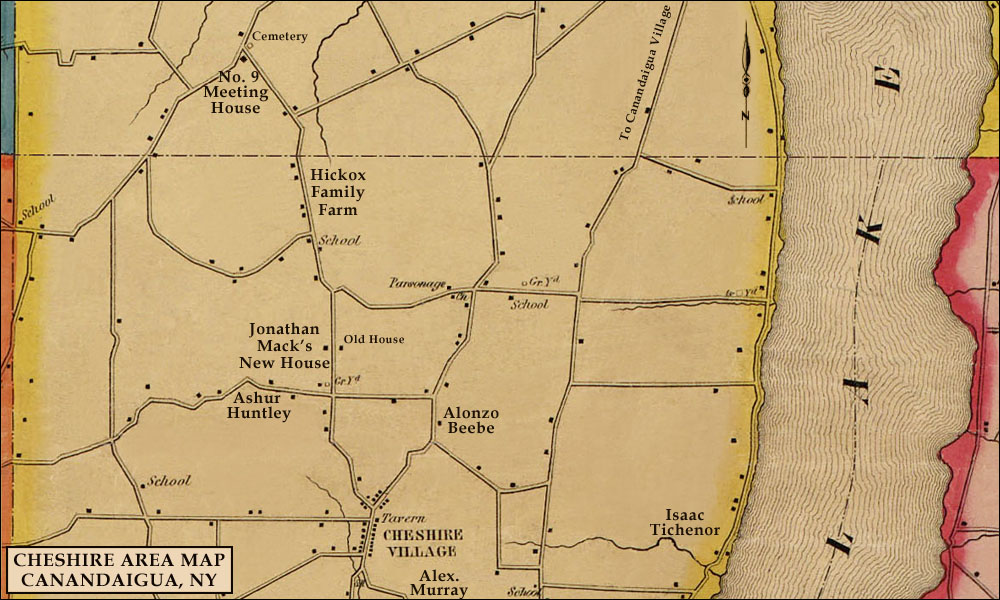
Although many people are aware that Mormonism had its birth in Ontario county, a few miles northeast of Canandaigua, the county seat, when in 1827 "crazy Joe Smith," as he was best known by his neighbors, delivered the bowels at the earth at a point now known as "Mormon Hill" of the mysterious plates, Urim and Thummim, from which he claimed to have formulated the text-books of Mormonism, few persons know that it was also in Ontario county and the town of Canandaigua that Brigham Young, the great Mormon leader, the founder of Salt Lake City and the greatest modern polygamist, adopted the tenets of that religion, and taught and preached it in that locality some time before he and others of the faithful took up their pilgrimage in search of the "land of promise," where they sought to shut themselves off from the rest of the world.

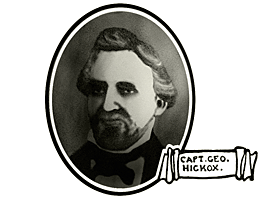
At the time Brigham Young became converted to Mormonism he was a common day laborer employed by Captain George Hickox, and at the old Hickox homestead near Canandaigua are still found relics of the great Mormon, now priceless, in the shape of furniture and other specimens of his ingenuity. Young went to Canandaigua from Auburn, in the early part of the '20's, having left the printing trade which he practiced in Auburn, but which did not suit his temperament, for the more broadening and independent work of an agriculturist. The whole family came, including Young's three brothers, two sisters, Young's wife, and four children. This large number of people had to be supported by hard labor. Young did not relish the continual striving for a mere living and at that early time evinced an ambition for a broader field of labor. His thirst for learning was early manifested and he seized all opportunities for reading and acquiring knowledge. He was converted to the Reformed Methodist faith in 1830, and diligently studied his Bible, becoming quite an exhorter and frequently leading the meetings of the neighborhood, at old "No. 9 meeting house."

It is still told by the Hickox family how Brigham Young borrowed $1 of his employer and sawed wood to pay the loan. He was something of a cabinet maker and made considerable furniture of a very fair sort. A chair is still retained in the Hickox family that Young made for them.

In 1832 some strangers appeared in the vicinity talking about the new religion of Mormonism, recently discovered by the Prophet Smith in the town of Manchester, and they soon succeeded in proselyting Young. At the last of their visits they found Young at work beside his master in the field. After a few minutes' quiet confab with them Young walked over to Mr. Hickox and said, "I am not going to work for you any longer, sir. I am going to do something better -- preach the everlasting gospel." He then left and went about in this section preaching for a time, then with the others who were looking for their Mecca started on the Western trip.

He frequently wrote to the Hickox family, and the correspondence continued at intervals till the time of his death. A letter from him written about the time of his seventy-fifth birthday, gives an interesting insight into some of his domestic relations. Portions of it are as follows:

Salt Lake City, U. T.

19 Feb., 1876. George Hickox. Esq., Canandaigua, N. Y.:

My Dear Sir: It was an unexpected pleasure to receive a letter from an old friend like yourself, and the news your favor contained of many whom I had not heard of for years brought to my recollections varied [----s] and sayings of days long since past. Old No. 9 I recollect right well, with many other places and persons, the [Van Normens], the Hickoxes and others who flourished forty-five years ago. In thinking of myself I picture the young man I was in those days you knew me. I [can w-----] realize that I have lived nearly seventy five years on the earth, but I am extremely thankful that I am enjoying exceptional health. I have three of my sons now residing in the state of New York, one a railroad man in New York, another a lieutenant in the United States engineers, and stationed Willet's Point, the third, a few years younger, is studying at the Naval Academy at Annapolis: another studying law at Ann Arbor, Mich. and two in this territory. I suffered a severe affliction in the loss of my eldest son. Joseph S. who died last April in the flower of his youth and usefulness. * * * I felt [amused and ------ed] in your statement that a chair made by me would occupy a place in your centennial supper to be held next Tuesday. I have no doubt that many other pieces of furniture and other specimens of my handiwork can be found scattered about your section of the country, for I have believed all my life that what was worth doing was worth doing well, and have considered it a part of my [-----ion] to do [b-----], reliable work, such as would endure for those who employed me, us to attend to the services of [God in] worship on the Sabbath. If you ever pass this way, call and see me. I shall be glad to see you * * * With many kind remembrances, I remain your friend.
BRIGHAM YOUNG.

The text of the above is written in a fine feminine hand, signed by a scrawling yet legible and characteristic signature. When Brigham Young died on August 29, 1877, he was then considered the third wealthiest depositor at the Bank of England, where most of his personal wealth was in keeping.

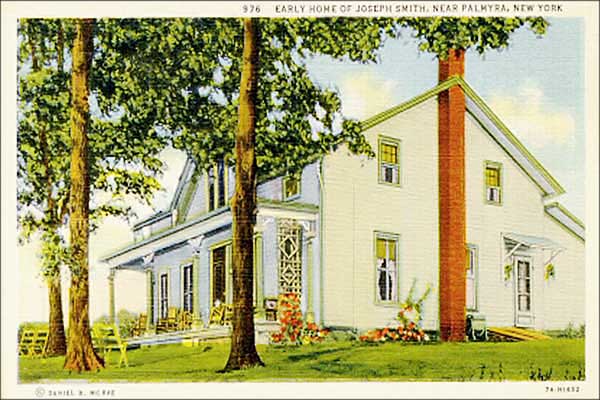
The lives of the two prophets of Mormonism, Smith and Young, are similar in some degree; both were born of poor, humble parents, and were nearly the same age. It was Joseph Smith, Jr., son of Joseph Smith, of Sharon, Windsor county, Vermont, who came to the light of the world in 1805, that afterwards made Mormonism a matter of history. The Smiths were poor and numerous. They emigrated to Palmyra in 1816. At this time Joseph became known as a money digger, a searched for hidden wealth, and he claimed among other things to have supernatural aid, including a magic mirror by which he could locate wealth, but as the family always remained poor, the people placed little faith in his abilities. He was a general ne'er-do-well, shirking everything that looked like work, and continually hunting for some means to get a living without labor.

Young was born in 1801, converted into Mormonism in 1832, and his whole family accepted the faith when he did. Up to that time he had had no settled vocation, going from one thing to another, first a farmer, then a painter and glazier, then a printer, then a cabinet maker and again a fanner, till he adopted the work that entailed little manual labor, that of preaching. Smith soon secured adherents, and the first among those were Sidney Rigdon and Parley P. Pratt, of Manchester. Then came Young, and others followed in order later.

Young was elected governor of Utah in 1850, after strife and struggles for independence from the United States government and after Young and the [1,000?] or more followers had striven long to [get] the power to run their territory to suit themselves. Up to that time lawlessness had been rife and the days of the "Danites" were then uppermost.

Smith had a hard time getting his Mormon bible printed, but finally the task was undertaken by John H. Gilbert, of Palmyra, and one other. Mr. Gilbert and [his] partner had a hard time getting the execrable manuscript of the illiterate Smith into shape and the first bible was not so satisfactory as it might have been from a literary standpoint. Later editions printed in 1830 [sic] by other persons are more presentable.

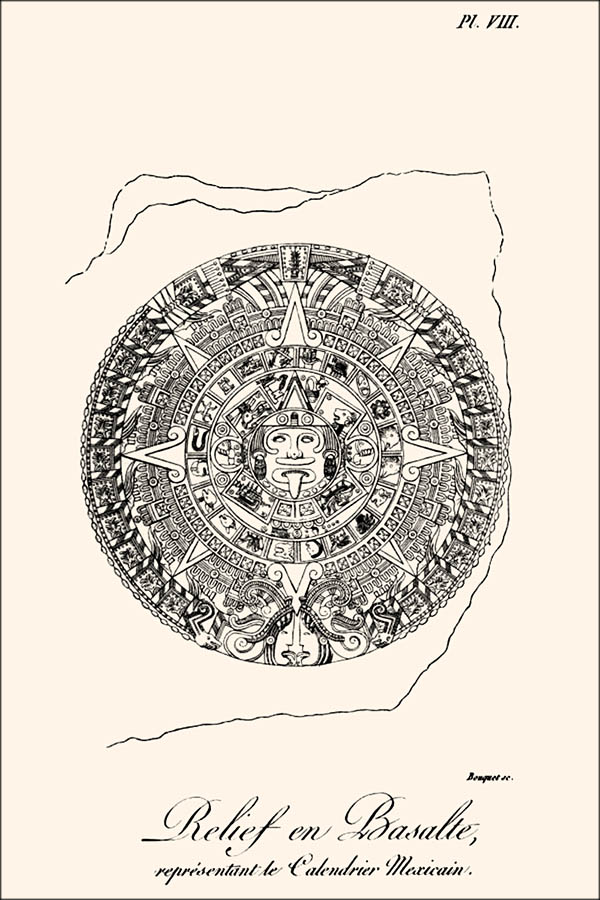
The plates described by Smith as those revealing the text of the bible to him and said by him to have, been pointed out by special divine mandate, correspond [in] description by those who have seen them to resemble the "glyphs" found in the "mound builder" sections, consisting of [curiously] wrought metallic plates with hieroglyphical characters thereon. They are thought to have been secured in indirect manner from mounds similar to those found in [-----] and Ohio, and which are well known to scientists as remnants of Aztec and Egyptian races.

It is certain that Smith had some assistance from one more versed in matters spiritual than himself, for his talk at that time was interspersed with a half scientific, half illiterate jargon that was meant by him to pass as inspired utterances, but which at times revealed the ignorance of the speaker as to the subject matter on which he spoke.

According to the legendary account adopted by the Mormons as to the true origin and correct history of the Book of Mormon, it is claimed that a portion of their history runs back to that extremely remote age, when the tongues were confounded at the Tower of Babel. They hold that at the time of that event the tribes of this earth were scattered abroad and that the migrations of one particular colony were directed by the Lord, who led the favored few across the sea to the Western continent, now called America.

The Mormon history records the progress of the opposing nations of Nephites and Lamanites. The former appeared to have been highly favored of God. The most noted prophet of the golden age of the Nephites was "Mormon," who made an abridgment of the sacred record which contained the history of his forefathers, narrated the prophecies made to them, and sketched the events [surrounding] the introduction among them of the gospel. After appending the history of his own time, Mormon was ready to leave this earth, and having laid him down to [die -----] the task of concealing the [-----] plates was imposed upon his son, Moroni. From this point begins the history of the Mormon bible. In order to preserve from the impious hands of the Lamanites the plates, Moroni deposited them carefully in the earth, in the locality then called the Hill Cumorah, now known as Mormon Hill," situated in the northeastern part of Ontario county, where the records, after being carefully sealed, were buried several feet below the surface of the hill at a date given as A. D. 420. There they lay till fourteen centuries had passed, until on the 22nd day of September, 1827, "an angel of the Lord directed Joseph Smith, Jr., (the original prophet) to exhume the long-buried history."

Mormon history goes into considerable detail as to the vicissitudes that [beset] Smith, in his attempts to "translate" and publish the Book of Mormon. But it is recorded that he finally escaped to the northern part of Pennsylvania, where in peace and solitude, by the aid of the wonderful crystals set in the spectacle bows, [found] with the plates (the Urim and Thummim), he translated the unsealed portion of the records into the English language ["in] obedience to the Divine Command."

The real history of the so-called Mormon bible is that it was the invention of the fevered brain of a Cherry Valley [recluse?] clergyman named Solomon Spaulding, who after long researches in Ashtabula county, O., where he found food for a [fanciful?] imagination in the Aztec mounds and American antiquities. with which the [region] was rich, conceived the idea of writing a fabulous history of the long [extinct?] races, adopting his hypothesis that [the] manuscript was found in one of [these] mounds. A printer mimed Rigdon, employed in an office where Spaulding's manuscript was submitted, is said to [have] stolen it, and finally submitted it to Joseph Smith, whose fame as a "money digger" had become widespread, and in whom [he] was personally interested.

The Book of Mormon or the Mormon bible, is a rarity nowadays, indeed it [is] almost an unknown quantity, very few [being] possessed outside the [----es] of Mormonism. The title page of this book is as follows:

[replica of title page - not copied]


Notes: forthcoming


The Utica  [     ]  Observer.

Vol. LIV.                               Utica, N. Y., Sat., Oct. 19, 1901.                               No. 147.


Lorenzo  Snow,  the  Fifth  Mormon  President.
_____

The death last week, at the Beehive, in Salt Lake City, Utah, of Lorenzo Snow, who has been for several years President of the Church of Jesus Christ of Latter Day Saints, as the Mormons style themselves, removes from the activities of life a man who was obstinate in his faith, persistent in his polygamy, able in the discharge of his executive duties, and a father in Israel; as he died at 87.

The Mormon Church was founded by Joseph Smith, a Vermont Yankee, whose parents brought him to the State of New York while he was a boy and settled near Palmyra, Ontario county, where Joseph grew to young manhood, engaged in the useful work a farm laborer. Then he obtained possession of the manuscript of a religious romance written by the Reverend Solomon Spaulding, and which after undergoing a few alterations, he gave to the world as the new Mormon Bible, which he pretended to have received Written on plates of gold by God's hand, who was an Egyptian according to the intent of the prophets." The prophet Joseph found dupes enough to swallow his stories and when he established the first church of Mormonism in Palmyra he Immediately announced that he had been elected President of the whole Mormon band and that as such he was ready to receive tithes from all the faithful. For fourteen years his Presidency continued and then in June, 1844. Joseph Smith was attacked by a mob of self-styled Christians in Illinois who proceded to hang [sic] him till he died. Next Brigham Young became President and for the next thirty-three years he defied Uncle Sam or flirted with him (when Millard Fillmore was President did he not make Brigham Young Governor of Utah Territory? an office he refused to relinquish to his duly appointed successor until compelled to do so by Federal troops); and he collected [wives] like a Jewish Patriarch; and married wives to the number of more than twenty-five; and ruled the church that Joseph Smith had founded on the Rev. Solomon Spaulding's religious romance with a rod of iron; then he died and John Taylor succeeded to the presidency. But John was an old man when elected president and he died in a few years without doing much good or harm. He was followed by Wilford Woodruff, during whose incumbency a revelation from the Almighty was received suspending the practice of polygamy in the Mormon Church. This revelation dovetailed so neatly with the Edmonds law that some of the unregenerate thought the Lord had taken to compromising. After the death of President Woodruff, Lorenzo Snow was made president and he continued to exercise the functions of the office down to last week, when he died. He is to be followed by Joseph F. Smith, grandson [sic] of the "prophet," and a comparatively young man. Each of the presidents of the Mormon church has had a life lease of power: that of Smith and Young extending over a period of forty-eight years; and Lorenzo Snow's bringing it up to sixty-two years, which is more than six-sevenths of the life of the church.


Notes: forthcoming


AUBURN  WEEKLY  BULLETIN.

Vol. XXI.                             Auburn, N. Y., Tues., Jan. 7, 1902.                           No. 2.


The Monster Abomination.

Rev. Solomon Spaulding was for some time in poor health, and to while away the time he wrote a preposterous religious romance. One Joseph Smith somehow got hold of that book before it was printed, and published it as a revelation of heaven, calling it the "Book of Mormon," and from that publication came Mormonism, the monster abomination of the earth. Rev. Solomon Spaulding might have been, better engaged than writing that book of falsehoods. However much time we have, we never have time to do wrong. Harness January for usefulness, and it will take the following months in its train. Oh, how much you may do for God between now and the 31st of next December! The beautiful "weeping willow" tree was introduced by Alexander Pope into England from a twig which the poet found in a Turkish basket of figs. He planted that twig, and from it came all the weeping willows of England and America; and your smallest planting of good may under God become an influence continental and international....


Notes: forthcoming


Vol. LXXIII.                             Albany, N.Y., Wed., Oct. 29, 1902.                             No. 22,431.


THE  EVENING  JOURNAL'S  ANSWERS
BY  EXPERTS.
______

POLYGAMY  IN  AMERICA  NOT  SMITH'S  IDEA.
______

Original Mormon Church as Founded by Joseph Smith was Monogamic.

BRIGHAM  YOUNG'S  TRICK.

Testimony of Founder's Family and Others Shows Bible Rule
Prevailed up to 1876.

______

BY  JOSEPH  SMITH.
Son of the Prophet Joseph Smith, Founder of Mormonism.

The popular supposition is that American polygamy was the outgrowth of the faith, doctrine and practices instituted by Joseph Smith, the putative founder of the Church of Jesus Christ of Latter Day Saints, which was organized April 6, 1830, in the state of New York. The object of this paper is to correct this popular supposition so far as the facts warrant conclusions as to ts origin.

First  Mormons  Monogamists.

One of the basic principles upon which the church organized by Joseph Smith and his associates was founded was the principle of direct revelation from God to man at any time when God had a people upon the earth whom He recognized as His. Accepting this principle and in direct pursuance of it the Book of Mormon, called by those outside the church "The Golden Bible," was discovered, translated and put before the American people as a revelation from God. This work was published in 1830. In it is a direct instruction against the practlce of polygamy, in form and substance as follows:
"But the word of God burthens me because of your grosser crimes. For behold, thus saith the Lord. This people begin to wax in iniquity; they understand not the scriptures; for they seek to excuse themselves in committing whoredoms, because of the things which were written concerning David and Solomon his son. Behold, David and Solomon truly had many wives and concubines, which things was abominable before me, saith the Lord, wherefore, thus saith the Lord, I have led this people forth out bf the land of Jerusalem by the power of mine arm, that I might raise up unto me a righteous branch from the fruit of the loins of Joseph. Wherefore I, the Lord God, will not suffer that this people shall do like unto them of old. Wherefore, my brethren, hear me, and hearken to the word of the Lord: For there shall not any man among you have save it be one wife, and concubines he shall have none. For I, the Lord God, delighteth in the chastity of women." -- Book of Mormon, page 116.

The Church in regard to the domestic relation.

Subsequently to this, in 1831, in a revelation given to the church in Kirtland, Ohio, after the removal of the church from New York state, a system of laws was given in which occurs the following:
Thou shalt love thy wife with all thy heart, and shall cleave unto her and none else; and he that looketh upon a woman to lust after her shall deny the faith, and shall not have the Spirit; and if he repents not he shall be cast out. Thou shalt not commit adultery." -- Doctrine and Covenants.

Not a great while after this declaration upon the subject was made, a mission to the Shakers was contemplated, and before the men who were to undertake it started upon their journey they askrd of the authorities of the church what should be their attitude and their teaching among the Shakers upon the subject of marriage, as the Shakers had in their faith abandoned the marriage relation end held to celibacy. The authorities of the church made the matter the subject of prayer and were instructed as follows:
"And again I say unto you that whoso forbiddeth [man to] marry, is not ordained of God, for marriage is ordained of God unto man; wherefore it is lawful that he should have one wife, and they twain shall be one flesh, and all this that the earth might answer the end of its creation; and that it might be filled with the measure of man, according to his creation before the world was made. -- Doctrine and Covenants.

Polygamy Condemned in Ohio.

This revelation to the church fixed the relation between the sexes in the domestic economy as monogamlc. The authorities of the church and the united eldership recognized these revelations as commandments to the church, and it became the organic law of marriage, and, was publicly acknowledged as such in a solemn assembly of the church held at Kirtland, Ohio, August 17, 1835. There was presented to that body an article carefully prepared and unanimously accepted, as follows:
"All legal contracts of marriage made before a person is baptized into this church should be held sacred and fulfilled. Inasmuch as this church of Christ has been reproached with the crime of fornication and polygamy, we declare that we believe that one man should have one wife and one woman but one husband, except tn case of death, when either is at liberty to marry again." -- Doctrine and Covenants.

It will be seen by this that so far as ecclesiastical law of the church with regard to the marriage relation is concerned, it Was purely monogamic, and that any rule of faith or practice which contravened or disregarded the herein stated could not legally become a tenet of the church.

In New York, where the church was organized, the statue laws prohibited bigamous or polygamous marriages and punished the same by penalties inflicted upon all persons connected with such marriages. The laws of Ohio ware similar to those of New York, and In every state and territory of the United States in which the church existed and flourished similar statute laws had been enacted and were upon the statute books. This was also the case in the foreign countries to which the missionaries were sent and where church propagandizing was carried on. This fact was well known to Joseph Smith and all others connected with him In church building. The church members were under obligation by virtue of their belief in present revelation to conduct themselves as good citizens of the state and make their church rules and regulations conform to statute enactments.

State Laws Approved.

In a revelation given in August, 1831, the following commandment concerning the law of the land was given to the church and placed among its rules of discipline
"Let no man think that he is a ruler, but let God rule him that judgeth according to the counsel of his own will; or, in other words, him that counseleth and sitteth upon the judgment seat. Let no man break the laws of the land, for he that keepeth the laws of God hath no need to break the laws of the land; wherefore be subject to the powers that be, until He reigns whose right it Is to reign, and subdues all enemies under His feet. Behold, the laws which ye have received from my hand are the laws of the church, and in this light ye shall hold them forth. Behold, here is wisdom." -- Doctrine and Covenants.

The church could not fail to know that if the revelation was from God, as they believed it to be, they would not at any time be commanded to perform any act or accept any rule of faith that would require them to disregard or break the laws enacted by the state. That plural marriage does require a disregard for and a breaking of the laws of the land whenever and wherever It Is practiced in any civilized country need not be argued; It is self-evident xxx It Is therefore contrary to the organic law of the church and also contrary to the law of the land.

From the organization of the church, April 6, 1830, to the death of Joseph and Hyrum Smith. June 27, 1844. was a period of but little over fourteen years. During this period of time the church existed under this monogamlc rule, and up to the date of their death no other rule of faith or practice was known to the church. The monogamic marriage law, first published in 1835, in the book of discipline, was incorporated in every successive edition of that work until the year 1878, both those published in America and those published in England, before and after the death of Joseph Smith, and it was not until the fall of 1878 that this monogamlc declaration of faith was stricken from this book of discipline, by order of President Brigham Young, and a supposed copy of a revelation, purported to have been given to the church through Joseph Smith in 1845, was inserted In its place.

New Doctrine Introduced.

No public presentation or acknowledgment of the dogma of plural marriages was ever attempted or made until August 27, 1852, eight years and two months after the death of Joseph and Hyrum Smith, and this was done at a special conference held in Salt Lake City, Utah, at the direction of President Brigham Young. At this conference Orson Pratt, one of the chief apostles of the Utah church, made the first public presentation and defense of the dogma, acknowledging it to be such first presentation in the following words:
"It Is quite unexpected to me, brethren and sisters, to be called upon to address you upon the principle which has been named -- namely, a plurality of wives. It is rather new ground for me -- that is, I have not been in the habit of publicly speaking upon this subject -- consequently we shall have to have to break up new ground." -- Journal of Discourses, volume I, pages 63 and 64.

When President Brigham Young presented this document, he did so stating that it was a copy which had been in his private possession and subject to his control, and of the existence of which no one was aware besides himself and those to whom he may have seen fit to show it. In attempting to account for its being a copy he stated that the original had been burned by the wife of Joseph Smith, the prophet, but the wife of the prophet distinctly affirmed until the day of her death in April, 1879, that she never saw, read or heard read or had in her possession, or burned, such a document. As to the rectitude and honor of the wife of the prophet there can be no question.

The foregoing. together with the fact that there was not upon record any paper or journal or organ of the church or any tract or printed sermon or article written or published during the lifetime of Joseph and Hyrum Smith, in which the dogma and practice of polygamy or plural marriage was presented, taught or defended, and the further fact that both Joseph and Hyrum Smith are on record as denouncing anything of the kind as late as the spring of 1844, just prior to their deaths, is evidence conclusive that the dogma and practice had no place in the church by virtue of introduction or sanction from them. To this may be added what is to reasoning and practical men an almost indisputable argument: No children were born to Joseph Smith or Hyrum Smith in plural marriage or polygamy.

Bible Rule Prevailed.

As an additional line of evidence as to the rule of marriage being monogamic in the church at the time of its organization and subsequently up to the death of Joseph and Hyrum Smith the following may be of value:
"Thou shalt take the things which thou hast received, which have been given unto thee in my scriptures for a law, to be my law, to govern my church; and he that doth according to these things shall be saved, and he that doeth them not shall be damned if be continues." -- Doctrine and Covenants.

This revelation or commandment was given to the church In February, 1831, and the scriptures which they had at that time were the Bible, King James's version, and the Book of Mormon. The rule of marriage as given in Genesis ii, 24, Matthew xlx. 5-10 and Mark x., 6-9 was simply and purely monogamic, as but one companion in wedlock at a time was contemplated in the scriptures thus cited. It is also a fact that in the countries where the Latter Day Saints have made effort to propagandize and build up churches the equality of the sexes has been marked, there being in the United States and territories where they have had the most success and the largest organization an excess of men over women at marriageable ages -- that is, between the ages of 15 and 39.

As late as February 1, 1844, the official organ of the church at Nauvoo, Ill., the "Times and Seasons," contained this notice:
"Notice -- As we have lately been credibly informed that an elder of the Church of Jesus Christ of Latter Day Saints, by the name of Hiram Brown. has been preaching polygamy and other false and corrupt doctrines in the county of Lapaer. state of Michigan, this is to notify him and the church in general that he has been cut off from the church for his iniquity, and he is further notified to appear at a special conference on the 6th of April next to make answer to these charges.
"JOSEPH SMITH,
"HYRUM SMITH,
"Presidents of the Church."

Prophet's Wife Testimony.

In corroboration, Emma Smith, the wife of the prophet; made the following statements in reference to the practice of plural marriage:
"There was no revelation on either polygamy or spiritual wives.

"No such thing as polygamy or spiritual wifery was taught, publicly or privately, before my husband's death that I have now or ever had any knowledge of.

"I know that he had no other wife or wives than myself, either spiritual or otherwise."

John Taylor, editor of the "Times and Seasons," after the prophet's death (and later the successor to Brigham Young as president of the Utah church), in the issue of that Journal for January 15, 1845, stated:
"Suppose we say a word concerning the prophet's wife, Mrs. Emma Smith. She honored her husband while living. and she will never knowingly dishonor his good name while his martyred blood mingles with Mother Earth."

As corroborative evidence as to the time when polygamy was introduced, George Q. Cannon, who was one of the presidency of the Utah church as counselor to John Taylor and Wilford Woodruff, and well known to the public as one of the leading men of the church in Utah, said on January 11, 1871:
"A prevalent idea has been that this prejudice against us owes its origin and continuation to our belief in a plurality of wives, but when it is recollected that the mobbings, drivings and expulsions from cities, counties and states which we endured and our exodus to these mountains; all took place before the revelation of that doctrine was publicly known, it will be seen that our belief in it has not been the cause of persecution. ... Joseph and Hyrum Smith were persecuted to death previous to the church having any knowledge of this doctrine." -- Journal of Discourse, vol. 14, pp. 165-66.

H. B. Clawson. son-in-law of President Brigham Young, made this statement:
"Polygamy at that time was unknown among those of the Mormon faith.... The doctrine of polygamy was not promulgated until they got to Salt Lake -- not, in fact, until some little time after they arrived there." -- Salt Lake Herald, Feb. 9, 1882.

Young Forced it on Church.

It was a part of the on written law of the church that documents purporting to be revelations could not become binding upon the church and accepted as rule of law to govern the church until such revelations had passed critical examinations before the leading quorums of the church, and if successfully passed upon and endorsed by the several quorums, they then passed to the general assembly for approval or disapproval, under the law of "common consent." There is no evidence on record that has been accessible to the writer that the purported revelation presented by President Young August 29, 1852, was ever at any time presented to the respective quorums of the church, or ever acted upon by any assembly or public meeting of the church as a document for approval or disapproval. No action of the body to which it was presented in 1852 was either had or asked for by President Young. He simply presented it with the boastful statement that it contained as doctrine a small portion of the world is opposed to, but I can, deliver a prophecy upon it. Though that doctrine has not been practiced by the elders, this people have believed in it for years." -- Supplement, Millennia Star; vol 15. p. 31.

That prophetic statement to which he referred was as follows:
"And I tell you -- for I know it -- tt will sail over and ride triumphantly above all the prejudice and priestcraft of the day; it will be fostered and believed in by the more intelligent portions of the world, as one of the best doctrines ever proclaimed to any people."

Tricked into Adopting It.

The writer of this article challenged this point In Logan, Utah, in [1887], and one of the then acting apostles of the Utah church publicly stated that he was present when the supposed revelation was sustained by a number of thousands of the church, membership in assembly. Subsequent inquiry furnished the evidence that instead or the document having been read, examined and criticized, or arguments for or against it having been heard, one of the leading elders upon the stand took up a book, supposed to be the Book of Doctrine and Covenants, and said, "I move that we sustain the Book of Covenants," which motion prevailed, there being no negative vote called or opportunity given for a negative vote. This was after the publication of the Doctrine and Covenants from which the original monogamic section was stricken out and the so-called revelation on plural marriage printed in the book In its stead. So that the point is clear that no such examination of the document was had as was contemplated in the church rule regarding revelations before they became binding upon the people.

The sons of the prophet contend that they and other church members who were baptized into the church prior to the death of Joseph Smith and Hyrum, his brother, have the right as members and officers of the church to a critical examination of any and all revelations by which the doctrines and practices of the church are to be changed or the rules subverted. This is one of their contentions, that no such opportunity for examination has been afforded them.

Joseph Smith Vindicated.

The foregoing shows clearly the time when the dogma and practice of plural marriage, or polygamy, became a part of the tenets of the so-called Mormon church. William Hepworth Dixon in his work, "New America," writing of his visit to Utah, states as follows:
"Still no proof has ever yet been adduced to show that Joseph either lived as a polygamist or dictated the revelation in favor of a plurality of wives That he did not openly live with more than one woman is admitted by all -- or nearly all; and so far as his early and undoubted writings are concerned, nothing can be clearer than that his feelings were opposed to the doctrines and practices which have since his death become the high notes of his church."

He further adds:
"It is my firm conviction that if the practice of plurality should become a permanent concept of this American church, the saints will not owe it to Joseph Smith, but to Brigham Young."

This he states after he claims to have tested the evidences which were presented to him.

Polygamy Injured Church.

Joseph and Hyrum Smith were leaders in an active effort at spreading the new faith, together with their associates, and were successful in building up a church which, at their death is said to have numbered 150,000 communicants and that without the dogma or practice of plural marriage. Of this estimated number not above 10,000 to 15,000 emigrated immediately to Utah, the remainder scattering in different parts of the states repudiating the new philosophy and repudiating the rule and authority of President Brigham Young. After the introduction and public presentation of polygamy there ensued an almost wholesale apostasy and abandonment of the church, both in the United States and Europe. It is estimated that some 15,000 left the church in one year. During the prevalence of the dogma and practice in Utah there was almost a cessation of propagandising efforts, in the United States, especially, and in many parts of Europe.

In 1850 President Wilford Woodruff stated to the church in Utah in substance that he was permitted to advise the church to cease the practice of plural marriage, and there was an apparent abandonment of the dogma, since which time there has been an apparent revival of propagandising efforts in the United States and elsewhere, and the elders of said church do not present or defend publicly that portion of the faith, though they do say in private, when questioned, that they still believe in it.

Smith's Sons Monogamous.

The Reorganized Church of Jesus Christ of Latter Day Saints, which claims to be the original church in succession, with which the sons of the prophet are identified, has been a strong opponent of the doctrine of plural marriage, and has been successful in organizing churches based upon the original tenets of the church as presented by Joseph and Hyrum Smith before their death, and are monogamic in both teaching and practice.
JOSEPH SMITH.


Notes: forthcoming


THE  SYRACUSE  JOURNAL.

Vol. LVIII.                             Syracuse, N. Y., Sat., Dec. 6, 1902.                           No. 290.


MORMONS  AT  RESCUE  MISSION.
______

Want to Know Why Their Critics Don't Try to Convert Them.

SOMETHING ABOUT "JOE" SMITH, THE MORMON PROPHET,
AND HIS "SEEING STONE."
______

Elders George W. Bruce and Erastus F. Rose, the exponents of Mormonism, attended a meeting at the Rescue Mission in State st. last evening. Elder Bruce was introduced and gave his testimony, as did others. He did not touch upon Mormonism, but said although a stranger in the city he was not a stranger to the Spirit.

Elder Bruce said to-day: "Why does not some one try to convert us. That doesn't seem to have occurred to any one. People just object to our trying to convert others, but make no effort to convert us."

The elders say they may attend church to-morrow.

The Rev. J. E. Allen will preach "The Mormons" at the Brown Memorial church and the elders say they would like to hear him.

They state they will continue their work quietly here.

About Joe Smith.

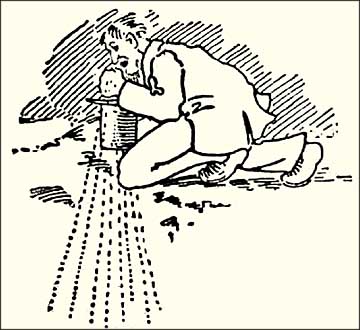
Mormonism is of more than a general interest to Syracuse for, while the fact is not generally known, the famous "seeing stone" by which Joseph Smith, the Mormon prophet, was enabled to "see things," was picked up in this city.

When the 19th century was new, Jack Belcher of Susquehanna county, used to come to Syracuse to buy salt. One day, while drawing salt on the Salina road, he picked up a peculiar brown and green stone, shaped like a goose egg. Belcher believed it was a seeing stone and took it home. There, according to a narrative of a neighbor published in the history of the county, the stone was a wonder. Belcher's boy covered the stone with a hat and saw a candle. Later, says the neighbor, the stone was used to locate lost children. A hatchet lost by the boy was located by the aid of the stone after being lost two years.

Joe Smith was in the county, about that time and conceived the idea of making a fortune out of the stone. He secured it and first started to dig for treasure. He failed because, as he said, "the rule of silence was broken and the enchantment removed."

Some time after this Smith moved to Ohio and a letter was written by Isaac Hale in response to inquiry as to Smith's character and history. The letter told about the "seeing stone" and how Smith ran away with the writer's daughter and married her. According to the letter Smith's occupation was pretending to see by means of a stone placed in his hat. In this way he pretended to discover minerals. His manners were careless and he was saucy and insolent to his father.

It was in 1826 that Smith married Hale's daughter and went to Palmyra, where he claimed he found the plates from which he wrote the Book of Mormon. Mr. Hale, in the letter, says that Smith brought a box which he said contained the plates. Hale was allowed to look at the plates. The plates were then hidden in the woods.

About this time Martin Harris appeared and wrote down the book interpreted by Smith. The manner which Smith read the plates was with the stone in his hat and the hat over his face. The plates were at the same time hidden in the woods.

The letter concludes as follows: "I conscientiously believe that the whole Book of Mormon (so-called) is a silly fabrication of falsehood and wickedness, got up for speculation, and with a design to dupe the credulous and unwary, and in order that its [fabricators] might live upon the spoils of those who swallowed its deception." The letter signed by Isaac Hale and sworn to. Where the stone is now is not known.

Alva Hale, son of the writer of letter, makes the statement published in the history that Smith told him that his gift in seeing with a stone was gift from God. Smith told him at another time that this peeping was d__d nonsense."

Another statement verified is to the effect that Smith said God had deceived [him] and that was the reason he would not show the plates.


Notes: forthcoming


THE  POST-STANDARD.

Vol. LXXV.                                 Syracuse, N.Y., Friday,  Feb. 13, 1903.                                 No. ?


New  Light  on  Book of Mormon.


To the Editor of the Post-Standard:

Inasmuch as the citizens of your community have recently been greatly interested in the "Mormon question" it seems to me that the following information will be received with a certain attention. The facts which have recently come into my possession should set at rest forever the claims and contentions on which the Mormons ground their faith.

Every religion must have a creed or book, a person or a dogma which is authoritative and secure from the attacks which a reasonable science and a modern knowledge are sure to make. Mormonism has no such authority.

"The Manuscript Found" from which the "Book of Mormon" was formulated has been very conclusively proved to be the work of Rev. Solomon Spaulding.

Mr. Spaulding was a graduate of Dartmouth College and a clergyman of some literary ability. At any rate, while living in Conneaut, Ohio, he became interested in certain earth mounds which were in close proximity to his home and caused an examination of them to be made. As a result of this investigation he wrote his manuscript, which was filled with ideas and figures quite unusual and out of proportion to the thought of the ordinary mortal.

The manuscript was taken at his death, with other personal effects, to Onondaga Valley (called "Hollow" at the time) to the residence of William H. Sabine. Mr. Sabine was a lawyer of distinction, and a personal friend of Judge Conkling of Utica and of other prominent men in this part of the State. The manuscript was kept in a trunk filled with other writings, letters, novels and the like.

Mrs. Anna T. Redfield, who in 1832 was a resident of Syracuse, remembered the manuscript distinctly when she was 84 years of age. She, and others, read the "Book of Mormon" and remarked upon the remarkable similarity which it bore to this writing of Mr. Spaulding.

The reason soon became apparent. Joseph Smith had been a teamster and out-of-door workman for Mr. Sabine after he had been released from the Onondaga County jail in 1817. An examination of the records will prove this assertion. Smith heard the tales reported concerning this remarkable manuscript and in all probability conceived his plan and purpose, which resulted in a book which is fallacious and deceptive in its origin, purpose and persuasion.

No wonder that Thurlow Weed wrote of him in 1882: "With my knowledge of Joseph Smith it has been for more than half a century the occasion of surprise and regret that such a vulgar impostor should have obtained a following which is even now drawing proselytes from Europe."

This new information may be explored in "New Light on Mormonism" by Mrs. Ellen E. Dickinson.   G. C. RICHMOND.
Syracuse, Feb. 12.


Notes: forthcoming


Geneva Daily Times.

Vol. ?                               Geneva, N. Y., Tuesday, April 5, 1903.                               No. ?


THE  EARLY  DAYS  OF
MORMONISM  IN  THIS  VICINITY.

______

The Hill at Palmyra Where the Mormon Bible
Was Found -- Early Days of the Saints --
The First Prophet.

______

Palmyra, N.Y., April 5. -- The testimony now being presented before the Senate committee appointed to investigate the eligibility of Apostle Reed Smoot, proving the continued prevalence of the practice of polygamy among the Mormons of Utah is bringing that sect into increased notoriety and their picturesque history is being dug up by lovers of the mysterious and bizarre.

The scene of the birth and early day of this religion, and the Mecca of devout Mormons, is this village and township of Palmyra, in Western New York, for here it was that Joseph Smith, jr., first prophet of the Latter Day Saints "lived and moved and had his being." Four miles south of the village, just over the county line, stands Mormon Hill or the "Hill Cumorah" of the Mormon Bible, on whose grassy slopes the prophet dug and found the golden plates engraved with characters which he read by Divine aid.

In Palmyra too the first version of the bible was printed. The old Washington hand press, No. 63, built by Robert Hoe & Co., is still on exhibition, the property of Fred W. Clemons, editor and proprietor of the Wayne Country Journal at Palmyra, N. Y., and is viewed with veneration by the faithful pilgrim, while the very man who set the type was living but a few years ago. "Major" Gilbert was a hale nonagenarian who celebrated each birthday by setting a stick of type to "keep his hand in," possibly with the hope of printing Bibles in the world to come. All honor to his memory.

That Joseph Smith has gone to a better land is not believed by those of the old inhabitants who knew him as a neighbor. They say he was idle and shiftless, a dreamer, a treasure seeker and addicted to chicken raising. The family came from Vermont in the early years of the last century and settled near Palmyra. They soon gained notoriety as diviners and fortune tellers. The mother is now conceded to have been the genius of the family. She had an acute mind but it was perverted by ignorance and superstition. She often gave out hints that one of her sons was to be a prophet.

The son Joseph began his prophetic career by finding an opaque stone shaped somewhat like a child's foot, which he hoarded, and in which he soon claimed to have found strange properties. He called it a "peek stone" and he declared that by putting it in his beaver hat and holding the latter close up to his face he could detect the whereabouts of underground springs, lost property and hidden treasure.

Smith in the early '20s paid several visits to settlements in the Alleghany mountains in Pennsylvania, where the settlers were more credulous than those in Palmyra. On a certain wilderness hill his peek stone discovered a ton of silver bars which had been buried by weary Spaniards as they trudged up the Susquehanna. As soon as Smith could collect enough followers the digging was begun and several excavations were made, one of which was fully thirty-five feet in diameter and as deep. The diggers had proceeded with great labor and were just ready to grasp the silver when Smith announced that it had suddenly moved three hundred feet to the northeast. Again the faithful set to work and again the silver flitted away. The third hole had been sunk about fifteen feet when the treasure slid over near the original hole. A black dog was then killed and its blood sprinkled on the ground, after which the treasure did not move far away, but frequent tunneling proved unavailing, and when Smith announced that one of their number would have to be sacrificed, the diggers at last rebelled and went on strike. This story has been verified by old residents of Susquehanna who were eye-witness.

Several years later when Smith had set up as a prophet he frequently visited that neighborhood. A number of witnesses in the vicinity of Nineveh remember that he set a day for that village to sink, but that he afterwards repented and withdrew his curse. He did, however, announce that on a certain evening he would walk on the water. The place of his selection was watched by boys until one of Smith's followers was seen to construct a bridge of planks just under the surface. Watching their opportunity, the boys removed some of the planks. Before Smith attempted to walk he exhorted his followers to have strong faith, and when the bridge suddenly gave way beneath him he paddled ashore and exclaimed, "Woe unto ye of little faith! Your faith would not hold me up!"

Coming back to the days of the treasure-seeking we find that from 1820 to 1827 Smith persevered in the practice, retaining his following with wonderful cunning, and gradually developing his pretensions, which culminated in the pretended discovery of the golden plates and the promulgation or the Book of Mormon.

Smith claimed that as early as 1823 the "Angel Moroni" had appeared to him and told him that he would find golden plates which he should be able to translate, but it was not until the night of September 22, 1826 [sic], that, according to the faithful, the golden plates were taken from the "Hill Cumorah." Smith, according to his own story, at once hid the plates in the woods, but was able to translate them at a distance by means of his "peek stone" and beaver hat. It is said that he dictated his translation to Oliver Cowdry, one of his three followers.

The funds for printing the book were provided by Martin Harris, a well-to-do farmer, who mortgaged his farm for $3000. The printing was done in the office of the Wayne Sentinel, E. B. Grandin proprietor, during the winter of 1829-30.

The "copy" was on ruled paper and the writing was so crowded together that the smallest monosyllables were often divided between two lines. The copy was in Cowdery's handwriting, and only enough for one day was brought in each morning by Hyrum Smith, the prophet's brother, who always called again at night to take it away. There were no marks of punctuation in the copy -- a sore trial to Pomeroy Tucker, the foreman and Gilbert in reading proof. At such times Cowdery had to be called in to assist, or the orthodox bible was referred to for enlightenment on some foggy passage.

The completion of the work was celebrated by Martin Harris, who invited the printers to his house. He introduced them to his wife, who bowed coldly and took no pains to welcome them. At length Harris asked for the cider pitcher and went to the spot indicated by his wife. Returning with it to his wife he showed her a large hole in the bottom. "Well" said Mrs. Harris, "It has as much bottom as your old bible has."

The narrative told in the Book at Mormon is as follows:

Some six hundred years prior to the advent of Christ a band of Israelites was inspired to seek the promised land, which proved to be Central America, where they greatly increased. A vicious and ambitious Jew named Laman was detected in a conspiracy, whereupon he and his adherents were driven forth and migrated northward. These were the progenitors of the American Indians. A portion of the tribe, however, became a "fair and delightsome" people, and withdrew from their savage fellows, who finally surrounded them at the scene of the discovery of the plates and slew them to the number of 200,000. Mormon and his son, Moroni alone escaping. This son, obeying his father's injunction, buried the tablets containing the sacred history of this wandering tribe. It being recorded that he who found them should become a prophet.

The accepted theory for the origin of this account is that it was written as a romance by one Solomon Spaulding, whose manuscript was rejected by a Pittsburg publisher and fell into the hands of Sidney Rigdon, who worked in the office at the time and later became acquainted with Smith, and after the alleged finding of the golden plates became a missionary in the promulgation of the faith. The doctrines enjoined in the faith were those which were being agitated in Western New York at the time. The doctrine of polygamy, however, was not incorporated in the faith until after Smith's death.

The physical appearance of Smith has been recorded. In height he was over six feet, of stout build but wiry; his hair and complexion were light; his eyes were blue and mild, and "he did not look as if he knew enough to fool people so," as one old lady expressed it. Another person who saw him in later years said: "General (?) Smith is in stature and proportion a very large man: and his figure would probably be called a fine one, although by no means distinguished for symmetry or grace. His arms and hands seemed never to have been developed by physical toil, and the latter are quite small for his proportions."

It seemed impossible to account for Smith's hold on his followers, ignorant and superstitious though they were, except by the theory that he possessed hypnotic power, which he doubtless inherited from his mother. His greatest triumph was embodied in the affidavit of the three witnesses, who testified as follows:

"Be it known unto all nations, kindreds, tongues, and unto whom this work shall come, that we, through the grace of God the Father and our Lord Jesus Christ, have seen the plates which contain this record, which is a record of the people of Nephi, and also of the Lamanites, their brethren, and also of the people of Jared, who came from the tower of which hath been spoken; and we also know that they have been translated by the gift and power of God, for His voice hath declared it unto us; wherefore we know of a surety, that the work is true. And we also testify that we have seen the engravings which are upon the plates; and they have been shown to us by the power of God, and not of man: And we declare with words of soberness that an angel or God came down from heaven, and he brought and laid before our eyes, that we beheld and saw the plates, and the engravings thereon; and we know that it is by the grace of God the Father, and our Lord Jesus Christ, that we beheld and bear record that these things are true; and it is marvelous in our eyes. Nevertheless, the voice of the Lord commanded us that we should bear record of it; wherefore, to be obedient unto the commandments of God, we bear testimony of these things. And we know that if we are faithful in Christ, we shall rid our garments of the blood of all men, and be found spotless before the judgment seat of Christ, and shall dwell with him eternally in the heavens. And the honor be to the Father, and to the Son, and to the Holy Ghost, which is one God. Amen! "OLIVER COWDERY. "DAVID WHITMER, "MARTIN HARRIS."

It has been claimed that these three witnesses sooner or later all left the faith, but it is only fair to say that this is not true. In 1887 David Whitmer, one of the witnesses, published a pamphlet in defense of Mormonism. He was then living in Richmond, Missouri, with that branch of the Mormons who did not accept Brigham Young's revelation enjoining the practice of polygamy.

It is believed by many that these witnesses were sincere and that their vision was a demonstration of Smith's hypnotic power. The scene has been described by the Rev. M. T. Lamb, formerly a Christian missionary among the Mormons.

"The scene is laid in the woods whither Harris, Cowdery and Whitmer have resorted to be convinced by Joseph that his book is of God. The witnesses are seated upon a log when the prophet appears. He prays and labors with them, but the heavens give no sign. There is a disturbing force present, and the prophet locates it in Harris and asks him to withdraw. Then he kneels down by the other two, and at last the vision is vouchsafed. A shining form bearing the plates appears and the men fall prostrate. Harris is then recalled, and alone Smith wrestles with his stubborn will. At last to him also appears the angel, and the testimony of the church is complete! The prophet has played a great game and he has won. We may leave him to enjoy his victory as heartily as any juggler on the banks of the Euphrates."

Before tracing farther the adventures of Smith and his followers after the publication of the Book of Mormon, we will describe some picturesque features of their doings.

The place where this splendid fraud was planned was an artificial cave which the conspirators had dug in a sidehill to the south of the highway running from the old Palmyra plank road to the residence of Mark Jefferson. The entrance to this cave was guarded by an iron-plated door, and the cave itself was fully sixty feet in length and ten feet high. At the end was a broad chamber furnished with a rude table and stools. Here it was that the treasure-seekers were wont to meet and consult the "peek stone," and in the later days the first converts to the new faith made it their rendezvous before they began to hold public meetings for the purpose of making converts. It is stated that Darius Pierce, at the head of a party of neighbors surprised one of the nocturnal assemblies and that a lively time ensued.

Another meeting place was the log cabin in the woods where dwelt the Smith family. Sometimes these meetings were interrupted by thunderings overhead, as if the Lord were answering their prayers from heaven. In later years when the building was torn down several cannon balls were found concealed under a false roof over the rafters. They could be moved by a string so as to give forth rolling sound as of thunder. This is the method employed in modern theaters for the same purpose.

As soon as the printing of the bible had been completed, Smith and his followers, Harris, Cowdery and Whitmer began to travel about the country seeking converts and selling copies of the book. The canny farmers of that region, however, were as a rule able to discern Smith's true character, and that prophet was without honor in his country. He often attempted to prove his semi-divine nature by various devices. He twice attempted to walk upon the water but in each case the planking gave way and he was ingloriously ducked.

The writer's grandfather, a Walworth farmer, was approached by Smith one day while he was at work beside the fire in a copper shop which he maintained on his farm. He became impatient of Smith's extravagant claims and at length offered to put Smith in the hot coals as a test; whereupon the prophet desisted and withdrew, never to return.

In the early days of the church "speaking with tongues" was much in vogue, and the tongues were alleged to be those of vanished Indian races. The mysterious gabble which was heard at the prayer meetings infected the imaginations of the small boys who heard it, and they would imitate fluently upon the streets. One of these boys, so it is related, was invited by Sidney Rigdon to speak at prayer meeting and the lad carried away by the excitement of the occasion, fairly outdid himself in vehement nonsense. Then Rigdon arose and gravely announced that a revelation from God had been transmitted through the boy. This he proceeded to translate amid great excitement. Finally he exclaimed "The boy has gone beyond me. I can't find words to express the wonder of it all." And thus he finished.

The first "Church of Christ of the Latter Day Saints" was organized in Fayette, Seneca County; on April 6, 1830, but converts were not as plenty as the ambitious leaders desired, so Smith soon had a "revelation" commanding them to go to Kirtland. Ohio. This revelation was the first in a long series reaching to the present day. They are made generally by the leader or "prophet" as he is styled. These revelations are embodied in the "Book of Doctrine and Covenants" which is the real bible of the Mormons, containing as it does the doctrines which they profess.

At this time [monogamy] was as much a cardinal doctrine with the Mormons as in churches generally. The following was among the specific directions given to the church by revelation in 1831: "Thou shalt love thy wife with all thy heart, and shalt cleave unto her and none else."

This was moral and unequivocal and creditable to Smith, and it was not until several years after his death that polygamy was adopted, at the suggestion of Brigham Young who slandered the dead by declaring that Smith had before his death received revelation countenancing polygamy.

The early part of the year 1831 found the Mormons settled in Kirtland, whither Rigdon had preceded them and where the clever swindle was resorted to of having him sensationally converted to the supposedly strange religion. Smith and Rigdon started a wild-cat bank and to support their credit, they showed visitors several copper boilers, apparently full of gold coin, but after two years of prosperity they were compelled to flee from a sheriff's warrant. The rest of the band soon followed them to Independence, Missouri, whence they were obliged to flee in 1840 to Illinois. There, on the banks of the Mississippi they founded the town Nauvoo, which grew to be a large city; and there on June 27, 1844, Smith and his brother Hyrum were shot while attempting to escape from a mob.

Thus died one of the false prophets of whom this country has produced so many. A Frenchman who was studying English history was led to remark: "The Anglo-Saxons have invented a hundred religions, but not one soup." If America is the home of religions then New York State is their birthplace, notably that part of the State west of the Oneida lake. The counties of Onondaga, Seneca, Cayuga, Wayne and Monroe have been called the Land of Faiths. Spirituallsm, Mormonism, a half dozen sects of Quakers, and the Cardiff Giant, the greatest frauds of the nineteenth century, were products of Western New York. The home of the Fox sisters, where spirit rappings were first heard, is but a few miles east of Palmyra.

To complete the fame of this image we must mention that it was the birthplace of the late Admiral William T. Sampson, and it is an interesting fact that at the time of his death he was the owner, and his brother the occupant of the famous "Mormon Farm." The hill is now the property of the Sampson estate.

From this place, at different periods, went these two men, Sampson and Smith, One was quiet, but energetic and industrious; the other was ostentatious, but incurably lazy and idle. One went eastward to build up his country's navy and to uphold her might upon the sea; the other marched westward to build up his fortunr, and there in the farthest recesses of the wilderness to escape his country's laws. One died from the poison darts of envy and criticism; the other from the bullets of a mob. Both were great, but only one was good.
[W. C.]


Note 1: This article was an illustrated wire service feature item and thus appeared in several American newspapers. Other than its mentions of the hot coals, canon balls and Joseph Smith's cave, the article supplies little unique information relating to Mormon origins. The incident of Sidney Rigdon having been present at a Palmyra "prayer meeting," probably have occurred in December of 1830 (if it happned at all), because Rigdon is not known to have otherwise attended meetings in that place. There is an obscure report that Rigdon and Smith visited briefly with Martin Harris at Palmyra in 1837, but no firm evidence for Rigdon having attended religious meetings at that time.

Note 2: For an earlier, fanciful description of Smith's cave, see the Palmyra Journal of July 27, 1898.


The Daily Palladium.

Vol. XL.                               Oswego, N. Y., Wed., Sept. 23, 1903.                               No. 213.


THINGS  TO  THINK  ABOUT.
______

Finding of the Mormon Bible Eighty Years Ago.
______

Joseph Smith is Long Since Dead, But Polygamy
Thrives in the Philippines...
______

Eighty years ago -- September 22d, 1823 -- was discovered the Mormon Bible on which the Church of Latter Day Saints base their belief. Within fifty miles of Oswego --as the crow flies -- Joseph Smith claimed that the tables were delivered to him by an angel. Smith was born in Vermont in 1805, and at the age of fifteen moved with his father's family to the old homestead in what is now Wayne county. From all accounts he wasn't much of a fellow, illiterate and adverse to work. He claimed that on the night of September 21st, 1823, the angel Moroni appeared to him three times, informing him that God had a work for him to perform and that a record, written on gold plates, giving an account of the ancient inhabitants of America and the dealings of God with them, was deposited on a particular hill in the neighborhood. With the records were two transparent stones, in silver bows, called the Urim and Thummim. Looking through these silver bowed stones, the plates became intelligible. September 22d, 1823, the angel of the Lord placed in Smith's hands the plates, with the Urim and Thummim. They were thin plates, a little thinner than common tin, 7x8 inches in size and about six inches in thickness, bound by three rings running through the whole. From these plates Smith read off the book of Mormon, or Golden Bible, to Oliver Cowdery. It was printed in 1830. Appended to it was a statement signed by Cowdery, David Whitmer and Martin Harris, who testified that they knew of their own knowledge that the book was inspired. Afterwards they quarrelled with Smith and repudiated their testimony. Smith and his followers went to Missouri, were driven out of that State and went to Illinois, where was built up we city of Nauvoo, which reached a population of several thousand people. In 1832, Brigham Young, a painter and, glazier, from Vermont, dropped into the camp and after Smith was killed he took command and the Mormons went to Utah. It is alleged that Smith organized within the ranks of the Mormons the Danites. It until 1838 that Smith introduced the practice of polygamy. It is now stamped out by law, excepting in our new possessions in the far East, where General Sumner says it is practiced by the Mormons. Smith and Young both became rich out of their Mormon connection. John Alexander Dowie is not the only one who knew how to play the game.


Notes: forthcoming


Watertown  Daily  Times.

Vol. XLIII.                              Watertown, N. Y., Sat., Nov. 28, 1903.                             No. 282.


A  Visit  to  Mt.  Cumorah.
______

The Birthplace of Mormonism and the
Traditions Which Surround it.
______

Unsavory Reputation of Joseph Smith in Palmyra, N.Y.
Where the New Doctrine Was Established -- Copy of First
Mormon Bible in Possession of Hon. Pliny T. Sexton.
______

(Written for the Times by George A. Fuller.


Few realize what the Mormon church is doing to secure a foothold in the eastern states and it may surprise some people to know that there are Mormon churches in several towns in New York state, where services are conducted regularly by the Mormon elders. One of these churches is located at Niagara Falls and another at Penn Yan, while an energetic proselyting is being carried on in Syracuse, Utica, Albany, Rochester and Buffalo, much to the disgust of the W.C.T.U. which has begun an active crusade against these latter day saints.

The writer recently paid a visit to Palmyra, the old home of Joseph Smith, and through the courtesy of P. S. Aldrich, was given an opportunity of visiting Mount Cumorah, where the olden plates were said to have been found by Smith, and many other interesting places associated with the early history of Mormonism, including Smith's old home.

Mount Cumorah, or "Mormon Hill" as it is more commonly called, is located about four miles from Palmyra, on a farm now owned by Hon. Pliny T. Sexton, one of the regents of the university of the state. As we approached the hill, we noticed a large bare spot near the summit and asked our escort if that was the spot where the golden plates were dug up. He replied that it was so reported, but added that his theory was that the hill was so poisoned by Mormonism that the grass never grew after Joe Smith walked on it.

Hon. Pliny T, Sexton, one of the most genial of men and a lifelong resident of Palmyra has many interesting reminiscences of early Mormon history and has in his possession the original copy of the Mormon Bible.

Prior to 1827 Joseph Smith the founder of Mormonism, was looked upon by his neighbors as an ignorant, shiftless, dishonest, intemperate mortal, who regarded the world as owing him a living, and who was not at all particular how he got it, so long as it was not by hard work. Possessed of a certain amount of natural cunning, it was the sole aim of Smith to live by his wits. In 1823, while digging a well on a farm near Palmyra, a curious stone was dug up, having the form of a little child's foot. The stone was regarded as a pretty object of curiosity by its finders, but when Smith saw it he claimed to be able, by looking through it, to see many strange things, and could forecast the future. This stone was given to Smith and is often mentioned in Mormon writings as the "peekstone."

There can be little doubt that Smith found enough credulous people to believe his stories for it was about this time that he conceived the idea of founding a new religion. In clearly understanding Mormon history, one must remember that Joseph Smith was both intemperate and illiterate, and utterly incapable of writing the book which he calls the Mormon Bible. In proof of this the story is told of him that he was once returning home at night in an oxcart, so much under the influence of liquor that he lay in the bottom of the cart asleep. Some boys, meeting the outfit, turned the oxen into the fence corner and unyoked them, and turned them loose. Sometime afterwards the besotted Smith awoke from his drunken slumber and sat up remarking, "Am I Joe Smith or am I not? If I am Joe Smith then I have lost a yoke of oxen, and if I am not Joe Smith then I have found a cart."

By the aid of the "peekstone" before mentioned, Smith claimed to be able to locate buried treasures, and the manner in which he used this stone to keep the Smith family in meat is worthy of a better cause. The credulous believers in Smith's supernatural powers would assemble at midnight in some lonely spot, a favorite haunt being a cave in the side of a hill near Smith's house. [One] of the seekers after treasure would be instructed by Smith to bring a sheep to the rendezvous, which was always done. Absolute silence having been enjoined on all spectators, Smith would cut the sheep's throat and allow it to wander in a circle, scattering the blood until it dropped. Then in the darkness the sheep would be quietly spirited away by some of the Smith family, and for years it was a standing joke in Palmyra that the dooryard fence of the Smith place was always adorned with a fresh sheep pelt. The spectators at these nocturnal gatherings were always carefully chosen from the credulous believers in the supernatural, and were pledged to silence during the incantations. After waiting some length of time some one would get tired and speak, when Smith would announce that he had the treasure almost located by means of the "peek-stone," but that the spell was now broken and they would be compelled to [------] [--------].

[------- ----- ---] Tower of Babel and who finally came to the western continent. The story was written but never published, and in some way fell into the hands of Smith, who conceived the idea of working on the credulity of the public to make them believe the record had been buried and through a direct revelation from the Almighty to Smith to have been discovered. So well did he play his part in the scheme that some of his neighbors came to believe in the truth of his statements, and one Martin Harris mortgaged his farm to furnish Smith with the money to print the first Mormon Bible.

In 1830 there was a printer in Palmyra by the name of John Gilbert, who was hired by Smith to do the printing. Smith claimed that the gold plates could only be read by means of two stones discovered with them and so he would come to the printing office every morning with three or four sheets of paper so poorly written that it could hardly be read and totally devoid of punctuation marks. Then, behind closed and locked doors, the sheets would be corrected and set up and printed on an old-fashioned hand press. For every sheet printed for Smith, John Gilbert secretly kept one for himself, and this book he kept as long as he lived. Shortly before his death he presented it to his lifelong friend and neighbor, Pliny T. Sexton, who keeps it in a safe in his office, where it was shown to the writer.

A few years ago Kate Field visited Utah and examined what purported to be the original manuscript of the Mormon Bible. She later visited Palmyra to consult with Maj. Gilbert to ascertain if he could furnish any evidence pertaining to the authorship of the manuscript, and he said he could identify it anywhere, since much of it was so poorly written that he had to rewrite it and punctuate the whole manuscript.

The farm and home of Joseph Smith at Palmyra are now owned by William Chapman, who tells many interesting reminiscences of the visits paid by Mormon pilgrims to this Mecca. He sleeps in the bedroom formerly occupied by Smith, and says it is not very pleasant to have visitors swarm over your premises, and especially to photograph your bedroom early in the morning before the bed is made.

We saw no fresh sheep pelts on the fence, but we did see a well kept farm with a beautiful field of alfalfa near the house, and orchards loaded with red and golden apples, but nothing to remind us of the originator of the most gigantic humbug ever perpetrated.


Notes: forthcoming


Utica Herald-Dispatch AND DAILY GAZETTE.

Vol. LVI.                              Utica, N. Y., Sat., Nov. 28, 1903.                             No. 13.


CRANK  DEMING'S  VISIT  TO  UTICA.
______

WAS HERE LAST SUMMER SELLING HIS CHARCOAL.
______

USED  DR. STEPEHENS'  NAME
______

Tried to Get Him to Recommend His Remedy for Use at the
Masonic Home -- Cured a Headache for Sheriff Brownell.

Dr. E. J. Stephens was much surprised this morning when he found that he had been given as a reference by Arthur B. Deming, the crank who succeeded in getting by the guard of the President at New York yesterday and handing him a letter. This letter was as follows:

"President Roosevelt:
"It is well to pay homage to the dead, but it is of greater Importance to preserve life. Please read carefully the article on the medical value of charcoal which is inclosed. Doctor Stephens, the chief physician at the Masonic House, Utica, thanked me for loaning him a copy. I know it will absorb all impurities in the blood, tumors and cancers, and prolong Emperor _____."

Deming came to Utica last summer and went about selling charcoal put up in bottles. He called on Doctor Stephens among others and exhibited a card upon which was written the name of Sheriff Brownell and a statement that he, Deming, had cured a case of sick headache for the sheriff in 15 minutes.

"I saw right away that he was crank," said Doctor Stephens this morning, "but he seemed to be all right on everything except charcoal. He told me about curing Mr. Brownell's headache and wanted me to chew some of his remedy.

"'I understand you are a physician at the Masonic Home,' he said.

"I replied that I acted in that capacity some times.

"'Well,' he said, 'I would like to have you use my remedy there. It would save a lot of them.'

"I told him that all supplies were purchased from local merchants and got rid of him by telling him to go and see them. He was a smooth talker and was simply off on charcoal."

Deming visited various places in the city, but nowhere did he seem to be anything more than a harmless crank.

The police of New York never made such elaborate arrangements for the protection of the President as they did yesterday when he attended the funeral of a friend there. Five hundred and sixty men were detailed as a special guard and orders given to close every avenue of entrance to the church where the funeral was held to all unauthorized persons. At about 10:15 o'clock a benevolent looking, white whiskered old man with a small black handbag tried te get in by the front door. He made so much fuss that the sexton of the church opened the door and came out.

"I have a message to deliver to President Roosevelt," said the stranger nodding as though he knew the sexton.

"If you have a message for the President," said the sexton, "take it to the side door."

The old man hurried around to the side door. The Rev. H. F. Taylor had been at this door admitting persons who had reason to be in the church. With him was a maidservant. The Rev. Mr. Taylor left the girl in charge just before the end of the service. He told her not to let anybody else in.

Four policemen were in the rectory hall to keep out unauthorized persons from that direction. But when the old man with the handbag presented himself to the girl at the door and said he had been sent there by the sexton, Mr. ClarK, with a message for the President, he was admitted at once.

The man said he thought he had better reduce the message to writing to save the President's time, and asked for writing paper. The girl showed him into the reception room and gave him some of the rectory stationery, with which he busied himself. He asked her to let him know when the President was coming out of the church. She did.

The President came out accompanied by Police Commissioner Greene, Secretary Loeb and Inspector Brooks. Mrs. Roosevelt and Mrs. Cowles, with Captain Cowles were close behind. As the President was passing the reception room the stranger with the message darted out and thrust an envelope containing the letter printed above into the President's hand. The President took it instinctively and looked at it.

It was addressed to "The Hon. T. Roosevelt. President," and across its face was scrawled something to the effect that within was "a cure for Emperor William's throat."

The President handed the envelope to Secretary Loeb and ignored the white whiskered old man's efforts to get into conversation with him. Mr. Loeb turned the envelope over to inspector Brooks, who had already grabbed the old stranger by the shoulder. By this time the whole party was on the rectory steps. Inspector Brooks turned his prisoner over to another officer, who took him to court.

Later Deming was sent to Bellevue Hospital. There he gave his residence as Jersey City. Some time ago Deming attracted considerable attention as the steamship Cedric was leaving the White Star pier on the trip on which she carried J. Pierpont Morgan and Andrew Carnegie as passengers, by making a speech about them, taking as his text "Go to ye rich men," denouncing millionaires and calling on them to repent and give up their riches. He was not arrested then.


Notes: forthcoming


THE  SYRACUSE  JOURNAL.

Vol. LIX.                             Syracuse, N. Y., Wed, Dec. 2, 1903.                           No. 287.


HAD  TO  DEMAND  ARREST  OF  CRANK.
______

New York Police on Trial for Permitting
Deming to Reach President.
______

MRS. ROOSEVELT HAD TO BEG INSPECTOR
TO ACT -- DEMING IS RELEASED.
______

NEW YORK. Dec. 2. -- Arthur B. Deming, the charcoal cure crank, who managed to get past President Roosevelt's bodyguard of police on the occasion of James K. Gracie's funeral, and who handed to the President a long manuscript, telling of the wonderful cures his medicated charcoal could affect, was released yesterday in the custody of his friends by Supreme Court Justice Fitzgerald on a bail bond of $500 being furnished. Deming was brought to court on a writ of habeas corpus and his counsel, W. H. Wingate, told Justice Fitzgerald that Deming was not dangerous. He might be enthusiastic on the subject of charcoal, but he was harmless otherwise and his friends were willing to take him over to Jersey City and care for him.

Roosevelt Was Displeased.

Police Captain Cottrell and several detectives and patrolmen were put on trial yesterday for neglect of duty in failing to catch Deming before he got to the President.

[graphic - not copied]

ARTHUR B. DEMING, THE CRANK.

The most interesting facts brought out at the hearing were that the President was displeased at the police in allowing Deming to reach him and that it was Mrs. Roosevelt who pointed out the crank to the police and asked that he be arrested.

It was Inspector Brooks and Munro Ferguson who brought out these facts. Mr. Ferguson is a friend of the President and had charge of part of the funeral arrangements.

Entrances Were Pointed Out.

Mr. Ferguson told of his having pointed out the many entrances to the church to Inspector Brooks and Captain Cottrell.

"I saw Deming hand a piece of paper to the President," he said, "and at first thought he was an acquaintance. Then I suspected that something was wrong and I pushed the President along and requested him to get into his carriage.

"As he reached the carriage, the President turned to Commissioner Greene and said, 'How did that man get this to me?' and handed over the letter. The President then got into his carriage.

Mrs. Roosevelt Caused Arrest.

"In the meantime Mrs. Roosevelt was standing on the sidewalk, waiting for the carriage: She seemed nervous and worried. Then this fellow Deming came out of the door and Mrs. Roosevelt, turning to Inspector Brooks, said: "That is the man. Please arrest him. Take him away.'"


Notes: forthcoming


Democrat  [     ]  Chronicle.

Vol. LXXII.                             Rochester, N. Y., Tues., Mar. 15, 1904.                             No. ?


CLOSE  TO  THE  CENTURY  MARK.
______

DR. JOHN STAFFORD  IS  NINETY-NINE  TO-DAY.
______

WILL  CELEBRATE  BIRTHDAY.
______

Doctor is Well Versed on Mormonism, Having Been Associated with
Joseph Smith in His Early Days on Family Farm in Manchester.

______

Dr. John Stafford, of No. 27 Byron street, will celebrate to-day his ninety-ninth birthday, surrounded by relatives and intimate friends, at his home. Though nearly 100 years old, Dr. Stafford is in good health and has been looking forward with a good deal of pleasure to spring, that he may plant his garden. Dr. Stafford has a plot of about a quarter of an acre that he has worked for a number of years. Four years ago he planted peas in the little plot two days before his birthday, but, in the words of one of his family, "he didn't attempt it this year."

Dr. John Stafford was born on Stafford street, in the town of Manchester, Ontario county, March 15, 1805. He is the only surviving member of a family of seven children, five of whom were younger than himself. Dr. Stafford's father served in the Revolutionary war. He had many and varied experiences. He was captured by the French and Spanish in turn and forced to fight under the flag of each nation. He was taken to Cuba and there lodged in a dungeon, where he remained for many months. He escaped and boarded a vessel that landed him at Baltimore without coat or hat, just as the bells of the city were tolling for the death of Washington. One of the greatest pleasures of the doctor to-day is derived from relating incidents in the life and experiences of his father.

Dr. Stafford, after reaching manhood, decided to acquire an education, and with that end in view he entered the Palmyra Academy. He walked six miles each day over the rough country roads to school, the ox team being too slow for him. Later he attended Hobart College, in Geneva, and completed a medical course in the office of Dr. Samuel McIntyre, of Palmyra. He received his diploma from the State Censor, a high honor, being one of two out of live contestants of his class to pass the rigid examination. While in the office of Samuel McIntyre he taught Colonel McIntyre, the son of Dr. McIntyre, of Palmyra, his A. B. C.'s. The time he spent with the young man is among the pleasantest memories be holds to-day.

Dr. Stafford is an authority on Mormonism. Joseph Smith, the founder of Mormonism, worked on the Stafford farm, and young Stafford was thrown in contact with him. Dr. Stafford was present at the first Mormon baptism. In 1824, when John Quincy Adams was a candidate for the presidency, the polls for the town of Manchester were in a cider house in the rear of the King residence on the Clifton road, midway between Shortsville and Clifton Springs. Dr. Stafford then a robust youth of nineteen, broad and hearty and with a beard, went to the polls with some older friends to see the fun. In those days a hat was passed around for the ballots. As the bearer of the hat passed in frout of young Stafford, his friends urged him to vote. He looked old enough. Acting on their suggestion, Stafford cast his first vote, which no one challenged, for John Quincy Adams.

From the foundation of the Republican party to the present day Dr. Stafford, has always been a staunch follower of its principles. He is one of the few living men who worked on the Erie canal when it was put through ths part of the country. While he stoops slightly, Dr. Stafford is energetic and is able to get about with amazing agility.

The story of Dr. Stafford's life, especially that part devoted to the practice of medicine, would fill a book. He was seldom in the house for any length of time. Houses were few and far apart and he made long trips from patient to patient. He had several smallpox patients. He had different suits hung up in the woods near each patient's home and would change his clothes in zero weather, stripping to the skin, before going into the house. Upon coming out he made another change before continuing his journey.


Note 1: Dr. John Stafford (1805-1905) was the son of William and Mary Cook Stafford of Farmington (Manchester), Ontario Co., NY. William Stafford (1776-1863) was the brother of Jonathan, Joshua, Jr., Abraham, John, Thomas and David Stafford, all sons of Joshua Stafford, Sr. (1749-1809) of Tiverton, Newport Co., Rhode Island. Joshua was one of the first settlers of Farmington (later Manchester). Dr. John Stafford should not be confused with his "Uncle John" Stafford (1779-1849), who was reported in 1885 as having once been a money-digger, along with Joshua, Jr., on the Joshua Stafford, Sr. farm (located in Manchester a little south of the Joseph Smith, Sr. farm) by Cornelius R. Stafford (1813-c. 1890).

Note 2: Dr. John Stafford provided a statement of his recollections of Joseph Smith, Jr., etc., (published in the RLDS Saint's Herald of June 1, 1881) in which he said: "My father, William Stafford, was never connected with them [the Joseph Smith, Sr. family] in any way. The Smiths, with others, were digging for money before Joe got the plates. My father had a stone, which some thought they could look through; and old Mrs. Smith came there after it one day, but never got it. Saw them digging one time for money; (this was three or four years before the Book of Mormon was found), the Smiths and others." Although his son John avowed no connection between William Stafford and the Smiths, William provided D. P. Hurlbut with a statement in 1833 in which he admitted "Joseph Smith, Sen., came to me one night, and told me, that Joseph Jr. had been looking in his glass, and had seen, not many rods from his house, two or three kegs of gold and silver, some feet under the surface of the earth: and that none others but the elder Joseph and myself could get them. I accordingly consented to go, and early in the evening repaired to the place of deposit." See also Dan Vogel's EMD 2 pp. 59-63 and John L. Brooke's The Refiner's Fire, pp. 151-154, 50-53, 364 n. 14-15.

Note 3: A shorter version of this article was previously published in the Syracuse Journal of Nov. 13, 1903. For more on Dr. Stafford's recollections of Joseph Smith, etc., see the March 16th issue of the Democrat-Chronicle..


Democrat  [     ]  Chronicle.

Vol. LXXII.                             Rochester, N. Y., Wed., Mar. 16, 1904.                             No. ?


KNEW  FOUNDER  OF  MORMONISM.
______

DR. JOHN STAFFORD  TALKS  OF  JOSEPH SMITH.
______

SAW  THE  FIRST  BAPTISM.
______

Aged Doctor Says Smith's Mother Had a Good Deal to Do
With the Book of Mormon -- Joseph Looked in a Hat for Revelations.
______

All yesterday friends of Dr. John Stafford were calling at his home, No. 27 Byron street, to congratulate him upon reaching his ninety-ninth birthday. The aged physician had recently been suffering from the grip, but yesterday found him in good condition. For years his family has held a reunion on his birthday.

Yesterday the family party included children and grandchildren, as fellows: Mrs. Mary R. Brown, her son, C. M. Brown, and daughter, Mrs. D. A. Eton, all of Shortsville, and Miss Jane L. Stafford and Mrs. Frank Fritz, who reside in Rochester. The doctor's son, William J. Stafford, of Albany, was expected to arrive on a late train, Mrs. E. S. Barr, of Carthage, N. Y., a daughter, was unable to be present. The man almost a century old was the recipient of many gifts. Though during the cold weather he keeps indoors. Dr. Stafford is in the open air almost all day long in summer. His family sees no reason why he should not live to be more than a hundred years old.

In 1800, when the town of Manchester stood in a wilderness. Dr. Stafford's father, William Stafford, settled there in the street which now bears his name. He had been a soldier in the Revolution. John, now the aged physician, was for many years a practitioner in the town of his birth. During school days and early manhood he was well acquainted with Joseph Smith, founder of Mormonism. Of Smith the doctor has some amusing recollections.

"I suppose I knew him as well as any one," he said yesterday, when questioned regarding his acquaintance with the Mormon leader. "I went to school with him, He was a strong, healthy boy, but was not considered remarkably bright. The people around town always thought his mother had more to do with writing the Book of Mormon than Joseph did. Even after the Smith family moved to Palmyra they said that they believed rich treasure was buried in that section. The mother of the family said that her family was going to get rich. A son, Alvin, went out West in search of wealth, but was unsuccessful and in a short time returned.

"It was soon after this that they began to write the book. They lived on what is now the Chapman farm. A man named Oliver Cowdry wrote the book. It was our belief that the old lady did a good deal of the dictating. It was said that Joseph would put his face into a hat and while thus gazing into darkness, would experience the revelations that enabled him to compose the Book of Mormon. When they had completed the work they tried to sell copies of the first sheets to people in the town, but they did not sell. People around there had no confidence in Mormonism.

"The Smiths heard that there were riches on the banks of the Delaware river, brought there by pirates. In search of which Joseph went into Pennsylvania. While there he married Miss Emma Hale. She returned with him to the family home. I do not think she accepted Mormonism. Whenever the people of the town had corn huskings or anything of that sort they were sure to invite the Smiths. They were lively and they always had their share of whisky.

"Close by the Smith house there ran a brook. Mormonism had a few followers in the country roundabout, and they were baptized in this brook. First came old 'Granny' Smith. Joseph claimed to have received revelations fitting him to perform baptism. I can remember to-day a part of the service he used. It was: 'Having authority given me by Jesus Christ I baptise thee, Lacy Smith, in the name of [the] Father, and of the Son, and of the Holy Ghost.' Brigham Young was one of his converts. He found him in Canandaigua. Joseph Smith was said to have wanted to marry for his second wife the daughter of Sidney Rigdon. Rigdon was interested in Mormonism for a time, but he opposed the marriage of his daughter to Smith. Joseph did not get Rigdon's daughter. Later Rigdon left Mormonism.

"I do not remember of any of the Smith family being baptised, excepting the mother. They were a curious family and superstitious in a great many ways."


Note 1: For more on Dr. John Stafford (1805-1905) see the notes for this newspaper's issue of March 15th.

Note 2: Dr. Stafford says: "The people around town [Manchester] always thought his mother [Lucy Mack Smith] had more to do with writing the Book of Mormon than Joseph did." Unfortunately Stafford does not state when this opinion prevailed. Mrs. Smith wrote a biography of her son, and thus was a known writer. If the local opinion of her connections to the Book of Mormon pre-dated her own writing career, then it must have been based more upon her perceived ability to write a book of latter day revelation, than it was upon any particular piece of literary composition that her neighbors were aware of. See Orsamus Turner's 1851 article for a similar recollection of Mrs. Smith's role in incipient Mormonism. While Stafford says "It was our belief that the old lady did a good deal of the dictating;" Turner amplifies the assertion, by saying "the book itself is without doubt a production of the Smith family, aided by Oliver Cowdery... an intimate of the Smith family." In a slightly re-written reprint of the same history, Turner adds: "The mantle of the Prophet which Mrs. and Mr. Joseph Smith and one Oliver Cowdery, had wove of themselves -- every thread of it -- fell upon their next eldest son, Joseph Smith, Jr."

Note 3: Dr. Stafford recollects: "A son, Alvin, went out West in search of wealth, but was unsuccessful and in a short time returned." Alvin arrived in the Palmyra area near the beginning of 1817 and died in Manchester on Nov. 19, 1823, at age of 25. His whereabouts are unaccounted for between May, 1818 and April, 1820 -- so perhaps his travels "out west" occurred during that period. Although there are numerous possibilities as to the destination of Alvin's reported journey, one choice then open to him would have been to join the annual migration of Ontario county families to northeastern Ohio. Before 1830 a significant number of these Ontario Co. pioneers had settled on newly cleared farms in Auburn twp., Geauga Co., Ohio, including George Antisdale, Roger Antisdale and Isaac Butts, who settled there in 1817-18. The Antisdales had occupied on the next farm west of the Joseph Smith, Sr. family, in northeastern corner of Farmington township, and some members of the family continued to reside there until late in the 19th century.

Note 4: Another possible reason for Alvin's traveling away from home would have been to secure paid employment as a treasure-seer. While such work did not pay particularly well, it offered the seer the promise of a share in any rewards resulting from the "search of wealth." Despite some allegations of his being viewed as the Smith family prophet, there is no firm evidence that Alvin worked as a seer. Joseph, on the other hand, did follow that occupation. See D. Michael Quinn's Early Mormonism and the Magic World View page 52, where he says: "the 1820 census supports the claims of [John B.] Buck, [Russell C.] Doud, and [William L.] Hine that by 1821 Joseph Smith was working as a treasure-seer during the summers in places distant from his home." Mrs. Sarah Fowler Anderick, speaking of this approximate timeframe, also says of Joseph Smith, that "He was from home much summers." For more on Joseph Smith's "westward wanderings," see this list.


Geneva Daily Times.

Vol. ?                               Geneva, N. Y., Wednesday, March 16, 1904.                               No. ?


GRAND  OLD  AGE  OF  DR. STAFFORD.
______

FORMER  RESIDENT  OF  SHORTSVILLE  99  YEARS  OLD.
______

Cast His First Vote for John Quincy Adams.
Other Notes and Personal Items.

______

Shortsville, March 16. -- Many old acquaintances throughout this section will be interested to learn that Dr. John Stafford of Rochester, formerly of Manchester, celebrated his ninety-ninth birthday yesterday, March 15, 1805. Dr. Stafford was born on Stafford street, in Manchester. He was one of a family of seven, five being younger than himself, and is now the only living representative. His boyhood was passed in the same neighborhood with Joseph Smith of Mormon fame, and he witnessed the first Mormon baptism. On reaching manhood he concluded to acquire a more thorough education and entered the Palmyra academy. Later he took a course in Hobart college, Geneva, and finally completed Hs medical studies in the office of Dr. McIntyre of Palmyra. He then located in Manchester village, where he practised medicine for many years. In 1845 he was united in marriage with Miss Nancy Hurlburt of that village, who is also living. In 1824, when John Quincy Adams was a candidate for the presidency, the polls for the town of Manchester were located in a cider house at the rear of the King house on the Clifton road, midway between Shortsville and Clifton Springs, and Dr. Stafford, then a strapping youth of nineteen, broad and hearty with a stubby beard, went to the polls with some older friends to see the fun. In those days a hat was passed for the ballots, and as the bearer paused in front of the youth, his friends urged him to vote, too, saying he looked old enough. Acting on their suggestion, he cast his first vote for John Quincy Adams.

Although bowed and bent with years, Dr. Stafford is still an energetic, well-preserved man, and gets about with amazing agility


Notes: (forthcoming)


THE SYRACUSE JOURNAL.

Vol. LX.                             Syracuse, N. Y., Thurs., Mar. 17, 1904.                             No. 66.


CHURCH  WILL  TELL  SMOOT  TO
RENOUNCE  HIS  FAITH.

______

Reformed Mormon Elder Bays says Apostle Will Do This In Order
to Be Seated In the Senate -- First Gun Against Mormonism in Syracuse.

______

The first real active step against Mormonism and the inculcation of its doctrines in Syracuse was taken this afternoon at the Brown Memorial Church in Davis St., when the Rev. D. H. Bays, who some time ago left the Mormon faith, which from a child he had been taught to believe, held what he called a "conversation." Many [residents?] of Syracuse were present and asked the former elder many questions pertaining to the Mormon belief: Tonight at the church he will deliver a [lecture] on "The Mormon Church and Why I Left It."

The Rev. Mr. Bays arrived in the city yesterday and was met by Mrs. Ella M. Curtis, president of the Federation of Christian Women of Syracuse, an organization formed to work in opposition to the "Mormons. Mr. Bays was [-----] this afternoon at the home of Mrs. Van Patten in Davis st. He is apparently more than [50] years old, bright and thoroughly in earnest in his crusade against Mormonism.

He told the reporter that Mormonism is a fraud from the ground up; that the Mormons are deceptive and not to be trusted. His parents were beguiled into embracing the faith when he [the---] was but eight years old. They were deceived by the elders who converted them he said. He gave some interesting facts about Mormonism and polygamy and also had something to say about the Smoot matter which has been before the Senate committee.

About Smoot.

"I know very well," he said, "that the Senate committee, [will give] Smoot the opportunity to renounce Mormonism on condition that he be seated in the Senate; that Smoot will renounce his religion and he will do it by the sanction and direction of the president and apostles of the Mormon church, and [then], when he has served his term in the Senate, he will go back to Utah and wallow again in the mire of his belief. [He] would renounce his religion and the officers of the church would direct him so to do if thereby he could be seated in the Senate and the Mormons therefore have a representative in the lawmaking body of the United States.

"There are two Mormon churches, the Reorganized church and the old Utah church. President Joseph F. Smith, who has been in Washington answering questions at the, Senate hearing, is president of the old church and the members of his church still uphold polygamy and they believe it a right and probably many of them still practice it. The: re-organized church professes not to uphold polygamy. I understand that the elders who are now proselyting in this city belong to the old church or the one, the members of which uphold polygamy. the Senate committee.

Law Violations.

"All the members of the old church believe in polygamy. They have [conspired] to violate the law from the beginning. Their pretense, the manifesto against polygamy issued when Utah [desired] to be admitted for Statehood, was simply one of the many Mormon deceptions made to gain an end. When one has seen as much of the Mormons as I have, he knows whereof he speaks. I fear that the committee from the Senate will be too lenient with Smoot.

"I left the Mormon church after I had been one of its elders and had preached its doctrines for 17 years. I failed to attend one of their conferences and wrote to the secretary that I intended to resign from the church. I became distrustful of the Mormon religion from the many disgusting things I had seen and heard: and I spent five years in considering the matter.

"Then I was convinced that it was a fraud from the ground up. I then told the people that I had no further use for the Mormons or their belief, but they will not let a man withdraw from the church without a fight. They prefer charges against him afterward and seven years after I had withdrawn, they preferred charges against me. I understand that the elders here have been looking up my record. I am glad they have done so.

Spiritual Wives.

"I do not have to guess the things I tell about Mormonism. I do not have to trust to report from others. I have been there and I know it all in all; its bare fraud. Why, I knew a man who was the old Joseph Smith's body guard and he told me he had stood guard over Smith and waited outside while the alleged prophet went to visit his spiritual wives and you know what they are.

"When I got my eyes open I left the church. The Mormons are clever in inducing people to join their belief. They quote from the Bible and then give an ingenious theory and get people to believe in them. from a Biblical polnt, just by deception and mis-construction.

Two Mormon Churches.

"There are now two Mormon churches, as I have said. Joseph F. Smith is president of the old, and his cousin, Joseph Smith, is a leader of the reorganized. The reorganized church is much more dangerous than the other, although Iit does discard polygamy. Is there polygamy in Utah and do men still practice it? There is, as Smith has told the committee, and men still practice polygamy, although not the general rank and file of the membership of the church.

"Joseph Smith, the original prophet, found his famous seeing stone near Syracuse, I am told, and he obtained it from another man by lying to him. It is all lies, or the greater part of it is. Three out of fou factions of the Mormons believe in and uphold polygamy, and the elders here, I believe, are of the faction that upholds that disgraceful belief. Joseph F. Smith, the Mormon president, who has testified at Washington, is, I say, a rascal and a scoundrel. The old Joseph, who found his famous golden tablets at Palmyra, well you know what he is. The simple fact of that is a disgrace upon New York State."

Tonight's Meeting.

The Mormon elders have been especially invited to attend the meeting to-night and it is expected that there may be a scene. Mrs. Ella M. Curtis and other women are determined to either drive the elders from the city or else convert them.

All sorts of stories about the Mormons have been heard by the women. Mrs. Van Patten and Mrs. Williams where the reformed elder is boarding while In the city, told a reporter to-day that they had heard that the elders had "been flirting with girls," but she refused to tell the name of the women whose daughters, it is alleged, were flirted with by the elders.


Notes: (forthcoming)


THE SYRACUSE JOURNAL.

Vol. LX.                             Syracuse, N. Y., Fri., Mar. 18, 1904.                             No. 67.


PASSED  THE  LIE  AMID  HISSES  AND
JEERS  FROM  WOMAN.

______

Tumultuous Scene at Brown Memorial Church When
Reformer Bays Had Finished Address on Mormonism and
He Was Tackled by Elder Misener.

______

The lie was passed in the Brown Memorial church last evening when amid heartless hisses and jeers, in the face of united opposition and with indignation blazing from his eyes, Elder Jesse S. Misener of the Mormon church stood for 20 minutes near the pulpit of the church and refuted the statements made by the Rev. D. H. Bays, a former Mormon elder, who during a long speech had arraigned Mormonism and the Strangites in bitter terms, laid bare some of the horrible practices, told of the blood curdling oaths and denounced the Mormon church, and its disciples in good round terms.

Such a scene has probably never here been witnessed in a house of God in Syracuse. At one time it looked as though a general riot, or at least melee, would be precipitated.

"There were cries of "Down with the Mormons!" "Put them out!" "The wretches."

Women with righteous indignation hissed the two Mormons in the church. [They] crowded around, them, jeered [them] and called them bad people. But [in spite] of the opposition a plucky little Mormon, scarcely 21 years old, stood his ground bravely and gave the former Mormon, the Rev. Bays, argument, characterizing the statements of Bays as false. "I wonder," he said, "how you can stand here before your God and say such things as you have said."

Church Packed.

Brown Memorial church was crowded last evening to hear the Rev. Mr. Bays talk against the Mormons. People sat in chairs, in the aisles and many stood near the doors. The Rev. Mr. Bays, as told in The Journal yesterday, was for 27 years an elder of the Mormon church and left it because, as he says, he was disgusted with its teachings and could see nothing in it but deception. He told of the tablets which Joseph Smith No. 1 had claimed to receive from an angel, and on which were the original commandments on which Mormonism was based, by the "prophet." He told of how Smith had claimed that these tablets were written in Egyptian. Bays had sent fac-similes of these plates to famous Egyptologists and they had told him there was not an Egyptian character on the plates nor in fact any character of any oriental or other language whatever.

Challenges Mormons.

He opened by saying that if there was any Mormon preacher in the house, he would let him speak and deny those statements if he could. He told of Oliver Cowdry, who swore that he was with Smith when the angel descended from Heaven and presented the plates to the apostle on a table. He said that as an elder he had baptized as many as twenty preachers. He had been a Mormon at seven years of age because his parents were in that church; had been deceived into joining it by the wily Mormons.

"They bait their hooks with soft words and the sucker bites," he continued. "I have seen a Mormon leader, one of the keenest rascals, the most unscrupulous villains the world ever saw, lay his polluted hands on the head of a little boy to cure him and that, too, while that Mormon leader was soaked in whisky.

"But few of you know that there has ever been a kingdom under the Stars and Stripes in this land of ours, but such there was. A man named James Strang founded a kingdom in Michigan and he called it the Kingdom of God. I heard my own father curse that desolate place until the atmosphere was tinged with gray and the odor of sulphur penetrated the olfactory nerve.

Strang issued an order that all women in the kingdom should wear bloomers. The women refused and that led eventually to the death of Strang."

The Mormon Oath.

Then an unusual thing took, place, Mrs. Ella M. Curtis, president of the Federation of Christian Women, read the oath which Bays says was the one taken by Mormons to avenge the enemies of the church and the apostles. This oath was in substance that if any [-----ed] to avenge the enemies of the apostles he was to "be disemboweled and his throat cut." Two men of the congregation then faced each other with their arms about each other's shoulders and so they could see in all directions, while Bays said that was the way in which the oath was administered. The oath Was to be fulfilled even to the destruction of the United States government.

Bays then told of the Mountain meadow massacre and said it was because of the killing of Pratt, an elder of the church, who had stolen a gentile's wife that the massacre was committed according to the oath.

Sensational Scene Begins.

It was at the conclusion of this talk the sensational scene took place. The Mormon elders sat in the middle of the house and at the conclusion of the speech Misener made his way toward Bays who was standing near the pulpit with the Rev. Ezra Tinker and several of the congregation. He was introduced and the two shook hands according to Marquis of Queensbury [rules]. Misener was mild at first. They said each other they were glad to meet "Yes," said Misener, "I am glad to meet you, but you have made some statement here to-night that are not right. You have misrepresented us. There is no oath in the Mormon church such as you have described."

"Everything I have said it true." said Bays;

"They are False."

"They are not. I say some of the things you have said are false," said Misener warmly, his eyes flashing fire. Then the great audience surged about the pulpit to hear the dispute. The Mormon and ex-Mormon were surrounded and stood as it were in an arena.

"Any fool can dispute," said Bays at length. "You are young and you do not know all that has taken place in the Mormon church. And I tell you that what I have said is true."

"It's false," shrieked Misener. "My word is as good as yours if I am young. You never were a Mormon. You were a Strangite. Now what church do you belong to? Tell us that. You have given no proof of your statements and you cannot. ["] ["]I challenge any Mormon. I challenge Joe Smith of [Lamoni], the man whom you hate and all of the old church hate to dispute me.["]

"I hate no man; I love them all," responded Misener.

Both men seemed angry. Misener shook with indignation and Bays' eyes shot out "sparks of fire." Pointing his finger at the elder he said: "You have never seen the Serpent perform in the Garden of Eden, have you? You never saw a Mormon get down on his belly and crawl like a snake because it was one part of their religion."

"Neither have you," said Misener. "And no such thing was ever done. What you say is false. How can you face your God and say such things! Your story is good and well learned, but you have no proofs."

Bays then said warmly: ["]Joe Smith is ashamed of your church and [Lamoni] is ashamed of you, because you favor polygamy. You believe in polygamy, don't you? What have you got to say about Joseph F. Smith, who admits that he was living with five women after the manifesto and against the laws of the land?"

"I honor Joseph Smith for what he has done, for not deserting his wives," responded the Mormon so all could hear.

"Down With Him."

Then the excitement was most intense. A woman shrieked "Down with him! Put the Mormon out!" There was one long almost unanimous his, that could be heard outside the church. There were jeers and scoffs. One man said: "Give the Mormon, fair play." The crowd surged nearer to the contestants. For a moment it looked as though the thing would become more that a battle of words.

The Rev. Ezra Tinker saw what might come and he shouted from the pulpit: "Let us adjourn and go home and come to-morrow night."

Misener then offered his hand to Bays and the latter reached out his. But as he did so he said something and the Mormon drew back his hand. The handshake was a failure.

A tidal wave of anti-Mormonism has come over Syracuse.


Notes: (forthcoming)


THE  SYRACUSE  HERALD

Vol. XXVIII.                              Syracuse, N. Y., March 18, 1904.                              No. 8357.


A  REORGANIZED  MORMON.

THE  REV.  D. H. BAYS  TELLS  ABOUT  SECTS
HE  HAS  KNOWN.

First In the Kingdom of God, Then in the Reorganized Church of
Latter Day Saints -- Mormonism in its Texas, Iowa
and Michigan Manifestations.
_____

The Rev. D. H. Bays, who was brought-up a Mormon and who for more than twenty years was a minister in one branch of the church, spoke last night at the Brown Memorial M. E. church against Mormonism and in the interests of the work of the Federation of Christian Women, which has undertaken to drive the Mormon elders from Syracuse and to combat proselyting by the Mormons. Mr. Bays was rather a disappointment because it transpired that he was never in Utah and never a member of the polygamous church.

Mr. Bays, who says that he does not want to be called a "reformed Mormon," was never a polygamist and was never in Utah. He was born in Texas, and there his father and mother were converted to Mormonism through the efforts of Mormon missionaries. The family went to Beaver Island in Lake Michigan and joined what was known as "The Kingdom of God." Mr. Bays didn't like the ways there and after a time the "king" was driven out, the "kingdom" disrupted, and Mr. Bays joined the Reorganized Mormon church in Iowa, and in that church served as a minister. It is this sect which never countenanced polygamy.

Mr. Bays began by referring to the Reed Smoot case, saying that if it became necessary for Smoot to renounce Mormonism -- or give up his seat in the Senate he would renounce Mormonism. Mr. Bays said that Smoot would do this with the consent of the of officers of the church, and that then after he had finished his term of office he would go back to Mormonism. Then Mr. Buys sailed into the Church of Latter Day Saints. "It was conceived in sin, brought forth in iniquity, and is at once the child of deception and fraud," he began. Mr. Bays said that he could honor some of the Mormons, for they wore conscientious men, but he would not "tolerate their abominable system."

Mr. Bays said that the story that a man named Spalding had written some manuscript, intending it for a story, and that it was found by Joseph Smith and made into the Book of Mormon, was not so. Mr. Bays said that the story was an old one, but entirely false. He said: "It makes no difference whence it came. Mormonism is thoroughly bad and ought to be rooted out. It is not necessary to trace its origin."

The Finding of the Tablets.

Mr. Bays then told of the finding of the tablets at Palmyra by Smith. He said that the Book of Mormon claims that the characters on the tablets were Egyptian and that they were written by the Jews who came from Jerusalem, but the entire colony died. Smith had gone out into the woods one day to pray, because he wanted to have divine guidance in the matter of joining one of the churches at Palmyra and he didn't know which sect to take up with. While praying he had a visit from God. and his Son, the book states, and afterward there were more visions, and finally the tablets were placed before Smith, He being told that none of the churches were right, but that the truth was on the tablets. Mr. Bays said thay he had proven by many authorities that the characters upon the tablets were not Egyptian: or any other known language, and that even if they were Egyptian, the Jews would not have written them in Egyptian. One man who said that he saw John the Baptist come down in a flood of light and ordain Smith to the priesthood, later deserted Smith.

The Reorganized Church.

Then Mr. Bays began to tell about his connection with the Mormon church, saying that he had been a minister in the reorganized or non-polygamous branch for twenty-seven years. "I have never been in Utah," he said, "but belonged to the Iowa branch. When I was a boy my parents lived in Texas and there the Mormon missionaries came. They made; converts through deception. They would go to a good Methodist or Presbyterian or Baptist and show him in the Bible where God appointed apostles and prophets, saying that if God appointed them they must continue in the church. Tha Mormons then showed that their church was the only one which had these, and also the only church whose high priests could cure by laying on of hands. It was all there in the Bible and the argument had weight. I used the same arguments when I Was a Mormon minister, and during all during all of that time I baptized twenty ministers of the gospel into the Mormon faith. I am sorry for it and I am going to undo as much of it as I can. With such arguments they baited their Mormon hook and then landed the suckers."

Mr. Bays wasn't getting along fast enough in his own experiences to satisfy the Rev. Dr. Ezra Tinker, chairman of the meeting and pastor of the church, and he interrupted Mr. Bays with the question:

"How came you to be reconverted, that's what we want to hear?

"The Kingdom of God."

Mr. Bays told about being baptised into the Mormon church when he was 8 years old, then of his father packing up and starting for "the kingdom of God."

The place. Mr. Bays said, had been called an Eden and was cracked up to be a paradise on earth, the finest place in the universe, Mr. Bays continued.

I used to think that my father had some religion -- he had been a Methodist -- but if he ever had any he lost it then and there. He was a soldier along the Texas frontier under Sam Houston, and he'd learned a few [---] down there, and the way that he cussed that kingdom up and down when he set eyes on it turned the whole place blue. It was nothing but a few sand hills and some scrub pine. They called it the "kingdom of God," but it was the most God-forsaken place I ever saw. James [Strang], known as King James, ran the place, and he had four or five wives. There was another fellow there, referred to in a so-called "prophecy" as "my servant, George Miller in whom there is no guile." Well, he had the most gall, for a fellow that had no guile that I ever saw. Father got disgusted with the place, sold everything he had except some mule feed for the mules and waited for a boat. The boat didn't come and we had to stay in the "Kingdom of God" all winter with, scarcely anything to eat. Along toward the last we finished up the mull feed. Those fellows in the "kingdom of God" were the worst set of thieves that I ever heard of. They seemed to think that it was proper to rob the Gentiles, and they supported King James and his five wives with the proceeds of what they stole.

King James Gets Unpopular.

Finally King James required every woman in the "kingdom" to wear bloomers. There were a few pretty decent men there and they rebelled as did their wives. One man said that his wife wouldn't wear bloomers and King James said that no man could disobey his orders without walking over his dead body. A day or two after that the man who disobeyed the king was taken out into some birches and "birched." I went along to see the fun and they made me lay it onto him, too. Then the man who was whipped shot King James a few days afterward, and the whole colony was driven off by an uprising oŁ the indignant Gentiles. King James went, back to the wife whom he had deserted to become head of the colony, and he died there. I got sick of it all then and joined the reorganized church.

After a collection had been taken Mr. Bays told of the Mormon oath, where every man promises to avenge the prophets, and the penalty for violating the oath is awful. The man is to be disembowled, and several other things are done to him. Mr. Bays said that the Mountain Meadow massacre was a result of this oath. A Mormon stole a man's wife and children. The man followed and killed the Mormon. The Mountain Meadow massacre which followed was the vengeance of the Mormons. Mr. Bays will talk to-night at the Wesleyan church.


Notes: (forthcoming)


BINGHAMPTON  PRESS.

Vol. I.                             Binghampton, N. Y., Thurs., April 14, 1904.                             No. 4.


MORMON'S  RELIGION  HAD  ITS  BIRTH
IN  BROOME COUNTY.


Story of How Joseph Smith Began His Work
_____

Practical Jokes Are Played on the "Prophet" by the Scoffers
_____

Broome county has the distinction of being the first place In which Mormonism was accepted as a religious belief. It was the home, for a time, of its founder, and here was formed the nucleus of the band that has grown into an organization world-wide in its scope.

Near the village of Nineveh, where the Susquehanna wends its way through rich meadows toward the sea, is a farm now owned by Charles Bush, which was formerly the center of the Mormon settlement. Here, in an old log cabin, long since passed into decay and around which an orchard has grown, was preached the first Mormon sermon ever heard in America. Here, too, Joseph Smith, the "Prophet," lived, expounded his doctrines and gathered a band of followers.

Addison Wilder is the only living man who was in Nineveh at the time the Mormon leader was there, seventy-five years ago, and, although 83 years old, his mind is still bright and active and he has vivid recollections of the "Prophet" and of some of the peculiar incidents in his career at Nineveh.

Joseph Smith's first appearance in Broome county was not in the role of a prophet but as a poor farmer -- a day dreamer who cared little for tilling the soil; who was much addicted to the use of intoxicants and whose one ambition was for the sudden acquisition of wealth through the discovery of a gold mine.

He was a tall, well-proportioned man, of splendid physique, light complexioned, with a mass of light brown hair that hung in profusion over his forehead. And, although he was unable to write his own name, he had a good command of English and a peculiar earnestness of manner that stood him in good stead when, later, he conceived the idea of becoming a prophet and attempted to inculcate into others his religious ideas.

Smith came from Oakland, Pa., which had been his home for some time, and where he had married the daughter of Isaac Hale, a hardy pioneer whose opposition to Smith seemed to strengthen the girl's infatuation for him and finally resulted in their elopement.

Taking up his residence in a log house near the little village of Ouquaga, be continued his listless life, wandering much among he hills, often under the influence of liquor, while his wife cheerfully did the farm Work and looked forgivingly upon her husband's peculiarities.

During these tramps Smith carried with him a transparent stone covered with beeswax, which he had procured from the driver of a salt wagon in Saline, N. Y., and which he called a "seeing stone." He claimed that with it he was able to locate hidden treasure.

SMITH  DIGS  FOR  GOLD.  BUT  IS  LACKING  IN  FAITH.

One day, in company with several others, he called on a man in the neighborhood named Stow [sic - Stowell?] and asked him to direct the party to Monument hill, where he said there was a gold mine. Stow consented, and, upon their arrival at the foot of the hill, Smith said: "Do you see a stump on which there seems to be something resembling fur?"

The stumps with which the place was literally covered were scanned closely and, finally, one of the party noticed one, the top of which was covered with fine black slivers which all agreed resembled fur. Smith told them all to be seated while he went through a series of ceremonies with the seeing stone," placing it in his high hat while he examined it closely with his head on the ground.


"There is a vein of gold 25 feet under this place," said Smith. If Mr. Stow will board the men while digging we will begin work at once and I will give him stock in the mine in payment."

When this offer was refused by Stow, Smith told the men to go to work while he went after a three-gallon jug of whisky. They did as he commanded, and, although a hole twenty-five feet deep was dug, they failed to find any gold. Smith claimed their failure was due to the fact that they did not have sufficient faith in what he had told them.

MILK  WHITE  DOG  WOULD  ANSWER  FOR  SHEEP.

Prior to this, when Smith was living in Oakland, he, in company with a man named Harper, after whom Harpersvllle is named, dug for gold until Harper had expended $2,000 in the enterprise. When he refused to go any further Smith said that the place was "enchanted" and the only way to break the "enchantment" was to get a milk white dog, kill it and scatter the blood around the ground. Diligent search failed to reveal the presence of a milk white dog in the country, and the ingenious Smith said he thought a white sheep would do as well.

Accordingly, a sheep was killed and the blood was scattered around the diggings. When failure was again the reward of their efforts Smith said: "The Almighty is displeased with you for having tried to palm off upon him a white sheep for a white dog, and He has allowed the 'enchantment' to remove the gold from this place."

Shortly after this Smith moved to Palmyra, where he claimed to have found the plates from which he translated the "Book of Mormon," or "Golden Bible," which task was accomplished at his house In Oakland, where he moved after a short stay in Palmyra. In translating these plates Smith would hold the seeing stone in his hat, and, thrusting his face down near it, would unfold to the young man he hired to do the writing the vision he had seen.

Shortly after the "Golden Bible" was completed Smith came to Nineveh, and preached his first sermon in the log house on the Bush farm. Among those who attended the first of the meetings was Addison Wilder, who, then as now, lived but a short distance away. George Collington, a fun-loving soul who never tired playing practical jokes on the "Prophet," and a young man named Davenport.

"PROPHET"  FRIGHTENED  BY  A  PRACTICAL  JOKER.

Smith was successful from the first in making conversions to Mormonism, and soon had a large number of followers, twelve of whom were appointed "Apostles." On meeting nights these "Apostles" stayed in a back room while the rest were taking their seats and until the voice of the leader was heard telling them to come out, stand before the "Prophet" and receive his blessing.

One night, as they were going through that part of the ceremony, Smith, in blessing them, made use of the expression: "You, who have come to take the places of the Apostles of old." Young Davenport dropped from a hole In the ceiling above and said "That is a lie." The Prophet so far forgot his dignity as to chase the youngster nearly a quarter of a mile.

Once Smith was telling in earnest and eloquent words how anxious he was to join the angel throng above, a hollow, mocking voice from above called out: "I am the devil and must have Joe Smith's soul tonight." Smith turned pale, wavered a little, and then realizing that some one was attempting to play a practical Joke on him, continued the discourse. Several listeners, however, rushed from the building, greatly excited and frightened. Davenport admitted, afterwards, that he was concealed in the garret and took the authority to represent himself as the devil.

WHY  MIRACLE  OF  WALKING  ON  THE  WATER  FAILED.

But, although many had been converted to the new faith. Smith continued to dream and long for greater power. He thought that, if he could perform a miracle, none would be too high to pay him homage. Accordingly he cudgeled his mind until he devised a plan that promised success, and at the next meeting he announced that, on the following Sunday, in accordance with a command that had come to him in a vision, he would walk upon the waters of Pickerel pond, (quite a large sheet of water on the Bush farm) and that he depended on the faith of his people to keep him from sinking.

The news that the prophet was to walk on the water traveled rapidly through the valley and many declared that if there really occurred a repetition of the miracle at Galilee, never again would they question his claims to supernatural power.

When George Collington heard of this, he decided to keep a pretty close watch on the Mormon leader and when, on the night previous to the miracle, long after dark, he saw Smith going toward the pond with a load of plank, he was not slow in seeing the possibilities for a practical Joke. He watched the Prophet as he took a boat and drove stakes in the ground where the water was deep, placing the planks on them until he had constructed a long plank walk, about an inch below the surface of the water and far from the shore.

On the following night, a great crowd lined the shores of Pickerel pond, awaiting the arrival of the wonder-worker. At last, it was announced that the "Prophet" had come and a hush fell upon the queer crowd of Gentiles, Mormons and "Apostles."

The rays of the harvest moon lighted up the pale face of the leader, glittered on the bright raiment that he wore, and cast a hazy light over the waters. Here was to be re-enacted the scene that, long ago, mystified the philosophers and wise men of the East.

Slowly, and with measured tread, Smith walked down to the boat, got in and pushed away from the shore, his eyes fixed intently on the water. At a point some distance away, he stopped, raised his face toward heaven for a moment, alighted from the boat and stood upon the water. The miracle was indeed complete!

Joseph Smith, the "Prophet," whom the Gentiles ridiculed, was walking on the water, and all must needs do him reverence. The people on the shore stood on tip-toe lest they miss any part of the strange spectacle. Smith, who had been moving slowly and cautiously, started at a faster pace. when, suddenly, there was a great splash and the Prophet was floundering in the water. His "power" had suddenly gone, and not being much of a swimmer, it was with the greatest difficulty that he reached the shore. When finally he did, he told his followers that their faith was not strong enough to hold him up, and for that reason, he had to sink. But he endured the jeers of the Gentiles all the way home, for, with his clothes and hair full of water, he bore little resemblance to a religious leader.

Afterward George Collington told how he had taken out one of the planks laid by Smith.

SMITH  FINDS  SALT.  BUT  IN  SMALL  DEPOSIT.

Many years before this time, when there were few white settlers and many Indians in Nineveh, the red men were often seen boiling water, which, when evaporated, left a deposit of salt. It was concluded that there was a salt spring in the locality, but its situation was unknown.

Smith heard of this, and with the zeal that had characterized his operations when in search for gold, he began looking for salt. The "seeing stone" came Into use again. It revealed salt on a farm In the vicinity, but unfortunately Smith said the salt, like the gold, was twenty-five feet under the ground. Work was begun, and when the men had made an excavation nearly twenty-five feet deep, a Harpursville man told George Collington that a bushel of salt would be furnished free if he would see that it was put In the bottom of the diggings.

To this Collington readily agreed, and after, the Mormons had gone home he emptied the salt in the hole and went away. Next day when the Mormons came to work and found that the water at the bottom of the hole was light colored, they investigated and found that it was salt water. Each one procured a sample bottle, and the joyous news that salt had been discovered, spread rapidly. Their happiness was of short duration, however, for the supply of salt was soon exhausted.'

BAD  EGGS  AND  DYE  FOR  THE  NEW  APOSTLE.

Traces of these diggings are still to be seen on the farm of Burr Collington, son of George Collington. The earth along the sides has caved in many times, but there is still quite an excavation, which is usually filled with water, and in which many cattle have been drowned.

This was Smith's last attempt to find hidden treasure. Afterward he directed his energies to advancing Mormonism.

He began a series of meetings in a schoolhouse, near his former home at Ouquaga, which soon resulted in the conversion of two young women. When his old neighbors, who were familiar with his former life, heard that the girls were to be baptized in the river the following Sunday, their indignation knew no bounds. One of the enraged farmers, meeting Smith on the way to church a few days after the baptism, threw rotten eggs and a bucket of blue dye at him. This so dampened the Prophet's zeal that he discontinued the meetings shortly afterwards, and decided to go West.

The Mormons in his band abandoned their homes for the uncertain fortunes of life In the almost unknown West. The party first went to Ohio and later to Nauvoo. Ill., where the Prophet was shot by a mob of 200 men.


Note: In 1825-26 Joseph Smith, Jr. was occasionally employed by Joseph Knight, Sr., whose farm near Nineveh bordered on Pickerel Pond (and included a small portion of the little lake). The only Smith "miracle" in that place, acknowledged by Mormon historians, was his casting a devil out of Newell Knight. Thus, it appears that Addison Wilder at least had the time and place of the first Mormon miracle correct in his memory, (even though no reliable history acknowledges the "walking on water episode"). See also the Press of May 20th, where the scene is transferred to "Perch pond." For more on George Collington and Smith's purported "walking-on-the-water," see the Broome Republican of July 28, 1880.


Democrat  [     ]  Chronicle.

Vol. LXXII.                             Rochester, N. Y., Thurs., Apr. 28, 1904.                             No. ?


THIS  SECTION  SCENE  OF  THE
BIRTH  OF  MORMONISM.

______

Investigation at Washington Recalls the Early History
of the Mormon Church -- Converts Were Baptized in
Seneca Lake -- The First Conference Was Held at Fayette.

______

Geneva, April 27. -- The Smoot hearing in Congress has revived interest here in the early history of Mormonism. since Mormonism had its birth but a few miles from here, just across Seneca lake. To be exact, the Mormon church was first organized at the house of Peter Whitman, a Pennsylvania German farmer, residing upon a farm in the southeastern part of the town of Fayette, Seneca county, April 6, 1830.

Joseph Smith, the founder of the church, who was born at Sharon, Vt., December 23, 1805, removed in 1815 to Central New York, with his parents. In after years he made it known that as early as September 22, 1823. he had recovered certain plates, known as the "golden plates," buried in a hill in the town of Manchester, Ontario county, about four miles south of Palmyra, which plates, however, he did not remove from their place of deposit until four years afterwards.

These plates contained inscriptions in unknown characters or letters, which, soon after he had examined them, in September, 1827, while living at the home of his wife, in [Harmony], Pa., to translate and transcribe into English. with the aid, as he alleged, of certain mysterious seer stones which he called Urim and Thummim.

In June, 1828, Joseph Smith removed from Pennsylvania to the residence of Peter Whitmer, where the work of translation progressed, assisted by Oliver Cowdery and David John [sic] Whitmer, son of Peter Whitmer. [T]he Book of Mormon was first printed by Egbert E. Grandin at Palmyra, and was issued in 1830.

The organization of April 6, 1830, alluded to, was perfected by Joseph Smith, then known as the prophet, and five others, Oliver Cowdery, David Whitmer, Peter Whitmer, Jr., Hyrum Smith and Samuel H. Smith. As early as June, 1829, David Whltmer and Hyrum Smith were baptised by Joseph Smith by immersion in Seneca lake, and one John Whitmer was baptized by Oliver Cowdery.

The first public meeting after the organization referred to was held at the house of Peter Whitmere, April 11, 1830, at which Oliver Cowdery preached. The same day Hiram Page, Catherine Page, Christian Whitmer, Anna Whitmer, Jacob Whitmer and Elizabeth Whitmer were baptized, and April 18th. the same year, Peter Whitmer, Sr., Mary Whitmer. William Jolly and Elizabeth Anna Whitmer were baptized.

In June, 1830, nine converts in addition to those named were baptized in Fayette, and a number of others were from time to time baptized by immersion in Seneca lake, Seneca river, Thomas and Kendig creeks and other streams not far from the Whitmer farm. Preaching services were held In 1830 and 1831 at Peter Whitmer's house and at Whitmer's schoolhouse nearby.

The first conference of the Mormon church was held in Fayette June 1, 1830, at which thirty members were present. The second general conference was held in the same town September 1, 1830, and continued for three days, while a third conference was held in the town January 2, 1831. In the latter part of January, 1831, Joseph Smith and wife, Sidney Rigdon and others removed to Kirtland, O.

The Whitmer and Jolly families accompanied, or soon after followed them there. At Kirtland a temple was erected and in 1834 Joseph Smith was chosen president of the Mormon church. In 1838 the Mormons then remaining in Kirtland and vicinity decided to move to Missouri, whither a large colony had preceded as early as 1831. locating at Independence, in Jackson county, and afterwards In Clay county, in that state.

Meeting with much opposition in Missouri, the Mormons removed in 1839 to Nauvoo, Ill., on the Mississippi river. There a city was founded, of which Joseph Smith was several times elected mayor. But there again a conflict arose, and in 1844 Joseph Smith and his brother Hyrum were incarcerated in the county Jail of Hancock county, at Carthage, Ill., where both were killed by a mob, June 27, 1844.


Note: This article was also featured in the Syracuse Journal on the same day.


THE SYRACUSE JOURNAL.

Vol. LX.                             Syracuse, N. Y., Thur., Apr. 28, 1904.                             No. ?


MORMONISM  HAD  BIRTH  AT  FAYETTE
IN  SENECA  COUNTY.

______

Converts Were Baptized in Seneca Lake -- First Conference
Held Just Across Seneca Lake from Geneva
-- Story of Organizing.

______

GENEVA. April 28. -- Mormonism had its birth but a few miles from here, just across Seneca lake. To be exact the Mormon church was first organized at the house of Peter Whitmer, a Pennsylvania German farmer, residing upon a farm in the southeastern part of the town of Fayette. Seneca county, April 6, 1830.

Joseph Smith, the founder of the church, who was born at Sharon. Vt., December 23, 1806, removed in 1816 to Central New York with his parents. In after years he made it known that as early as September 22, 1823, he had recovered certain plates known as the "golden plates," buried in a hill in the town of Manchester, Ontario county, about four miles south of Palmyra, which plates, however, he did not remove from their place of deposit until four years afterwards.

These plates contained inscriptions in unknown characters or letters, which, soon after he had examined them in September, '27, while living at the home of his wife in Harmony, Pa. [he began] to translate and transcribe into English, with the aid, as he alleged, of certain mysterious seer stones which he called Urim and Thummim.

In June, 1829, Joseph Smith removed from Pennsylvania to the residence of Peter Whitmer, where the work of translation progressed, assisted by Oliver Cowdery and David John Whitmer, son of Peter Whitmer. The Book of Mormon was first printed by Egbert B. Grandin at Palmyra, and was issued in 1830.

The organization of April 6, 1830, alluded to, was perfected by Joseph Smith, then known as the prophet, and five others, Oliver Cowdery, David Whitmer, Jr., Hyrum Smith and Samuel H. Smith. As early as June, 1830. David Whitmer and Hyrum Smith were baptized by Joseph Smith by immersion in Seneca lake, and one John Whitmer was baptized by Oliver Cowdery.

The first public meeting after the organization referred to was held at the house of Peter Whitmer, April 11, 1830, at which Oliver Cowdery preached. The same day Hiram Page, Catherine Page, Christian Whitmer, Anna Whitmer, Jacob Whitmer and Elizabeth Whitmer were baptized, and April [15], the same year, Peter Whitmer, sr., Mary Whitmer, William Jolly and Elizabeth Anna Whitmer were baptized.

In June, 1830, nine converts in addition to those named were baptized in Fayette, and a number of others were from time to time baptised by immersion in Seneca lake, Seneca river, Thomas and Kendig creeks and other streams not far from the Whitmer farm. Preaching services were held in 1830 and 1831 at Peter Whitmer's house and at Whitmer's schoolhouse nearby.

The first conference of the Mormon church was held in Fayette June 1, 1830, at which thirty members were present. The second general conference was held in the same town Sept. 1, 1830, and continued for three days, while a third conference was held in the town Jan. 2, 1831. In the latter part of January, 1831, Joseph Smith and wife, Sidney Rigdon and others removed to Kirtland, O.

The Whitmer and Jolly families accompanied or soon after followed them there. At Kirtland a temple was erected and in 1834 Joseph Smith was chosen president of the Mormon church. In 1838 the Mormons then remaining in Kirtland and vicinity decided to move to Missouri, whither a large colony had preceded as early as 1831, locating at Independence, in Jackson county, and afterwards in Clay county, in that State.

Meeting with much opposition in Missouri, the Mormons removed in 1839 to Nauvoo, Ill., on the Mississippi river. There a city was founded, of which Joseph Smith was several times elected mayor. But there again conflict arose, and In 1844 Joseph Smith and his brother Hyrum were incarcerated in the county jail of Hancock county, at Carthage, Ill., where both were killed by a mob, June 17, 1844.


Notes: (forthcoming)


BINGHAMPTON  PRESS.

Vol. I.                             Binghampton, N. Y., Fri., May 20, 1904.                             No. 35.


QUEER STORIES TOLD ABOUT
"MORMON JOE" AT AFTON.


MORMON RELIGION IN AFTON HISTORY.

It Was There That Joe Smith Married the Pennsylvania Girl
with Whom He Eloped.
_____

There is a curious temptation for many communities to pepper local history with traditions of Joseph Smith, founder of the Mormon religion, and the little village of Afton is only one of many others in the state which claims to be the original spot where the Lord buried his divine word for an unknown man to dig up. They tell of many things that Mormon Joe did during the few years in the early part of the past century in and about Afton, while eking a miserable existence for himself. The same is true up in Seneca county, this state, and down in Susquehanna county, Pa. But Afton outclasses them all. According to the chronologists of that locality, Joe Smith arrived at Afton in February, 1826 [sic - 1827?], on an eloping tour, his companion being a young woman named Emma, or Eliza Hale, the daughter of a farmer down in Harmony, Pa. They first made their appearance at the home of Deacon Stowell, tradition says, and one of Deacon Stowell's boys with his two girls took the strangers in a sleigh, and crossing the river at Stowell ferry drove to the house of Zachariah Tarbell, Justice of the peace, who tied the matrimonial knot. This account is confirmed, they say, by Noble Buck, who was one of the witnesses to the ceremony. Then followed the "career" of Mormon Joe, who divided his time between Afton, Harpersvllle and Nineveh, which caused people to talk. Another thing has been discovered exclusively by Afton people. There were two Joe Smiths.

The younger one was selected by Providence to go down the river and turn up Cornell creek, which he followed until he reached a lonely spot at the head of a gulch. There he climbed over a pile of rocks 20 feet high and began digging. He made an opening 9 feet high and 13 feet wide and went into the ground 75 feet, and then lifted out the golden plates. A few years ago people were living who measured the excavation. Joe had cribbed it with pine boards to keep the opening intact as a proof that he obtained the sacred plates in that spot.

Tradition is not as exact about the many queer things that happened to Joe Smith around Afton after that. Some woman is said to have made an affidavit that she saw the train of covered wagons drawn by oxen, which conveyed Joe Smith and his few followers out into the West. Another recalled that Justice Neally once tried Joe for vagrancy, and several witnesses have declared in the corner grocery that it was a common thing for Joe to cast devils out of his friends.

George Collington, Smith Baker's father, and Elijah Stowell were boys when Smith drew crowds to the shore of Perch pond after dark and showed them that he could walk on the water. Boy[s] like, these three urchins determined to learn the trick, and so one day they got there ahead of the time for the show and found planks laid upon saw horses a few inches under the water. They fixed the planks in such a manner that when Joe stepped out blithely to show that he was possessed of miraculous power, singing as he danced on the water:

"Jesus walking on the sea,
Simon Peter, follow me."

he took a plunge bath that was not in the programme.

Nobody doubts that this all happened, because a man named Knight, near Nineveh, had [the] plank which suddenly disappeared.

In a house which stood near the schoolhouse at Nineveh where a man named Thompson lived, Joe Smith translated the golden plates. No one doubts that Joe had a Morman Bible about this time, because Preston Wilkins, at Wilkins settlement, saw "a load of them in a wagon."

About this time, too, there was a good deal of digging for hidden treasure near Afton, and back of Nineveh. Deacon Stowell, they say, had a dream in which he was directed to a mine of treasure, and for some time he and Joe Smith ran the excavation business in opposition. Not a dozen years ago one of Deacon Stowell's holes in the ground could be seen a mile out of the village of Afton. At last he and Joe Smith struck up a sort of partnership arrangement and went to burrowing, in company on shares. For a few years Joe and Eliza [sic] Hale Smith were householders. The residence they occupied is pointed out to any one who cares to cross the Afton bridge to see it.

Finally the business of casting out devils, walking on the water and translating golden plates behind a curtain became dull, and Smith turned his attention to digging post holes. They became a drug [sic] in the market, and Smith and Stowell returned to the hunt for treasure. Right there Stowell seems to have passed out of public life, and Smith then turned his attention to a new feature.

Public interest flagged and something had to be done. Smith decided to sacrifice a "black slut dog" by tying the dog to a stake and burning it. This shocked the community, but drew a crowd. The stake was seen for years afterward, proving the authenticity of the incident. Ben Wakeman's father also saw the slut tied to the stake.

Then Joe suddenly retired to private life and a stagnation in shows lasted several months. At last Deacon Stowell's craving for hidden treasure returned and he sent out a search for his old partner. Jim Coots learned that Joe had gone to Palmyra. There were no telephones in those days, so Deacon Stowell waited until he heard of a neighbor who was packing his mule train for a trip to Western New York. This was in 1826. He sent word to Joe that he had found a bargain lot of interesting spots for digging, and Joe returned to Afton. With a few private sleuths who had become interested in the game on their tracks, Smith and Stowell led several midnight chases, until within a month they had made the country around Afton look like a prairie dog settlement. After that Smith packed up and departed from the country.


Note 1: The writer of the above account was evidently relying upon an imperfect chronology, for he has Joseph eloping with Emma Hale a year earlier than that event actually occurred. The story probably is correct at the end, where Joseph Smith is said to have left the Colesville area "in 1826." The writer fails to tie Smith's 1826 departure to his being "tried... for vagrancy," however. The better informed recollections of A. McMaster were re-printed in the Chicago Inter-Ocean of July 16, 1881, where that source says: "the object of the trial being to compel him [Smith] to leave the neighborhood, it was arranged that the officer in charge should give him a chance to escape. His counsel having whispered this in his ear, he embraced the opportunity given, and with the best strides his long legs could make he betook himself across the fields to the woods, all the crowd roaring with laughter, to see the great prophet run. This ended his work in Chenango County. He went into Pennsylvania, and afterward returned to Broome County, New York, where he was again arrested."

Note 2: A modern LDS historian, Richard L. Bushman, writes this in his 2005 Smith biography: "Joseph spent most of 1826 in southern New York. He went to school and worked for Stowell in Bainbridge, and possibly labored in Joseph Knight Sr.'s carding mills... in Colesville... Joseph returned to Manchester in the fall of 1826" (pp. 52-53). None of this informs the reader as to where Smith went in 1826 immediately following his March 20th escape from justice. Dan Vogel (EMD4 p. 177) notes that Smith's school attendance in South Bainbridge (Afton) "was likely during the winter of 1825-26." Emily M. Austin, writing in 1882, neglected to mention Smith's pre-trial hearing of March 20th, but remarked that Smith and his money-digging associates gave up their searching "in despair, and Joseph went home again to his father's in Palmyra," (p. 33). Emily's recollection is reinforced by a statement of Smith's lawyer, John Reed, given in 1844, in which he said: "Joseph... After living in that [Colesville] neighborhood about three years... told his particular friends that he had had a revelation from God to go to the west about eighty miles, to his father's, in which neighborhood he should find hid in the earth, an old history written on golden plates... Joseph Knight, one of the fathers of your church, a worthy man, and my intimate friend, went with him."


BINGHAMPTON  PRESS.

Vol. II.                             Binghampton, N. Y., Mon., Dec. 12, 1904.                             No. 53.


MORMONS  TO  BUY
M'KUNE  HOMESTEAD?


It is Reported That Salt Lake City Polygamists
Are to Transfer Old House.

IT WAS THERE SMITH COMPILED HIS BIBLE.

Special to The Binghampton Press.
_____

Susquehanna, Pa., Dec. 12. -- There is a report that the old McKune homestead, at West Susquehanna, in which Joseph Smith, assisted by Harris, Coudery, et al., "translated" the Book of Mormon, or "Mormon Bible," will be purchased by the Mormons of Salt Lake City, to be placed in their great museum.

Delegations of Mormons, have, from time to time, visited the old homestead, which is situated Just west of the Erie railroad station in this place, and which is in a fair state of preservation. In the little cemetery nearby rest the remains of Smith's first child. There can still be seen traces of excavations made by Smith and his dupes in their unsuccessful search for gold and other precious minerals.


Notes: (forthcoming)


Democrat  [     ]  Chronicle.

Vol. LXXIII.                             Rochester, N. Y., Sat., Feb. 25, 1905.                             No. ?


OLDEST  PHYSICIAN  IN
UNITED  STATES  DEAD.

Dr. John Stafford, probably the oldest physician in the United States, died yesterday morning at 6 o'clock at his home in this city, No. 27 Byron street. Had he lived until March 13th he would have been 100 years old. He had been ill about two weeks, contracting a cold that resulted in pneumonia.

Dr. John Stafford was born in Stafford street, in the town of Manchester, Ontario county, March 13, 1805. He was one of a family of seven children, five of whom were younger than himself. His father served in the Revolutionary war and had many and varied experiences. He was captured by the French and Spanish in turn and forced to right under the flag of each nation. He was taken to Cuba and there lodged in a dungeon, from which he escaped after many months. He boarded a vessel that landed him at Baltimore without coat or hat just as the bells of the city were tolling for the death of Washington. One of the greatest pleasures of Dr. Stafford's life was derived from relating incidents in the life and experiences of his father.

Dr. Stafford, after reaching manhood, decided to acquire education, and with that end in view he entered Palmyra Academy. He walked six miles each day over the rough country roads to school, the ox team being too slow for him. Later he attended Hobart College, in Geneva, and completed a medical course in the office of Dr. Samuel McIntyre of Palmyra. He received his diploma from the State Censor, a high honor, being one of two out of five contestants of his class to pass the rigid examination.

The decendent [sic] was [an] authority on Mormonism. Joseph Smith, the founder of Mormonism, worked on the Stafford farm, and young Stafford was thrown in contact with him. Dr. Stafford was present at the first Mormon baptism. In 1824, when John Quincy Adams was a candidate for the presidency, the polls for the town of Manchester were in a cider house in the rear of the King home in the Clifton road, midway between Shortsville and Clifton Springs. Dr. Stafford, then a robust youth of 19, broad and hearty, with a beard, went to the polls with some older friends to see the fun. In those days a hat was passed around for the ballots. As the bearer of the hat passed in front of young Stafford, his friends urged him to vote. He looked old enough. Acting on their suggestion, Stafford cast his first vote, which no one challenged, for John Quincy Adams.

From the foundation of the Republican party to his death, Dr. Stafford was a staunch follower of its principles. He worked on the Erie canal when it was put through this part of the state. While he stooped slightly, Dr. Stafford was energetic and was able to get around with amazing agility, until his last illness. The story of his life would fill a book. In the practice of medicine he made long trips from patient to patient. He had several smallpox patients. He had different suits hung up in the woods near each patient's home and would change his clothes in zero weather, stripping to the skin before going into the house. Upon going out he made another change before continuing his journey.

In 1843 he married Miss Nancy Hurlburt, of Manchester, who survives him. He also leaves one son, William J. Stafford, of Syracuse, and four daughters, Mrs. Frank J. Fruz, of Manchester, Mrs. Eugene S. Barr of Carthage, Mrs. Mary Stafford Brown, of Shortsville, and Mrs. Jane L. Stafford of this city. The funeral will be held in Shortsville and only relatives and old family friends will attend.


Notes: (forthcoming)


Geneva Daily Times.

Vol. ?                               Geneva, N. Y., Saturday, February 25, 1905.                               No. ?


LIVED  NEARLY  A  CENTURY.
______

Death of Dr. John Stafford,
Formerly of Shortsville,
at Rochester.

______

CHUM  OF  MORMON  JOE  SMITH.
______

Shortsville, Feb. 16. -- Dr. John Stafford, for many years a very prominent practitioner in this vicinity and a resident of the village of Manchester, died at his home in Rochester at 6 o'clock yesterday morning, after an illness of two weeks. He attained an age which few people reach -- ninety-nine years, eleven months and nine days, and had he lived until the fifteenth of March, would have completed a century.

Dr. Stafford was born on Stafford street, in the town of Manchester, March 15, 1805, being one of seven children, five of whom were younger than himself, and all of whom he outlived. He received his early education in the district school of that neighborhood, and after reaching manhood concluded to fit himself for a professional career, and entered the Palmyra academy, three miles away, and daily walked the six miles to and from, as the ox-team was too slow for him. Later he attended Hobart College, at Geneva, and then completed his medical course in the office of Dr. Samuel McIntyre, in Palmyra, receiving a diploma from the state censors, which was considered a high honor. In 1845 he was married to Miss Nancy Hurlburt of Manchester, who survives him.

His boyhood was spent in the same neighborhood as that of Joe Smith, of Mormon fame, and he was present at the first Mormon baptism. He assisted his uncle, who had a contract for digging a portion of the Erie Canal through the region known as Hen-peck, and voted for John Quincy Adams In 1824.

Dr. Stafford Is survived by his wife, one son, William J. Stafford of Syracuse, and four daughters, Mrs. Mary Stafford Brown of Shortsville; Miss Jane L. Stafford of Rochester; Mrs. Eugene Barr of Carthage; Mrs. Frank J. Frits of Rochester. The funeral will be held in Shortsville.


Notes: (forthcoming)


Democrat  [     ]  Chronicle.

Vol. LXXIII.                             Rochester, N. Y., Mon., March 13, 1905.                             No. ?


OLD  RESIDENT  OF  MANCHESTER.

Shortsville, March 12 -- Mrs. John O'Tier, one of the old residents of this town, died at her home on Stafford street very suddenly on Saturday, aged 71 years. She was apparently in her usual health until the moment of her death, and was quietly sitting in a chair when the end came. Mrs. O'Tier lived on the old Stafford homestead, where Dr. John Stafford, the centenarian who recently died in Rochester, was born. She is survived by her husband and three sons, Frank O'Tier, of Rochester, Jacob O'Tier, of Farmington, and John O'Tier, of East Palmyra.


Notes: (forthcoming)


Democratic  [     ]  Herald.

Vol. XX.                             Clyde, N. Y., Wed., Sept. 6, 1905.                             No. 29.


BIG  PRICE  OFFERED.
______

Mormons Seek Manuscript of Joe Smith's Bible.

A special dispatch to The Rochester Herald from Newark says eighty-three years ago Sunday Mormonism as a faith was given to the world by Joseph Smith, familiarly known in Palmyra, where he lived, as Joe Smith. Joseph Gilbert, of that village, and a prominent lawyer of Newark and Wayne county, lived for 38 years in sight of Mormon Hill, or "Bible Hill," as it is called, and many times had occasion to direct pilgrims to the Mecca of Mormonism.

This wonderful hill is located about 4 miles south of the town of Palmyra in the town of Manchester. At the north end of the hill and near the top is a barren spot where it is claimed Smith found the gold plates for the Mormon Bible. The original manuscript of Joseph Smith's "Book of Mormon," the Bible of the Mormon Church, is kept in a bank vault in Richmond, Mo. The elders of the Mormon Church in Utah made different attempts in past years to get possession of it, but failed. Once they offered $100,000 in cash for the old and yellow manuscript, but its keeper. David Whitmer, one of the founders of the church, refused the offer because he believed the Utah branch of the church wished to get by forgery a clause that would authorize and sanction the practice of polygamy.

It was only a week or so ago that representatives of the Mormon Church of Utah were there making another attempt to buy the manuscript. Smith's occupation for two years was digging gold. He claimed that be had more than once been on the point of reaching some great treasure when, in his eagerness, some unlucky exclamation would escape him and the treasure would vanish from under his feet, for he was full of superstition.

Finally in the fall, September 3, 1822 [sic], he went about the village of Palmyra telling people of the great bonanza he had at last found. He went into minute details about the size, weight and beauty of the carvings on the golden tablets and the strange characters and the ancient adornments. The people were skeptical and several in the place began to feel that Joe was a remarkable man after all. Joe declared he found the plates on the hill six miles south of Palmyra, on the main road between that place and Canandaigua. The first few months Joe refused to tell that there was any religious significance to the treasure; but simply that he had found valuable records of some ancient people.

The plates were never allowed to be seen, although Joe's mother had lifted them when covered with cloth and declared they were too heavy. Through the work of Sidney Rigdon, a partner Joe took in, to push the treasure, the alleged divinity of the golden plates began to spread abroad. It was given out that the plates were a new revelation and were part of the original Bible, and that Joe Smith was a true prophet of the Lord, to whom it was given to publish among men.

Meetings were held at the Smith residence and in the barns of adjoining farms, which were addressed by Smith and Rigdon. and an active canvass for converts was inaugurated. Joe Smith was uneducated and some way must be provided for the translation of his record. So he claimed to have found with the gold plates a wonderful pair of spectacles, and he asserted that by placing tbe plates in the bottom of a deep receptacle he could put on those spectacles and look down upon the plates, when the engraved characters were all translated into English, and he had only to read it off and have it recorded.

Smith and Rigdon and a man named Harris worked off converts to the new faith. The three traveled all over the State. Smith relating stories connected with tbe finding of the plates, while the others worked to find converts. Some money was obtained and copies of the manuscript were to be printed in Bible form, but there came a halt, for Mrs. Harris, wife of Martin Harris, who had become so disgusted with her husband that one morning she threw in the fire all the Bible manuscript that had been brought to him for review by Smith. The loss was made good by Harris, which was about $300. The copy of the "Book of Mormon" was prepared in a cave that Smith and others dug in the side of this hill on the farm owned by the Miner family.


Notes: (forthcoming)


THE  CLYDE  TIMES.

Vol. LVI.                             Clyde, N. Y., Thurs., Sept. 14, 1905.                             No. 87.


MORMON  BIBLE  WANTED.
______

Seek  Manuscript  of  Joseph  Smith's
Book  for  Unknown  Purposes.

Eighty-three years ago Mormonism as a faith was given to the world by Joseph Smith, familiarly known in Palmyra, a small village west of Newark, where he lived, as Joe Smith. Joseph Gilbert, a prominent lawyer of Wayne county, lived for 38 years in sight of Mormon Hill, or "Bible Hill," as it is called, and many times had occasion to direct pilgrims to this Mecca of Mormonism. This wonderful hill is located about four miles south of the town of Palmyra, in the town of Manchester. At the north end of the hill, and near the top is a barren spot where it is claimed Smith found the gold plates for the Mormon Bible. The original manuscripts of Joseph Smith's "Book of Mormon," the Bible of the Mormon Church, is kept in the bank vault in Richmond, Mo. The elders of the Mormon Church in Utah made different attempts in past years to get possession of it, but failed. Once they offered $100,000 in cash for the old yellow manuscript, but its keeper, David Whitmer, one of the founders of the church, refused the offer, because he believed the Utah branch of the church wished to get by forgery a clause that would authorize and sanction the practice of polygamy.

It was only a week or so ago that representatives of the Mormon Church of Utah were there making another attempt to buy the manuscript. Smith's occupation for two years was digging gold. He claimed that he had more than once been on the point of reaching some great treasure when, in his eagerness, some unlucky exclamation would escape him and the treasure would vanish from under his feet, for he was full of expectation.

Finally in the fall, September [of] 1822, he went about the village of Palmyra telling people of the great [treasure] he had at last found. He [next] told minute details about the size, weight and beauty of the engravings on the golden tablets and the strange characters and the ancient [workmanship?]. The people were [--------] and several in the place began to think that Joe was a remarkable man after all. Joe [pretended] he found the plates south of Palmyra, on the [main] road between that place and Canandiagua. The first few months Joe refused to tell that there was any religious significance to the treasure; he simply said he had found [------] records of [some] ancient people.

The plates were never [showed or] seen in the [---- ----- -----] ... out that the plates were a revelation and were [ones] of the original Bible, and that Joe Smith was a true prophet of the Lord, to whom it was given to publish them among men.

Meetings were held at the Smith residence and in the barns of adjoining farms, which were addressed by Smith and Rigdon, and an active canvas for converts was inaugurated. Joe Smith was uneducated and some way must be provided for the translation of his record. So he claimed to have found with the gold plates a wonderful pair of spectacles, and he asserted that by placing the plates in the bottom of a deep receptacle he could put on these spectacles and look down upon the plates when the engraved characters were all translated into English and he had only to read it off and have it recorded.

Smith and Rigdon and a man named Harris worked off converts to the new faith. The three traveled all over the state, Smith relating stories connected with the finding of the plates, while the others worked to find converts. Some money was obtained and copies of the manuscript were to be printed in Bible form, but there came a halt, for Mrs. Harris, wife of Martin Harris, who had become so disgusted with her husband that one morning she threw in the fire all the Bible Manuscript that had been brought to him for review by Smith. The loss was made good by Harris, which was about $300. The copy of the "Book of Mormon" was prepared in a cave that Smith and others dug in the side of this hill on the farm owned by the Miner family.


Notes: (forthcoming)


SOUTH  DAYTON  NEWS.

Vol. ?                               South Dayton, N.Y., Aug. 16, 1906.                               No. ?


[Beginning of article missing] ... In the history of this county, the axe will always play a prominent part. Through its instrumentality, the forests have been razed, the desert has been made to "bloom and blossom as the rose," savagery has been made to give back before this emblem of higher civilization, and communities and cities have strung into existence. It is not a bad suggestion once made in congress that on the coat of arms of the United States be blazoned an axe, rampant, on a field, green.

As to who was the first settler in this region, history, as usual is rather vague. It is commonly believed that Leman H., and James P. Pitcher were the first to clear for themselves a place in which to work and live. Others followed in their wake and the beginning of South Dayton probably dates from the time when Robt. F. Ewing made the locality feel the impress of his splendid personality.

Concerning the early history of our village, the following has been written especially for this anniversary number of the News:

In 1830 and 1840 there was a great Mormon excitement here, and the prevailing religions here at that time were Mormons and Methodists. The great Mormon Prophet, Joseph Smith, came here occasionally and held services in a large house which stood on the site where Mrs. Hampton Phillips' house now stands.

This building was 30 x 50 and three stories height, and at one time nine families occupied it, mostly Mormons. This house stood for a great many years and was finally torn down by Homer Wheelock.

When the Mormons left New York state Joseph Smith went with them and the Nickersons, who owned the great house and all the land on which the village of South Dayton now stands, went with him, after selling their property to the Smith brothers of Hanover, who afterwards sold it to Homer Wheelock.

In those days peddlers used to go on horse back carrying packs on their backs. One day a peddler came with his horse and a small stock of goods. The man put up at the Mormon headquarters and was never seen to go away...


Note 1: The following is found in chapter 19 of Inez S. Davis' The Story of the Church: "In the month of September [1833], one Freeman Nickerson who had a large and prosperous farm consisting of two hundred acres on Conewango Creek, in the town of Dayton, Cattaraugus County, New York, took a journey to Kirtland with his wife. Elders had preached in his home at various times, and at length he and his wife were baptized... On the 5th of October, the Nickersons with Sidney Rigdon and Joseph Smith started for Canada."

Note 2: Joseph Smith's personal diary contains this entry: "Saturday the 12th [October 1833, came to] the house of father Nickerson... Sunday the 13th held a meeting at Freeman Nickerson['s]   had a large congregation Brother Sidney preached & I bear record to the people the Lord gave his spirit in [a] marvelous manner...


Watertown  Daily  Times.

Vol. XLVII.                                 Watertown, N. Y., Sat., Mar. 23, 1907.                                 No. 87.


"Book of Mormon."

The "Book of Mormon" proved to be a literary plagiarism, being a free paraphrase of a romance written by the Rev. Solomon Spalding in 1810, the manuscript of which came into the possession of Joseph Smith, and he. sitting behind a curtain, dictated it to Oliver Cowdery, who, seated out of sight of the reader, wrote the matter as it was given him. Smith pretended that the book was discovered to him by revelation and dug up from the side of a hill not far from Palmyra, in the county of Ontario, N. Y. The claim was made by Smith that the writing on the plates was engraved in "reformed Egyptian," which he was unable to read until magic spectacles, which be called his Urim and Thummim, were given to him, enabling him both to read and translate into English. The spectacles and the plates have disappeared, and the story of the dictation makes tolerably clear the manner in which the "Book Mormon" had its origin.


Note: Note: The same report appeared in the Canton, NY St. Lawrence Plaindealer on Apr. 16, 1907 and in the Poughkeepsie Daily Eagle of May 20, 1907.


BINGHAMPTON  PRESS.

Vol. XXX.                             Binghampton, N. Y., Fri., June 21, 1907.                             No. 61.


STORIES  AND  INCIDENTS  OF
THE  OLD  FRONTIER

_____

No. 31 -- JOE SMITH, THE MORMON PROPHET
_____


By Jasper T. Jennings.

Some 82 years ago a tall and strong young man of llgrht complexion and quick, furtive expression. came to the settlements along: the north side of the Susquehanna river, about one and one' half miies below the present borough of Oakland, to locate and dig for hidden treasure. He came with several illiterate adventurers, whom he had deluded into believing that the Spaniards had centuries before buried vast quantities of gold and silver in that vicinity, which he could locate for them.

This strange young man, ignorant and unlettered, was one of the most eccentric of mortals. He possessed the power of reading human nature almost to perfection; and, being shrewd and quick to perceive, he held control over less positive minds to an astonishing degree. He had bought a seeing or "look" stone of one Jack Belcher of Gibson, by which, he had assured them, he could unlock the secrets of the most profound mysteries. It was a smooth, oblong, dark colored stone, with small brown spots interspersed over its surface, and was about the size of a goose egg.

His manner of using it was to place it in a hat and then place his face therein, drawing it closely about in such a manner as to exclude all light, when, he claimed, he could behold all earthly things. He had told the men wonderful stories of what Mr. Belcher had seen and done by the aid of the stone, how he had found a lost child, how he had found long lost articles, and many incredible stories told with such apparent sincerity and earnestness that the simple minded men believed him. And when he pictured in glowing language the vast wealth that would soon be theirs they were ready to go to the very ends of the earth with him.

The sequel was they had engaged him to come to this region of the distant frontier to tell them by his magic art where to dig for the rich Spaniards' gold, where the foot of a Spaniard never trod. Such was Joseph Smith, the Mormon prophet, then but a little over 20 years of age. Traces of these diggings are even yet plainly discernible on the hillside above the McKune cemetery. By charms, divinations and incantations he managed to delude the people who were with him, and thus eke out an existence without work. But as they neared the place where he had assured them the treasure was to he found and no traces of it could be seen, he told them something had been said or done that had broken the enchantment, and he could not see it any longer. They finally became discouraged and gave up the job.

About this time Smith began to pay attention to Emma Hale, daughter of the well known pioneer, Isaac Hale, who resided in the near vicinity, and asked of her father her hand in marriage. He was Informed that he was a comparative stranger and followed a business that could not be approved, and therefore the request must be denied. Smith went away, but some time later came back, when Mr. Hale was away from home, and carried off his daughter to Palmyra, N. Y., where they were married.

In a short time they returned, when he informed her father that he had given up his incantation or wizard business and was going to settle down and work for an honest living. Her brother, Alva Hale, went to Palmyra with them and moved their furniture to her father's house, in the present townshlp of Oakland. This was in 1827. He now gave up his wild ideas of divination and enchantment for another scheme more daring and preposterous than any he had ever attempted before.

He claimed to have had visions and revelations from heaven. While praying for light and spiritual guidance, as is asserted, two angels appeared to him and made the announcement that he was God's chosen apostle and prophet to establish a new religion and preach the true gospel to an unbelieving world. A few days elapsed and another angel appeared, clothed in glorious raiment, and with countenance bright and dazzling as the lightning, announcing himself as a special messenger from the throne of God, to reveal the spot where the golden Mormon Bible was concealed. It was the evening of the 21st of September, 1823. By the next morning he was visited again by the divine messengers and commanded to go to the hill of Gomorah. [sic] about four miles from Palmyra, and unearth the sacred book of the new religion.

Repairing to the spot, according to the direction of the angel, he came to a strong stone box, the corner only of which was visible, having been washed bare by the storms of a thousand years. Within he found three short pillars, upon which lay the sacred oracles of the Most High, while underneath, upon an ancient appearing breastplate, was a bow like a pair of spectacles with two beautiful stones clear as crystal set therein. These he was to look through in making his prophesies and disclosing the hidden future, and were said to be identical with the Hebrew Urim and Thummim. The youthful prophet stood gazing upon the wonderful objects with awe and mute amazement. Suddenly the familiar angel came and the brightest vision of his life took place. The windows of celestial beauty were opened, and all the glories of heaven stood revealed. A moment later the evil spirit passed slowly by, followed by his long black retinue of misery and wickedness. And then, after refusing Smith the golden book until the "fullness of time had arrived," the angel vanished, and the young seer was alone.

Four years passed by, and at length, on the morning of the 22d of September, 1827, he received the long sought treasure. The leaves, or plates, had the appearance of pure gold, seven by eight inches in size, forming a volume about six inches thick, held in place by three rings. Placing it under his coat, he carried it to his home in Palmyra and hid it beneath the great stone hearth before the rude stone fire place. When they moved to Oakland the "golden Bible' was brought there in a barrel of beans. Mr. Hale saw the box, but was not permitted to look inside; and as he had no faith in Smith's stories and they did not agree in regard to his alleged supernatural powers, the plates were taken away and hid in the woods.

He now began to preach the new doctrine and to declare that power was given him to bless and to curse mankind, and to perform miracles as Jesus had done 1,800 years before. The people scouted his ideas as base fabrications and wild delusions unworthy of the consideration of an intelligent public. To convince them he proposed the performance of a miracle in their presence. He gave out word that on a certain day he would walk on the water, that all might see and be convinced.

On the night before he went down to the bank of the river and selecting a spot favorable for his design, where the people could see, but in such a position that they could not readily detect deception. Bringing some planks to the spot he proceeded to build several stone piles under the water upon which to place the planks with stones and fastenings to hold them down firmly and in such a manner that they could not be seen easily seen from the other shore where the audience was to assemble. He worked several hours fixing up the plan, and as he went up to the house in the small hours of the bright moonlight morning, he no doubt chuckled within himself at how easily he would surprise and dupe the unsuspecting settlers.

But two or three of the young men of the place, well knowing the character and reputation of Smith, had seen him going down to the in the evening and they resolved to watch him. After he had accomplished his work and gone back to the house they went down to the spot and discovered what he had done. To walk carefully out on this ill-provised submerged, feeling their way with stout sticks, was the work of but a few moments. They soon had one of the planks removed where the water was quite deep and sent it down the current; after which they returned to their homes to keep their counsel until the morrow.

The morrow came and quite a number assembled at the hour and spot designated to see the announced miracle performed. They knew Smith to be a strange and eccentric specimen of humanity with natural talents for magical and mysterious performances, but they looked upon them as sleight-of-hand, or necromancy, and were not disposed to believe them as the work of a chosen prophet of God. At the appointed time Smith came down to the river. He had a sort of solemn look upon his face, almost as though he half feared to do what he was about to attempt in the face of God and man, it was a more daring feat of deception than he had ever attempted before. He was perceptibly agitated as he seemed to offer a silent prayer, or incantation, and then he stepped firmly but slowly out upon the water, sinking only about to his knees as he proceeded. The people knew the water was deeper, and some gazed with wonder, half inclined to believe it must be some supernatural agency. Slowly and carefully he proceeded, feeling his way as he went, cautiously stepping over the stones that helped to hold the ends of the planks in place, and approached the spot where the plank had been taken out. There was a half suppressed smile on the face of two or three of the boys, while others put on a more grave aspect, but no word was spoken. He reached the last stone, and stepped over the next plank. It was not there. The result can readily be imagined. He plunged headlong into the river with a loud splash, where for a few moments he was in danger of drowning. The promised miracle had turned out a complete failure. An outburst of laughter rose on the calm air, while the discomfited prophet walked away.

Of course, after such an exhibition as this there was little chance for such a prophet's work In that section. Shortly afterward he retired to the privacy of his own room and procuring a scribe to write for him put on the huge spectacles he had found with the plates and proceeded to translate the hieroglyphics of his gold Bible. About 1830 he moved back to Palmyra, N.Y., where the translation was completed and where he duped parties and obtained money to get it published. The written manuscript, pretending to give the ancient history of the American Indians, claiming that they were one of the lost tribes of Israel and the descendants of Joseph, together with many good moral maxims, was soon delivered to the printer, and the Mormon Bible was thrown upon the world.

He now entered upon his religious work with new zeal and ardor. On the sixth of April, 1830, he organized the first Mormon church, at Manchester, Ontario county, N. Y., with 30 members. Persecution commenced at the outset. Had It not been for this the Mormon church would not have been what it is today. Sidney Rigdon, Oliver Cowdrey and Parley P. Pratt joined the faith, and being educated and active, became efficient co-workers in the Mormon cause. They proceeded to Kirtland. O., where they soon gathered over a thousand converts around them. Then Smith came with his little band of followers, where he was hailed with every demonstration of joy. He no longer placed an oval "look stone" in his hat and buried his face therein to read the future, as had once been his custom when seeking for hidden treasure. Everything was revealed by special revelation.

Hundreds flocked around them to hear the strange doctrine, many to become converts and remain, and many to go away and join the army of persecution. Public opinion waxed warm against them Smith was tarred and feathered. He now pretended to receive another revelation to go to the far West, and the entire band migrated to Missouri. Missionaries were sent out in every direction to gather the saints to the new Jerusalem, and they increased until they numbered 12,000. But persecution followed them, and they were forced to remove to Illinois. Settling at Nauvoo and calling in the members from every section, they organized anew and proceeded to build a temple.

A short period of prosperity and peace now ensued. But it was only the lull before the storm. Civil dissensions and disputes arose among them, and ere long others besides the prophet declared that they too had received revelations from heaven, and among other things the monstrous authority for one man to have several wives. Rumors of immoral doctrines and practices spread throughout the state and a newspaper was established at Nauvoo to expose their crimes. By the order of Smith the printing press was demolished and the materials scattered. Warrants were issued against Smith and 17 others and officers sent to arrest them. They were, however, overpowered by the Mormons and driven from the city.

The people now resolved to take the matter into their own hands, and collecting around Nauvoo they threatened to lay the place in ashes. The Mormons fortified the city, raised a legion of armed defenders and prepared to resist the power of the State. The flame of civil war seemed ready to burst forth. The peace of the State was menaced. The Governor took the field in person. At length the Smiths surrendered themselves as prisoners and were confined in Carthage Jail, charged with treason. On the evening of the 27th of June, 1844. an excited mob overpowered the guards, broke into the Jail and the prisoners were shot.

Thus perished Joseph Smith, the Mormon founder, at the age of 39 years. That he was an extraordinary man no one can doubt. He seemed to possess the peculiar power of governing the minds of others and bending them to his desires. His power for promoting good or evil was, therefore, immense. On the death of Smith, Brigham Young took the lead as prophet, priest and king. Then the exodus began over the plains and the Rocky Mountains to the Salt Lake Valley, where they founded a new city, and where they have since remained. Strange indeed that from such a low and illiterate beginning a sect of such proportions could have grown. Had it not been for the hand of continued persecution it would have amounted to no more than Dowieism. Today they number by hundreds of thousands and their missionaries are in all lands.


Notes: (forthcoming)


UTICA SUNDAY TRIBUNE.

Vol. XXXIII.                                 Utica, N. Y., Sun., Aug. 29, 1909.                                 No. 17.


JOSEPH  SMITH  MONUMENT.

The announcement that the dedication of the monument to Joseph Smith, the founder of Mormonism, at Sharon. Vt., is to be made a sort of state occasion, the Government officials lending the dignity of their presence to the ceremonial. while United States Senator Reed Smoot will deliver an address, has aroused some natural indignation in the State. A monument to Smith may seem appropriate in Sharon, as he may have been the most illustrious son of that village, which, indeed, does not figure conspicuously in American history: but he was a brutal, illiterate impostor, scarcely to be comprehended as the victim of self-delusion, and the State of Vermont should have nothing to do, officially, with the dedication of his monument.

Sharon can have no remembrance of Joseph Smith. When a child he removed with his parents to Palmyra, N. Y. Here he led an idle and somewhat disreputable life. One day he declared that on September 21, 1823, the Angel Moroni had appeared to him, announcing that God had work for him to perform, and that buried in the earth in a certain spot a few miles distant was a record inscribed upon gold plates, giving an account of the early inhabitants of America and of their fate, and With this record would be found a kind of spectacles through which alone the writing could be read.

Four years later Smith declared that the angel had placed the plates in his hands, together with the spectacles. He described the plates as being about eight inches long by seven wide and connected by rings so as to form a volume about six inches thick. The plates were inscribed on both sides with hieroglyphic characters in a language no longer extant, but which he was able to decipher and understand by the use of the miraculous spectacles. Smith professed to have dictated in English the contents of these plates to Oliver Cowdery, who acted as his amanuensis, the plates themselves mysteriously disappearing as they were successively transcribed. The manuscript thus prepared was printed at Palmyra in 1830 under the title of "The Book of Mormon, etc." To it was prefixed a certificate signed by Cowdery and two others to the effect that they had seen and handled the plates. Subsequently all three of the witnesses fell out with Smith and declared the whole matter to be a hoax. Smith was soon joined by Sidney Rigdon, a printer by trade, who had also aspired to found a new religion, and the two gained a small body of followers and in 1831 went to Kirtland, O., where they built a temple and set up a fraudulent bank. It Is probable that Rigdon himself wrote the Book of Mormon. Smith and his followers were driven from place to place until finally, at Nauvoo, Ill., they built up a town of 1500 inhabitants. Here smith put forth the doctrine of polygamy. This raised a schism among his followers. On May 6, 1844, Smith destroyed the presses of a paper that [accused?] him. The militia was called out to prevent a war of factions. The Governor of Illinois, on guaranteeing the [personal] safety of Smith and his brother induced them to surrender. They were taken to the jail at Carthage, and a guard placed for their protection. On the evening of [June] 27 a mob dispersed the guard and began firing into the jail. The Smiths made a desperate defense but both were killed.

Smith had energy and courage. He helped, somewhat, to blaze the trail westward, but he was an enemy of this country, and a moral reprobate. The monument to his memory is an insult to the intelligence of the people in its neighborhood, and if Reed Smoot comes eastward to eulogize its subject, he will certainly not increase the measure of respect he may have secured in this part of the country. As for the Vermont State officers, the manifold duties of the harvest season will surely keep them from meddling with such a deplorable ceremony


Notes: (forthcoming)


SYRACUSE  JOURNAL.

Vol. LXVI.                             Syracuse, N. Y., Thurs., Sept. 8, 1910.                           No. 215.


Will Mormon Church Succeed in Ambition
to Rule America?

______

The current issue of Pearson's carries a striking letter by Richard Barry, entitled "The Political Menace of the Mormon Church," in which is set forth the story of the alliance between the Mormon Church and the Republican party. This story tells how Jos. F. Smith, the present head of the church, threw practically the whole Mormon vote, normally Democratic, to the Republican party in exchange for the admission of Utah to statehood, and how the alliance made at that time has been renewed at various times since.

"In Salt Lake City lives an old man with five wives and 43 children," says Barry. "He is the political friend and ally of Wm. H. Taft, for the reason that he controls six senatorial votes and the electoral votes of three states. In Wyoming he is a millionaire: in Idaho he is a millionaire; in Utah he is a multi-millionaire. On Wall Street and in Washington he is alike a power, one of the guiding forces of the Republican party to-day.

"This old man -- Jos. F. Smith, president of the Church of Jesus Christ of Latter Day Saints -- is not brilliant in any sense. However, he has an average shrewdness and an average intelligence.

"Three hundred and seventy-five thousand people believe that Joseph Smith is in direct communication with God.

"Those 375,000 people have more political power than any million in the United States, because they are a unit. From the very beginning the purpose of the Mormon Church to dominate in political affairs has been clear and undeviating. In 1844 Joseph Smith, the first prophet, had himself nominated as a candidate for President of the United States. But that was all bravado.

"No king ever exerted more despotic authority than did Brigham Young, the second prophet. His word was law. In those early Utah days Young adopted into the endowment ceremony, by which all neophytes are baptized into the Mormon Church, the oath of blood atonement, which still exists as an integral part of the ritual. This oath is:

THE OATH THEY TAKE.

"'I do solemnly promise and vow that I will pray and never cease to importune high heaven to avenge the blood of the prophet upon this nation, and that I will teach this to my children, and to my children's children unto the third and fourth generation.'

The present Jos. F. Smith, U. S. Senator Reed Smoot, and every other Mormon in good standing has taken this oath.

"The present-day Mormons believe that the United States of America has only been ushered into its present august state that it might fitly be prepared for the final dominion of the Church of Jesus Christ of Latter Day Saints.

"In 1880 Bishop Lunt said: 'Our church has been organized only 50 years, and yet behold its wealth and power! We look forward with perfect confidence to the date when we will hold the reins of the United States government. That is our present temporal aim. After that we expect to control the continent.'

"That was in 1880. Let us see what a generation has accomplished toward fulfilling the prophecy.

"In the early '90s, as the story goes, there appeared on the streets and in the homes and clubs and offices of Salt Lake City a personable young man named Ike Trumbo. Everybody liked him. He became the go-between in the deals between the church and the Republican politicians.

WAS IT A DEAL?

"The first deal was made over the admission of Utah to statehood. The price in money which the church is supposed to have paid for this was $100,000, turned over to Trumbo, and part of which at last reached the coffers of the National Committee.

"Of course money was not all that was paid. It must be remembered that the Republican party and the Mormon Church were natural enemies. But the party in power was Republican, so the leaders of the church, after ratifying their agreement, passed the word to the priesthood; the priesthood passed it to the brethren and sisters. Presto! A great majority of Mormon voters suddenly discovered that they had been Republicans all their lives without knowing it.

"An election for a constitutional convention resulted in an overwhelming Republican victory.

"In 1896 Utah went Democratic by 61,000. It was a 'mistake' for which the leaders abjectly apologized to Senator Hanna, then chairman of the Republican National Committee. As a matter of fact the 'mistake' was due to the tardiness of Hanna in making his deal with Trumbo.

"In 1900 Hanna made his promises and received his contribution in due time. That year Utah went Republican.

The next big deal came In 1904 when the church agreed to deliver to the Republicans the electoral votes of Utah, Wyoming and Idaho in exchange for a cessation of the movement for an amendment of the Constitution granting Congress the power to legislate concerning polygamy, a defense of Reed Smoot, and a disposition of federal patronage in Utah and surrounding states in obedience to the wish of the Mormon hierarchy.

The agreement is still binding. All Mormon influence will be found with the Republican party again this fall.


Notes: (forthcoming)


THE  FAIRPORT  HERALD.

Vol. ?                                 Fairport, N.Y., Wed., Nov. 8, 1911.                                 No. ?


The  Source  of  the  Book  of  Mormon.

The foundation of the Mormon faith and the source of the Book of Mormon may be stated briefly as follows:

In the reign of Zedekiah, six hundred years before the birth of Christ, a Jewish family with a few friends and retainers left Jerusalem; being warned of God that a great destruction and captivity were at hand, and journeyed eastward in search of the "land of promise." After much wandering and the death of the Patriarch [sic], they reached the sea, where Nephi, the eldest son of the family, who had succeeded his father in the Patriarchate and Priesthood, was directed by the Lord to build a boat. Having completed this task, the ship was equipped with a "double ball and spindle," which served the exact purpose of the modern mariner's compass. They embarked and after various adventures with storms they landed in Central America. Here they increased rapidly in numbers until a schism arose, and one Laman, with his followers, refused [any] longer to obey the true Priesthood, for which they were cut off from the rest of the people and condemned to be a "brutish and savage "people, having dark skins and compelled to dig in the ground for roots and hunt their meat in the forest like birds of prey." These Lamanites became the American Indians, while the Christian party were known as Nephites, who spread all over North and South America and left the wonderful ruins found on this continent. The Lamanites and Nephites waged warfare almost continually. Finally the two hosts encountered in a mighty battle south of Lake Ontario in this State, and made a last stand at the Hill Cumorah (Mormon Hill) about 430 A. D. Here the fight was waged until the whole land was covered with the dead. It is recounted that two hundred and thirty thousand Nephites were slain and nearly as many Lamanites. The Lamanites, however, were victorious. The little remnant of the Nephites were captured by them, only two making their escape, Mormon, one of the High Priests, and his son, Moroni. The various Kings and Priests of the Nephites had kept a careful record of its history, which Mormon put in one volume, to which he added a book of his own and gave them to his son. The latter finished the record on golden plates, gave it the name of the Book of Mormon, and buried them. In the Hill of Cumorah, being assured of God that fourteen centuries later, a great prophet, would arise and restore them to man. In Joseph Smith that promise was fulfilled. An angel appeared to him and revealed to him the secret of the buried plates, which he found and translated into the present Mormon Bible.

Such is the book of Joseph Smith's account of it. Opposed to this is another account of the origin of the Mormon Bible. In the year 1812, according to the other story, a written work called "The Manuscript Found" was offered to a Mr. Patterson, a publisher in Pittsburg, Pa., by the author, the Rev. Solomon Spaulding. This gentleman was born in Pennsylvania [sic] and was "a graduate of Dartmouth and for many years a Presbyterian minister. Being fond of writing he wrote "The Manuscript Found" more as a recreation than with any intention of making use of it. It was supposed to be an historical romance and an effort to account for the early settlement of America. Friends induced him to offer it for publication and he proposed that Mr. Patterson bring it out, with a preface giving an imaginary account of its having been taken from plates dug up in Ohio. Sidney Rigdon, who later figured so prominently in Mormon affairs, was then at work in Patterson's office and when he died in 1826 [sic], the manuscript, which had been left with him, could not be located. Mrs. Spaulding had in her possession a complete copy of the story, but this disappeared in 1825 [sic] while Joseph Smith was digging a well at a place in Ontario county, where she was staying. Mrs. Spaulding afterward testified that it had been taken from her trunk. When the Book of Mormon was published in Palmyra, Mrs. Spaulding and a brother of Solomon Spaulding and several others who had heard him read his fanciful tale, forthwith claimed that the Mormon book was nearly identical with "The Manuscript Found," varying only in certain interpolated texts and doctrinal points.

One. day in 1829 [sic - 1823?] while Joseph Smith was assisting his father and brothers in digging a well; an occupation often pursed by them, a very curious stone was found somewhat resembling an infant's foot in shape and size. The stone was taken possession of by Smith and it played a prominent part in all the succeeding events of his life. He presently attributed to the stone most wonderful supernatural powers, pretending that it revealed to him hidden stores of gold, water etc., and it was partly [with] its help that he was enabled to translate the golden plates. The well where the stone was found is probably still in existence. It is, or was, located on a place owned by Clark Chase on Canandaigua street, just beyond the town line and on the farm owned by the late Timothy Sniders. The hiuse stood on the west side of the road on the hillside, a little south of the point where the hill [ends?] on the north. The old wood colored house fell to pieces some years ago, but the cellar and foundation wall could be easily located.


Notes: (forthcoming)


BINGHAMPTON  PRESS.

Vol. XXXIV.                             Binghampton, N. Y., Fri., Feb. 16, 1912.                             No. 262.


LANESBORO  M. E. SOCIETY  IS  NOW
100  YEARS  OLD

_____

Centennial Will Be Observed at Church March 3, 4 and 5
_____

DR. SEVERSON TO PREACH
_____

Isaac Hale, One of Founders, Father-in-law of
Joseph Smith, Mormon Leader
_____

Susquehanna, Pa., Feb. 16. -- The Lanesboro M. E. Church will celebrate its centennial on March 3, 4 and 5, next. Sunday will be devoted to centennial services, the Rev. Dr. O. L. Severson preaching the centennial sermon.

The original members of the church 100 years ago included John Comfort and his wife in whose home (almost on the site of the present home of Thomas A. Carr) the first services in Lanesboro were held. John Comfort was the father of the Rev. Dr. Elias Comfort, an eminent preacher and author in the Methodist Church, and grandfather of Dean Comfort of the Fine Arts College of Syracuse University.

Another of the first members was Isaac Hale, at whose home, about one mile below Oakland and on that side of the Susquehanna river, services were often held.

Joseph Smith, Jr., the founder of Mormonism, married Miss Emma Hale daughter of Isaac Hale, against her father's wishes. Joseph Smith with his father boarded for a while at the Hales' while the Smiths loafed or dug for hidden treasure, which young Joseph claimed to see by means of a peepstone concealed in his hat.

Isaac Hale, who was a mighty hunter, did not approve of the shiftless ways of young Smith and forbade the marriage. So young Smith and Miss Hale ran off to New York State and were there married.

Isaac Hale was buried in the McKune Cemetery and his tombstone bears this unique inscription: "The body of Isaac Hale, the hunter, like the cover of an old book, its contents torn out and stript of its lettering and gilding, lies here, food for worms, yet the work itself shall not be lost, for it will, as he believed, appear in a new and more beautiful edition, corrected and amended." It is believed Joseph Smith wrote this inscription on his father-in-law's tombstone.


Notes: (forthcoming)


SYRACUSE  JOURNAL.

Vol. LXIX.                             Syracuse, N. Y., Fri., Feb. 7, 1913.                           No. 33.


TEXAN  RESIDENT  IS  SURVIVOR
OF  MOUNTAIN  MEADOW.

______

Bloodiest Chapter in American History is
Recalled by Baker's Story.
______

WAS  BABY  AT  THE  TIME.
______

Identified When Rescued by Birthmark on Each of His Forefingers.
______

MARSHALL, Tex. Feb. 7. -- W. T. Baker, 56 years old, living at Leslie, six miles south of here, is the younget of the 17 surviving children of the Mountain Meadow massacre, which occurred in Utah, in September, 1857, when 120 men, women and children from Arkansas were waylaid and brutally murdered by Mormons and Indians. His father, mother, oldest sister, several aunts and uncles were killed, and two of his sisters escaped.

Mr. Baker way born at Harrison, Ark., Nov. 15. 1856, being the son of G. W. Baker. He was nine months old when the massacre occurred, and when rescued in 1859 was about three years old.

SISTERS ALSO ESCAPED.

His two sisters, who escaped, are Mrs. Sarah Gladden, now of Checotah, Okla., and Mrs. Betty Terry of Harrison, Ark. At the time of the massacre they were about three and five years old, respectively.

The story of the massacre furnishes one of the bloodiest chapters in American history. One hundred and thirty-seven Arkansas emigrants from Carroll County, of which Boone was then a part, were en route to California in search of permanent homes. They were commanded by Capt. Alexander Fancher, and had a long wagon train, 900 head of cattle, many mules and horses and considerable money.

When they reached Mountain Meadow, Utah Territory, they were waylaid and massacred by Mormons and Indians, in September, 1857. Only 17 children, 10 girls and seven boys, between the ages of nine months and nine years, escaped. This emigrating party was said to form the wealthiest train in horses, mules, cattle, wagons, carriages, property and money that ever attempted to cross the plains in that year.

Capt. J. H. Carlton of the United States Army was sent two years later to bury the bones of the dead and to learn what he could about the crime. He proceeded from Los Angeles. Cal., and made a careful examination. He interviewed Mormons and Indians, who lived near. The Mormons claimed the Indians were responsible for the massacre, but the Indians said they were led by 200 Mormons, and the order to exterminate the wagon train came from Salt Lake City.

Captain Carlton found the bodies of children murdered in their mothers' arms, and human hair hanging to the bushes where the crime occurred. He erected a monument over the bodies of the murdered people, on the north side of which was inscribed:

"VENGEANCE IS MINE."

"Vengeance is mine, saith the Lord; I will repay." On the reverse side was inscribed: "Here 120 men, women and children were murdered in cold blood in September, 1857. They were from Arkansas."

Mr. Baker stated that while he lived at Harrison. Ark., Capt. James Lynch of Calhoun County stayed over night with him and told him how he had helped to rescue the children from the Mormons. Captain Lynch wore old, rugged clothes into the settlement where it was thought the children were located.

It seems that he pretended to be traveling and that some of his wagons needed repairing. He got permission to camp in a desirable location until his wagons could be repaired. Here the exact location of the children was found and [the] Mormons were ordered to produce them or suffer what might follow.

It is stated that one of the wives of John D. Lee was keeping two of the little girls, and when the rescuers were approaching the house she ran away. When a demand was made for the girls, Mrs. Lee said that if she had known some one was coming after the children she would have burst out their brains against the gate post.

Credit is given Dr. Jacob Forney, superintendent of Indian affairs In Utah, for obtaining these children in that state. When he obtained them their names had been changed to prevent identification or inquiry, while in possession of the Mormons. Brothers and sisters were kept separated, but were allowed to see each other once in a while. They were poorly fed and clothed.

Dr. Forney placed these children in charge of Major Whiting of the United States Army, who brought them from Salt Lake City. Utah, to Fort Leavenworth. Kan., and was met there by Col. W. C. Mitchell of Arkansas.

WORE RED FLANNEL SUITS.

Colonel Mitchell, who lost three sons and all their families, took charge of the children at Fort Leavenworth, August 25, 1859, and reached Carrollton, Carroll County, with them on Sept. 16 of the same year, and distributed them to their relatives. On the trip they wore red flannel suits.

Charles Mitchell, one of Colonel Mitchell's sons, married Sarah Baker, sr., an aunt of Mr. Baker and a sister to G. W. Baker, his father.

When the children were being distributed, a dispute arose as to whom the baby, W. T. Baker, belonged. He was claimed by both the Baker and the Mitchell relatives. It was known that Charles Mitchell's baby and G. W. Baker's were about the same age, and that one or the other was killed in the massacre. The dispute was not settled until Grandma Baker, known as "Aunt Polly," was called in.

She said that if it were the Baker baby, there was a birthmark on each of its forefingers -- no nails. This was found to be true and the baby was identified as W. T. Baker. And to-day this mark is easily detected, each of the forefinger tips being as smooth on the top side as it is on the bottom.


Notes: (forthcoming)


Utica Herald-Dispatch AND DAILY GAZETTE.

Vol. LXV.                              Utica, N. Y., Tues., March 11, 1913.                             No. 97.


MORMONISM.

An Address by the. Rev. F. S. Eastman Before
The Utica Clerical Union.

That Mormonism was founded on fraud, that it has flourished on avarice and lust, until it has become a menace to the United States, was the statement of the Rev. F. S. Eastman of New Hartford, in an address at a meeting of the Utica Clerical Union in Grace Church yesterday. The speaker declared that the "Book of Mormon" published by Joseph Smith, as a revelation found written on tablets of stone unearthed by him, was proved to have been taken verbatim from a romance written by Solomon Spalding.

Mr. Eastman said that the rapid growth of the Mormon sect, until they number nearly 500,000, was due to the fact that they have 2,000 missionaries at work securing converts. The doctrine of plural marriage, he said, still stands in their "Book of Doctrine and Covenants." Said he: "From Smith and his successors the constant charge has been: "We intend taking the whole United States."


Notes: (forthcoming)


SYRACUSE  JOURNAL.

Vol. LXIX.                             Syracuse, N. Y., Fri., Dec. 19, 1913.                           No. 302.


DECLARES  MORMON  BIBLE  WAS  FOUND  NEAR  WATERTOWN.
______

St. Louis Authority Says That Plates Were
Translated in Cayuga County.
______

DENIES  SECOND  BOOK  TALE.
______

Original Mormon Came Here from Jerusalem in Year 604 B. C.
______

ST. LOUIS, Dec. 19. -- A story that "the original copper [sic] plates from which the was written were 'planted' in an Indian mound in Pike County, Ill., in the '40s by the father of W. D. Fugate, 1926 Obear av., St Louis, in a plot to trick the Mormon leader, Joseph Smith." was assailed by George W. Schweich of Richmond, Mo., an authority on Mormon history. Schweich said there is no Second Book of Mormon.

"The gold plates from which the Book of Mormon was translated by Joseph Smith were found by him on Hill Cumora, near Watertown, N. Y., in 1829." Schweich said. "The plates are covered with reformed Egyptian hieroglyphics. They are thin, and about the size of ordinary writing paper. The plates form a stack about four inches tall, and are held at one end by a ring, which serves as a binding. The book was translated in the home of my grandfather, Peter Whitmer, sheriff of Cayuga County, N. Y., and printed more than a decade before the date of the alleged hoax In Illinois."

FIRST  MORMON  FROM  JERUSALEM.

Schweich told how Lehi, the original Mormon, had sailed with his family in a small boat from Jerusalem to South America in 604 B. C. Lehi, he said, had been warned by God to leave Jerusalem because it soon was to be destroyed by Nebuchadnezzar for its iniquity.

"Two of Lehl's sons rebelled against him and were cursed by God," Schweich said. "Their skin became bronzed. They were the original American Indians and were known as Lamanites. The descendants of the other son remained white and were called Nephites. These two races fought incessantly and their last stand was at Hill Cumora, where Smith found the plates. The keeper of the plates and other relics was the only white man to survive. He added a short description of the battle before burying the plates. This was several centuries before Christ came to America."

MOVEMENT  STARTED  IN  1829.

"Besides the gold plates, the mound contained brass plates on which the old Mosaic Bible was written in Hebrew. Their history dates to the flight of Lehi from Jerusalem in 604 B. C. There also was found the armor and sword of Laban, which a son of Lehi had obtained on the hasty departure. The son found Laban the treasurer of the Sanhedrin intoxicated, and slew him. The sword has a scabbard of gold and a blade of the finest Damascus steel. In the hilt is set a diamond as large as a partridge egg.

"The movement started in 1829, is growing and will continue to do so. Ten years hence a migration will have carried most of the Mormons from Salt Lake City to Independence, Mo. Independence then will be the Zion of the Mormon Church and the Utah city a Gentile town."


Notes: (forthcoming)


THE  FAIRPORT  HERALD.

Vol. XLV.                                 Fairport, N.Y., January 24, 1917.                                 No. 43.


WHEN  JOE  SMITH  HATCHED  MORMONISM.

Story of the Rise of This Peculiar Religion
in Early Days of Wayne County
________

That period in Wayne county when the Erie canal was dug, and which started the prosperity of the western portion of the State is also notable as the period when "Joe" Smith of Palmyra hatched out his Mormon religion. The remarkable rise of this religion in Wayne county is a peculiar circumstance, and its early history in the county in the region of Manchester and Palmyra is worthy of careful note. Although Smith claimed to have dug up the plates from which the Mormon Bible was translated, and although the printing of the Bible was done at Palmyra, yet it is to the credit of Palmyra that people that they did not "take" to the doctrine, and aside from Martin Harris and a few others the local converts were few in number.

The following story of the rise of Mormonism is taken from a History of Wayne County, written by Prof. W. H. McIntosh.

Mormonism had its origin with the family :of Joseph Smith, Sr., who came in the summer of 1816, from Royalton, Vermont, and settled in the village of Palmyra. The family consisted of nine children, viz., Alvin, Hiram, Sophronia, Joseph, Samuel H., William, Catherine, Carlos and Lucy. Arrived at Palmyra the elder Smith opened a "cake and beer shop," as his sign indicated, and the profits of the shop, combined with occasional earnings by himself and eldest sons at harvesting, well-digging and other common employments, enabled him to provide an honest living for the family. The shop, with its confectionery, gingerbread, root-beer and such articles, was well patronized by the village and country youth, and on public occasions did a lively business. A hand-cart fashioned by Joseph Smith, Sr., was employed to peddle his wares on the streets. For two and a half years the family resided in the village, and in 1818 settled upon a wild tract of land located about two miles south of Palmyra. Anticipating a removal hither, a small log house had been built, and in this they made their home for a dozen years. The cabin contained two rooms on the ground floor, and a garret had two divisions. Some time after occupation a wing was built of slabs for a sleeping apartment.

The land thus settled was owned by non-resident minor heirs, who had a local agent to look after it; hence the squatters were not disturbed. Mr. Smith finally contracted for the land, made a small payment and occupied the tract until 1829 when the new religion was ushered into existence. The family were an exception to Vermonters, and did little to improve their state or clear the land. A short time before leaving the farm they erected the frame of a small house and partially inclosed it, and here they lived in the unfinished building until they took their departure. The old cabin was put to use as a barn. The Smiths left in 1831, and that once wild tract, the abode of the squatter family, is now a well-organized farm located on Stafford street, running south of the village. The Smiths obtained a livelihood from this lot by the sale of cordwood, baskets, birch-brooms, maple sugar and syrup, and on public days resumed the cake and beer business in Palmyra. Much the larger portion of the time of the Smiths was employed in hunting, trapping muskrats, fishing and lounging at the village. Joseph, Jr., was active in catching woodchucks, but practically ignored work.

Nocturnal depredations occurred among neighbors, and suspicion rested upon the family, but no proof of their being implicated has been adduced. "A shiftless set" was an appropriate designation to the Smiths, and Joseph, Jr., was the worst of the lot. During his minority he is recalled as indolent and mendacious. In appearance dull-eyed, tow-haired, and of shiftless manner. Taciturn unless addressed, he was not believed when he did speak. He was given to mischief and mysterious pretense, was good-natured and was never known to laugh. Having learned to read, the lives of criminals engrossed his attention, till from study of the Bible he became familiar with portions of the Scripture and especially found interest in revelation and prophecy. Revivals occurred, and Smith joined a class of probationers in the Methodist church of Palmyra, but soon withdrew.

In September, 1819, the elder Smith and his sons Alvin and Hiram, in digging a well near Palmyra, threw up a stone of vitreous though opaque appearance, and in form like an infant's foot. This stone was secured by Joseph, and turned to account as a revelator of present and future. In the role of fortune-teller, small amounts were received from the credulous, and the impostor was encouraged to enlarge his field by asserting a vision of gold and silver buried in iron chests in the vicinity. The stone was finally placed in his [hand?] to shade its marvelous brightness when its services were required. Persisting in his assertions, there were those who in the spring of 1820 contributed to defray the expenses of digging for the buried treasure. At midnight, dupes. laborers and himself, with lanterns, repaired to the hillside near the house of Smith, where, following mystic ceremony digging began by signal in enjoined silence. Two hours elapsed when just as the money-box was about to be unearthed someone spoke and the treasure vanished. This was the explanation of the failure, and it was sufficient for the party. The deception was repeated from time to time in the interval between 1820 and 1827 and, despite the illusory search for money, he obtained contributions which went towards the maintenance of the family.

A single instance illustrates the mode of procedure at a search for money. Assuming to see where treasure lay enthroned, Smith asserted that a "black sheep" was necessary, as an offering upon the ground, before the work of digging could begin. William Stafford a farmer, had a fat black wether, and agreed to furnish the sacrifice in consideration of an equitable division of the results of the venture.

The party repaired with lanterns at the appointed hour of the night to the chosen spot; Smith traced a circle, within which the wether was placed and his throat cut, the blood saturated the ground, and silently and solemnly, but with vigor, excavation began. Three hours of futile labor ended, when it was discovered that the elder Smith, assisted by a son, had taken away the sheep and laid in a stock of mutton for the family use. Such were the foolish and worse than puerile acts which served as a prelude to the crowning act in the life of Joseph Smith, -- the inauguration of Mormonism.

In the summer of 1827 a stranger appeared, and made frequent visits at the Smith cabin. Smith announced a vision wherein an angel had appeared and promised the revelation of a true and full gospel, which should supersede all others. Again the angel: appeared to Smith, and revealed "That the American Indians were a remnant of the Israelites, who, after coming to this country, had their prophets and inspired writings; that such of their writings as had not been destroyed were safely deposited in a certain place made known to him, and to him only, that they contained revelation in regard to the last days; and that if he remained faithful, he would be the chosen prophet to translate them to the world."

Fall came, and Smith assumed the role of a prophet. He told his family, friends and believers that upon a fixed day he was to proceed alone to a spot designated by an angel, and there withdraw from the earth a metallic box of great antiquity, -- in short, a hieroglyphic record of the lost tribes and original inhabitants of America. This mystic volume Smith alone could translate, and power was given him as the Divine agent. The expectant revelation was duly advertised, when the prophet, with spade and napkin, repaired to the forest, and at the end of some three hours returned with some object encased in the napkin. The first depository of the sacred plates was under the heavy hearthstone of the Smith cabin. Willard Chase, a carpenter and joiner, was solicited to make a strong chest wherein to keep the golden. book in security, but no payment being anticipated. the interview was fruitless. Later, a chest was procured and kept in the garret. Here Smith consulted the volume upon which no other could look and live. William T. Hussy and Ashley Vanduzer, intimates of Smith, resolved to see the book, and were permitted to observe its shape and size under a piece of canvas. Smith refused to uncover it, and Hussy, seizing it, stripped off the cover and found -- a tile brick. Smith claimed to have sold his visitors by a trick, and, treating them to liquor the matter ended amicably. A huge pair of spectacles were asserted to have been found with the book, and these were the agency by which the translation was to be effected. A revelation of a Golden Bible, or Book of Mormon, was announced, and the locality whence the book was claimed to have been taken has since been known as "Mormon Hill," and is located in the town of Manchester. Smith described the book as "consisting of metallic leaves or plates resembling gold, bound together in a great volume by three rings running through one edge of them; the leaves opening like ordinary paper book." Translation began, and the result was shown to ministers and men of education. The "Nephites" and "Lamanites," were outlined as the progenitors of the American Aborigines. The Bible was evidently the basis of the work, and sections of Isaiah, Jeremiah and Matthew were almost bodily employed. Smith, being unable to write, sat behind a blanket and evidently read to his scribe whose name was Oliver Cowdery, who had been a schoolmaster, and wrote at dictation. It was desirable to get the manuscript into print. George Crane of Macedon, a Quaker, and a man intelligence, was shown several quires of the "translations." His opinion was asked and his aid solicited. Mr. Crane advised Smith to give up the scheme, or ruin would result to him and, as is well known, the Friend spoke prophetically.

Followers may be obtained for any creed. He formed an organization denominated "Latter-Day Saints." They are enumerated as Oliver Cowdery, Samuel Lawrence, Martin Harris, Preserved Harris, Peter Ingersoll, Charles Ford, George and Dolly Proper, of Palmyra, Ziba Peterson, Calvin Stoddard and wife, Sophronia, of Macedon, Ezra Thayer of Brighton, Leeman Walters of Pultneyville, Hiram Page of Fayette, David Whitmer, Jacob Whitmer, as well as Christian, John and Peter, Jr., of Phelps, Simeon Nichols of Farmington, William, Joshua, and Gad Stafford, David and Abram Fish, Robert Orr, K. H. Quance, John Morgan, Orrin and Caroline Rockwell and Mrs. S. Risley and the Smith family. A man named Parley P. Pratt from Ohio stepped off a canal boat at Palmyra and joined the organization. Martin Harris desired the new book printed and avowed to his wife his intention of incurring the expense. She knew that the result would be a loss of the farm, and while her husband slept, secured and burnt the manuscript. The burning she kept secret, and Smith and Harris, fearing that they might be produced, dared not rewrite the manuscript. Again translation was effected, this time within a cave dug in the east side of the forest hill and guarded by one or more disciples. In June, 1829, Smith, accompanied by his. brother, Hiram, Cowdery and Harris, called on Egbert Grandin, publisher of the Wayne Sentinel, at Palmyra, and inquired the cost of an edition of three thousand copies. An estimate was furnished but publication refused. An application to Thurlow Weed, of the Anti-Masonic Inquirer, at Rochester, met a like rebuff, and Harris was advised "not to beggar his family." Elihu F. Marshall, a book publisher of Rochester, gave terms. Mr. Grandin was again visited, and: a contract was made whereby for three thousand dollars five thousand copies of the Book of Mormon were printed, bound and delivered in the summer of 1830. Harris gave bond and mortgage in security for payment. John H. Gilbert did the type-setting and press-work, and retained a copy of the book in the original sheets. Harris and his wife separated. She received eighty acres of land and occupied her property in comfort until her death. The mortgaged farm was sold in 1831. It is land located a mile and a half north of Palmyra. Anticipating profits from the sale of the work. Smith obtained cloth for a suit of clothing from the store of David S. Aldrich of Palmyra, and in November, 1829, went to northern Pennsylvania, where he was married by Sidney Rigdon, after the Mormon ritual, to a daughter of Isaac Hale.

In June, 1830, the organization took place. Smith read and expounded some passages of the new Bible, and then installed his father as "Patriarch and President of the Church .of Latter Day Saints," while Harris and Cowdery were invested with limited authority. Baptism was administered by Smith to Cowdery, and Harris, and their baptisms were conducted by Cowdery. The pool where the rite was celebrated was formed by obstructing a brook near the place of assembly. Smith was not baptized, he averring that brother Rigdon had performed the ceremony in Pennsylvania.

A few days elapsed, and a party of about a dozen went to Fayette, and similar observances in the presence of a congregation of about thirty persons, followed. Sidney Rigdon, a renegade Baptist clergyman, resident in Ohio, had so far kept in the background. He now came to Palmyra, as the first regular Mormon preacher. All the churches were closed to him, but the hall of the Palmyra Young Men's Association was opened, and a small audience assembled to hear the first discourse. The attempt was never repeated by Rigdon or any other of his creed in Palmyra. In the summer of 1830, the Mormon founders removed to Kirtland, Ohio, and from Rigdon's former congregation increased their number, till over one hundred persons had embraced Mormonism. The imposture was now under headway and the "prophet" and his followers had departed from Western New York, and with them we had done. It remains to account for the production of the Book of Mormon, which, however heterogeneous, has nevertheless evidence of scholastic ability in the design. Its authorship is attributed to Rev. Solomon Spaulding, who in 1793, having graduated from college, settled in Cherry Valley, and thence removed to Ohio. The region in which he settled abounded in ancient mounds, of whose builders no knowledge is existing. Mr. Spaulding beguiled his hours in a fanciful sketch of their origin, and the race which then existed. The work was entitled, "The Manuscript Found," and was completed in 1812. The manuscript was sent to a Mr. Patterson at Pittsburgh, Pennsylvania, with the idea of joint publication. It was not printed, and in 1816 was reclaimed by the author, who died in 1827 [sic] at Amity, New York. The manuscript was "missed or stolen" from the widow, and the "Book of Mormon" came into notice. It is believed that Sidney Rigdon, a printer at work for Patterson, had copied the manuscript and brought it into Smith's possession.

From the plot of shrewd, unprincipled men a creed had gone out whose disciples grew strong by persecution, crossed the great plains to Salt Lake, and then founded a community which enrolled its thousands of followers, and set at defiance moral law and national authority. Foreign converts, halting from the train at Palmyra, gaze upon Mormon Hill with open-mouthed awe and wonder as the pilgrims at an eastern shrine, and the pioneers who knew the Smiths and their deception, look on in pity and contempt. They depart and join the "saints" -- now in their evil days -- the period of their dissolution.


Note 1: The above excerpt from W.H. McIntosh's 1877 "History of Wayne County" was paraphrased primarily from Pomeroy Tucker's 1867 book.

Note 2: The town of Fairport is today a southeastern suburb of Rochester. In 1917 it was still a detached village, just across the county line from Wayne County.


Democrat  [     ]  Chronicle.

Vol. LXXIII.                             Rochester, N. Y., Sun., Mar. 18, 1917.                             No. ?


MORMON BIBLE.

From time to time various prophets have arisen whose cleverness has been the means of calling to their standard a sufficient number of followers to make their revelation imposing. The most striking example in our country was Joseph Smith, who came to be known as "the Mohammed of the West," the founder of the Mormon States.

There must have been something exceptional in the man, for Smith was known in the little New York village of Manchester, where he resided, as an idle, intemperate and illiterate person, yet when he told his wonderful story of divine revelations and the discovery of a new religion, he found many willing dupes.

According to Smith's own account of himself, his mind was at a very early age exercised religiously, and that on the evening of September 21, 1823, when he was but eighteen years old, the angel Moroni appeared before him as a messenger from the Lord, instructing him in the secret purposes of the Most High, and announcing the divine will to be that he, Smith, should become a spiritual leader and commander to the nations of the earth.

He claimed he was also told that there was a bundle of golden or metallic plates deposited in a hill in Manchester, which contained some lost Biblical records, and with which were two transparent stones, set in the rim of a bow of silver, which were anciently known as the Urim and Thummim, and that by looking through these stones he could see the strange characters on the plates translated into English.

These plates were about eight inches long by seven wide, and a little thinner than ordinary tin, and were bound together by three rings running through the whole. From these plates, with hieroglyphics in a language called the Reformed Egyptian, Smith, sitting behind a blanket hung across the room to keep the sacred records from profane eyes, read off, through the transparent stones, the "Book of Mormon" to Oliver Cowdery, who wrote it down as Smith repeated it.

This volume of several hundred pages was printed in 1830. Appended to it was a statement signed by Oliver Cowdery, David Whitmer and Martin Harris, who had become professed believers in Smith's supernatural pretentions, and are called by the Mormons, the "three witnesses." In after years, however, these witnesses quarreled with Smith, renounced Mormonism and avowed the falsity of their testimony.

As to the transcript on the paper, one of the golden plates having been submitted to Professor Charles Anthon, of New York, for his inspection, that eminent scholar gave as his opinion that the paper was a kind of scroll, consisting of all kinds of crooked characters disposed in columns, and had evidently been prepared by some person who had before him at the time a book containing various alphabets, Greek and Hebrew letters, crosses and flourishes; Roman letters, inverted or placed side-ways, were arranged and placed in perpendicular columns, and the whole ended in a rude delineation of a circle, divided into various compartments, decked with various strange marks, and evidently copied after the Mexican calendar given by Humboldt, but copied in such a way as not to betray the source.

Shortly after the purported discovery of these Mormon scriptures, the first regularly constituted church of the faith was organized in Manchester, April 6, 1830, and from this time and event dates the Mormon era. The first public discourse was preached by Oliver Cowdery. On the first of June the first conference of the church was held at Fayette, N. y., and from this on for some time converts multiplied rapidly, gaining greatest headway in the Middle West. To-day Salt Lake City is the Mormon Zion, and while the doctrine is not gaining any material headway, yet its capital city is prospering and bids fair to long remain a seat of interest of the fake delusions of the intemperate and illiterate Joseph Smith, of Manchester, N. Y.


Notes: (forthcoming)


BUFFALO [ MORNING ] EXPRESS.

Vol. LXXIII.                               Buffalo, N.Y., Mon., Mar. 4, 1918.                              No. 42.


Origin  of  Mormonism.

Editor Buffalo Express. -- In her address on Mormonism on February 10th at the Richmond Avenue Church of Christ, Mrs. Luis L. Shepard demonstrated good knowledge of the subject as it relates to the Utah Mormon church, which is an [apostate] church, having departed from the original teachings of the Church of Jesus Christ of Latter Day Saints. Its members, led by Brigham Young, migrated west from the banks of the Missouri river into Utah, via the "cart brigade," taking all of their effects in a two-wheeled hand cart[s]. Arriving in Utah, Brigham rebaptized and reconfirmed all of his adherents out of the original church into what is known as the Mormon church. Brigham took the name of the original church for his organization, adding doctrines of his own to those which are taught in the Book of Mormon -- the Adam-God worship as set forth in the temple endowment service, the blood atonement, polygamy and the doctrine of revelation (Matt. xvi. 17), which is the corner-stone of the Mormon church. Brigham at once put this doctrine into practice by having a revelation and taking Lamech, Abram, Jacob (Gen. iv. 13; xvi., xxix), David and Solomon as his authority; took upon himself more wives, encouraging his adherents to do likewise. The Book of Mormon, which he pretended to follow, denounces polygamy in Jacob ii. 23-27, in these words: "Behold David and Solomon truly had many wives and concubines, which thing was abominable before me, saith the Lord. Wherefore, my brethren, hearken unto the word of the Lord; for there shall not any man among you have save it be one wife, and concubines he shall have none."

Having organized his church Brigham became a menace to the entire country through his priesthood, which claims "to be a part of God, and has power in all things, spiritual and temporal. It is the only representative and agent of God on earth and possesses the only right to baptize and power to save souls. It alone has the right to preach the gospel, to administer any ordinance whatever and has power to bless or curse. It is the only civil government, and finally it will be the only government. It alone has power to give the holy ghost or to receive a revelation from God; and after giving its verdict no person has a right to think for themselves upon such subject further." The original church (an assembly of which is in Kensington) takes the Book of Mormon literally as its textbook and follows its teachings. It was organized on April 6, 1830, with six members in the house of Peter Whitmer in Fayette, Seneca county, N. Y. It is known as the "Reorganized Church of Jesus Christ of Latter Day Saints," and has no connection whatever with the Brighamite church. The two churches wage perpetual warfare against each other.

The Book of Mormon was originally an historical novel, with Solomon Spaulding of Conneaut its author. His manuscript was loaned to Sidney Rigdon of Pittsburg, who after the death of Mr. Spaulding added 23 chapters literally from the Bible, with numerous sermons of his own to the Spaulding "manuscript found," which manuscript now lies in Oberlin college. Oberlin, O. He took the whole manuscript to Palmyra, Wayne county. N. Y., put it in a stone box and planted it on the side of a hill near the top on Admiral Sampson's farm, four miles south of Palmyra. Joseph Smith's father, being let into the secret by Rigdon, sent Joseph, with David Whitmer, Oliver Cowdery and Martin Harris as witnesses. In their presence Joseph dug up the manuscript and the Book of Mormon soon appeared. The church was organized with Joseph Smith as president. After his death Brigham Young, an apostle defeated for head of the church, apostasized with many adherents.
FREDERICK B. STANTON.
Buffalo, Feb. 27th.


Notes: (forthcoming)


BUFFALO [ MORNING ] EXPRESS.

Vol. LXXIII.                               Buffalo, N.Y., Mon., Mar. 10, 1918.                              No. 48.


Origin  of  Mormonism.

Buffalo, March 7th.    
Editor Buffalo Express. -- Your issue of the fourth inst. contains a letter from Frederick B. Stanton under the above heading. We appreciate the fair manner wherein he shows the great difference between the Reorganized Church of Jesus Christ of Latter Day Saints and the apostate Mormon church of Utah. If all preachers, lecturers and writers, who may have access to the facts, were as fair, the people would soon cease confounding the true Latter Day Saints with the iniquitous church of Salt Lake City.

He is, however, mistaken as to the origin of the Book of Mormon. Neither Solomon Spalding nor Sidney Rigdon had anything to do with its origin or publication. The plates from which the Book of Mormon was translated came into the possession of Joseph Smith in 1827. It was translated and printed by March, 1830. Sidney Rigdon was not acquainted with Joseph Smith, nor did he ever see a Book of Mormon until Parley P. Pratt visited him in October, 1830, and presented him with a copy, which caused him seriously to consider the claims of the Latter Day Saints. Oliver Cowdery, who did write the Book of Mormon, says: "I wrote with my own pen the entire Book of Mormon (save a few pages) as it fell from the lips of the Prophet Joseph Smith." "Sidney Rigdon did not write it, Mr. Spalding did not write it." (Church History, volume 1, page 145.) That manuscript in the handwriting of Oliver Cowdery is in the archives of the church at Lamoni, Ia.

In their work, "Mormonism Unveiled," published in 1834, E. D. Howe and D. P. Hurlbut originated the idea that the Book of Mormon was copied from the work of Solomon Spalding. Others have copied it from them. They gathered eight witnesses, who depended upon their remembrance of hearing some fragments of Spalding's work read twenty years before. The evidence was void of proof.

The following extracts taken from a paper read before the Northern Ohio and Western Reserve Historical Society on March 23, 1886, by James H. Fairchild, who had possession of the original "Manuscript Found" of Solomon Spalding:
"This manuscript (the Spalding) is now in my possession, and it is at hand this evening. The manuscript has no resemblance to the Book of Mormon, except in some very general features. There is not a name or an incident common to the two. * * *

The names of persons are entirely original, quite as remarkable as those in the Book of Mormon, but never the same. * * * The only important question connected with this manuscript is what light, if any, does it throw on the origin of the Book of Mormon? This manuscript clearly was not the basis of the book. * * * Now it is difficult -- almost impossible, to believe that the religious sentiments of the "Book of Mormon" were wrought into interpolation. They are of the original tissue and substance of the document, and a man as self-reliant and smart as Sidney Rigdon, with a superabundant gift of tongue and every form of utterance, would never have accepted the servile task. There could have been no motive to it, nor could the blundering syntax of the Book of Mormon have come from Rigdon's hand. He had the gift of speech which would have made the style distasteful and impossible to him." Western Reserve Historical Society, vol. 3, pages 187-200.

JAMES PYCOCK.
Buffalo, March 6th.


Notes: (forthcoming)


BUFFALO [ ILLUSTRATED ] EXPRESS.

Vol. XXXVII.                               Buffalo, N.Y., Sun., Sept. 26, 1920.                              No. 2.


G. O. P.  FOUNDED  IN  FRIENDSHIP,
RESIDENTS  SAY.

______

Mormonism, too, had its beginning
in Allegany county village.
______

Special to The Buffalo Express.

Cuba, Sept. 25 -- Residents of Friendship, Allegany county, contradict the theory that the origin of the Republican party may be traced back to the great meeting under the oaks at Jackson, Mich., on July 6, 1854. The Republican national committee indorses the claim of Friendship to this honor...

Friendship, according to data just uncovered, also had a part in initiating a great movement of another sort. One of the founders of a famous religious body was a native of Friendship. His name was Sidney Rigdon, often spoken of as the brains of the original Mormon cult.

Records show that it was he who furnished Joseph Smith with the manuscript to which Smith added a portion to produce the Book of Mormon.

Sidney Rigdon, who was a man of wide education, taught Latin and Greek to the father [of] Mrs. James A. Garfield and he spent his last few years at Friendship.


Notes: (forthcoming)


GENEVA DAILY TIMES.

Vol. ?                               Geneva, N. Y., Friday, April 8, 1921.                               No. ?


Birthplace  of  Mormon  Church
Near  Waterloo.

______

Joseph Smith Came to Village Frequently After Making
His Home in the Peter Whitmer Farm House,
Two Miles Southwest of Town.

______

Waterloo, Apr. 8. -- History tells us that the Mormons, who are at present generally believed as a majority to be situated in tne vicinity of Salt Lake City, Utah, really originated in the neighborhood of Waterloo and Fayette, and later migrated west under the oppression of the more firmly established religious sects which were at that time located here.

"Mormon Joe" or Joseph Smith, the Mormon prophet came to these regions in or about the year 1830; making his headquarters in the farm house of Peter Whitmer, two miles south-west of the present village of Waterloo, which was the birthplace of the Mormon church.

It was there that Joseph Smith first declared the golden plates and the divinity, which he claimed to have unearthed on a hill near Manchester, Ontario County, and it was at Whitmer's where he received and promulgated "the revelation" for establishing the church, and where the organization was also effected.

For several weeks following his arrival, Joseph Smith is recorded to have been shut up in Whitmer's house, hours at a time, engaged in translating the characters engraved on the plates, which he termed the "reformed Egyptian." With two bright clean stones in his hands -- stones similar in appearance to those gathered in fresh water on a gravelly beach -- he sat intently gazing upon them and uttering sentences which were written down by a companion named Oliver Courdney [sic]. Thus was produced that great volume of manusscript upon which the Mormon church rests the claim of divine inspiration. Smith called the two stones he used, through which he interpreted the inscriptions on the golden plates, his "divine optical instrumentat." He said that they "had a spiritual reflection upon the plates."

In the meantime he obtained such funds as he required through working days in cutting timber, burning brush and ditch-digging. Neighbors came in from time to time out of curiosity, but were never permitted to see the plates; Smith always declaring that they were too sacred for profane eyes.

The half dozen followers he obtained at that time, he took one by one (as each professed the faith) to the nearest shore of Thomas Creek, a small stream flowing near the eastern extremities of the village, and baptised them. He also invited as many as could be reached to attend his meetings at the Whitmer House.

At last he ostentatiously enrolled in the "book of life" his assistant Oliver Courdney and Hymen Smith, Peter Wilmer. Jr., Samuel H. Smith and David Wilmer on the sixth day of April, 1830; organizing the Mormon church.

The following June a Mormon conference was held on the shore of Cayuga Lake. Delegate Cannon says that the organization of the church was made on a day and after the pattern directed by God in a revelation given to Joseph Smith, who was twenty-four years of age at that time. The revelation gave the name by which the church was to be called as "The Church of Jesus Christ of Latter Day Saints."

To outsiders, especially residents of Waterloo, where Smith was an occasional visitor, and which was then a small village "Mormon Joe," as Smith was generally called, occasioned no end of fun and comment. He was often seen on the outskirts of the Village, by people who have said that it was his custom to pace slowly along some favorite walk with his hat in his hand, crown downward, steadily gazing into it.

It was at that time that Smith attracted the attention of Brigham Young who was then a lad, one of the five sons of John Young, who lived in the town of Tryone, Schuyler county. It was said by one Lewis Halsey that John Young was a revolutionary soldier from Whittingham, Mindham Co., Ct., who becamo "a traveling tinker and mender, and a poor farmer;" and that his sons spent most of their time hunting and fishing; usually in harvest time crossing Seneca Lake to work for farmers in Romulus. That is probably how Brigham Young became acquainted with Smith.

The latter upon quitting this country with his followers repaired to Kirkland, Ohio, from whence the colony shortly migrated to Nauvoo, Ill., where Smith met his death,

The followers of the newly founded Mormon religion then journeyed across the plains to Utah, and settled in the vicinity of that which is now Salt Lake City.


Note: The above article is essentially a reprint from page 91 of the 1903 "Grip's" Historical Souvenir of Waterloo, N.Y., retaining that earlier account's numerous spelling and factual errors.


Democrat  [     ]  Chronicle.

Vol. LXXXIX.                             Rochester, N. Y., Sun., July 17, 1921.                             No. ?


Farm House Where Joseph Smith and Five Converts
Organized Mormon Church Still Standing
in Fayette Town, Seneca County.


(graphics - not copied)
______

The upper picture shows the old Whitmer homestead in the town of Fayette, two and one-half miles south of Waterloo, Seneca County, where in 1830 Joseph Smith and five followers organized the Mormon Church. The lower picture shows Thomas creek, near the farm house, in the waters of which the first converts were baptized by Joseph Smith.

Seneca comity, in addition to its many other natural and historical features, is also recorded as having been the scene of the organization of the first church of the Mormon religion, and tourists pacing through the northern port of the country may see in the township of Fayette, approximately two miles south of Waterloo, the old Whitmer homestead where the first Mormon services were held in the year 1830.

From an autobiography left by Joseph Smith, the founder of the religious body commonly called the Mormons, but which is officially known as the Church of Jesus Christ of Latter-Day Saints, as well as from a sketch of his life said to have been written by his mother, it would appear that he was born in Sharon, Windsor county, Vermont, the son of a farmer. He was born in 1805, and organized his church in 1830, the year of his arrival at Fayette, where he made his headquarters at the farm home of Peter Whitmer.

Mormon Shrine at Palmyra.

Previous to this he had lived on a farm near Palmyra, which to-day is known as the Joseph Smith Farm and is maintained by the Mormons as a sacred shrine of their religion. Near this farm are the sacred woods in which Smith said an angel appeared to him and told him where he would find the golden plates buried on the side of Mount Cumorah not far away. Mormon tradition has it that [he] translated these plates in 1827 in the house which still stands on the Palmyra farm, and in recent years Elder W. W. Bean, in charge of the farm, found in the attic what he believes was the stand used by Smith at that time,

For several years [sic - months?] following his arrival at Fayette Jo[seph] Smith is recorded to have been shut up in the Whitmer house for hours at a time. According to his own statements, he retired "to a secret place in a grove and began to call upon the Lord * * * after having received many visits from the angels of God. unfolding the majesty and glory of events that should transpire in the last days; on the morning of September 22, 1827, the angel of the Lord delivered the records into my hands." These records were stated to be engraven "in Egyptian characters," on plates which had the appearance of gold, and with then Joseph Smith further seated, though in the vaguest way, that he found a "curious instrument, which the ancients called Urim and Thummim, which consisted of two transparent stones set in the rim of a bow fastened to a breastplate."

What Angelic Record Told.

Through the medium of this instrument he professed to be able to translate the records, which were said to have been written by Mormon, a Jewish prophet, and to contain a history of ancient America from its first settlement by a colony that came from the Tower of Babel, at the confusion of languages, to the beginning of the fifth century of the Christian era. His own account of what was contained in the records was "that, America in ancient times was inhabited by two distinct races of people. The first were called Jaredites, and came directly from the Tower of Babel, and the second race came directly from the city of Jerusalem about six hundred years before Christ. They were principally Israelites, of the descendants of Joseph.

"The Jaredites were destroyed about the time the Israelites came from Jerusalem, who succeeeded them in the inheritance of the country. The principal nation of the second race fell in battle toward the close of the fourth century. This book also tells us that our Savior made his appearance on this continent after his resurrection, that they had apostles, prophets, pastors, teachers and evangelists -- the same order, the same priesthood, the same ordinance gifts, powers and blessings as were enjoyed on the eastern continent: that the people were cut off in consequence of their transgressions; that the last of the prophets who existed among then was commanded to write an abridgement of their prophecies, history, etc., and to hide it up in the earth, and that it should come forth and should be united with the Bible."

Published Book in 1830.

Joseph Smith first made known the discovery of the engraved plates to the members of his own and to his father's household. These became his first converts. When the news spread, the prophet says; "My house was frequently beset by mobs and evil-designing persons. Several times I was shot at and very narrowly escaped, and every device was made use of to get the plates from me." He succeeded, however, in gathering together a number of believers. In 1830 he published "The "Book of Mormon," which had been translated from the plates by the aid of the curious spectacles called the Urim and Thummim. In carrying out that work. Joseph Smith always retired behind a screen, whence he dictated the record to "a scribe" named Oliver Cowdrey, who, like himself, had been baptized by an angel to fit him for the task. After the translation had been completed, the plates were shown to eight witnesses, and the angel again made his appearance to Joseph, at which time he delivered up the plates into the angel's hands, in whose hands they remain even to this day.

The foregoing is a brief account of the discovery and translation of the "Book of Mormon," according to the prophet's own statement, but there is another story told of the authorship, viz. that the volume was founded upon a religious romance entitled "The Manuscript Found," written by one Samuel [sic] Spalding, a Presbyterian [preacher]. The manuscript of this work is said to have been taken to New York by the preacher's widow ten years [sic - months?] after his death, with the view of finding a publisher for it, but by some means it came into the possession of Smith or an associate of his named Rigdon.

First Followers Enrolled.

When all was in readiness for the organization of the Mormon Church, Smith ostentatiously enrolled in the "Book of Life" his assistant, Oliver Cowdery. [Hyrum] Smith, Peter Whitmer, Jr., Samuel H. Smith and David Whitmer, on April 6, 1830, and the Mormon Church was established with six members. The few followers he obtained at that time, he took one by one, as each proclaimed the faith, to the nearest shore of Thomas creek, a small stream flowing near the eastern extremities of the village, and baptized them. He also invited, as many as could be reached to attend his meetings at the Whitmer house.

The following June, a Mormon conference was held on the shore of Cayuga lake. Delegate Cannon says that the organization of the church was made on a day and after the pattern directed by God in a revelation given to Joseph Smith, when he was 24 years old. The revelation gave the name by which the church was to be called as "The Church of Jesus Christ of Latter-Day Saints."

From that time on the sect increased with astonishing rapidity, and churches were set up in Ohio, Indiana, lllinois, Pennsylvania, Missouri and New York. Despite ridicule, persecution, tarring and feathering, the work went on until in the fall of 1839 there was a general migration to Illinois, where the Mormons founded the city of Nauvoo the beautiful on the banks of the Mississippi. Soon, from a wild tract, the spot became a city of 1,500 well built houses with more than 15,000 inhabitants, and Joseph Smith as "seer, prophet and revelator" of his own city, possessed commanding influence in Nauvoo, but was being constantly embroiled with the civil authorities of the state of Illinois.

An 1844 the governor of the state issued a warrant against Joseph Smith as the instigator of a riot, during which the printing offices and premises of a "gentile" newspaper were destroyed by the Mormons. The prophet at first made symptoms of resistance and called out his militia, of which he was lieutenant colonel [sic - general?], but subsequently offered to surrender if the governor would provide a guard for his society [sic - security?] until his trial should take place. He was lodged in Carthage jail under a small guard selected, it is assumed, from Smith's enemies. A few days afterward a mob of turbulent ruffians broke into his prison, fired into the room where he was confined and killed his brother Hiram, who was incarcerated with him. The prophet attempted to effect his escape through the window, but was taken and shot. His body was interred by his followers with the greatest of solemnity, and he became the martyr of his sect, which, in consequence of its founder's fate, increased even more rapidly than before.

Subsequent to the death of Joseph Smith, a Mormon prophet named Brigham Young, of whose early life nothing authentic has been published, was chosen as "prophet and revelator." He soon proved equal to the position. Foreseeing the utter hopelessness of contending against the people of Illinois, backed perhaps, by the government of the United States, he besought his followers to quit Nauvoo and proceed far beyond the most outlying settlement of the Federal government. Resolved to place an almost impassible barrier between the "saints" and their persecutors, he selected a vast sterile tract beyond the Rocky Mountains, called the Valley of Great Salt Lake.

Now Have Beautiful Temple.

The settlement of this country subjected the Mormons to the greatest of hardships, but through all they persevered and to-day the Valley of Great Salt Lake is one of the most prosperous in the country, and Salt Lake City is by far one of the most beautiful and most modern cities in the United States. The Mormon religion, which was founded by Joseph Smith and a handful of followers in the township of Fayette, Seneca County, New York, in 1830 has grown into an organization comprising hundreds of thousands, and instead of the modest farmhouse where the first service was held almost a century ago, there stands in Salt Lake City a temple which is regarded as one of the [------] ecclesiastical structures in this country.


Notes: (forthcoming)


GENEVA DAILY TIMES.

Vol. XXVIII.                               Geneva, N. Y., Thursday, April 26, 1923.                               No. 271.


BURIED  PLATES  CALL
MORMONS  TO  REPENTANCE.

______

Found Near Scene of Smith
Revelation in Palmyra.

______

Preachers Who Make Discovery
Incline Toward Supernatural.

______

Rochester, April 26 -- Two itinerant evangelists, Charles E. Driver of Jamison City, Pa., and Melvin M. Lawton of Philadelphia, profess to have discovered two metal plates on Mormon Hill, four miles south of Palmyra, where Joseph Smith, founder of Mormonism, received, as he alleged, from an angel nearly 100 years ago, tablets whose inscriptions were made the basis of Mormoonism. Instead of being a continuation of the Smith revelation, the two evangelists say, the latest discoveries refute the Mormon belief.

Rev. Fay C Martin, pastor of the Church of God, Palmyra, last night gave a translation of the plates. One inscription, he said was "repent ye." The larger one supplements this with the injunction, "Ye must be born again." The Greek of the inscriptions is modern, varying somewhat from the style of letters used in Biblical records.

The plates have the appearance of ordinary copper plated metal sheeting, such as is used for lining roof gutters. One is three by seven inches and the other, two by seven inches. They look as if they were trimmed into shape by shears and the inscriptions appear as tho' someone had used a punch to make the indentations which form the letters. The preachers who are personally interested in this "find" profess to believe that further revelation is necessary and probable.

The new plates bear no evidence of wear, nor do they have the patina that metal laid in earth acquires. Mr. Driver and Mr. Lawton, the discoverers of the plates, say they were walking on Mormon hill last Friday when they were attracted by two newly stirred patches of earth. They dug into it, they declare, and found the tablets between two flat stones.

Joseph Smith lost several plates at the time of his "discovery." He said an angel took them away and promised to return at the proper time. In explaining the alleged loss of these plates, Mr. Martin said it was due to Smith's tardiness at dinner time. He said: "The facts that I tell have been related to me in confidence by a Palmyra resident whose father was an an intimate acquaintance of Martin Harris, who assisted Joseph Smith in translating and publishing the Mormon bible.

"Mrs. Harris was extremely jealous of her husband's share with Smith in the task of translating the supernaural plates, and was especially angry with Smith because he was habitually late to his meals. One day when Smith was particuarly late to dinner, Mrs. Harris left the dining room, usually kept locked, gathered up all the papers on the table there, put them in her apron, carried them back downstairs and dumped them into the fire.

"Immediately afterwards, Smith declared that an angel had visited him in his room and taken away the tablets with the promise to return them at a proper time. Mrs. Harris confessed on her deathbed her part in the destruction of the untranslated plates."

Mr. Martin is a Palmyra boy and well acquainted with Mormon history and traditions.

Elder Bean of the Mormon church and representative for that organisation, in and around Palmyra, is skeptical of the new "find."

"As a matter of fact," he said "the Mormon church is too well established to fear any refutation by such means. I am willing to debate this matter and to allow Mr. Martin to pick his own text for reference to establish that the Mormon faith is as firmly founded and as well based in Scripture as any other."

He seemed inclined to be satirical over the finding of copper plates and referred to the fact that the original plates which Joseph Smith discovered were of gold.


Note: See also the New York Times of Apr 26, 1923. The American Mercury Magazine of January, 1925 contains an advertisement on page 31, saying: "Rev. Charles E. Driver, Safe, Constructive evangelism. Former Pastor. Experienced evangelist. Eminently successful. Finest Testimonials. Write for open dates. Palmyra, N.Y."


Democrat  [     ]  Chronicle.

Vol. 92.                             Rochester, N. Y., Wed., September 17, 1924.                             No. ?


Mormon Hill and Bible Proofs, Not Mentioned in
Sexton's Will. May Be Acquired for Memorial.

______

Palmyra. Sept. 16. -- The death of Pliny T. Sexton has aroused speculation as to what disposition will be made of Mormon Hill and printer's proofs of the first Mormon bible, which he owned. The Mormon Church reveres the hill as the birthplace of the Mormon faith and the faded proofs are regarded as a relic of great historical value. Information given to the public concerning Mr. Sexton's will does not include mention of this property.

The executors are authorized to dispose of all property not specifically bequeathed, so it is assumed that the Church of Jesus Christ of Latter-Day Saints, otherwise the Mormon Church, will endeavor to obtain possession of the hill and the bible. The latter is officially known as "The Book of Mormon," upon which the Mormon faith is founded. The hill is known to the Mormons as Hill Cumorah, and is located six miles south of this village near the village of Manchester.

It is known that during the life of Mr. Sexton overtures were made on behalf of the Mormon Church to purchase the hill, but so far as known, he never chose to fix a price. Two years ago an officer of the church said that on various occasions he had communicated to Mr. Sexton the desire of the church to buy the property, suggesting that a price be named or that negotiations be opened. It was said to be part of the plan of the church to expend about $100,000 in erecting a suitable memorial on the spot. The same official said that while the church would be glad to obtain the book, it was his conjecture that Mr. Sexton would give it to the state museum at Albany.

A depression in the side of Mormon Hill near the top, is pointed out as the spot from which Joseph Smith uncovered the golden plates on which was inscribed the message of the angel Moroni. A short distance from the hill is the Joseph Smith farm, owned by the church. Joseph Smith and his brother, Hyrum, lived here as young men. In the "sacred grove" nearby, Smith received his first visitation from a heavenly messenger, who, according to Mormon history, returned from time to time until Smith was prepared to make his great find.

Golden Plates Translated.

When the golden plates were unearthed, Smith is said to have taken them to the farm house. In the front room of which he translated them. Buried with the plates he is said to have found two odd stones, and by looking through these was enabled to decipher the message on the plates. Sitting behind a curtain, he read aloud while Oliver Cowdry, on the other side of the curtain, wrote down his words. The Smith farm is in charge of Elder W. W. Bean, who lives there with his family. The furnishings of the house is much as it was a century ago, containing scores of articles used by Smith and his brother.

After the Book of Moroni [sic] had been translated, a printer, John Gilbert, of Palmyra, was engaged to put it in book form. Gilbert is said to have retained for himself a complete set of the proofs, which in due course came into the hands of Mr. Sexton. The latter kept them at his bank and was always glad to permit visiting Mormons or others interested to inspect them.

Anniversary Celebrated.

Last year the Mormon Church observed the hundredth anniversary of the first visitation of the angel to Joseph Smith. Hundreds of Mormon missionaries from various parts of the world and the highest officials of the Church attended the ceremonies at the farm and on Mormon Hill. Mr. Sexton never interposed any objection to the Mormons or the curious visiting the hill; in fact, he permitted free access to it. He made no use of the property. On the occasion of the anniversary last year the hope was expressed by a number of those present that the church might acquire possession. The presence of Dr. Heber J. Grant, president of the church; members of the Twelve Apostles, or governing body; the presiding bishop and other officials lent color to a rumor that a deal might be completed, but nothing was [done]. Part of the week's ceremonies consisted of raising the Cumorah-Ramah flag up the hill.

Elder Bean said that should the church require the hill property it would undoubtedly use every effort to make it one of the show places of the section. He said [he] had in mind that the church probably would beautify it and erect a memorial somewhat on the same plan as the memorial that marks the birthplace of Brigham Young in Whitingham, Vermont.


Notes: (forthcoming)


The Oswego Palladium.

Vol. LXI.                                 Oswego, N. Y., Wed., Sept. 17, 1924.                                 No. 220.


MORMONS  WILL  SEEK  TO  GET
SEDON  FARM.

________

Where Joseph Smith is Said to Have Unearthed Golden Plates
Carrying Bible of Their Religion.

________

PALMYRA. Sept. 17. -- The death of Pliny T. Sexton has aroused speculation as to what disposition will be made of Mormon Hill and printer's proofs of the first Mormon bible, which he owned. The Mormon Church reveres the hill as the birthplace of the Mormon faith and the faded proofs are regarded as a relic of great historical value. Information given to the public concerning Mr. Sexton's will does not include mention of this property, but the executors are authorized to dispose of all property not specifically bequeathed, so it is assumed that the Church of Jesus Christ of Latter-Day Saints, otherwise the Mormon Church, will endeavor to obtain possession of the hill and the bible. The latter is officially known as The Book of Mormon, upon which the Mormon faith is founded. The hill is known to the Mormons as Hill Cumorah, and is located six miles south of this village near the village of Manchester.

It is known that during the life of Mr. Sexton overtures were made on behalf of the Mormon Church to purchase the hill, but so far as known, he never chose to fix a price.

A depression in the side of Mormon Hill near the top, is pointed out as the spot from which Joseph Smith uncovered the golden plates on which was inscribed the message of the angel Moroni. A short distance from the hill is the Joseph Smith farm, owned by the church. Joseph Smith and his brother, Hyrum, lived here as young men. In the "sacred grove" nearby, Smith received his first visitation from a heavenly messenger, who, according to Mormon history, returned from time to time until Smith was prepared to make his great find.

When the golden plates were unearthed, Smith is said to have taken them to the farm house. In the front room of which he translated them. Buried with the plates he is said to have found two odd stones, and by looking through these was enabled to decipher the message on the plates. Sitting behind a curtain, he read aloud while Oliver Cowdry, on the other side of the curtain, wrote down his words. The Smith farm is in charge of Elder W. W. Bean, who lives there with his family. The furnishings of the house is much as it was a century ago, containing scores of articles used by Smith and his brother.

After the Book of Moroni had been translated, a printer, John Gilbert, of Palmyra, was engaged to put it in book form. Gilbert is said to have retained for himself a complete set of the proofs, which in due course came into the hands of Mr. Sexton. The latter kept them at his bank and was always glad to permit visiting Mormons or others interested to inspect them.

Last year the Mormon Church observed the hundredth anniversary of the first visitation of the angel to Joseph Smith. Hundreds of Mormon missionaries from various parts of the world and the highest officials of the Church attended the ceremonies at the farm and on Mormon Hill. [Mr.] Sexton never interposed any objection to the Mormons or the curious visiting the hill; in fact, he permitted free access to it. He made no use of the property


Notes: (forthcoming)


Jefferson  County  Journal.

Vol. ?                                    Adams, N. Y., Wednesday, Dec. 10, 1824.                                    No. ?


HISTORY  OF  THE  TOWN
OF  ELLISBURG

_______

Paper prepared and read by Frances Littlefield Wood, at the D. A. R. meeting, Nov. 20.

To portray the early history of Ellisburg and Woodville, to forcibly impress upon your minds, the hardships and struggles which the first settlers endured is indeed quite impossible in the short confines of this paper. As you are doubtless aware that the early history of Woodville is very closely linked with that of my husband's family -- and consequently mine -- I trust you will pardon many personal and family references which under other circumstances would be considered rank egotism on my part. For what follows I am indebted to the admirable treatise on Jefferson County by the Hon. E. C. Emerson; to the Genealogical and Family History of the County of Jefferson by the late B. A. Oakes and of course to our own family records.

In many respects the hisory of the town of Ellisburg is unlike that of any other civil division of Jefferson County. From its settlement in 1797 Ellisburg has been, in a measure, an independent town and its history has been different frdm surounding towns. True, it was a part of the Macomb purchase and on April 11th, 1796, Agent Constable contracted to sell to Marvel Ellis of Troy, all of what is now Ellisburg, except a marshy tract near the lake which was known as the Brown and Eddy tract. As there was no land agent on this latter tract soon became peopled with squatters and temporary undesirable settlers, from whence came the name "No God," which applied to the section and is heard even now occasionally. Mr. Ellis purchased Ellisburg with the exception of "No God" but as he only paid a small part of the purchase price down and gave a large mortgage for the balance, the executors of Wm. Constable finally deemed it best to foreclose the mortgage and thereby reobtain title to the land. This was done in 1804 and Mr. Ellis was rendered insolvent. Nothing daunted by his failure he kept on with his work of settling the village of Ellisburg and with Lyman Ellis and others, he made great progress under most trying circumstances. It was at this time that our grandfather, Ebenezer Wood, purchased from the Wm. Constable executors the land on which we now live -- and the deed to which is now in our safe.

In all the Black River country, no town possesses ancient history equal to Ellisburg. As early as the year 1615, Samuel de Champlain with a party of French and Indians crossed the western border of the town on an expedition into the Iroquois, country and on his return the intrepid Frenchman followed the same course though himself badly wounded. Again in 1884, De la Barre held a treaty with the Onondagas on the lake shore at the mouth of Sandy Creek where many of his men fell sick and suffered so severely from the want of provisions that the name Bay le Famine, was given to the locality and has ever since been preserved. The next notable visitor to the place was Father Charlevoix, the French missionary, who in May, 1721, spent some time at Famine Bay and wrote of all the surroundings.

Ellisburg abounds in evidence of Indian occupation and from the mouth of Sandy Creek to the eastern boundary of the town there is hardly a farm or locality which has not disclosed some trace of the aboriginal period. The heavily timbered woods abounding in game tended to make the town of Ellisburg an ideal hunting ground. The fort at Niagara was built in 1719, and was followed by that at Oswego and the miner line of Iroquois defences, against the French and Canadian Indians; extending north from Oswego through Ellisburg were doubtless constructed some time between 1720 and 1735. Upwards of one half-dozen such defences have been located in the town though now they have disappeared from the ravages of time and the plow.

Coming down to the year 1813, we see the British coming up the south branch of Big Sandy Creek on a May morning, 200 strong in their boats. We see them land and as suddenly we see their line mowed down by the fire of Major Daniel Appling and his 150 riflemen, aided by the local militia. We see the big cable carried on the backs of men to Sackets Harbor and we are justly proud of the early history of our town.

Woods  Settlement

But now for the Woods Settlement afterwards known as Woodville. Ebenezer Wood was born in Norwich, Conn., Sept. 17th, 1771, and was the son of the Rev. Nathaniel Wood. He came to Ellisburg in the fall of 1803 to look for land. Evidently being satisfied, upon returning, he purchased from the executors of Wm. Constable 754 acres for which he paid $2,294.80 and returned in the fall of 1804 with his two brothers, Jacob and Ephriam, and also brought his saw mill irons at this time. It is said he came to Adams and from Bells Settlement, now Bellsville; he and his party cut their way down the creek through the woods. There probably was no road from Ellisburg to Woodville at that time so he came by way of Adams. In February following, more people came, including one great grandfather, the Rev. Nathaniel, who made the trip up from Rome over the Redfield turnpike in an ox sled. I have often wondered how many of us today would enjoy an ox sled trip from Rome north, in February. Little do we realize the steady spirit, the untiring zeal and the desired determination which must have pessessed our ancestors in the easbj days. Ebenezer first constructed a log cabin, then the frame house in which he kept tavern and store and in which our father, Nathaniel, was born in 1816. This building has only recently been torn down and stood just a few rods north from our present dwelling. From the first, Ebenezer was much interested in all civic and community affairs. He was engaged in various enterprises besides his store and tavern, bought and sold land, [as] the [---- ---- which --- now have ----] ably attest. He was especially active at the period of the war of 1812 and in 1817 was elected to the state legislature. We have a portion of the cloak which he wore when in Albany. He was appointed by the governor as one of the three commissioners to lay out the state road from Oswego to Sackets Harbor. In referring to the Centennial Historical Souvenir recently published by the Jefferson County National Bank we find on page 12 the following: "In reviewing the early history of Jefferson County, we find that the following men were active and prominent in all civic affairs: Ebenezer Wood, Elisha Camp, Henry Coffeen and Jabez Foster."

Ebenezer was one of the charter directors of the Jefferson County National Bank elected June 20, 1816. He served as supervisor for the town of Ellisburg, 1815-16. He served again in 1821. He was one of the trustees of the Baptist society which was formed in 1824. He had several brothers and sisters. One brother Ephraim, was the father of Amos E. Wood, who was a tanner shoemaker and justice of the peace; a pensioner of the war of 1812 and the father of Simeon T. Wood, whom we all remember, as he but recently left us and his genial smile and kindly manner is ever remembered by all who had the good fortune to know him. Another brother, Nathaniel Jr., resided about two miles north from Woodville. His son was Governor Wood of Ohio. A daughter, Polly, married Oliver Batchelor, who came in 1808 and was our first blacksmith. He installed a trip hammer and became especially famous in forging agricultural tools. He forged the iron doors for the Jefferson County National Bank. When he was 93 years old, he had voted at every election since he came to the settlement.

Ebenezer had a large family of children, there being but three surviving families left in Woodville: Miss Loretta Wood, F. Arthur Wood and our own in which I include our brother, Nathaniel Wood.

In the years gone by there has been a tannery, a paper mill, sash and blind factory, saw mill and grist mill located here. One by one they have gone until only the grist mill is left. The mercantile business, which was started by our grandfather, has been carried on more or less by our family since that time. A few of us support the Congregational church which was founded in 1836, after the Baptist society had become inactive. We have a large school building with two rooms on the first floor and a large, auditorium on the second floor in which we have our various social gatherings. A post office was early established and a hotel and cheese factory were later built. The hotel is used at present more as a dwelling and the cheese factory has recently been closed.

Much more could be written about the early days did space permit. In conclusion,. I wish to refer to two or three papers which we have in our possession. One is an account book kept by the Rev. Nathaniel Wood when he was a merchant in Middletown, Vermont. This account begins in 1802, when pounds, shillings and pence were used and terminates in 1803, when the dollars and cents came in use. We also have the assessment roll for the town of Ellisburg in the year 1813, which was of especial interest in giving the names of the residents, of that day, but above all we prize the deed which our grandfather received from James Constable, Wm. McVicker and Hezikiah B. Pierrepont, executors of Wm. Constable, dated the 26th day of May, 1804.


Notes: (forthcoming)


THE  POST-STANDARD.

Vol. ?                                 Syracuse, N.Y., April 5, 1925.                                 No. ?


Onondaga Valley Home May Have Housed
Original of Mormon Bible in Manuscript

________

Doubters Say Faith is Based on Imaginative Tale
Written by Former Resident of Village

________

And it came to pass that after we had sailed for the space of many days we did arrive at the promised land; and we went forth upon the land, and did pitch our tents, and we did call it the promised land.

So it is stated in the first book of Nephi, eighteenth chapter and twenty-third verse of the Book of Mormon, that being the description of the landing of the lost tribe of Israel on the shores of America in the year 589 B. C.

All this, and much more, was engraved on plates and hid in a hill near Manchester, Ontario county, to be discovered September 21, 1823, by Joseph Smith, Jr., according to the belief of the Church of Jesus Christ of Latter-Day Saints, better known as Mormons.

Those plates, translated, became the Book of Mormon or Mormon Bible, which is accepted today as infallible by more than 600,000 believers in its teachings and that Joseph Smith was inspired by God to dig in the hill.

Smith Farmhand at Valley.

The 600,000 believe that "It came to Pass" as the first Mormon said it did, there are others who assert Joseph Smith worked as a farm-hand at Onondaga Valley when he was a youth, an employee of William H. Sabine, and that while he was there Solomon Spaulding's writings, "The Manuscript Found," were in a trunk in that house. There are those who assert "The Manuscript Found" was purloined -- but not by Smith -- printed and labeled "The Book of Mormon."

The house, built in 1817, in which for three years was the old trunk and in the trunk, "The Manuscript Found," still stands at 9 Academy green, Onondaga Valley, and in the house now lives Mrs. Thomas W. Meachem, granddaughter of William H. Sabine.

It is a mooted subject; Mormons will and have denied it, but strong circumstantial evidence has been gathered to show that Solomon Spaulding's manuscript was the basis of the Mormon: Bible, and, for three years before it fell into the hands of men who foisted it upon a gullible and superstitious following that which is now known as the Mormon Bible lay, with a lot of other papers, in a trunk in the Sabine home, now the residence of Mrs. Meachem.

Spaulding Once Clergyman.

Solomon Spaulding was born at Ashford, Conn., in 1761. He married Matilda Sabine, only sister of Squire Sabine, as the early settler of Onondaga Valley was known. Spaulding engaged in various occupations and professions, at times being a clergyman and school principal and finally part owner of an iron foundry at what is now Conneaut, O., where, at that time, Indian mounds were opened and many relics found.

Spaulding wrote much, and these discoveries set him to writing a fanciful and fictitious history of an ancient race in America, which he described as the lost tribe of Israel, his narrative being written in the familiar Biblical phraseology, with "and it came to pass" so frequently Interjected those who read the manuscript declared this repetition made the thing ridiculous.

In the first chapter of the book of Nephi of the Mormon Bible are eight times that "it came to pass," in the second chapter 11 times and in the third chapter 15 times, "and from there on is a succession all through the book of the phrase, "and it came to pass."

Widow at Onondaga.

Spaulding moved to Pennsylvania, his "Manuscript Found" still unpublished, and died in 1816. Then it was his widow came to live with her brother at Onondaga; Valley, brining the old hair covered trunk full of papers. She then went to Hartwlck, Otsego county, marrying again in 1820, and the trunk was taken there.

It is believed the manuscript was copied while it was in the hands of a printer in Pittsburgh, before Spaulding's death, there being much circumstantial evidence to bear out this theory.

In 1830 Smith, founder of Mormonism, established headquarters at Kirtland, O.,. and proselyting was carried on in that state, while Smith went about peddling his Bible for $1 a copy. There was a meeting at Conneaut, at which selections from the Bible were read, and Spaulding's old neighbors there at once declared it to be the fiction story of the lost tribe of Israel, written by and read to them by Solomon Spaulding.

Copied by Rigdon.

Sidney Rigdon was at Conneaut when Spaulding was writing his Manuscript Found." He was working in the printing shop in Pittsburgh when the manuscript was there, and it was said by Spaulding that Rigdon copied it there. Rigdon became associated with Smith later, and he has been referred to as "the compelling genius of Mormonism."

In 1834 D. P. Hurlburt went to the home of Spaulding's widow, then remarrled, and obtained the manuscript by presenting a letter from Squire Sabine and saying he washed to compare it with the Mormon Bible to determine whether they were the same. It was not returned altho a promise had been given, and was said to have been burned. It is asserted by those who contend Spaulding's manuscript to have been the basis of the Mormon Bible this was done to destroy all evidence.

Mormons Mistreated.

Nevertheless, Mormonism grew and despite persecutions of its adherents. A temple was built [sic] at Independence, Mo., but the Mormons were forced to leave in 1838. Then they founded Nauvoo, Ill. Mormons everywhere were mobbed and mistreated. A battle waged at Carthage, Ill., June 27, 1844, and, after several had been killed and when death, seemed certain for him, Joseph Smith flung himself from a high window.

Thus died the founder of the Mormon faith, the man who as boy had been a farm-hand at Onondaga Valley, and who, in that day, claimed the gift of a seer. with his divining rod finding treasures, and being called upon to search with his supposed miraculous power the depths of that sugar loaf hill which was so long a landmark on the edge of St. Agnes, cemetery, now almost disappeared, its sand and gravel hauled away for building material.

In 1848 the Mormons migrated to Salt Lake valley, Utah, led by Brigham Young, who there, as a result of a vision, declared it to be the promised land. Mormonism and polygamy flourished, until enforcement of a law against it curbed the system of a man marrying as many women as he could support.

But Mormonism has slowly gained ground since Joseph Smith proclaimed the finding of the gold plates in the hill near Manchester, when his family were living a poverty stricken life at Palmyra, and today it has more than 600,000 adherents, despite the more generally accepted belief Solomon Spaulding wrote their Bible, unintentionally as such and only as a piece of fiction.

Mormonism paid its founders. Joseph Smith had to work as a farm hand no longer after he found the Bible. He had to go about no more with his divining rod.

"And it came to pass," when Brigham Young, died, August 20, 1877, he left 19 wives, 57 children and $1,000,000.

None of which might have happened had Squire Sabine used Spaulding's manuscript to have started a blaze on a frosty morning in the fireplace of the old house at Onondaga Valley in which, his granddaughter still lives.


Note: The above story appear to rely upon the speculation of writers on Mormonism from the time of Jonathan B. Turner onward, coupled with a few stories preserved in the Sabine family. Ellen E. Dickinson produced some similar explanations in 1884. But the fanciful account of a very young Joseph Smith, Jr. working for Mr. Sabine and then stealing the text of Sabine's late brother-in-law has no evidence upon which to rest. The tradition of Joseph Smith, Jr. having lived in the neighborhood of William H. Sabine appears to be apocryphal.


Democrat [     ] Chronicle
and
ROCHESTER  HERALD.


Vol. 94.                                 Rochester, N. Y., Sun., April 18, 1926.                                 No. ?


WAYNE  COUNTY  OBSERVES  103D  YEAR  OF  EXISTENCE; CULTS  ORIGINATED  THERE
________

County Named for Revolutionary General;
Home of Mormonism and Spiritualism.
________

Clyde, April [16]. -- (Special Correspondence) -- Wayne county to-day is celebrating its 103d anniversary. The last century has seen the county grow from a semi-wilderness to one of the most progressive sections in the state. Facts for the following sketch were culled from local histories and furnish an interesting perspective of the history of the last century.

Two outstanding features of the history of Wayne county are the founding of two cults, the Spiritualists and the Mormons. The accounts of these groups contained in this article are but one view of highly controversial points in Wayne county's history, and are offered as they have been compiled by local historians.

Settled in 1789.

Until March, 1789, what is now Wayne county was virgin soil. Southward a line of settlements had led to the west, but what this country possessed in the way of civilization was still in the east. When the English rulers gave a charter to a colony; they made the western limit the setting sun, or the very nearest, the Pacific ocean, so the earliest formed county, west of the Hudson, was named Albany and included everything in the state to the westward.

This was in 1683, and while Mohawk, Oneida. Cayuga, Onondaga or Seneca Indians roamed at will over this vast domain, the name remained unchanged until 1772, when Tyron county was organized, embracing all that territory west of a line running north and south, through the middle point of Schoharie county, and was thus named after the governor of the province at that time, William Tryon. Following the end of the Revolution the patriotic inhabitants could not endure the name of a loyalist governor and so the county was renamed Montgomery, thus recalling the thrilling scene at Quebec.

The empire at this time steadily was moving toward the west, and in 1791, Herkimer county was formed, permitting the application of the name of the hero of Oriskany. The area included all between the present eastern boundary of Herkimer county and the eastern line of Ontario county, erected in 1789, and running along the eastern side of Lyons and Sodus. In 1794 a portion of this land became known as Onondaga county: Cayuga county was formed in 1799, and in 1804, Seneca, whose extreme northern town, Junius, included the present townships of Huron, Wolcott, Butler, Rose, Galen and Savannah.

Separated in 1823.

The geography of the state continued thus until April 11, 1823, when the upper part of Junius from Seneca county and Sodus, Lyons, Williamson, Palmyra and Ontario from Ontario county were united and became known as Wayne county, named in honor of General "Mad" Anthony Wayne.

Over the area of Wayne county planted fifteen townships, the earliest having been formed during January, 1780, Sodus, named after the bay to its north, that in the earlier days was called by the Indians, "Assorodus," meaning "silvery wayer," and Palmyra were the first formed while still a part of Ontario county: other townships of Wayne county, formed in the order named, were Williamson, Wolcott, Ontario, Lyons, Galen, Macedon, Savannah, Arcadia, Marion. Rose, Huron, Butler and Walworth.

The first settlements in Wayne county were made within the bounds of the present towns of Palmyra and Lyons, the venturesome pioneers from Connecticut or New York sailing up the Hudson to the Mohawk; then by means of a pole pushed their crafts up stream until they reached the site of the present city of Rome, when their boats and effects were moved across the country, a mile or so, to what was known as Wood creek, and thus they floated down toward Oneida lake, and to its outlet, the Oneida river, to the junction of Seneca and Oswego.

Here they turned southward and traveled up the sluggish stream until they entered the Clyde river, known in the early days as Mud creek. Up this river they moved until they dropped anchor near Lyons, a journey which had taken approximately twenty-eight days. The trip was made under the direction of General John Swift, who was their agent. The occupation of these early inhabitants was hunting, trapping and trading with the friendly Indians for food and other necessities of life.

Once Pulteney Estate.

The nine western towns of Wayne county belonged to the Pulteney estate; the eastern part, including Savannah, Galen and portions of Wolcott and Butler, constituted a part the old Military Tract; that intermediate portion, except the three south tiers of lots lying in Rose township, were compensation lands granted to the Pulteney estate for the gore between the old and new pre-emption.

The Iroquois, the general term which has been applied to the Six Nations, ranged in freedom through these wild domains. Next the French claimed the command of this wilderness. At length, they gave way to the British powers. After the Revolution, the treaty of 1783 left it in possession of the victorious colonies. But the involved Massachusetts and New York in a sharp controversy, each state insisting upon its claim to this part of the western territory, now known as Wayne, and Western New York.

This dispute was submitted for decision to commissioners, appointed by the two states, who met at Hartford, December 16, 1786, and settled by compact between the two states, in which New York "ceded, granted, released and confirmed to Massachusetts, all the estate, right, title, and property; the right of government, sovereignty and jurisdiction excepted; which the former had to a large territory west of the Military Tract, comprising the whole part of county through which the Genesee runs, from its source to where it flows into Lake Ontario." The amount of land was estimated at about six million acres. By the legislature of Massachusetts, this district, in 1788, was granted to Oliver Phelps and Nathaniel Gorham, for the sum of $100,000 to be paid in three installments, and from that time private property. Phelps and Gorham during that same year established a land office at Canandaigua.

Soldiers Given Land.

Besides this Massachusetts Reserve, there was the Military Tract. These constituted the two general divisions of Western New York. The Military Tract [was ordered by an act of the] New York Legislature, January 25, 1782, to be distributed among the officers and soldiers of New York State who served in the Revolution, and situated directly east of the Massachusetts Reserve, or the Phelps and Gorham purchase.

The first roads in the county were built by Charles Williams, an agent of the Pulteney estate, from Lyons and Palmyra to Sodus Point, near which nearly all of the early settlers located. Williams also laid out a city at Sodus bay, which never has been completed, From 1790 to 1794, colonists came in from Rhode Island. Long Island and Maryland. The latter brought with them several slaves: but it was soon found that slave labor was unprofitable, and the settlements did not progress with great rapidity for several years, owing to the diseases which prevailed.

The fear of Indian hostilities, and of British invasion during the war of 1812, greatly retarded settlement of this part of the state. On the return of peace, settlers began to arrive in considerable numbers, principally from New England and Eastern New York. The completion of the Erie Canal gave a new impulse to immigration during [1822]; and in a few years the flourishing villages of Lyons, Clyde, Palmyra and Newark were built up along its course. To-day the Erie canal is replaced by the Barge canal, which takes its course in this section through the old Clyde river, which was dredged to a depth that will allow boats of greater size than the small scows that plied between New York and Buffalo, and thus on through the Great Lakes. The New York Central Railroad was built through Wayne county in [1842]...


Two of the most notable events in the history of Wayne county are the rise of Mormonism in Palmyra, and the origin of Spiritualism near Newark.

The progenitor of the Mormonism belief, Joseph Smith. Jr., was born in Sharon, Windsor county, Vermont, December 23, 1805. He moved to Palmyra, with his father, Joseph. Sr., and family, in 1815, and later located some two miles southwest of the village, just over the town line in Manchester. Joseph Smith, the father of the "Prophet," previous to the Mormon dispensation, supported himself and family by digging and peddling "rutes and yarbs," selling cake, beer, etc.

Dug for Money.

In 1819 the Smiths commenced digging for money for a subsistence. The vocation was noised around among the community, and not a few were credulous enough to believe that they were within reach of a "chest of gold," and thus they contributed money to the Smiths to enable them to continue their excavations. They, however, used money thus obtained for the support of the family, and in the meantime kept [their] friends in a fever of excitement while treasure hunting.

Here, it may be well to relate an incident replete with importance, from its intimate connection with the rise and progress of Mormonism. Rev. Solomon Spaulding, while residing at Conneaut, Ohio, in 1809, formed the basis of a romance purporting to give the history of a lost race of people, from the numerous mounds and relics of dilapidated fortifications in this vicinity, which inspired the idea of a literary production. His original design was merely to amuse himself and friends by the imaginary history, entitled "Manuscript Found."

It purported to have been written by one of the lost nations, and recovered from one of the mounds. After its completion it was left for perusal with a Mr. Patterson, publisher of a newspaper there [sic - in Pittsburgh?]; an he believed it possessed no real merit, Mr. Patterson refused to publish it. Spaulding neglected to call for it, and it finally was thrown among the waste paper, where it came under the observation of Sidney Rigdon, who at that time was connected with the printing office, and who took a copy of it. Rigdon, upon hearing of the doings of the Smith family in Palmyra, conceived an idea which resulted in the printing of the Mormon Bible. He at once proceeded to Palmyra, and had long and frequent private interviews with Joseph Smith, Jr., when it is supposed they formed a plan of a new religious dispensation.

Mormon Bible Written.

From this romantic legend the Mormon Bible was transposed. Joseph: Smith would repair at night to a cave in the hillside, and dictate to his amanuensis, (Oliver Cowdery) what he mysteriously translated from golden plates, which be pretended to have found while digging for money in September, 1823, five months after! Wayne county had been formed, by spirit of revelation, but was not permitted to take them from the earth until 1827, about the time the Bible was begun. The great secrecy was observed during the revelations, which only were given in the cave at night, without any light, no one besides Smith being able to read the inscription on the plates.

When it was completed, they were in a great dilemma to know how they were to get it printed. This difficulty soon was obviated by Martin Harris, a convert, who mortgaged his farm to defray the expenses. Application was made about June, 1829, to Egbert B. Grandin, the publisher of the Wayne Sentinel at Palmyra, for the printing of the book. Grandin at once advised them against the supposed folly of the enterprise. All importunity, however, was resisted by Harris, and resented with indignation by Smith.

Upon the refusal of Grandin, they applied the same year to Mr. Weed, of the Anti-Masonic Inquirer, at Rochester, and there met with a similar refusal. They afain applied to Mr. Grandin, who upon seeing their determination, consented to print it, stipulating to print 5,000 copies of the book for $3,000. The last known location of the press [on] which this book was printed, was at Rose Valley, N. Y.

The second noted event in the history of the county, transpired at Hydeville, near Newark, is the origin of modern spiritualism. Margaret and Catharine Fox and Elisabeth Fish, a niece of the sisters, were the first to discover an intelligence in mysterious "rappings" on the night of March 31, 1849. The father of the sisters was a blacksmith, honest and industrious, who pursued his trade in the small settlement of Hydeville. Those in the neighborhood who discarded the idea of its spiritual origin, affirm that it was simply a ruse between the girls to dupe their mother, who was said to be very superstitious, or to subject her to the imposition so commonly practised on April 1st. Succeeding so well, they determined in initiate the whole family, and pursue their deception, it is said, at the expense of a credulous community as a means of subsistence. Those who adhere to the belief in the validity, or superhuman origin, of the rappings, as firmly deny the assertion.

This created considerable excitement in the vicinity of Hydesville on "spirit manifestations." The people came in large numbers, from all directions, to witness this singular phenomena; some to deprecate and others to investigate its merits. About a month after its inception, the family moved to Rochester, being unable to accommodate the throng of curious and eager spectators who daily visited them.

In Rochester they gave [private] exhibitions in the halls of that place, hence the name "Rochester rappings." The incredulity of the people was aroused, and a series of investigations instituted; some claiming for it a spiritual origin, but the majority pronouncing it a humbug or delusion. From this source the great body of Spiritualists originated.


Note: Most of the above article is composed of excerpts copied from the 1867-8 issue of the Gazetteer and Business Directory of Wayne County, N. Y.


The Oswego Palladium.

Vol. ?                                 Oswego, N. Y., Thurs, Dec. 23, 1926.                                 No. ?


Prophet Joseph Smith, Founder of
the Sect of Mormons, Born
December 23, 1805.

Joseph Smith, the Mormon prophet was born in Sharon, Vermont December 23, 1805. When a lad of ten years his parents removed to Palmyra, Ontario (now Wayne) County, New York, and four years later settled in Manchester, a few miles distant.

Young Joseph was employed as farm hand, and could merely read and write, when, in the spring of 1820, in the midst of great religious excitement four of his father's family having joined the Presbyterian church, Joseph claimed to have gone Into the woods to pray, when he had a vision in some respects similar to St. Paul's, but was told not to join any sect.

On the evening of September 21, 1823, after retiring, he claimed to have had another vision. According to his story an angel that he called Moroni visited him and told him of a book written upon golden plates, in which was a history of the former inhabitants of this country and "the fullness of the everlasting gospel."

He was instructed to dig for the plates in the hill Cumorah, four miles from Palmyra, between that town and Manchester, He subsequently went to the spot that he had seen in the vision, found the plates of gold, but an unseen power prevented him from removing them.

Moroni, with whom Smith claimed to have had many interviews, told him that he had not kept the Lord's command, that he valued the golden plates more than the records upon them, and not till his love for gold had abated and he was willing to give his time to the Lord and translate the inscriptions would they ever be delivered to him.

It is claimed that the heavenly messenger delivered the sacred records into Smith's hands on September 22, 1827.

Smith told of his visions and to escape the jeers and ridicule of his neighbors, he went to reside with his wife's family in Susquehanna County, Pennsylvania, where he began to translate the plates, the characters on which were in a tongue styled "reformed Egyptian," by the aid of Urim and Thummim, a pair of magic spectacles, from behind a curtain, dictating the "Book of Mormon" to Martin Harris, and later to Oliver Cowdery. Smith received the priesthood of Aaron from John the Baptist and of Melchizedek from Peter, James and John.

The "Book of Mormon" was printed in Palmyra, N. Y., by Egbert B. Grandin in 1830. The "Church of Jesus Christ of Latter Day Saints" was organized April 6, 1830, by six "saints" at the house of Peter Whitmer in Fayette, Seneca County, N. Y. Fayette, Seneca County, N. Y.

Smith was recognized as prophet signalizing, his "new dispensation" by casting out a devil from Newell Knight of Colesville, Broome County.

The church at Fayette began to gather disciples. On June 1, 1830, thirty members were present and missionaries were sent out, among whom were Brigham Young, the two Brothers Pratt, and Sidney Rigdon, a converted Campbellite preacher. Churches were formed in New York, Pennsylvania, Ohio and even in Indiana and Illinois.

Then came persecution, and the "saints" selected Kirtland, Ohio, as the promised land of the Mormons. In the fall of 1881 a revelation was made known which located the heavenly city in Jackson County, Missouri, and soon two thousand had gathered in that place Here a printing press was established and a monthly and a weekly newspaper published.

In 1832 Smith was dragged from his bed one night in Hiram, Ohio, and tarred and feathered and otherwise outraged, wan left for dead.

By the time Smith reached his followers in Missouri he had had another revelation, which made him a "military leader of the people."

Quarreling and fighting between the Saints and Gentiles was constant, and the interference of state authority was invoked by the latter. The militia was called out, when after much loss and suffering, and many deaths, the Saints were driven, in the depth of the winter, across the Mississippi River into Illinois.

The prophet and his brother Hyrum, and other leading Mormons were seized and sentenced by court martial to be shot but they Were subsequently released.

Smith was afterward frequently arrested, and while at Nauvoo, Ill., refused to recognize the validity of a warrant and had the sheriff conducted out of town by the city marshal. He was then arrested and placed in jail at Carthage on the charge of treason. While he was there a mob broke into the jail June 27, 1844, and the prophet and his brother were shot to death.

Joseph Smith has been conceded one of the most remarkable figures of the nineteenth century. Starting in life without education or worldly advantage, he became a recognized leader of enthusiastic converts, who believed he was a veritable prophet of God.


Notes: (forthcoming)


Democrat  [     ]  Chronicle.

Vol. 95.                             Rochester, N. Y., Sun., August 21, 1927.                             No. ?


Joseph Smith Discovered 'Golden Plates' of
Mormon Cult in Western New York

______

By CHARLES F. MILLIKEN

A high point in Western New York history is that touched by the uncovering of the "Golden Plates" and the organization of the Mormon cult in [1830]. This gave the region a place of national fame, if not of national importance.

Both Joseph Smith and Brigham Young were born in Vermont, and both found in the air of Western New York the inspiration that led them to leadership in the new religion, but they came into no personal or spiritual contact while residents in this [state].

Joseph Smith, upon whose "visions" was founded the new religion and whose alleged discovering of "golden plates" was made the basis of a new sacred book, was born in Sharon, Vt., in December, 1805, but he was a resident of the town of Manchester, about three miles south of the village of Palmyra, in 1820, when his call came. It was while in the woods engaged in prayer that he felt himself called of God to replace the old religious sects by one that was true and pure, he said. Three years later he was visited by an angel named Moroni, who told [of] a book, written on golden plates, and of two stones in silver bows, fastened in a breastplate and constituting the Urim and Thummim which would enable him to translate the book, he declared, These relics. Joseph said he was told, were hidden in the hill Cumorah, which is now conspicuously marked on the highway between Canandaigua and Palmyra.

Translating Plates.

For four successive years Joseph said be went to this hill, in the meantime engaged in digging for silver in Pennsylvania and in other similar enterprises, and in marrying himself a wife in the person of Emma, daughter of Isaac Hale, but it was not until September 22d, 1827, that he gained possession of the golden plates and the devices by which to translate the characters inscribed on them.

Members of the Smith family and other credulous believers in Joseph's occult powers accepted the visions and the culminating "discovery" for all that they were claimed to be; but there were neighbors who charged the young dreamer with shiftlessness and circulated stories calculated to defame his character as well as throw doubt upon the reality of his alleged dealings with the heavenly powers. But however this was, Smith, with a neighbor, one Martin Harris, understood [sic - undertook?] translation of the mysterious plates, which were sedulously screened from the profane eyes of even the prophet's [confidant?], Harris. The latter, however, was so recreant to the [trust] as to let his wife have a sight of some of the manuscript, with the result that it was lost or destroyed, and Smith turned to another scribe, a schoolmaster named Oliver Cowdery, for the help required.

It was Harris, however, who had the financial ability needed to float the work and who first took the manuscript to Rochester to Thurlow Weed, then publisher of the Anti-Masonic Enquirer, to get it printed, bat Weed refused to undertake the job.

Publisher Found.

"It seemed," Mr. Weed afterward wrote, "such a jumble of unintelligent absurdities that we refused the work, advising Harris not to mortgage his farm and beggar his family."

But a publisher of the book was subsequently found in Palmyra. Incidents relating to the correction of the numerous grammatical errors that appeared in the manuscript were related by the printers. Harris, who had been induced to finance the enterprise but who had been unable to satisfy his wife that he was not throwing away his money, tried to get Professor Charles Anthon to indorse the "Reformed Egyptian" characters on a manuscript purporting to be an exact copy of one of the Golden Plates, but was unsuccessful in the effort, the famous classical scholar denouncing it as a fraud or hoax, comprising a collection of "singular characters prepared by some person who had before him a book containing various alphabets, Greek and Hebrew letters, crosses and flourishes, Roman letters inverted or placed sideways, &c., and containing anything else but "Egyptian hieroglyphics."

Five thousand copies of this first edition of the "Book of Mormon" were issued "by Joseph Smith, Junior, Author and Proprietor, Palmyra. Printed by E. B. Grandin, for the Author." In later editions, Joseph Smith, Jr., is set forth as the "translator" instead of "author and proprietor" and it has gone into many editions and been translated in many languages.

The Book of Mormon, to which has been pinned the faith of hundreds of thousands of conscientious people, assumes to tell how following the confusion of tongues at the tower of Babel, one of the dispersing colonies was led across the ocean to America and after being destroyed by its own wickedness, was followed by a second colony, Israelites of the tribe of Joseph. These became divided into two nations, one of them lapsing into barbarism and becoming the immediate progenitors of the American aboriginals, while the others were the Nephites, whose historian, Mormon, completed the nation's records. Mormon's son. Moroni, deposited these records inscribed on golden plates in the hill, Cumorah, where they were discovered by Joseph Smith, on September 22, 1827, according to the book.

Made Foundation of Church.

As to what was the true origin of this attempt to explain the peopling of America, there are various theories, and the mystery of how it became the basis of a world religion cannot easily be explained. That it was dug from a pit of ignorance and superstition, and that given publicity when there was intense interest throughout Western New York in matters of personal religion, with neither popular literature, talking machine, radio, or automobile to entertain the people of the rural districts, its earnest and fanatical promoters were enabled to make it the foundation of a new church.

The Mormon church was organized in a chamber of Peter Whitmer's house at Fayette, Seneca County, April 6, 1830, with an elaborate system of elders, priests, trustees, deacons, bishops, etc. Persecutions to which the founders were subjected led them to move their headquarters to Ohio, then to Missouri, and Nauvoo. Illinois, where Smith was mobbed and foully assassinated on January 27, 1844.

But this untoward event did not occur until the movement which the Prophet and his coadjutors had launched had received what turned out to be a recruit of portentious importance, in the person of another native of Vermont and also for a time a Western New Yorker. This was none other than a young man named Brigham Young. While Smith was seeing visions, uttering prophesies, receiving revelations and unearthing and deciphering golden plates in the town of Manchester, Ontario County, Young was living in the same county in the town of Canandaigua, and fifteen miles distant, where he was employed as a man-of-all-work on the farm of Captain George Hickes.

Young Added Faith.

In 1829 Brigham Young joined his father, who had settled in Mendon, Monroe County, and there a year later for the first time he saw a copy of the Book of Mormon. Keenly interested in religion, but dissatisfied with the different existing denominations, he was converted to Mormonism and on the 14th of April, 1832, was baptized by immersion. Before his clothing was dry he was ordained an elder.

During the same month he met the Prophet Smith at Kirtland, Ohio, and then began a collaboration of effort and a church development that made these two remarkable men the founders of a cult that from its obscure origin in Western New York has grown to embrace nearly a half million people and to constitute one of the wealthist and most powerful religious organizations on earth.


Notes: (forthcoming)


Watertown  Daily  Times.

Vol. LXVII.                             Watertown, N. Y., Thurs., Jan. 26, 1928.                             No. 230.


Founder  of  Mormon  Church  And  Fate
That  Overtook  Him.

________

Body of Joseph Smith and Brother Hyrum found After 80 Years
-- Led a Religious Movement That Underwent Persecution Until
Climax Was Reached at Carthage, Ill., Where He and Brother
Were Killed by State Militia -- Mormonism's Prophet Lived
to See His Church Thrive.


For more than 80 years after they were shot down in an anti-Mormon uprising of the people in Carthage, Ill., the bodies of Joseph Smith, founder of the Mormon church and his brother, Hyrum, remained in unknown graves. Recently a Kansas City engineer. W. O. Hands, assisted by several members of the church at Nauvoo, Ill., came upon the bodies after a series of excavations on the site where once had stood the spring house near "The Homestead," the Smith home in Nauvoo. The events leading up to the killing of the brothers form one of the most interesting chapters in American history.

At the time Joseph Smith announced he had found plates upon which, in hieroglyphs. were inscribed the words of the Book of Mormon, western New York was the scene of religious unrest.

Joseph Smith was born in Sharon, Vt., Dec. 23, 1806. About 1816 he removed with his parents and seven brothers and sisters to a small farm near Palmyra, N. Y., and thence to Manchester, some six miles away,

The youthful Smith was exceptional, a born leader and organizer. His father often alluded to him as the "genius of the family," praising him for his occult powers.

It was related by the future founder of Mormonism that in 1820 he had a vision. It was followed by one three years later, both of which were In the nature of revelations, showing him the hiding place of the golden plates and other paraphernalia on a hill close by his home. Smith, who was unable to read or write fluently, entrusted the task of translation of the plates to Martin Harris and his own wife, Emma. Later, Oliver Cowdery, a blacksmith and school teacher, and David Whitmer were called in to act as amanuenses. An edition of 5,000 copies of the Book of Mormon was printed early in 1830, accompanied by the sworn testimony of Cowdery, Harris and Whitmer that they had seen the original plates.

Widespread opposition to the new church developed, yet Smith went on with his work. By April, 1830, a church was organized in Fayette, N. Y. Smith was chosen first elder and then prophet, seer and revealer of the new word.

Persecuted at home, Smith went with Rigdon to Kirtland, O., where a church was organized. But their efforts to extend the faith throughout that state met with increasing hostility and in Hiram, a town nearby, they were tarred and feathered, and subsequently driven out. This, however, did not dampen their ardor. They went on with the crusade and by 1833 the Church of Jesus Christ of Latter Day Saints, commonly known as the Mormon church, was fairly well established in several communities.

Parley Pratt and Oliver Cowdery, by this time staunch pillars of the church, meanwhile had come to Jackson county, where, in 1831. together with Smith and Rigdon, they established a temple at Independence. Smith declared that here was to be the Zion of the Saints. But persecution followed the Mormons to Missouri, with the result that several thousand moved to Illinois, where the governor gave [sic] them grant of land on the Mississippi river. There the town of Nauvoo, now an almost forgotten community, sprang up.

When the Mormons went to Illinois they found the state divided politically between Democrats and Whigs. Both parties made a bid for Mormon support The Democratic association at Quincy condemned the treatment accorded the Mormons in Missouri and welcomed the refugees. It was not long before 800 acres of land were sold to the Mormons for the building of Nauvoo. Smith was said to have had a revelation at this time that the Zion of the Saints thenceforth would be Nauvoo and not Independence.

Nauvoo grew until it assumed the proportions of a city. Emigrants from the East and even from Europe flocked to this haven of refuge just as in later years they were to flock to Salt Lake City. The Mormon journal, Times and Seasons, published from 1839 to 1845, claimed for the community a population of 15,000, with two steam mills and other manufacturing concerns. An English traveler of the time praised the beauty of the place and commented on the fact that the streets were well laid out so as to cross one another a right angles, a fact which, he said, "will add greatly to its order and magnificence when finished."

By reason of the desire political parties to keep on good terms with the Mormons, the members of the new sect acquired exceptional powers from the state. Nauvoo was made practically independent of state control.

It was not long before Illinois came to see that an organization had sprung up within its boundaries which was like a sovereign commonwealth. The declaration of Apostle Orson Pratt that all other governments were "In direct rebellion against the kingdom of God" stirred up hostility among the rest of the Illinois population.

Joseph Smith found trouble spring up around him on all sides when the question of polygamy was brought into discussion. Although it never was proved that Smith believed in the system, enemies arose who denounced him. Quite a number seceded from the church and stared a newspaper which they called the Expositor. Smith, angered at this opposition by members of his own church, issued an order to the commander of the Nauvoo Legion to destroy the printing establishment of the Expositor. The publishers fled to Carthage, Ill., where they obtained a warrant for the arrest of Smith.

Smith, soon after being arrested, was discharged. He retaliated against his foes by issuing a proclamation in which he labeled all seceders "blacklegs, counterfeiters and debauchees."

Aroused by what they believed to be Smith's high-handed methods, the seceding Mormons held a meeting at Warsaw, a short distance down river from Nauvoo, and offered resolutions for the banishment of Smith, urging a war of extermination if he should be kept in office. Armed forces began forming and people from among the "gentiles" added their numbers to the rebellious members of Smith's flock. Governor Ford advised Smith and his associates to surrender to the authority of the state, which would give them protection. With this understanding, Smith, his brother Hyrum and an elder by the name of John Taylor, gave themselves up and were taken to Carthage where the governor placed them in the county jail and threw a guard of state militia around the building. This act of the governor's has been condemned because of the situation in Carthage, where bitter opponents of Mormonism had their headquarters. That he was ignorant of the peril cannot be proved, yet his purpose was honest. He doubtless tried to protect the prisoners.

The three were confined in an upper room of the Jail. The morning of June 17, 1844, members of the militia, under the taunts of the crowd outside and hostile to the Mormons themselves forced their way into the room. There was a shot. Hyrum fell with a bullet through his head. Joseph, attempting to leap from the window, was shot twice. Painfully wounded, he dragged himself to the window ledge, exclaiming "O Lord, my God!" and hurled himself to the ground below. Some accounts say that he was dead when picked up; others, that he was fired upon and died thus. Taylor, although wounded, recovered and later became president of one branch of the church.

The news of the murders spread consternation throughout Nauvoo. The next day the bodies of Smith and his brother were buried [in front of?] the Nauvoo temple. Although the bodies were supposed to be in the coffins boren to the graves with much pomp, it was thought at that time that sand was the only thing buried. The recent discoveries have proved that the two brothers were spirited away and interred secretly.


Notes: (forthcoming)


Democrat [     ] Chronicle
and
ROCHESTER  HERALD.


Vol. 97.                                 Rochester, N. Y., Sun., May 19, 1929.                                 No. ?


Masque  to  Commemorate  Event  in
Mormon  History.

________

(graphic not copied)

Ordination of Joseph Smith and Oliver Cowdery (depicted in painting above) will be celebrated May 15, the 100th anniversary). Inset, statue of founder of Mormonism at Salt Lake City.

Salt Lake City -- Mormons the world over will observe this week the event they regard as one of the most epochal In the history of their movement.

On that date in 1828, according; to records of the church, John the Baptist appeared to Joseph, Smith and Oliver Cowdery as they prayed in the woods of Pennsylvania, where they were translating from gold plates the book of Mormon, and conferred upon them the Aaronic priesthood, with the authority of baptism for the remission of sins.

Plans for observing the event have been issued from the office in the city of the presiding bishopric, which as the head of the Aaronic priesthood of the church, has charge of its temporal affairs and the welfare of its members. They include the presentation of a pageant depicting tne ordination of Joseph Smith, revered by Mormons as their prophet, and of Oliver Cowdery, his scribe, with divine authority.

A few days after the ordination, the church records declare, the apostles Peter, James and John appeared to the two men and bestowed upon them the Melchizedek priesthood, which has to do with the spiritual affairs of the church and which is under the direction of the first presidency of the church.

Plans already are being considered for the observance of the centennial of the organization of the Church of Jesus Christ of Latter Day Saints or Mormon Church, April 6. 1930.

The world-wide celebration is expected to continue several days and to be centered here and at other spots regarded as sacred in the history of the church.


Notes: (forthcoming)


THE  POST-STANDARD.

Vol. ?                                 Syracuse, N.Y., March 9, 1930.                                 No. ?


FIRST  MORMON  WORKED  HERE.
________

Smith once Farmhand at Onondaga Valley
________

This part of the country, tho it is far from Utah, is interested in the centennial of Mormonism or the founding of the Church of Jesus Christ of Latter-Day Saints, for the founder, Joseph Smith, was a farm-hand at Onondaga Valley when he was a youth.

He worked for William H, Sabine and the old Sabine house, built in 1817, is now occupied by Mr. Sabine's great-granddaughter, Mrs. Thomas W, Meachem. It is at 9 Academy green, back of the Onondaga Valley Presbyterian church.

It is a singular coincidence, too, that in this house was a trunk in which was the manuscript of a story written by Solomon Spaulding, who married Matilda Sabine, the squire's sister, and left her a widow in 1816, tho she married again in 1820. His story was a fictitious history of the lost tribe of Israel, the narrative concerning its coming to America.

Joseph Smith was born in Vermont in 1805 and was 11 years old when the family came thru New York state, and finally located at Palmyra. According to his story he began having visions in 1820, and in 1823 was revealed the place where inscribed gold plates were hidden in a Palmyra hill. In 1827 he was allowed to translate them, using a miraculous pair of spectacles called Urim and Thummim, their use only permitting translation.

The Book of Mormon was printed in 1830, a story of the lost tribe of Israel, which came to America. Thereupon a church was organized at Fayette, Seneca county, on April 6, 1830, which is the centennial being celebrated. The sect built churches in Ohio, Illinois and Missouri, but its adherents met with opposition, and Joseph Smith was killed by a mob at Carthage, Ill., in 1844.

In 1847 Brigham Young led a pioneer band of 153 persons into Utah, as "the promised land," and established Salt Lake City. The city grew; the church grew, but Mormonism had a hard road to travel. Many of its teachings were opposed, such as polygamy. The church has abandoned many early practices, with later "revelations," and today Mormons are accepted as people who have the same right as all other Americans, "freedom to worship God" as they will.


Note: Since Joseph Smith, Jr. was born at the end of 1805, he was probably a few months shy of being "11 years old when the family came thru" the Syracuse area late in 1816. There is no reason to suppose that the young boy then stopped to work for William H. Sabine -- months before his sister came from Pittsburgh to live there -- or that the boy ever returned to Onondaga county in later years to hire himself out there as a farm-hand. By the time Smith reportedly was having visions in the Palmyra area, the personal belongings of Spalding's widow were evidently out of the Sabine house and moved her new residence in Cooperstown, Otsego Co., NY. Later, during the 1820s, the widow's effects were moved again -- to nearby Hartwick, in the same county. It seems entirely inconceivable that Joseph Smith, Jr. purloined Spalding's text, either from its first temporary resting place in Onondaga Co., or from its later repository in Otsego Co.


SYRACUSE  HERALD

Vol. 50.                               Syracuse, New York, Apr. 6, 1930.                               No. 2585.


Joseph Smith, Mormonism Founder,
Was Once Farm Hand in Onondaga;
Golden Tablets Idea Conceived Here

______

Smith as Youth Practiced 'Divining Rod Art
in Onondaga Valley
______

Worked for Sabine
Learned of Spaulding's 'The Manuscript Found'
in Sabine's Employ

BY CHESTER B. BAHN

A century and 10 years ago, a youth of possibly 20 summers, professing to be able through the employment of "divining rods" to locate hidden treasure, made his appearance in Onondaga County.

He was a strange youth, strange in appearance, with his dull eyes and flaxen hair, strange in behavior, and stranger still in his talk. His antecedents were little known, he had few, if any, intimates, and his periods of "hiring out" were both infrequent and brief.

One of his employers was William H. Sabine of Onondaga Valley, then known as Onondaga Hollow. Mr. Sabine was an eminent attorney, a brother-in-law and a law partner of Judge Joshua Forman, whose name is written large in county and State history. The stranger's stay with the Sabines as "hired man" was short, but no more so than his stay elsewhere; he was the proverbial rolling stone.

This inability to "stay put" eventually sent him to the Onondaga County Jail, then located at Onondaga Hill, for "vagrancy and debt." Before and after, he was engaged to "locate" water with sticks of witch-hazel, and there is a further local tradition that he was employed as a "seer" to seek for gold in one of Onondaga's hills.

Eventually, as strangely as he had appeared, he dropped from sight and the "Hollow" knew him no more. That was a century and ten years ago.


... Joseph Smith... the founder of Mormonism was the strange youth who a century an 10 years ago worked for Onondaga farmers as teamster and field laborer when he felt like it, but who spent the greater part of his time solemnly practicing the mystic art of the "divining-rod."

The "Gentile" world today acknowledges Smith's claim to a niche in American history as an empire builder: to him and those thousands of earnest believers who followed him in covered wagons over the weary miles to the untamed West, the nation, however it may regard his strange career and the faith he preached, owes a sizeable debt.

"The American Mahomet," as he well has been called, was about 30 years old when he founded Mormonism in Palmyra on April 6, 1830. He was born in Sharon, Vt., the date of his birth being not accurately known. His parents, Joseph Smith, Sr., and Lucy Mack Smith, were of Scotch descent. The younger Joseph was one of nine children, the others being Hyrum, Alvin, Samuel, Harrison, William, Don Carlos, Sophronia, Catherine and Lucy, an assortment of names as strange as Joseph himself.

To what extent incidents of his childhood influenced the later revelations of Mormonism's founder no one can safely say, but that they undoubtedly had something to do with his role of prophet seems certain. Long before the Smiths left the Green Mountain State to settle in Palmyra, his parents, convinced that one of their children was destined to be a religious leader, had selected Joseph as the instrument of Providence.

Mrs. Smith was deeply superstitious and dominated the family. The power she exerted was unusual in those days when the husband and father was accustomed to hold undisputed sway. Joseph was endowed with much the same talent for leadership, although it was not to be apparent until after his summer or two in Onondaga.

The reputation of the Smith family in the vicinity of Palmyra was not exactly savory. Its nominal head was a cooper, or so posed, although he actually was a jack of all trades. He dug wells; he "hired out" to farmers of the vicinity, and he was present on "training days" with beer and ginger bread for sale.

Mrs. Smith, it is recorded, "took in washings" for families in the vicinity, while the children sold products from their garden, made maple sugar in season for marketing, and wove baskets which were peddled in Palmyra.

In light of Mrs. Smith's superstitious nature, it is not surprising that she should win local notoriety as a "fortune teller." Or, too, that her son should claim miraculous powers. One of the first mystic instruments he introduced was the famous "Peek Stone," supposedly discovered on the property of Clark Chase, near Palmyra.

Through it, Joseph professed to work wonders. He could, he declared, see buried treasures of gold and silver, trace stolen and lost articles, and tell where water was to be found. The "Peek Stone" was supposedly most efficient at night, and Joseph soon attracted to himself a small body of followers who accompanied him here and there on his expeditions.

One writer, describing Smith's activities at this time, declares the "When Joe wanted fresh meat for his family, he gave out that it would be necessary to insure success by having a black sheep killed as a sacrificial offering, before going to work."

It was about this time that Mormonism's founder suddenly left his usual haunts, to reappear in Onondaga. He was away from Palmyra about four years, spending the interval in various other places, Chenango and Broome counties in New York and Pennsylvania border points among them.

This four-year absence looms large in any careful study of Smith's later career as a prophet and founder of a new religion, and supposed events during it even more closely link Mormonism and Onondaga than the mere presence here of Joseph.

While Smith was in the employ of "Squire" Sabin, the latter's household included his sister, the widow of the Rev. Solomon Spaulding. The cleric, a graduate of Dartmouth, had been forced to leave the ministry by ill-health, and some time prior to his death was interested in an iron foundry at Conneaut, O.

During his period of residence in Ohio, the Rev. Mr. Spaulding was moved to investigate some earth-mounds near his home. The excavations revealed evidences of a prehistoric race, and confirmed his belief that the American continent had once been inhabited by a people possessing the refinements of civilization.

Inspired by what the earth-mound had given up after the passage of untold centuries, the Rev. Mr. Spaulding began to write a romance. He adopted the most antique style of composition, imitating the Scriptures, and drawing upon his knowledge of the classics and histories for names and material. More important still, he pretended that he was merely translating the hieroglyphical writing on some golden plates which his workmen had discovered in the mound.

To the volume, he gave the title "The Manuscript Found." The story purported to narrate the peopling of the continent by the lost tribes of Israel. To them and their leaders, the Rev. Mr. Spaulding gave singular names -- names then to be found nowhere else in literature -- among them Mormon, Moroni, Lamanite and Nephi.

"The Manuscript Found" attracted unusual attention, and the Rev. Mr. Spaulding was finally led to submit it for publication to a Mr. Patterson, a Pittsburgh publisher. It was, however, never printed, and the original manuscript was in Mrs. Spaulding's possession, it is claimed, at the time Joseph Smith was working for her brother in Onondaga.

There are other reasons as well why "The Manuscript Found," with its singular names, its daring theme and its purported golden plate origin, was to later give Joseph Smith and the church he founded no little trouble.

Working for Patterson, when the Spaulding manuscript was under consideration was a young printer, Sidney Rigdon, who had suddenly bobbed up from nowhere. It was the Spaulding family's direct charge, later, that Rigdon, who was to become a Mormon preacher, carefully copied "The Manuscript Found."

It was presumably left for Parley P. Pratt, itinerant peddler, destined to figure in Mormon history as "The Archer of Paradise," to bring together Joseph Smith, already aware of the existence of "The Manuscript Found," through gossip in the Sabin family, and Rigdon. Mrs. Ellen E. Dickinson, kinswoman of the Rev. Mr. Spaulding and Squire Sabin makes the definite statement in her own book, "Smith is known to have had a copy of the Spaulding manuscript in his possession about the year 1820, or at the time these three met.

The following year, the revival spirit swept over the country, and the Methodist, Baptist and Presbyterian churches in Palmyra sought for converts. Five members of the Smith family saw the light in the Presbyterian Church, and Joseph was about to join the Methodist congregation when he claimed to have had a vision.

The angel Moroni -- note the name -- appeared in his room, he said, instructed him in the way of righteousness, and informed him that there was no true church on earth, the creeds of those in existence being "abominations in the face of the Lord."

The angel further informed him that he was "Dearly beloved of the Lord, and should be commissioned a priest after the order of Melchisedec, organizing a church of faithful persons in that line to receive the Lord in the Millennium."

Later, the angel made a second appearance, advising Joseph that "the truth shall spring out of the earth." The heavenly visitor explained that Joseph was to be led to the Hill Cumorah, near Palmyra, and receive from out of the ground holy and prophetic records concerning a tribe of Jews that emigrated from Jerusalem in the time of Zedekiah and were miraculously led across the ocean.

Six years were to pass, however, before the "golden plates" with their divine message, made a physical appearance.

In 1826, Joseph returned to Palmyra, bringing with him as his bride, Emma Hale, daughter of a well-to-do Pennsylvania farmer. Their marriage had been clandestine, and was much against the wishes of the girl's parents. They took up their residence in a small log house, roughly finished, near the summit [sic] shortly to go down in history as "Gold Bible Hill." There Rigdon visited them, staying for several months.

Smith's reputation as the possessor of strange powers grew magically, and it is recorded that he could "cast out devils and heal the sick." Or so those who came under his influence believed. At this same time, Smith made frequent references to golden plates he had been directed to unearth by a heavenly messenger.

Finally, on the night of Sept. 22, 1827, while Smith and the followers he had attracted were at prayer, it is claimed, the angel came out of the chasm miraculously opened in Cumorah's Hill and delivered a chest to Mormonism's founder. The angel's appearance was marked by a grand display of celestial fireworks, while the gify of the chest itself was contested by "legions of devils."

The struggles of the fiends were futile, and the chest was safely entrusted to Smith, who was told that within were golden plates on which was recorded the fate of America's earliest inhabitants. He would find it possible to read the history, the angel added, through the aid of wonderful stone spectacles. Urim and Thummim, likewise in the chest.

To his log cabin home Smith promptly took the divine gift. Opening it in secret, he later announced that it held, in addition to the six [sic!] golden plates 18 inches square, and the stone spectacles, the sword of Laban and a breastplate which had been brought by the by-gone race from old Jerusalem.

The task of translation was immediately begun. Smith, while engaged in this, stood behind a blanket, that the plates might not be profaned by curious eyes. He dictated to Oliver Cowdery, an erstwhile pedagogue, and to Reuben Hale, his brother-in=law.

The work, however, was subject to interruptions. At one time, Smith and Cowdery, professing uncertainty, went into the woods "to inquire further of the Lord." They returned with the news that John the Baptist had appeared while they prayed and had ordained them. The ungodly plotted to steal the plates, but the attempt failed. A more serious interruption was occasioned by the abstraction of 116 pages of the translation by a woman of the vicinity.

Finally the task was finished, and early in 1830, the "Book of Mormon" was published in Palmyra, being printed in the plant of the Wayne Sentinel. The cost was borne to the extent of $3000 by Martin Harris, whose interest, while presumably religious, was later acknowledged to have been financial. He hoped to reap a neat profit on his investment.

In a period when religious excitement was the rule and not the exception, the "Book of Mormon" naturally attracted wide attention, and it had a sufficient sale to qualify as a "best seller" of the day.

The first Mormon church was founded at the house of Peter Whitmer in Fayette, Seneca County, with a congregation of six -- Joseph Smith, Jr., Oliver Cowdery, Hyrum Smith, Peter Whitmer, Jr., Samuel H. Smith and David Whitmer. These were the first Mormon elders.

In June 1830, Fayette was the scene also of the initial Mormon conference. Thirty professed members of the faith attended.

While Mormonism was making none too steady gains in the place of its conception, its peculiar message was soon being carried out into the "Gentile" world by its elders. Undoubtedly, the fact that Palmyra and Fayette were none too distant from Onondaga, where "The Manuscript Found" and its story were familiar to many, had something to do with Central New York's coldness.

So it is not remarkable that "the prophet," as word came back of the success met by the wandering missionaries in Ohio, declared he had a "revelation" concerning a New Jerusalem in the West.

"The First Hegira" to Kirtland, O., or "Sheinar," selected by Rigdon, who was already on the scene preparing the way, followed. It was a long, hard journey, but with visions of a "Promised Land" at the end, the faithful made no complaint as they drove their heavily laden wagons overland.

Approximately 1,000 converts, testifying to the eloquence of Rigdon, Pratt, and other elders, awaited "the prophet" on his arrival at Kirtland. This was in 1832, or the year after the first Mormons had settled there. It was in the year 1832 also, that Brigham Young, who was to carry on after Joseph Smith's murder, joined the colony, coming from Vermont. He quickly was ordained an elder.

In May, 183 [sic - 1834?], the sect abandoned the name "Mormon," and adopted the designation, "Latter Day Saints."Two years later, the "Twelve Apostles" were ordered to foreign lands to seek converts....

... Illinois, too, was destined... It was at Carthage, Ill., that Joseph Smith and Hyrum, his brother, were murdered by a mob. As one writer aptly says, "He had lived long enough for his fame, and died when he could be called a martyr.

A struggle for leadership followed. It terminated with the supremacy of Brigham Young, who had hastened to Illinois from Boston, and the banishment of Rigdon, who vainly had sought to seize Smith's sceptre.

It was Young as "First President" of the church who delivered his rival over to the "buffetings of the devil for a thousand years" in the [name] of the Lord.


Note: Although the writer, Mr. Bahn, speaks of "local tradition" saying that Joseph Smith, Jr. "was employed as a 'seer' to seek for gold in one of Onondaga's hills," and appears to cite Sabine family recollections from a century past, the account given above remains almost totally undocumented and therefore almost totally unreliable. Evidently the writer derived much of his information from the equally unreliable amateur historian, Ellen E. Dickinson. The recollections of some in the extended Sabine-Spalding tradition, claiming that Joseph Smith, Jr. once worked for William H. Sabine, may have been in the family for several generations, but the tradition was founded upon no hard and fast proofs. Whatever evidence may have ever existed, placing any of the Smith family in Onondaga at an early date, appears to have been lost and forgotten long ago, as is generally the case for this sort of "folklore."


Democrat [     ] Chronicle.

Vol. ?                                 Rochester, N. Y., Sunday, March 17, 1935.                                 No. ?


ONCE  THRIVING  SENECA  COUNTY  VILLAGE
NOW  MERELY  MEMORY.


By Marie Murphy


All that remains of a once flourishing settlement that years ago was the most progressive and important in Seneca County are two houses erected in the beginning of the 18th Century, a modern school house, and a barn that was once part of the leading tavern on the Albany-Buffalo turnpike.

The forgotten village, the "Kingdom" or "Canton," as the name appears in the county records, had its beginning in 1808. It covered many acres midway between Waterloo and Seneca Falls. It dates from the year that Lewis Birdsall settled there, built the first brick house in the vicinity from sand and clay taken from the property and built so well that the house still stands in excellent condition.

The name "Kingdom" was derived from the "Devil's Kingdom," an appelation given to the settlement early in its history through its reputation. It was regarded as the "toughest" spot along the Buffalo turnpoke. It had a reputation here for gamesters, adventurers and fighters who made their headquarters at a tavern run by Pontius Hooper, rough and swaggering, who arranged cock fights, fox chases, wrestling matches, prize fights and horse races.

Canal men, stage drivers and travelers over the Western Turnpike knew the place. Over the canal and through the waterway that led to Cayuga and Seneca lakes, "Devil's Kingdom," with its locks on the two-mile level, was the stopping place for a bit of excitement. Stage coaches traveled the route from 1800 to 1815 and then to some extent were supplanted by packet boats that tarried there while their passengers rested and dined.

On the north side of the river in 1810 there was a tavern, a red school house, grocery, blacksmith shop, a half-dozen houses, flour mill, saw mill and cooper shop. Across the river on the south side there was a big settlement about the locks of the canal. Abundant water power afforded mill sites that later were developed on both sides of the river.

It was around the Lewis Birdsell house, still standing and occupied, that the dignity of the hamlet contrasted with the rough element. In an upper room there was a court chamber where Judge Knox, who lived a little to the west, administered stern justice and his neighbor, John Burton, the lawyer and surveyer who mapped all the villiages and hamlets, defended or prosecuted as the occasion presented itself. Many of the Burton maps now on record in the county clerk's office here are referred to today by attorneys in drawing deeds or conveying property. The Birdsall house is now owned by Mr. and Mrs. Van Riper.


Note: The above item appears to be a condensation of a larger article published in the Democrat-Chronicle of March 12, 1922, under the title of "'The Kingdom,' Once Thriving, Little Known." The 1922 article was, in turn, an updated reprint of Harrison Chamberlain's 1903 Seneca Falls Historical Society paper, "The Kingdom." See also the Hilton Record of Nov. 20, 1924, for a similar reprint of the 1903 paper.


Democrat [     ] Chronicle.

Vol. 107.                                 Rochester, N. Y., Mon., Apr. 10, 1939.                                 No. ?


Mormonism Born 109 Years Ago in Fayette.


Waterloo -- Mormonism was founded in the Town of Fayette, a short distance south of here 109 years ago.

Records reveal that the first Mormon Society, or the first Church of Latter Day Saints, was organized on the Peter Whitmer farm in MacDougall Road, on Apr. 6, 1830.

For nearly a year the society flourished in this vicinity, there being three conventions and numerous additions to the membership of the faith that founded Salt Lake City, Utah,

The Whitmer farm of 100 acres today is operated by Mr. and Mrs. Lewis Stoner, who leased it from W. W. Bean, Palmyra, overseer of the Mormon property in Western New York.

Mr. and Mrs. Stoner, although they have not embraced the Mormon faith, come in contact with Mormons from all parts of the country who annually visit the Seneca County farm to see where Joseph Smith organized his church with six members.

Tradition has it that Smith, who located at the Kingdom, a mile east of Waterloo, about 1821 went into the town of Fayette about 1830 whereon, Apr. 6 of that year, he organized the Mormon Church and baptized the first convert.

Smith obtained financial assistance from men living in the vicinity to whom, in confidence, he made known his "divine inspirations." He had with him an assistant, Oliver Cowdery, who transcribed what Smith, behind a curtain professed to read from the golden plates, "the Inspired word of God." Smith declared he had a vision in which Moroni, an angel, revealed to him the hiding places of golden plates concealed centuries before by Mormon, a prophet.

Smith, records say, found the plates buried in a hill near Palmyra. Accompanying them were two transparent stones arranged in the form of spectacles. After surmounting many difficulties, the work was completed and the book was published in 1830.

An enrollment of six members was needed to effect a legal organization in New York State. With Smith and Cowdery, Hyrum Smith, Samuel H. Smith, Peter Whitmer and David Whitmer, the church was formed Just 109 years ago this past Thursday.

Smith and his wife and others residing in Fayette moved in the latter part of January, 1831, to Kirtland, Ohio, where a temple was built and in 1834, Smith was chosen president of the Mormon Church there. In 1873 [sic - 1837?], the Mormons residing in Kirtland and vicinity moved to Missouri. Meeting with opposition in that state they moved in May, 1839 to Nauvoo, Ill., where a city was founded of which Joseph Smith was several times chosen mayor.


Notes: (forthcoming)


THE  HERALD-AMERICAN

Vol. ?                               Syracuse, N.Y., September 23, 1945.                               No. ?


HISTORIC  HOME  IN  VALLEY

Mechem House Was Built in 1816.

By DAVID WALLACE.

Far out in the Valley, called for many a year, Onondaga Hollow, sits the Meachem home which has a history of the most romantic sort. Its exact location is 9 Academy Green, just off Seneca Turnpike, and it nestles back among the trees with a quiet, satisfied air.

It has not been occupied since last December, when Mrs. Thomas W. Meachem died, and an auction sale of furnishings was held there yesterday, but it has not been abandoned, for just down the driveway, at 7 Academy Green, stands its nearest relative, another charming home built in the most modern manner.

That is occupied by Joseph Forman Sabine Meachem, head of the family now...

The old house was built in 1816, and while it now seems far from the center of town, its setting was at that time the most aristocratic of various hamlets in this locality. It could have called itself "uptown" with perfect justice because not until decades after it had been put up did the city of Syracuse come into being. Clinton Square and all of what is now downtown were then just salt marshes.

One of the family's connections, Joshua Forman, is known as the founder of Syracuse. In fact he has been called the city's "inventor." for he was one of the moving figures in getting the Erie Canal put through, then had the legislature pass laws which lowered the level of Onondaga Lake and drained the marshes.

William H. Sabine, the great-grandfather of J. F. Sabine Meachem, erected the house, and it has been in the family's possession ever since.

Joseph F. Sabine, son of the builder, was born in this house and lived there for some time. Later, while his twin brother kept the house he moved downtown... The family carries on, but what final disposition will be made of the old house lies in the hands of J. F. Sabine. He has not offered it for sale as yet...


Notes: (forthcoming)


The Democrat-Chronicle

Vol. ?                              Rochester N.Y., Nov. 18, 1951.                                No. ?


"The Mormon Exiles"

(under construction)


Note: The lengthy historical article features a considerable amount of information related to the Rev. Sidney Rigdon and the early history of the Mormons.


Courier-Journal
Serving the Southwestern Wayne County Towns of Palmyra, Macedon, Walworth and Marion

Vol. XLVI.                              Palmyra, N. Y., Thurs., Aug. 6, 1959.                                No. 18.


MORMONISM:  ITS  HISTORY,  DOCTRINE,
AND  ORGANIZATION


BY  CAROLYN GRIFFITH HALL

INTRODUCTION

Since America was first heralded as a land of religious, freedom, it has become the home of a multitude of various religious sects. Almost every American sect had its origin in Europe, and grew in strength and popularity here in America. Every American, regardless of race or color, it allowed to follow his own religious beliefs, according to the Bill of Rights. A vast system of churches stretches across our country. Protestant and Catholic believers dwell in every section of our land.

There is, however, one particular religion which has aroused the attention of many Americans ever since it started. The Mormon faith originated in America, and has since grown to great strength despite endless persecution. It is therefore my purpose, in this essay to present the basic facts and principles of the Mormon religion; which is much disputed and little understood, and to try to erase any false beliefs which still exist.

THE  EARLY  FOUNDATIONS  OF  MORMONISM

Mormonism is the nickname for the system that embodies the principles and the spirit of original Christianity. Although the religion itself was born in the early part of the nineteenth century, it is indirectly traced back to very early times in history.

According'" to Mormon tradition, an adventure story lies behind the religion. Mormons believe there Were originally three colonies of people who came from the Old World and settled in America for twenty-five hundred years.

The first, group, led by a man named Jared, left the Eastern Continent, for what is now America, soon after the confusion, of tongues at the Tower of Babel. These people sailed across the sea, landed on thr North-American continent, and settled on the land. They grew prosperous, multiplied and later divided into two rival nations which exterminated each other until only one man was left. This man was called Coriantumr.

About six hundred B.C., the second group, led by Lehi, left Jerusalem set sail, and landed in South America. They too multiplied, and the descendants of two brothers, Nephi and Laman, became two nations.

The third party, led by Mulek, a son of King Zedekiah, left Jerusalem and also landed in South America. Four hundred years later they were discovered by the Nephites who united with them.

The Lamanites, descended from Laman, increased in number in North America. They were savages; yet they were great builders of civilization. The Nephites, descended from Nephi, displayed Christian methods and grew in numbers in South America, later spreading northward to North America. The two tribes joined and enjoyed two hundred years of peace, but then trouble came. The Lamanites received an apostasy and destroyed the Nephites. By three hundred eighty-four A.D., the Lamanites controlled the Western Hemisphere and ruled until Columbus discovered America.

Mormon was a commander of the Nephites and collected their sacred writings when he felt his tribe was in danger of being subdued. Mormon, the historian, wrote an abrigment of Nephite history on golden plates to be preserved for all time. These plates he entrusted to his son, Moroni who buried them in the Hill Cumorah in 421 A.D., near Palmyra, New York, where they rested until they were revealed to Joseph Smith by Moroni, a resurrected being.

However, Mormonism as a religion originated with the birth of Joseph Smith, the son of poor parents and relatives, on December 23, 1806, in Sharon, Windsor County, Vermont.

In 1816, when Joseph was ten, his family moved to Palmyra and later bought a farm two miles south of Palmyra. They first built and lived in a log house of four rooms; two down and two upstairs. In 1822, they started to build the home on Stafford Road, Palmyra, and moved into it in 1823.

While the Smith family in general was respected in this neighborhood Joseph was often reviled for his ignorance and for his mysterious ways.

About the year 1820 there was a tremendous religious revival, and pastors were urging people to join their particular church. Although his mother, 2 brothers, and one sister joined the Presbyterian faith, Joseph was partial to the Methodist church but did not join it because his was confused and uncertain.

The education of Joseph Smith was very limited although he did have a good knowledge of the Holy Bible. One day when he was reading from the pages of this book, he found a certain passage, which aroused his attention. It reads:

"If any of you lack wisdom, let him ask God who giveth to all men liberally and upbraideth not, and it shall be given him."

These powerful words struck Joseph at a time when be was baffled with religious questions, and he decided to follow the words of the Bible, and ask God for wisdom.

He arose early the next morning and went to a woods near his home where be prayed to the Almighty. While he was intent upon his praying, a great force struck him so he could not speak. A pillar of light fell upon him, and two Heavenly Beings dressed in flowing robes stood before him. One of these Heavenly Beings called him by name, and Joseph knew at once that it was God and his Son Jesus, They forgave Joseph's sins and told him that none of the churches were right. It was revealed to Joseph by these two glorified personages that the Gospel of Jesus was yet to be restored and that he, Joseph, was to be an instrument in its restoration and the establishment of the true Church of Christ. Joseph was told to prepare for the work in God's kingdom which was to be his responsibility. These two blessed persons disappeared, and the first vision was over.

Joseph pondered much over his strange experiences. He was despised and persecuted by the townspeople for saying that he had received a vision from God. But as time passed the suspicion toward his family and him passed and they were again accepted by their neighbors.

During the next few years Joseph is reported to have had several heavenly visitations. One particular vision, however, merits our attention. On the night of September 21, 1822, Joseph was praying for forgiveness of his sins when a brilliant light flooded his room and a glorified person stood near the foot of his bed. Joseph was frightened but managed to grasp the significance of the vision. The exalted person told Joseph that he was God's messenger, Moroni.

(This is believed to be the same resurrected Moroni who buried the records of the early American tribes so many centuries ago.)

Moroni informed Joseph that he was to have an important task in the world. He also told Joseph that there was a book, written on golden plates and giving an account of the early inhabitants of the land, buried in a certain hill. On these plates, also, would be found the fulness of the Gospel as delivered by the Saviour to the ancient people. With the golden plates there would be two stones in silver bows fastened to a breast-plate. These instruments, known as Urim and Thummim, were to be used in translating the golden plates.

Moroni further quoted prophesies from the Old and New Testaments. He warned Joseph not to tell anyone of these plates which contained the fulness of the everlasting gospel. With this bit of warning, the greatest vision ever received by Joseph was over. Joseph was stunned by his strange vision, and minutes later the angel reappeared to him and repeated the same story. The angel had convinced Joseph that he was destined for a part in God's kingdom.

On the following day after this remarkable vision concerning the golden plates, the angel again appeared to him and told him to inform his father of his visions and commandments. Joseph did as he had been instructed and was ordered to carry out the commandments of the angel.

So Joseph, led by a vision, went to a large hill which has since been named Hill Cumorah, which is located near Palmyra, New York. On the west side of the hill near the top, he found a box containing the golden plates. While he was marvelling over the plates, the angel again appeared to him, the heavens opened, and two figures were shown to Joseph. They were the Lord and the Prince of Darkness, which represented good and evil and were shown to Joseph so that he might be able to distinguish between them and wipe out the wicked one, the Prince of Darkness.

Joseph was informed that the plates were sealed by a prayer of faith and contained the Gospel of Jesus as if was given to the early inhabitants of the continent. Joseph would not be allowed to take the plates until four years from that day.

News of Joseph's second vision spread to his neighbors through a friend of the Smith family, Martin Harris, who was the first person to believe Joseph's ideas. He was a religious enthusiast and later joined Joseph to form the new religion.

Sometime after Joseph's second vision, Josiah Stoal came to Palmyra and persuaded Joseph to accompany him to Pennsylvania to dig for gold and hidden treasure. Joseph took this opportunity as he was being persecuted at home. In Chenango County, Pennsylvania, Joseph boarded at the home of Isaac Hale where he met Emma Hale, who became his wife on January 18, 1827.

This trip which Joseph took subjected him to much ridicule. He was called everything from a "gold digger" to a "treasure seeker." Any absurd story was synonymous with his name.

On September 22, l827, Joseph went to Hill Cumorah for his annual meeting with Moroni. [There] in a vision he received instructions for translating and caring for the records given him. Then the golden plates, Urim and Thummim, and the breastplate were entrusted to him.

People soon learned that Joseph had received some miraculous plates. But Joseph, true to his word, told them that the plates were a sacred charge and that no one else could see them. He kept these plates hidden under a hearth stone in the Smith home and tried to translate them when he was alone.

In order to complete the translation in privacy, Joseph and his wife moved to Harmony, Pennsylvania, the home of his father-in-law. Martin Harris, by now Joseph's best friend and ally, gave him fifty dollars to help cover the expenses in translating the plates. Joseph spent all his time in working on the plates with the aid of the Urim and Thummim.

After Joseph had copied the characters and made a beginning translation, Martin Harris took this manuscript to New York, to be valued [sic] by Professor Charles Anthon who said they were Egyptian,- Chaldaic, Assyriac, and Arabic. He would not give him the plates because they were sealed. However, when he discovered the truth of how Joseph had found the plates, he tore up the certificate which he had made, saying that the characters were genuine and refused to be a part of any such religious fantasy.

In 1828, Harris returned to Harmony, and he and Joseph began the translation of the plates. The first plate contained the writing of Lehi, a minor prophet, who warned that Jerusalem would destroyed and led a colony to the wilderness, across the ocean, and to the west coast of South America.

When Harris and Smith had completed a translation of the plates satisfactory to themselves, Harris took the manuscript to Palmyra and showed it to his friends who would not believe that such a thing could be trae. A tragedy occurred when the manuscript was stolen and never found. This happened because Joseph had disobeyed his orders. Also, Moroni took the plates from him along with the Urim and Thummim and did not return them to his possession until September, 1828.

Another person, Oliver Cowdery, a school teacher who boarded with the Smiths, became interested in Joseph's story. He offered to help in the translation of the rest the plates, and visited Joseph on April 5, 1829. Then the two began the trinslation with Oliver acting as scribe.

On May 15, 1828, when Oliver and Joseph were praying in the. woods, an angel, believed to be John the Baptist, acting under the direction of Peter, James, and John, came to them and conferred the Priesthood of Aaron upon them. Joseph and Oliver baptized and ordained each other into the Aaronic Priesthood, and thus received the Holy Ghost and prophesied concerning the rise of Church of Jesus Christ of Latter Day Saints. (The Melchizedek Priesthood was restored soon thereafter).

After the memorable experience, of the conferring of the Aaronic Priesthood upon them, Joseph and Oliver were more able to translate the plates. However, they were often threatened, by mobs, Joseph's father-in-law, Isaac Hale, had to protect them.

While translating the plates, Oliver and Joseph discovered that the Lord wouid provide three witnesses to the sacred plates. One day Oliver, Joseph, Martin Harris, and David Whitmer, who had since joined the group, went to woods to pray. They prayed vocally for several hours but received no answer. Harris withdrew from the rest thinking he was the reason for their inability to receive a vision. An angel then appeared to Oliver, David and Joseph and showed them the plates, revealed to them by God's power, and translated through Him. Joseph went to Harris who was praying in another part of the woods, and praying together, they received the same vision. Thus, these three, men, Oliver Cowdery, Martin Harris, David Whitmer were the three witnesses to the Book of Mormon, which now carries their testimony...

Later at the banks of the Susquehanna River, the Melchizedek Priesthood which was restored prior to the Three Witnesses manifestation, by Peter, James, and John, Christ's chief Apostles, who came as resurrected beings, was received by Joseph and Oliver from them.

Joseph Smith received the copyright for The Book of Mormon on June 11, 1829. After the translation was finished, Joseph, Oliver Cowdery, Martin Harris, David Whitmer and Hiram Page gathered at Joseph's home to discuss plans for the publication of the book.

In July, 1829, eight more men gave their testimony to the Book of Mormon... Christian Whitmer, Jacob Whitmer, Peter Whitmer, Jun., John Whitmer, Hiram Page, Joseph Smith, Sen., Hyrum Smith, Samuel H. Smith.

Three of these eight died out of the church, but not one of them denied his testimony concerning the Book of Mormon.

After this Moroni reappeared to Joseph and ordered him to return the plates to "Hill Cumorah and Joseph obeyed him. When he reached the hill, it opened up, and he went into a room, saw a table on which were the records of the Nephites, and deposited the plates on that table.

After much, deliberation, E. B. Grandin of Palmyra, New York, manager and owner of the Wayne County Sentinel, agreed to publish the Book of Mormon and make five thousand copies for three thousand dollars. The Book of Mormon was written on fools-cap paper in solid block form, without capitals or punctuation. The title page said: "Joseph Smith, Author and Proprietor."

Martin Harris mortgaged his home to guarantee payment of the publication of the book. When it failed to sell, Harris had to sell one hundred fifty acres of his land to meet the cost of the book. The Book of Mormon proved to be a source of controversy. Some people believed that Joseph had stolen it from the Spaulding story, which had been written some years before.

Many converts were added to the new faith started by Joseph Smith. From Palmyra, the converts were Oliver Cowdery, Samuel Lawrence, Martin Harris, Preserved Harris, Peter Ingersol, Charles Lord, and George Proper. Ziba Peterson and Calvin Stoddard joined the faith from Macedon, New York. Ezra Thayer came from Brighton, Lee Walters from Pultneyville, Hiram Page from Phelps, Orin Rockwell and Gad Stafford from Manchester. In all about twenty converts were baptized by Joseph and Oliver.


THE  BEGINNING  DAYS  OF  THE  MORMON  CHURCH

The twenty converts and many other persons interested in the Mormon principles met at the home of Peter Whitmer in Fayette, New York, on April 6, 1830, for the purpose of organizing a church, Joseph Smith presided over the meeting and told the audience that he was commanded by the Lord to organize a church which would be called The Church of Jesus Christ of Latter-day Saints [sic - Church of Christ?]. Joseph also explained his heavenly manifestation, the Holy Priesthood, and the keys of the apostleship giving him authority to officiate to Christ's names. The people accepted Joseph as a teacher in God's kingdom. Then Joseph ordained Oliver Cowdery as an elder in the newly founded church, and Oliver likewise ordained Joseph. All members present at this meeting took communion and received the Holy Ghost. Certain members of the new church were ordained as officers of the Priesthood and held the confidence, faith, and prayers of the entire church body.

At this first meeting Joseph Smith organized the Mormon Church with six members. They were Joseph Smith, Oliver Cowdery, Hyrum Smith, Peter Whitmer, Samuel Smith, and David Whitmer.

Another meeting was held at the home of Peter Whitmer on April 11, 1830. At that time Oliver Cowdery preached his first public discourse on the new gospel six more members were added to the church by baptism and confirmation. Then, on April 18, seven more members joined the folds of the new faith

Meanwhile Joseph and Oliver moved to Harmony, Pennsylvania, on the invitation of Joseph Knight of Colesville, New York. In Colesville they baptized more converts and established the first branch of the Mormon Church.

The first church conference was held in Fayette, New York, on June 1, 1830, with over thirty members present. After this meeting Joseph was unable to return Colesville because public opinion was too much against him. Joseph received a Warrant for arrest on the charge of claiming he received a revelation direct from God. He was arrested in Broome County but was not convicted, for there was no evidence against him.

In August 1830, Parley Pratt born in Canaan, Columbia County, New York, came to Newark, New York. He was a disciple of Alexander Campbell who organized a religious sect of disciples. Pratt was a Bible student and could not believe in Campbell's source of authority. Thus, Pratt decided to start out on his own and, preach in Newark. There he heard about Joseph Smith and the Book of Mormon which interested him greatly. Hyrum Smith, brother of Joseph, told Pratt about the events leading to the translation and the publication of the Book of Mormon. Pratt became convinced of the truth of the Mormon faith and was baptized in Seneca Lake by Oliver Cowdery. He later became a member of the Mormon Church and was ordained as an elder sometime later. Pratt was an active, member in the Mormon Church and a strong pillar in the Mormon faith.

Another meeting of the newly-organized church was held in Peter Whitmer's home on September 1, 1830, when matters pertaining to doctrines and church organization were discussed and explained, but opposition grew steadily toward Joseph and his new religion. Three hundred men gathered to rid the country of Joseph Smith whom they believed to be a disturbing element in the land.

In a conference held on September 24, 1830, Cowdery, Pratt, Peter Whitmer and Ziba Peterson were sent on a mission to the Indians. These men went to Mentor, Ohio, and met Sidney Rigdon, Pratt's former pastor. They held a meeting in his church; this meeting greatly impressed the people. One hundred twenty-seven persons were baptized and admitted to the Mormon Church. Rigdon was ordained to carry on the local missionary work. Later Rigdon and Edward Partridge of Kirtland, Ohio, west to Fayette, New York, to meet Joseph. Orson Pratt joined them there, and these three men became strong members of the church.

At a church conference, it was decided that Kirtland. Ohio, would become the home of the Latter-Day Saints. Rigdon, Partridge, and Joseph Smith moved to Kirtland February 1, 1831, to effect a perfect organization of the Mormon Church in that city. They built a beautiful temple in Kirtland which was soon thronged by hundreds of Mormon followers.

However, they were persecuted so much in Kirtland that a group of them went to Illinois, where they founded a prosperous community, naming it Nauvoo, which means beautiful. But their enemies rose up against them, and Joseph and his brother Hyrum, were forced to leave Nauvoo, and return to Carthage, Illinois where their enemies [seized] them and thrust them in jail. Here, on June 27, 1844, he was killed by a mob while waiting trial on a variety of false charges. Hyrum was killed by a bullet fired by the enemy through the jail door which was still closed and locked.

During Joseph's fourteen years of ministry he was arrested, tried, accused of almost every crime known to man, was called names which are usually applied only to men of disreputable character, and at the time of his murder was being tried for treason.

Joseph is called a prophet of God by his followers. The Mormon Church has its foundations in Joseph's revelations, the truths he taught and the authority of the Priesthood restored in him, which Joseph tells about in his own story. He was the first President of the Mormon Church and restored the pure gospel of Jesus to be applied to everyday life. He translated the Book of Mormon, organized the Church of Jesus Christ of Latter-Day Saints under the guidance of the Lord, and revealed the doctrine of the Church.

He was a material leader, building a temple at Kirtland, Ohio, founding the city of Nauvoo, Illinois, starting schools and universities, building other cities, and planning for the welfare of his people through agricultural and industrial organizations.

A builder of human welfare, a spiritual teacher, and a doctrinal leader, he taught the Bible and preached the restored Gospel of Christ, complete and well-organized. Joseph gave the world a rational idea of the origin of man....


Notes: (forthcoming)


DAILY  PRESS

Vol. ?                              Utica, N.Y., Thurs., August 8, 1963.                                No. ?


21st Hill Cumorah Pageant Opens

Oneida County may well have played host for a short time to a modern Moses; a man many believe was directed by God to transcribe buried plates into what is now the Book of Mormon....

In 1817, the family of 12-year-old Joseph Smith was driven by poverty from the hills of Vermont and traveled across New York State -- very likely through Oneida County -- to Palmyra.

Neighbors did not like the Smiths. They were, it was said. given to belief in revelations, and spent most of their time digging for buried treasure in the surrounding hills....

In 1830 the first Book of Mormon was published...

Critics of Mormonism have charged historical aspects of the Book of Mormon bear remarkable resemblance to a book written in 1816 by a Presbyterian minister, Solomon Spaulding. They also say that the books theology was perpetrated by revivalist Sidney Rigdon, who they say often visited Joseph during the "translation."

They charge that during Joseph's original description of his "vision" he never mentioned God or an angel, but told only of a bleeding ghost. The first detail of heavenly apparitions is given, they say, in the Prophet's autobiography published -- in 1838 -- [and] actually "ghosted" by Rigdon.

The critics point to the Smith-Rigdon translation of the Bible as rewritten, in part, to prophesy of the coming of a redeemer named Joseph.

Yet, for two million believers the visions of a teen-ager on Hill Cumorah are the seeds of a religion that eventually traveled westward with Brigham Young.

It is this vision which was celebrated last night.


Notes: (forthcoming)


THE TIMES-UNION

Vol. ?                              Rochester, N.Y., April 25, 1974.                                No. ?


Palmyra Cave Mormon 'Holy Ground?'

By LOU ZEIGLER

PALMYRA -- A cave that may have been used by Mormon prophet Joseph Smith about 150 years ago is being uncovered by a local farmer. Smith, who was born in Palmyra founded the Church of Jesus Christ of Latter-day Saints (Mormon). Children discovered the cave about 11 years ago, but eventually mud and dirt blocked the entrance. Bulldozers have cleared the cave opening after the farmer decided last week to investigate the 20-foot long cave,

"I really think I've got something here," said Andrew H. Kommer, the farmer on whose land the cave is located.

The cave is about 7 feet high and 8 feet wide and is carved into a rock-hard clay hillside. It is about a quarter mile off Miner Road south of Palmyra. Yesterday Kommer and two other men prepared to protect the cave from the public by installing 1 1/2 inch iron bars and locked doors. Kommer, 60, who is not a Mormon, said that "ever since my childhood I have heard rumors about a cave." Kommer purchased his Palmyra farm in 1952. Shortly afterward he hired a bulldozer operator to uproot bushes on the hill, he said.

"This was done in the fall," he said. "During the following spring the rains washed the soil down the hill and a small cavity developed on the east side of the hill. I became aware of the opening by some children in the neighborhood who had been scouting around on the slope of the hill."

The children walked through the hole and into the cave, They reported the discovery to their parents.

"It happened about 11 years ago," said Donald Nichols, father of one of the children involved. Nichols yesterday helped Kommer and Gerald Henderson at Palmyra fasten bars and doors to the cave. Over the past decade the hole leading to the cave filled with dirt.

"I have always hoped to learn what might exist underground at that particular spot," said Kommer yesterday. He said a bulldozer was hired to do work on his farm last week and that he decided to have the dozer dig near the cave site.

The cave was built so that water would drain away from it. The walls and ceiling of the cave appear to have been dug or picked by hand. According to Kommer, a few years ago a Mormon visiting Palmyra tried to reach the cave but was stymied by the concrete-like hillside.

An article in the New York Herald on June 25, 1893, told of the cave being located on the hill. A landslide had made the cave inaccessible to the public. The Mormon prophet had [evidently] constructed doors to the cave, which have since rotted, the article said. In digging this week some rotten door planks were uncovered.

The unearthing of the cave this week may clear up a mystery about the exact location of the cave. According to a book written in the 1920s by historian Thomas Cook, "no trace of the old Joe Smith cave can be found."


Note 1: A photograph accompanying the above article bears this caption: "Andrew Kommer, right, assisted by Don Nichols, left, and Gerald Henderson, enclose entrance to cave that may have been used by Joseph Smith, founder of the Church of Jesus Christ of Latter Day Saints.

Note 2: Palmyra editor Abner Cole was perhaps the first person to publicize Joseph Smith's excavation exploits south of Palmyra. According to Dan Vogel, Cole was particularly interested in Smith's activities around what later came to be called "Miner's Hill," because he had owned that piece of property a few years before the proto-Mormons dug their tunnel into the hillside: "The Locations of Joseph Smith's Early Treasure Quests," Dialogue: A Journal of Mormon Thought 27 (Fall 1994) pp. 204-207. In his Reflector for Jan. 18, 1831, Cole contrasts the prophetic careers of Smith and "the impostor of Mecca," noting that "Mahomet... retired to a cave in mount Hara, where he... [received] passages which he pretended had been revealed to him by the ministering angel." In his issue of Feb. 14, 1831 Mr. Cole says a little about the Smith family's money-digging and mentions the money-diggers' claims that "great treasures" of the "Ancient inhabitants" of the region "remained secure" from theft "in large and spacious chambers" in the earth, in and around Ontario county, New York. In his 1830 "Book of Pukei" satires, Cole makes further mention of the local money-diggers' preoccupation with " treasures, hidden in the bowels of the earth," but he does not specifically refer to their activities at Miner's Hill.

Note 3: The next writer to offer significant relevant comments on the Ontario county digging was reporter James G. Bennett of the New York City  Morning Courier and Enquirer. In that paper's issue for Aug. 31, 1831 Bennett informed his readers, that "A few years ago the Smith's... caught an idea that money was hid in several of the hills which give variety to the country between the Canandaigua Lake and Palmyra... the Smith's and their associates commenced digging, in the numerous hills... in the town of Manchester... On the sides & in the slopes of several of these hills, these excavations are still to be seen." To this report, Bennett added the strange intelligence, that a "famous Ohio man made his appearance" in the midst of the New York money-diggers -- a "Henry Rangdon or Ringdon" -- and that when "this person" (the Rev. Sidney Rigdon) "appeared among them, a splendid excavation was begun in a long narrow hill, between Manchester and Palmyra... Ringdon partly uniting with them in their operations." How much truth may reside in this story, it is difficult to say; but from 1831 forward there were certain people who declared that Sidney Rigdon was more or less secretly connected with the mysterious hillside excavations made south of the Smith home.

Note 4: Eber D. Howe's 1834 book, Mormonism Unvailed, was written and published at a considerable distance away from the Ontario digs, but Howe's associate, D. P. Hurlbut, in 1833, managed to collect a few scraps of useful information in the Palmyra area. In a statement signed by 51 citizens of Palmyra, those local folks certified that the Smiths "spent much of their time in digging for money which they pretended was hid in the earth; and to this day, large excavations may be seen in the earth, not far from their residence, where they used to spend their time in digging for hidden treasures."William Stafford, a Manchester resident interviewed by Hurlbut, testified that the Smiths "would say, also, that nearly all the hills in this part of New York, were thrown up by human hands, and in them were large caves" and that in these hidden hill chambers were "large gold bars and silver plates." In examining the 1833 statements collected by Hurlbut, the modern reader gains the impression that the Mormon Smith family asserted that practically every pile of glacial gravel in their neighborhood was an ancient Nephite mound, full of secret chambers, accessible only by tunneling in from the outside.

Note 5: Although local residents in the Manchester area knew, from an early day, that Joseph Smith, Jr. and his diggers had tunneled into Miner's Hill, further publication of information on the cave construction appears to have been lacking until Pomeroy Tucker's Origin, Rise, and Progress of Mormonism came out in 1867. Tucker wrote about Joseph Smith's money digging and occasional concealment in dark chambers, as early as May 26, 1858, but he did not provide any specific details regarding the cave in Miner's Hill until his 1867 book was published. On pp. 48-49 of that work, Tucker reports: "The work of [Book of Mormon] translation this time [1829] had been done in the recess of a dark artificial cave, which Smith had caused to be dug in the east side of the forest-hill near his residence, now owned by Mr. Amos Miner... [others said he] only went into the cave to pay his spiritual devotions and seek the continued favor of Divine Wisdom. His stays in the cave varied from fifteen minutes to an hour or over -- the entrance meanwhile being guarded by one or more of his disciples... This excavation was at the time said to be one hundred and sixty feet in extent... [with] a substantial door of two-inch plank, secured by a corresponding lock. From the lapse of time and natural causes the cave has been closed for years, very little mark of its former existence remaining to be seen. Like James G. Bennett before him, Tucker introduced the secretive presence of Sidney Rigdon into his telling of the Mormon story. Although Tucker's account allows for the possibility that Rigdon occasionally "hid up" his reverend self in the Miner's Hill cave, the writer does not specifically make that claim -- nor does he offer much in the way of evidence demonstrating Rigdon's secret presence among the Smiths in New York or Pennsylvania.

Note 6: Most subsequent accounts of Smith's Miner's Hill tunnel appear to have been directly or indirectly influenced by Tucker's 1867 account. One narrative not dependent upon Tucker was an 1861 British novel, that put Smith and Rigdon together, operating both money and scriptural counterfeiting schemes, by torch-light, inside just such a cave -- the novel even supplies a fanciful illustration of the nefarious business. A more substantive account was offered as supplementary evidence by Rev. Clark Braden in the 1884 Braden-Kelley Debate, conducted in Kirtland, Ohio. Rev. Braden quotes Samantha Stafford Payne thusly: "She was a schoolmate of Smith. His reputation was bad... After Smith came back from Pennsylvania, his followers dug a cave in a hillside not far from here. They conducted the work of getting up Mormonism in it. I was in it once. It can be seen to-day. The present owner of the farm, Mr. Miner, dug out the cave, which had fallen in. The cave had a large, heavy plate door and a padlock on it. The neighbors broke it open one night, and found in it a barrel of flour, some mutton, some sheep pelts, and two sides of leather..." Braden probably quoted Samantha's testimony from a now lost article published in the Michigan Cadillac Weekly News of April 6, 1880. A Samantha Payne affidavit, dated June 29, 1881, was published in the Ontario County Times of July 27, 1881, but it contains no mention of Miner's Hill.

Note 7: The publication of statements like those made by Samantha Payne stirred some Mormon elders to conduct interviews among the Smith's old neighbors and publish the more or less favorable results in their own periodicals. The RLDS Saints' Herald of June 1, 1881 contains a number of these generally positive reminiscences regarding the Mormon Smith family. However, since the interview texts were censored prior to publication, the unpublished interviewers' notes (now in the Dan Vogel document series) should be consulted to obtain more accurate and complete readings. Lorenzo Saunders saw the Smiths digging in Miner's Hill prior to the close of 1825. Saunders also told one interviewer that Smith informed him that it was "in a cave, where I began the first translation of the inspired pages." Ezra Pierce recalled that Abel Chase had visited "the cave with the Smiths where the sheep bones were found." He added, "people used to think they were making counterfeit money" in the tunnel -- which, by 1881, was "all caved in." Major John H. Gilbert said that Smith and his helper(s) "translated" the Book of Mormon "in a cave;" but he probably took this idea from Tucker's book. Nevertheless, Elder George Reynolds reprinted Gilbert's allegation in his "Joseph Smith's Youthful Life," published in the Juvenile Instructor for Oct. 1, 1882, and Elder Rudolph Etzenhouser repeated the same in his 1894 book, From Palmyra to Independence. See also George Q. Cannon's acknowledgement of the mysterious cave in his July 5, 1873 Juvenile Instructor piece, "Visit to the Land and Hill of Cumorah."

Note 8: Around the turn of the century the old neighbors' recollections of events at Miner's Hill began to take on a surrealistic tone. Following Tucker's 1867 lead, the survivors and their interviewers seemed convinced that Joseph Smith did his Book of Mormon translation in a hidden chamber, such as the one he dug in Miner's Hill. Palmyra historian Thomas Cook says, in his Palmyra and Vicinity, that Smith encountered his ministering angel in "a cave. There he would meet him and reveal to him the hieroglyphics on the golden plates." Walter H. McIntosh, in his History of Wayne Co., N. Y., states that the final stage of the Book of Mormon translation "was effected... within a cave dug in the east side of the forest hill." Accounts by Daniel Hendrix were published in 1899 and 1905, in which he asserted that "The copy for the Book of Mormon was prepared in a cave that Smith and others dug... on Gold Hill... Some one of the converts was constantly about the mouth of the cave, and no one but Smith and Alvin [sic, Oliver?] Cowdry... were allowed to go through the mouth of the cave. Rigdon had some hopes of converting me, and I was permitted to go near the door, but not so much as to peep inside. Smith... read aloud, and Cowdry, who was seated on the other side of a screen or partition in the cave, wrote down the words as pronounced by Joe."

Note 9: Perhaps the most whimsical reconstruction of events inside Miner's Hill was the account penned by the Rev. Dr. William H. Whitsitt, in his 1891 manuscript, "Sidney Rigdon, The Real Founder of Mormonism." On pp. 394-396 Whitsitt says: "Lucy Smith declares that... 'my husband, Samuel and Hyrum retired to a place where the family were in the habit of offering up their secret devotions to God'... likely the cave that is mentioned by Pomeroy Tucker, who says that Smith had caused a dark artificial cave to be dug in the east side of the forest hill near his residence, now owned by Mr. Amos Miner. Mr. Tucker adds that Joseph was accustomed to spend some of his time in this cave, of which the entrance was meanwhile guarded by one or more of his disciples... [here] it would be easy for Sidney [Rigdon] to secrete himself ... [and] When the eight fresh witnesses were duly assembled in this favorable situation, Mr. Rigdon would experience no special embarrassment in playing the role of an angel... It may be supposed that Rigdon had the entire [Spalding] manuscript at hand in a... rear portion of the cave... [where] the witnesses were invited to inspect... the matter... Lucy Smith reports... 'the angel again made his appearance to Joseph, at which time Joseph delivered up the plates into the angel's hands'... [this] signifies that Sidney came forward from the recesses of the cavern to which he had recently retired took.... the manuscript, and set forth on his journey back to his home in Mentor Ohio." On pp. 515-516 Whitsitt adds the following to his reconstruction: "Lucy Smith declares... the family were ejected... during the Spring of 1829, and went to reside with their son Hyrum Smith... in Manchester...Hither was brought... the recently completed manuscript of the Book of Mormon; here was prepared the curious artificial cave... for the purpose of guarding that treasure from harm... hence were carried from day to day that portion of the copy... [which was] safe to intrust to the printers... The homestead is now said to be owned by Mr. Amos Miner..." Whitsitt is obviously wrong in many particulars of time and space -- but he still manages to offer his readers a fascinating tale of Sidney Rigdon's intrigues in the artificial cave.


THE  POST-STANDARD
Vol. ?                              Syracuse, N. Y., May 1, 1974.                                No. ?


Mormons Find No Cave Link

PALMYRA -- Authorities of the Church of Jesus Christ of Latter-day Saints in Salt Lake City announce that no apparent record has been found to indicate a cave recently uncovered near Palmyra was dug by Mormon prophet Joseph founder of the Church. Hill Cumorah is two miles south of the cave uncovered on Miner's Hill by Andrew Kommer, a Palmyra farmer. A spokesman for the church -- [the] church's historian could not find any apparent record of Joseph Smith ever having dug such a [cave]. He said the only reference to such a cave in Church history was made in a speech by Brigham Young in 1877. Young said he was told that the gold plates on which the Book of Mormon was written were contained in a cave on Hill Cumorah, now the site of this church's annual pageant. A local history written in the 1920s and an article which appeared in the New York Herald in 1893 said there was a cave on holy ground on Miner's Hill. The reporter said he visited the cave. According to those reports, [the] Mormon angel Moroni instructed Smith to dig a cave at the hill and to translate the plates there.

The cave found by Kommer is seven feet by eight, the approximate size of the cave referred to in the newspaper article. The newspaper article and book descriptions of the cave are considered legend rather than authenticated stories by the church. The Church spokesman said Smith translated the gold plates in many places throughout the area in the 1820s.


Note: Essentially the same article appeared in the Syracuse Herald Journal on Monday, May 6, 1974.


Courier-Journal
Serving the Southwestern Wayne County Towns of Palmyra, Macedon, Walworth and Marion

Vol. XLVI.                              Palmyra, N. Y., May 1, 1974.                                No. 18.


Cave Dug by Mormon Prophet, Church Founder

PALMYRA -- Mormon leaders in Salt Lake City, Utah, are playing it down, but Palmyra dairy farmer Andrew Kommer says he thinks he's "got something" and has already begun taking measures to protect it. Last week Kommer brought bulldozers to a site on Miner's Hill, on Miner Road, to uncover a cave that he says was dug by prophet and founder of the Mormon Church, Joseph Smith, 150 years ago.

A bulldozed path leads the way to the side of the hill where Kommer and two workers spent most of last week clearing the cave and erecting iron bars to "keep the sightseers from hurting themselves."

An official in the Mormon historian's office in Utah said no records could be found to indicate that Joseph Smith dug the caves in Question. But a local history written by historian Thomas Cook in the 1920s said that Smith dug several caves in search of holy ground in which to translate the hieroglyphics found on golden plates containing the text of the Book of Mormon. According to Cook's account, Smith was told by a guardian angel that the first two caves he dug were not on holy ground. A third site, on the east side of Miner's Hill, was satisfactory to the Angel Moroni, so Smith dug a forty-foot cave. Doors were fastened and "every evening, just a twilight, for the next three months he visited the cave, always accompanied by two or more, but always entering the cave alone."

"For several years this cave remained practically intact. After it had commenced to fall in, Wallace W. Miner, a grandson of Amos Miner, the owner of the hill at that time, partly restored the old cave. The grandson, who is now over eighty years of age, owns and occupies the farm, but no trace of the old Joe Smith cave can be found," the early 1920[s] account reports.

A New York Herald newspaper article in June, 1893 also makes reference to the site. The reporter said he visited Cave Hill "where the Mormon plates were translated * * * exactly halfway between Mormon Hill and Palmyra." Miner's hill is about halfway between Hill Cumorah and Plamyra.

He said the cave was still sound and partly visible, but the "earth has been washed down by storms and the opening to the cave nearly filled so that it cannot be entered at present."

Jim Young, 26; 171 Canandaigua Road, Palmyra said when he was "12 or 13" he and another boy, Dick Van Haneghan, discovered the cave on Miner's Hill while exploring. He said they could crawl a "few feet" into the cave on their hands and knees, but could not stand up or penetrate further than that.

Kommer said he had known about the cave "all along" and had wanted to uncover it, but had not had the chance until now. "The dairy business is a little slow, and I'm partially retired, so I thought I'd take a look under," he said.

Reporters inspected the cave shortly after supports had been added and bars erected at the mouth of the cave which is about six feet high at the largest point in the middle and 10-12 feet long.

Kommer said he may sell the land to the Mormons if they are interested or may allow tourists, who flock 200,000 strong along nearby Canandaigua Road to Hill Cumorah to see the annual "America's Witness For Christ" (Mormon Pageant), to view the site. Tourists will not be allowed into the cave.


Notes: (forthcoming) on Monday, May 6, 1974.


THE  POST-STANDARD
Vol. ?                              Syracuse, N. Y., July 12, 1977.                                No. ?


Pageant in Palmyra Nears

The epic story of the [1977] version of the Hill [Cumorah Pageant]

Again this [year] the pageant will be under the direction of Dr. Harold I. Hansen of Brigham Young University. This will be his last year after directing every pageant since its humble beginning in 1937. It has been hailed as most elaborate religious outdoor pageant in the Brilliant staging and lighting have combined with music of such majesty as to thrill hundreds of thousands. The outdoor stage with its open cover of stars literally comes alive. The pageant begins with a with a little-known but fascinating story of Christianity in ancient According to Mormon the events portrayed in the pageant began in 600 B.C. the records of those events lay hidden in Hill Cumorah until until 1827. These records first came to light when a young Joseph Smith unearthed the plates. He translated and published the ancient records. The Book of Mormon. The records tell of a people who left Jerusalem about 600 years before the time of Christ. Following a prophet of [God] they made their way to a new and unknown the American continent.

Now known as the Book of the records witness that Jesus is the [Christ] and that his gospel is here to be enjoyed by all who will partake. The pageant carries that message.


Note: The above text contains several errors -- it will be updated when a legible copy of the clipping is obtained for transcription.


SYRACUSE      
  Herald [     ] American


Vol. ?                              Syracuse, N.Y., Sunday, July 17, 1977.                                No. ?


Mormons answer challenge

By Richard Palmer

PALMYRA -- Three southern California researchers recently have claimed they have new evidence challenging the authenticity of the Book of Mormon.

The book contains the sacred writings of the Church of Jesus Christ of Latter Day Saints (Mormons).

The Book of Mormon is the basis of the Hill Cumorah Pageant, scheduled here at 9 p.m. Friday, Saturday and July 26 through 30.

Based on the opinions of three handwriting "experts," the researchers have declared that portions of the Book of Mormon were written by a Congregational minister and novelist named Solomon Spaulding.

Spaulding died more than 10 years before Joseph Smith is said to have received the revelations from God through golden plates.

Henry Silver, one of the handwriting experts consulted by the researchers, together with Wayne Cowdrey, one of the researchers, visited Mormon Church headquarters in Salt Lake City late in June. They mot with church historian Dr. Leonard J. Arrington.

Silver said he had not seen the original manuscript of either the Book of Mormon or the Spaulding papers and that it would be impossible to make any definitive conclusions except from the original manuscripts.

The church claims the unidentified scribe of the 12 pages in question is believed to be either Reuben Hales, brother of the wife of Joseph Smith, or Martin Harris of Palmyra, who financed the printing of the first 5,000 copies of the Book of Mormon.

Dr. Arrington said, "It would require us to believe that Spaulding had written 12 pages in his copy book, that those 12 pages somehow drifted 14 years later into the hands of an unrelated young farmhand a long distance away, that this young man while dictating the Book of Mormon inserted those 12 pages into this manuscript, part of the way through his narrative, and that those 12 pages matched exactly the size and texture of the paper which was just ahead of itT and after it in the manuscript, and that they match ink and the language style and content of what the young man had dictated before and after those pages in 1829.

"The whole idea is preposterous."

Dr. Asahel D. Woodruff, director of the Hill Cumorah Visitor's Center, said there existed an increasing avalanche of authenticating discoveries.

He said the most obvious case is the gold plates themselves. Prior to about 1850, no such records on thin gold sheets, in a stone box, were know to modern man.

Since that time, however, they have turned up by the scores all over the world dating in origin from around 3,000 B.C. to 800 A.D. In this respect, Joseph Smith's announcement was the unspoken prediction of those later finds.

Another claim that was regarded as ridiculous for some time was that the writing was about a Jewish form of knowledge and recorded in the language of the Egyptians. One of the most dramatic verifications of this is less than five years old.

An Egyptian scholar, Dr. Sammi Hanna, has recently translated the book from English into Egyptian. To his astonishment, the language which is awkward to English speakers, fell easily and with great meaning into the Egyptian forms of language and thought.

He cited hundreds of cases in language structure alone to show this. A very subtle test in this case is the presence or absence of "modernisms" in the book. A modernism is such a word as can't, or a title such as Mister, Miss, Doctor, etc. or the use of surnames, which came into general use about 1040 A.D., long before the days of Joseph Smith but also long after the period of time described in the book.

Further, in no instance is there a letter q, x, or w in an uncorrupted proper name in the translated Book of Mormon.

No modern names for wearing apparel occur in the book such as skirts, pantaloons, waistcoats, collars, cuffs, gloves, boots, shirts, etc. Also, many places described in the Book of Mormon have been located by explorers and archaeologists, according Woodruff.

He concluded, "Today, the Book of Mormon is one of the world's all-time best sellers, with a remarkable impact upon people. It has been discovered to be the most powerful single element in causing readers to affiliate with the church.

"It is literally fulfilling its own prophecy of worldwide distribution and impact. In that light, and in view of its contents, it will indeed be interesting to see what handwriting research finally amounts to."


Notes: (forthcoming)


SYRACUSE      
  Herald [     ] American


Vol. ?                              Syracuse, N.Y., Sunday, January 15, 1978.                                No. ?


New book revives
Mormon controversy


Researchers claim 'Golden Tablets'
based on novel


By Richard G. Case

The Book of Mormon," divine revelation or literature?

The quarrel has gone on for years about tho religion founded nearly 150 years ago by a farm boy in Upstate New York.

Was the foundation of the modern Church of Jesus Christ of Latter-day Saints, with 3.1 million members, a message from God, revealed on golden plates dug from a hill near Palmyra?

Or was "The Book of Mormon" actually based on a novel written by an obscure Protestant minister who once lived in Central New York and died before the accounts dictated by Joseph Smith were published in 1830?

A new book adds fresh fuel to the argument and an old house on Syracuse's South Side figures in the strange, complex story of many sub-plots.

The publication is "Who Really Wrote the Book of Mormon?" by three California men, Dr. Howard Davis, Wayne L. Cowdrey and Donald R. Scales (Vision House, Santa Ana, Calif. 257 pp., $4.98 paperback).

Davis, who has a doctorate, is described in the book as a researcher, Scales, a writer, and Cowdrey, a descendant [sic] of Oliver Cowdrey, who worked with Joseph Smith in publication of "The Book of Mormon" at Palmyra.

On the basis of research begun in 1974, the authors say they came to the "firm and studied conviction" that "The Book of Mormon" is "not a genuine revelation from God at all but was derived from a novel written by Solomon Spaulding."

Spaulding, who died in 1816, was a New Englander who lived in New York state between 179$ and 1809. His wife Matilda, was the sistor of one of early settlers of the Onondaga Valley area of Syracuse, lawyer William Sabine.

The new book argues that the authors are convinced 'The Book of Mormon's" source was an unpublished novel Spaulding began to write in 1812, when he was in ill health. Spaulding called the novel "The Manuscript Found."

Ironically, those who follow the book's theory contended the manuscript was stolen from Spaulding after he left it at a print shop in Pittsburgh.

Until recently, no trace of Spaulding's original had be-en found.

The authors, however, claim to have found a portion of the novel's manuscript during their research. It was, they contend, in the history office of the Mormon headquarters in Salt Lake City as part of the original "Book of Mormon" dictated by Smith.

The 12-page handwritten segment was carried by church historians as the work on an "unidentified scribe" among Smith's associates. The new book includes notarized statements from experts indicating the handwriting matches that of known samples of Spaulding's.

Numerous textual similarities between Spaulding's work and the Mormon scripture also are cited by the authors. The book includes several statements from friends and members of the Spaulding family who heard the minister read and discuss his book. Each remarks resemblances they noted after reading "The Book of Mormon."

Spaulding's novel supposedly dealt with "hieroglyphic writing" exhumed from mounds which told the story of America in terms of a "lost tribe" from Israel. Some of the proper names, including that of Mormon, were alleged in the original.

The church, for its part, long has denied the Spaulding connection. As recently as last August, when the authors announced discovery of the 12-page section in Mormon archives, a statement from the Salt Lake City headquarters said a church historian had "conclusive evidence refuting charges by three California anti-Mormon researchers concerning the origin of the Book of Mormon."

The answer of Mormon historian Dean C. Jesse« is discussed in the book as well.

Solomon Spaulding was born in Connecticut and trained as a Congregational minister. He married Matilda Sabine in 1795 and soon after moved to Cherry Valley in upstate New York, where he ran a store with his brother and was first principal of Cherry Valley Academy.

Later, the family moved to Richfield Springs, where they ran a store and speculated in land in Ohio and Pennsylvania. Spaulding's health was poor at this time, according to the book, and he "experimented with writing novels." When his business failed, he moved to Ohio and then Pittsburgh in hopes of printing and selling "Manuscript Found," his second novel.

After Spaulding's death, his widow and daughter moved to Onondaga Valley to live with the Sabines. The lawyer's house, built in 1816, still stands at the end of Academy Green. It is the home of Sabine's great, great granddaughter, Mrs. H. Gillis Murray and her husband.

A copy of the Spaulding manuscript, at that time, lay in a horsehair trunk in the Sabine house.

Later, Mrs. Spaulding remarried and moved from The Valley. The trunk stayed behind, for a time, with the Sabines, and later was sent to the home of her new husband near Cooperstown.

According to the widow's later testimony, made shortly after "The Book of Mormon" appeared, the manuscript was loaned to a man, on the basis of a letter of introduction from William Sabine, who wanted to compare it to the "The Book of Mormon."

It was not seen again, according to the family. The account put together for the new book by the CaHfornians claims Spaulding's "Manuscript Found" manuscript was read by, and perhaps copied, by a young minister, later a Mormon convert, named Sidney Rigdon.

The book says Rigdon was in Pittsburgh at the time and through a friend who worked for the printer, had the opportunity to "borrow" the manuscript. This later was denied by Rigdon, who joined Joseph Smith at Palmyra about the time "The Book of Mormon" appeared.

The quarrel over the origin is almost as old as the founding of the Mormon church. A statement by Spaulding's widow, outlining what she said was conversion of an "historical romance" into a "new Bible." appeared in a Boston newspaper in 1839.

Later, in 1880, an account was published, with recollections of friends and family members of Spaulding's original, in "Scribner's Monthly."

The article was expanded into a book on the controversy, "New Light on Mormonism." by Ellen Dickinson, in 1885. Mrs. Dickinson was Sabine's granddaughter.

The book includes the 1880 statement of Ann Treadwell Redfield, a well-known figure in the history of Syracuse. Mrs. Redfield was an educator, author and wife of Lewis, one of the county's pioneer journalists.

She recalled, while principal of Onondaga Academy, visiting the nearby Sabine house in 1818 and meeting Mrs. Spaulding, Mrs. Redfield said she did not read the manuscript but often heard it discussed.

When the "Book of Mormon" appeared, she said she got a copy and compared her recollections. They were the same.

"Mrs. Spaulding," Mrs. Redfield wrote, "believed that (Rigdon) had copied the manuscript while it was in Patterson's printing office in Pittsburgh. She spoke of it with regret."

Mrs. Murray, the present occupant of the Sabine house, said last week she was very familiar with the Spaulding-Mormon controversy, from not only reading earlier accounts but family recollections. She has not seen the new book but did receive letters from the authors seeking information on the family.

No, she said with a laugh, she and her husband, who are restoring the family home, have not found any pages of the "missing" manuscript in the house "so far."

The Onondaga Historical Association file on the argument reflects its age and durability. In 1903, for example, a Syracuse newspaper carried an account of the controversy, which included a picture of Mrs. Spaulding's trunk.

Drawing on recollections of the Sabine family, it also included the statement that Joseph Smith, as a young man, had worked as a "servant" and "farm hand" for William Sabine. This, it was alleged, was during the period Mrs. Spaulding and her daughter stayed with the Sabines and had the trunk with them.

The most recent statement on the subject from church headquarters in Salt Lake City said Mormons "still declare the Book of Mormon is precisely what we have always said it was."


Notes: (forthcoming)


SYRACUSE      
  Herald [     ] American


Vol. 100                              Syracuse, N.Y., Sunday, July 6, 1980.                                No. 5204


New interest in Mormon legend

By Richard Palmer

(graphic of Wm. Sabin house not copied)

The 150th anniversary of the Church of Jesus Christ of Latter-Day Saints (Mormons) has revived, interest in an old legend concerning the one-time presence in Onondaga Valley of its founder, Joseph Smith.

The story, dating back more than 150 years, is that Smith as a young man spent some time working as a farm hand for Squire William H. Sabine, a prominent local attorney and businessman. Sabine's brother-in-law and law partner was Judge Joshua Forman, whose name is firmly etched in local history.

Smith's alleged tenure as a hired hand for Sabine was short. His inability to "stay put" eventually sent him to the Onondaga County