
READINGS IN EARLY MORMON HISTORY
(Newspapers of New York)

Otsego Co., N. Y. Newspapers
1851-79 Articles
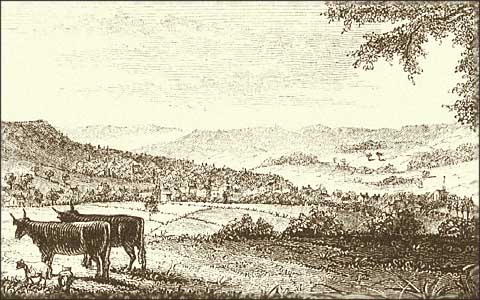
Distant View of Cherry Valley Village (from an early 1800s engraving)
1795-1825 | 1826-1850 | 1851-1879 | 1880-1899 | 1900-1999
| WEST NY | BATAVIA | ROCHESTER | PALMYRA | EAST NY |
| 1829-31 | 1829-31 | 1829-31 | 1829-31 | 1829-31 |
| 1832-33 | 1832-39 | 1832-33 | 1832-33 | 1832-39 |
| 1834-39 | 1834-39 | 1834-39 | ||
| 1840-46 | 1840-46 | 1840-46 | 1840-46 | 1840-46 |
CVG Feb 05 '57 | OGE May 07 '57 | OGE May 21 '57
OGE May 28 '57 | OGE Jun 11 '57 | OGE Jul 02 '57 | OGE Jul 09 '57 | OGE Jul 30 '57
OGE Aug 06 '57 | OGE Aug 20 '57 | OGE Oct 01 '57 | OGE Oct 22 '57 | OGE Nov 05 '57
OGE Nov 12 '57 | OGE Nov 19 '57 | OGE Nov 26 '57 | OGE Dec 10 '57 | OGE Dec 17 '57
CVG Dec 24 '57 | CVG Dec 31 '57 | CVG Jan 07 '58 | CVG Jan 14 '58 | CVG Jan 28 '58
CVG Feb 11 '58 | CVG Feb 18 '58 | CVG Feb 25 '58 | CVG Mar 04 '58 | CVG Mar 18 '58
CVG Mar 25 '58 | CVG Apr 01 '58 | CVG Apr 08 '58 | CVG Apr 15 '58 | CVG Apr 22 '58
CVG Apr 29 '58 | CVG May 06 '58 | CVG May 13 '58 | CVG May 20 '58 | CVG May 27 '58
CVG Jun 03 '58 | CVG Jun 10 '58 | CVG Jun 17 '58 | CVG Jun 24 '58 | CVG Jul 08 '58
CVG Jul 22 '58 | CVG Jul 29 '58 | CVG Aug 05 '58 | CVG Aug 26 '58 | CVG Sep 02 '58
CVG Sep 01 '59
News Articles Index | New York City Papers | Otsego Spalding resources
 Vol. III. Cherry Valley, N.Y., Thursday, February 5, 1857. No. 6.
FALSE CENSUS RETURNS FROM UTAH.-- Elder John Hyde, sent as a Mormon missionary to the Sandwich Islands, has turned State's evidence against the Saints, and while denouncing their polygamy and villainy generally, charges them with falsifying the census returns of the territory. -- He affirms that there are not half as many inhabitants in Utah as the census indicates. The names of deceased persons, of emigrants, disciples who never came to hand, and of Mormons who long ago recanted their beastly creed and fled the country, were all retained and used to make the number of '70,000.' |
Vol. III. Cherry Valley, N.Y., Thursday, May 7, 1857. No. 19.
THE GENERAL GOVERNMENT
The Mormons seem to be going it, after their fashion, at the greatest rate imaginable. They have never been under the actual control of Congress, and their present attitude is one but little short of positive rebellion. A writer in a recent number of the National Intelligencer gives a long list of quotations from Brigham Young, Orson Pratt, Heber C. Kimball, and others of the Mormon leaders, which ought to ring in the ears of this nation; till the government shall be compelled to raise a strong arm and scatter them to the four quarters of the globe. It is a burning shame to this country, and to any administration, that such practices as those established by the Mormons should be allowed to exist. It is difficult, we know, for an administration, which has planted itself upon the doctrine, that every Territory shall have the right "to choose the character of its own institutions," to do what ought to be done in such a case. But it will be better for the government to modify this doctrine, somewhat, in relation to this single case, than that the Nation should suffer from the establishment of so foul a system within its boundaries; and then to see them, in all their reeking shamelessness, get up to such a height as to defy the powers of our general government is too much to be endured. Hear what this writer in the Intelligeneer, who resided with them for a year as an officer of the government, quotes from their leading ministers and prophets: |
Vol. III. Cherry Valley, N.Y., Thursday, May 21, 1857. No. 21. BRIGHAM YOUNG FLEES UTAH.
|
Vol. III. Cherry Valley, N.Y., Thursday, May 28, 1857. No. 22. The Mormons. The Cabinet are reported to have been, of late, engaged in grave deliberation on the Utah question -- in other words, considering how to deal with Brigham Young and the horde of fanatical and desperate outlaws congregated about Lake Deseret. This is by far the most troublesome matter Mr. Buchanan has to handle, and it is growing every day more and more embarrassing. The complete isolation of the settlement from the restraints of surrounding civilization, and its comparative inaccessibleness to military approach have rendered these fanatics insolent and reckless, and encouraged them to aspire to a virtual independence of the Government and its laws. Indeed, Brigham Young is reported, by an ear witness, to have made the declaration in a public discourse to his people, that -- "a kingdom can exist within a republic." The rapid increase of their numbers and the entire impunity with which they have hitherto practiced their crimes and abominations are well calculated to encourage the delusion. Any overt act in pursuance of such a design -- if indeed it be entertained -- would make the duty of the government as clear as it would be imperative. |
Vol. III. Cherry Valley, N.Y., Thursday, June 11, 1857. No. 24.
WHAT THE MORMONS SAY. -- A Delaware City (Kansas) correspondent of the Sun, who has conversed with Judge Stiles, Surveyor General Burr and others from Utah, says the Mormons laugh at the idea of Executive power and companies of Federal troops to enforce obedience in Utah from the people. |
Vol. III. Cherry Valley, N.Y., Thursday, July 2, 1857. No. 27. From California. ...Great indignation is felt throughout the State against the Mormons of Salt Lake, since the developements by Judge Drummond, concerning them and the prompt and energetic action of the Administration in the premises is universally endorsed. |
Vol. III. Cherry Valley, N.Y., Thursday, July 9, 1857. No. 28. The Mormons to be Governed. Appearances indicate that decisive measures will be pursued by the administration towards the Mormons, in Utah territory, to bring them under subjection. Col. Cumming, of Missouri, it is said, has been appointed Governor, and he will be supported with a military force sufficiently strong to enforce obedience to his authority. No attempt will be made to interfere with the religious and social institutions of the Mormons, but the laws of the United States will be rigidly enforced. |
Vol. III. Cherry Valley, N.Y., Thursday, July 30, 1857. No. 31. FROM WASHINGTON.
|
Vol. III. Cherry Valley, N.Y., Thursday, August 6, 1857. No. 32. From Washington.
|
Vol. III. Cherry Valley, N.Y., Thursday, August 20, 1857. No. 34. IMPORTANT FROM UTAH. The Sacramento Union contains important news from the valley of the Great Salt Lake. It will [be recalled] that the Mormons are not only [raging ----- ] against peaceful and unoffending citizens, but that serious dissensiobs are rapidly thining their own ranks, and that many of them have already left for the Atlantic States. The Union says: |
Vol. III. Cherry Valley, N.Y., Thursday, October 1, 1857. No. 40. An Escape from Salt Lake. The following narrative is from the pen of John Davies, a young Welshman who emigrated to Salt Lake with his family about two years ago, from Maesteg, South Wales. -- It is taken from a private letter, dated Council Bluffs City; Iowa, June 29: |
Vol. III. Cherry Valley, N.Y., Thursday, October 22, 1857. No. 43.
SALT LAKE. -- Dates from Brigham Young's dominions are to the 5th August. The "Saints" still breathe defiance against the Government, and seem determined not to submit peaceably to the mandates of the official representatives who are en route thither. A ridiculous report obtained some credence here a few days ago to the effect that Gen. Harney's command has been defeated by the Mormons with great slaughter. It is well known that the former could not, at present writing, have arrived within the territory occupied by the polygamists. |
Vol. III. Cherry Valley, N.Y., Thursday, November 5, 1857. No. 45.
FROM SALT LAKE CITY. -- The Republican publishes a discourse delivered by Heber C. Kimball, of Salt Lake City, August 30th, in which strong grounds are taken against the United States Government, and a determination is expressed to resist their troops to the last extremity. The Mormon "Children" are called upon to arm themselves, and the people are generally exhorted to lay up grain and otherwise prepare for the conflict. During the discourse, Kimball said: "We are the kingdom of God and the State of Deseret, and will have Brigham Young for Governor just so long as he lives." Young made a speech equally bold in its declarations of hostility against the United States. |
Vol. III. Cherry Valley, N.Y., Thursday, November 12, 1857. No. 46.
WASHINGTON Nov. 7. -- The War Department has just received despatches confirmatory of previous reports that the Mormons are bent on a resistence of the army and general preparations are such that no fears are entertained for the result. |
Vol. III. Cherry Valley, N.Y., Thursday, November 19, 1857. No. 47.
==> A letter from J. C. Ward to the Los Angeles Star, dated San Bernardino, Oct. 4, 1857, states that an entire train of emigrants from Missouri and Arkansas, bound to California by way of Great Salt Lake, had been massacred by Indians at the Mountain Meadows, which are on or near the rim of the Great Basin, and some distance south of the most southren Mormon settlements. -- The massacre took place about the 10th or 11th of September. Mr. Ward says he first obtained his information from the Indians. |
Vol. III. Cherry Valley, N.Y., Thursday, November 26, 1857. No. 48.
The Mormon War.
|
Vol. III. Cherry Valley, N.Y., Thursday, December 10, 1857. No. 50.
THE MILITARY STRENGTH OF THE MORMONS. -- In view of the possibility of a bloody conflict with the Mormons, information respecting their means of defence is of interest to the public. A writer in the Sacramento Age states that at the order of their leader and prophet they can muster 15,000 men, armed with the most effective instruments of destruction. They have many thousands of the finest horses trained to camp service; they have a foundry where cannon amd shells are cast; a powder mill and factory where revolving rifles and pistols are manufactured, equal to those made at Hartford. They have every munition of war and necessary provision, and means of transportation within themselves, and even the women and children are instructed in the use of arms. Add to this their geographical position. To reach Salt Lake from the east, it is necessary to pass through a canyon of twenty-five miles, under hills so steep and rocky that a dozen men could hurl down an avalache of stones on the approaching caravan; and even in the event of several thousand troops reaching the valley, the beseiged, with their herds would take to the mountains, and, reinforced by their savage allies, would, in turn, beseige their beseigers, and cut off supplies until the invaders had starved out. |
Vol. III. Cherry Valley, N.Y., Thursday, December 17, 1857. No. 51. PRESIDENT'S MESSAGE. ... A territorial government was established for Utah by act of Congress approved the 9th September, 1850, and the Constitution and laws of the United States were thereby extended over it "so far as the same, or any provisions thereof, may be applicable." This act provided for the appointment by the President, by and with the advice and consent of the Senate, of a governor, who was to be ex-officio superintendent of Indian affairs, a secretary, three judges of the supreme court, a marshal, and a district attorney. Subsequent acts provided for the appointment of the officers necessary to extend our land and our indian system over the Territory. Brigham Young was appointed the first governor on the 20th September, 1850, and has held the office ever since. Whilst Governor Young has been both governor and superintendent of Indian affairs throughout this period, he has been at the same time the head of the church called the Latter-Day Saints, and professes to govern its members and dispose of their property by direct inspiration and authority from the Almighty. His power has been, therefore, absolute over both church and State. |
Vol. III. Cherry Valley, N.Y., Thursday, December 24, 1857. No. 52.
==> Senator Gwin has received a large number of letters from California, in which the writers express an intense interest to be mustered into the service of the United States against the Mormons, who, it is mentioned, have large emissaries throughout that state and are thought to be meditating series mischief. |
 ns Vol. IV. Cherry Valley, N.Y., Thursday, December 31, 1857. No. 1. CONGRESSIONAL. ...on Monday... In the House, Mr. Warren asked but did not obtain leave to introduce a preamble: |
ns Vol. IV. Cherry Valley, N.Y., Thursday, January 7, 1858. No. 2. Important From Utah. The intelligence from the Utah Expedition is highly important. The Mormons have declared their independence, and organized an army to resist the progress of the troops. |
ns Vol. IV. Cherry Valley, N.Y., Thursday, January 14, 1858. No. 3. Important From Utah. ==> It is now said that the Mormons do not intend to abandon the Salt Lake Valley, as heretofore surmised; but that they will defend themselves to the last in their present position of rebellion against the United States authorities. It seems hardly possible that the hallucination of their ability to maintain their position throughout another Summer, can have taken posession of their minds. That they are an ugly force to meet in a military encounter cannot be doubted; and if they once rally in earnest in their alleged determination to fight, a bloody contest is likely to occur. But they will of course be crushed by the power of this great nation. Out of their own community they have no sympathisers with their cause and will find neither moral nor material support. It is possible that they may enlist a formidable Indian force in their defence. Brigham Young, although an audacious, is at the same time a wily leader, and we look, at the last moment perhaps, for better proof of his sagacity than a desperate military struggle with the Federal troops. -- In the mean time the order of Lieut. Gen. Scott, published in our columns elsewhere, shows that the Government is vigorously, preparing to crush out this rebellion, and that the army poured into Utah as soon as spring opens will be very formidable. |
ns Vol. IV. Cherry Valley, N.Y., Thursday, January 28, 1858. No. 5. From the Utah Expedition.
|
ns Vol. IV. Cherry Valley, N.Y., Thursday, February 11, 1858. No. 7. MORMONISM. We make the following extracts from the speech of Mr. John Thompson of this state, delivered in the House of Representatives, Jan. 27.: |
ns Vol. IV. Cherry Valley, N.Y., Thursday, February 18, 1858. No. 8. LATEST NEWS. ...A series of resolutions have been introduced in the Legislature approving Senator Douglas's Kansas bill, and the majority of the Democratic leaders and newspapers side with Douglas against the President. The mustering of soldiers for Utah continues active in California. Almost every country has its company. -- There is no important news from Oregon or the Sandwich Islands, and no later dates from Utah. |
ns Vol. IV. Cherry Valley, N.Y., Thursday, February 25, 1858. No. 9. CONGRESS. In Congress Thursday... The Army bill was then taken up, and the fourth section stricken out by one majority. An ammendment was adopted, to the effect that a reduction at the end of two years should not operate on any officer at this date. Mr. Iverson expressed a low opinion of volunteers, who would be, in his judgment, quite likely to join the Mormons as to fight them. An ammendment, introduced by Mr. Hamlin, to the effect that in no case should the force created by the act serve over two years, was agreed to.... |
ns Vol. IV. Cherry Valley, N.Y., Thursday, March 4, 1858. No. 10.
FROM UTAH. -- A correspondent of the Tribune, writing from the army in Utah, communicates news of great interest, especially the Message of Brigham Young to the Territorial Legislature. The Army is in excellent condition, and, thanks to the wise arrangements of Col. Johnston, does not suffer from its confinement in winter quarters. The proceedings before the Court of Chief-Justice Eckles are also important. An indictment for high treason has been found against Brigham Young and a number of the subordinate Mormon leaders, and one of them -- now a prisoner with the Army -- has been put upon his trial; the case was adjourned, however, in order to give him time to procure witnesses. To judge by the evidence which now reaches us, the Mormons are resolved to fight and will do it with energy and earnestness. Some "striking indications as to their military resources are given by this correspondent. -- He also gives a copy of a letter by Dr. Hurt, which charges upon the authorities of the Mormon Church a variety of outrages of almost inconceivable atrocity. |
ns Vol. IV. Cherry Valley, N.Y., Thursday, March 18, 1858. No. 12.
THE MORMONS. -- The Council Bluffs Bugle of the 3d says: That Mr. Wingate has just arrived from Salt Lake January 25th, and reports that there is no snow in Salt Lake Valley and but little in the mountains. He came by a route known only to the Mormons -- through the mountains by which only horsemen in single file can pass. Mr. Wingate says that the Mormons are making small cannon and percussion locks and telescopic sights, which will carry a two pound ball with more certainty than a common rifles. They are also making 500 revolvers a week, and manufacturing a coarse kind of gunpowder for mining purposes. A skirmish had occurred between a party of Mormons and a picket guard of the army, in which two of the former were killed, and it is reported that four of the latter were slain. Mr. Wingate says that Brigham is willing the civil officers shall come into the Territory and enter upon their duties, but if the army attempts to enter the Valley they will be resisted. On the 24th of January Brigham Young preached to 9,000 people, all whom rose when Young told those in favor of giving the troops hell, to rise. |
ns Vol. IV. Cherry Valley, N.Y., Thursday, March 25, 1858. No. 13. CONGRESS. ...Tuesday... In the House... The memorial from the Legislature of Utah was presented. After it had been read, the House adjourned. |
ns Vol. IV. Cherry Valley, N.Y., Thursday, April 1, 1858. No. 14.
THE MORMON WAR. -- According to the plan laid down by the War Department for the service in Utah, there will be by July next about five thousand five hundred troops in that Territory, amply supplied for an active campaign. Should it be necessary this force will consist of about one-third cavalry, sixteen guns of artillery and the rest infantry. Three-fifths of this force has yet to be sent. Russell, the contractor for transportation of this army will employ three thousand five hundred teamsters to drive wagons carrying the supplies. This will give some idea of the magnitude and cost of the undertaking. In view of the importance of the service, object and end of this war-like and expensive expedition, it is under consideration with the government, notwithstanding the brevet appointment of Col. Johnston, whether it would. not be proper to assign an officer of more service and experience, as Geo. Harney or some other, to this command. |
ns Vol. IV. Cherry Valley, N.Y., Thursday, April 8, 1858. No. 15. The Mormons. These fanatics are causing more actual disturbance to the peaceful relations, heretofore existing between the several portions of our citizens, than the agitation of even the "'exed" question of slavery. The Mormons have taken hold of Gen. Jackson's motto, with a vengeance -- "the largest liberty to the greatest number," being their cardinal creed, and believing firmly that their numbers not only consist of the visible church, but also of the heavenly host -- for Brigham says the God of Battles is with them -- they consider themselves entitled to any amount of liberty. Their liberty of speech is tolerably well exemplified in Gov. Young's celebrated sermon to his "whining women," while the unmuzzled condition of their powers of correspondence is abundantly set forth in their late memorial to the Congress of the United States. In this production of the Utah Legislature the Mormons say, if the army, in their midst, is there by authority, they should like to be informed of it. They say they will not submit to be ruled by a parcel of demagogues, and ask the Government to withdraw the troops, and give them fair play. "In spite of earth and hell," they declare that, they will maintain their religion. If they do not entertain a favorable opinion of the army, they beg blandly, to be excused. "If some of them had their deserts they would be pulling hemp by the neck, or occupying positions in prison." Some portions of this memorial, during its reading, caused great laughter, while many nervous gentlemen saw much of "hidden fire" beneath this Mormon warming pan. |
ns Vol. IV. Cherry Valley, N.Y., Thursday, April 15, 1858. No. 16. CONGRESS. In Congress Monday... The House concurred in the ammendments to the Volunteer bill made by the Senate. -- A resolution was adopted calling upon the Secretary of War for full statements respecting the supply contracts for Utah.... |
ns Vol. IV. Cherry Valley, N.Y., Thursday, April 22, 1858. No. 17.
FOR UTAH. -- A general order has been issued by the Commander-in-Chief, directing particularly the movements of troops from the barracks at Newport, Jefferson and Carlisle, and from Forts Columbus and Randall for Utah at the earliest notice. General Smith is appointed to the command of the Government of Utah, and Brigadier Generals Harney and Johnson to command according to their brevet ranks. Col. Lee succeeds to the command of the Department of the West. Col. and Inspector-General Mansfield is relieved from the duty of inspecting recruits and this duty will devolve on Lieut. Col. J. E. Johnston. The. greater portion of the troops destined for Utah will be concentrated at Fort Levenworth to be ready to leave on the arrival of General Smith. The head-quarters of the 2d Infantry is transferred to St. Louis. |
ns Vol. IV. Cherry Valley, N.Y., Thursday, April 29, 1858. No. 18.
==> A man named Isaac Sheen, publishes a card in Cincinnati, stating that Brigham Young and his Danites have condemned him to death for giving McLean the information which led him to shoot Parley P. Pratt, the Mormon apostle. In case their designs are accomplished, he wishes the authorities to know where to look for his murderers. |
ns Vol. IV. Cherry Valley, N.Y., Thursday, May 6, 1858. No. 19. The Temper of the Mormons. The California mails bring a new batch of complaints and denunciations from the Mormons against the United States. They have prepared a long memorial to Congress. |
ns Vol. IV. Cherry Valley, N.Y., Thursday, May 13, 1858. No. 20. Army Orders.
|
ns Vol. IV. Cherry Valley, N.Y., Thursday, May 20, 1858. No. 21. Highly Important from Utah.
|
ns Vol. IV. Cherry Valley, N.Y., Thursday, May 27, 1858. No. 22.
NEWS PARAGRAPHS.
...Gen. Persifer F. Smith, the commander of the Utah forces at the headquarters at Leavenworth, died at half part twelve o'clock on the 17th inst. His remains left Leavenworth on Wesnesday last. Gen. Harney succeeds to the command. |
ns Vol. IV. Cherry Valley, N.Y., Thursday, June 3, 1858. No. 23.
UTAH ARMY. -- The last detachment of troops for Utah, under command of Major, Paul, numbering 210 men, left Jefferson Barracks May 26th, for Fort Leavenworth. A letter to the Democrat, dated Leavenworth 22d, says: "There is no intermission in the preparatory labors of the troops consequent on the recent intelligence from Salt Lake; and judging from the movements at the Fort, no countermand of orders already given, is anticipated. The head quarters would not move for 15 or 20 days. It was understood, however, that Gen. Harney might proceed in advance of his Staff, passing the several columns on the route. Gen. H. had given an order to Col. Grossman, Quarter-Master General, to proceed with the fourth column, under Col. Monson, and Major Babbit. -- [The] Adjutant General is to be stationed at Fort Laramie, whither he has gone immediately." |
ns Vol. IV. Cherry Valley, N.Y., Thursday, June 10, 1858. No. 24.
Important from Utah.
|
ns Vol. IV. Cherry Valley, N.Y., Thursday, June 17, 1858. No. 25.
Important from Utah.
Governor Cumming, who appears to have been kindly received by the Saints, has given publicity to the following Proclamation which it will be seen offers "a full and free pardon to all who will submit themselves to the authority of the Federal Government." This movement, according to present indications, will end the Mormon war: |
ns Vol. IV. Cherry Valley, N.Y., Thursday, June 24, 1858. No. 26. ...Later From Utah. ...Private, but authenticated advices from Utah, state that the submission of the Mormons is sullen and unsatisfactory. Notwithstanding all their assurances, they still held actual military possession of all the passes. |
ns Vol. IV. Cherry Valley, N.Y., Thursday, July 8, 1858. No. 28.
FROM UTAH. -- A despatch from St. Joseph, dated the 28th ult., by the United States Express to Boonville, says -- The Salt Lake mail arrived here to-day, bringing dates from Salt Lake City to the 12th ult. Gen. Johnson was to start for the city on the 13th with 3,000 men, in columns. The army will enter the valley at Soda Springs, on Bear River. Col. Hoffman had arrived at Camp Scott with his men, and others in good health and spirits. Capt. Marcy's command had arrived from New Mexico with 1500 loose mules. Commissioners McCulloch and Powell had started for the city in company with Gov. Cumming and Postmaster Morrell. Col. Harnett, Secretary of the Territory, left Camp Scott on the 10th inst. for Salt Lake City. There was quite a diversity of opinion at Camp Scott as to what course the Mormons would pursue in regard to allowingthe the troops to enter the valley. The mail party passed about three hundred Mormons with horses and mules, all well armed; but they would give no information as to where they were going or what they intended doing. -- Fifty Mormons who had escaped from the valley were met at Platte Bridge wending their way to the States. Twelve companies of cavalry or dragoons were met near Fort Laratnie, and they had passed General Harney and Colonel May, encamped on the Pawnee fork of the Little Blue. large number of troops were encamped on the Big Blue. Colonel Morrison and his command were at the Little Blue. The mail party also met supply trains between the Fourth and Fifth Crossing of the Sweet Water. Colonel Sanders was at South Pass, and was on the eve of starting on the exploration of the wagon road from that place, to Fort Hall. The report that the Mormons had removed their families in Provo is confirmed. It is not known whether Brigham accompanied the Mormons or remained in the city. The Mormons have not gone to Sonora or to the Russian Possessions, as anticipated by the authorities at Washington, but would do so next Spring, if any but Mormons are placed there to govern them. |
ns Vol. IV. Cherry Valley, N.Y., Thursday, July 22, 1858. No. 30.
CONDITIONS OF PEACE WITH UTAH. -- The Utah correspondent of the St. Louis Republican, under date of June 18, says that the conditions agreed upon at the conference between Governor Cumming, the Peace Commissioners and the heads of the Mormon church are, that the troops shall enter the city without opposition; that the civil officers shall be permitted to perform their duties without interruption, and that unconditional obedience shall be paid to the laws of the land. While on the other hand, past offences are to be forgiven, as was stated in the President's proclamation. All the houses in the city had been closed against both civil officers and strangers, except one, which was occupied by the Governor and his family; every body else were obliged to sleep on their wagons or on the ground. |
ns Vol. IV. Cherry Valley, N.Y., Thursday, July 29, 1858. No. 31. The Latest from Utah. Gen. Johnston's army entered the city without molest from any quarter. |
ns Vol. IV. Cherry Valley, N.Y., Thursday, August 5, 1858. No. 32. NEWS PARAGRAPHS. ...A gentleman who went to Utah a few years ago, as an officer of the U.S. Government, says that as he was walking one day with Brigham Young, they saw a very bright looking little fellow that attracted their attention. "What is your name, little boy?" said Brigham. "John Young, sir." "Who is your father?" "Brigham Young, sir." |
ns Vol. IV. Cherry Valley, N.Y., Thursday, August 26, 1858. No. 35. The Mormons in Utah. The last advices from Utah state that there would be no difficulty with the Mormons and they would come in as a State of good and quiet citizens, if it were not for polygamy. That is the rock on which they are most certain to split. To any interference with this they say they will not submit under any circumstances. They declare that come what will, they will recognize no attempt to breakup the system of plurality of wives. |
ns Vol. IV. Cherry Valley, N.Y., Thursday, September 2, 1858. No. 36.
==> It is reported that Brigham Young met with a very unexpected rebuke from a gentleman in the employ of the Army, who visited him on business connected with its operations. Brigham took occasion in his presence, to speak in a contemptuous manner of our worthy Secretary of War, in whose honor the present encampment of the army has been named Camp Floyd. whereupon our friend told His Majesty that if he did not desist from using such language in his presence, he would consider it as a personal insult and require personal satisfaction for the same. Brigham, terribly shocked to find a person bold enough to reprove him in so direct a manner, simply muttered in reply that he supposed he had a right to speak as he pleased, and then changed the subject. -- There were some fifteen or twenty persons present at the time. |
ns Vol. IV. Cherry Valley, N.Y., Thursday, September 16, 1858. No. 38. From Kansas and Utah.
|
ns Vol. V. Cherry Valley, N.Y., Thursday, September 1, 1859. No. 36. The Press. Mr. Greeley, in a recent letter, reported a conversation with Brigham Young. It furnishes an occasion for the Herald to talk rather harshly of Horace: |
Back to top of this page.
Articles Page | Articles Index | History Vault
Oliver's Bookshelf | Spalding Library | Mormon Classics
last updated: Mar. 11, 2009