
READINGS IN EARLY MORMON HISTORY
(Newspapers of New England)

Misc. New England Newspapers
1830-1839 Articles
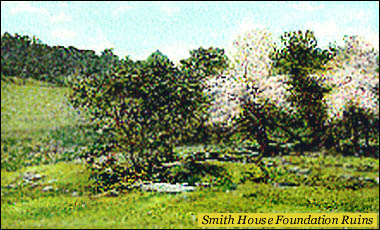
Joseph Smith, Jr., Birthplace -- Sharon, VT (1935 postcard)
1780-1829 | 1830-1839 | 1840-1844 | 1845-1879 | 1880-1920
1830
CCr Feb 09 '30 | NaP Mar 03 '30 | RIAm Apr 16 '30 | SGaz Apr 20 '30 | HGM May 03 '30 | EArg May 25 '30 | NBMr May 28 '30
BMsg Oct 30 '30 | BMsg Nov 20 '30 | SGaz Dec 10 '30 | ColR Dec 11 '30 | VTWat Dec 14 '30 | Jesuit Dec 18 '30
1831
HGaz Jan 19 '31 | VPat Mar 07 '31 | AWhig Mar 14 '31 | BCou Mar 17 '31 | VTel Mar 22 '31 | CReg Mar 26 '31 | CMir Apr 16 '31
HGaz Apr 27 '31 | SGaz May 06 '31 | CMir May 07 '31 | BMas May 21 '31 | BrkJ Jun 02 '31 | FHer Jun 22 '31 | VTChr Jun 24 '31
RIR Jul 05 '31 | CCr Jul 12 '31 | VGaz Jul 19 '31 | HGaz Jul 20 '31 | NHPat Jul 25 '31 | UnivW Aug 13 '31 | VPat Aug 29 '31
NHSnt Sep 09 '31 | VGaz Sep 13 '31 | VPat Sep 19 '31 | CReg Sep 24 '31 | NHGz Sep 27 '31 | VTel Oct 04 '31 | HGaz Oct 05 '31
BCou Oct 10 '31 | NGHA Oct 21 '31 | NHGz Oct 25 '31 | FHer Oct 26, '31 | NHSnt Oct 28 '31 | EGaz Nov 19 '31 | HamW Nov 30 '31
SGaz Dec 06 '31 | VTel Dec 06 '31 | PJr Dec 24 '31 | NHPat Dec 26 '31 | HopM Dec 31 '31
1832
FHer Jan 18 '32 | BSnt Mar 23 '32 | BMsg Mar 24 '32
ColR Mar 31 '32 | CReg Apr 07 '32 | SGaz Apr 27 '32 | CMir May 05 '32 | FHer May 09 '32 | BInv May 11 '32 | ColC May 11 '32
NHPat May 14 '32 | VGaz May 22 '32 | SGaz May 22 '32 | SJour Jun 04 '32 | FHer Jun 06 '32 | FHer Jun 13 '32 | RIR Jun 19 '32
CInt Jun 22 '32 | VGaz Jul 03 '32 | BRec Jul 18 '32 | BInv Aug 03 '32 | BInv Aug 10 '32 | SGaz Aug 14 '32 | BInv Aug 17 '32
BTvl Aug 27 '32 | SGaz Aug 28 '32 | NMr Sep 01 '32 | ChrW Sep 07 '32 | EGaz Sep 08 '32 | SJour Sep 10 '32 | CReg Oct 06 '32
BRec Oct 10 '32 | NECH Nov 07 '32 | NHSnt Nov 08 '32 | ChrW Nov 09 '32 | VGaz Nov 27 '32 | IndMsg Nov 29 '32
1833
IndGz Jan 11 '33 | Lib Jan 12 '33 | NBMr Apr 05 '33 | CReg Apr 06 '33 | PSun Apr 18 '33 | NBMr Apr 19 '33 | PSun Apr 25 '33
PJr May 11 '33 | BRec May 22 '33 | VGaz May 28 '33 | NBMr Jun 14 '33 | PSun Jun 27 '33 | NBMr Jun 28 '33 | NHGz Aug ?? '33
NHSnt Aug 22 '33 | FCab Aug 23 '33 | ChrW Aug 23 '33 | CCr Aug 26 '33 | ChrW Aug 30 '33 | FCab Aug 31 '33 | Lib Sep 07 '33
BRec Sep 11 '33 | BRec Nov 13 '33 | NHSnt Nov 14 '33 | FCab Dec 06 '33 | CReg Dec 07 '33 | BDA Dec 12 '33 | PSun Dec 12 '33
NHSnt Dec 12 '33 | ChrW Dec 13 '33 | BRec Dec 14 '33 | CCr Dec 16 '33 | FCab Dec 20 '33 | CReg Dec 21 '33
1834-1835
EGaz Jan 11 '34 | BerkA Jan 22 '34 | BerkA Feb 12? '34 | NEWR 17? '34 | Lib Feb 22 '34 | PSun Apr 03 '34 | BMes May 09 '34
BMes May 23 '34 | CReg Jun 07 '34 | EGaz Jul 04 '34 | Lib Jul 05 '34 | CCr Jul 07 '34 | HofF Jul 10 '34 | CCr Jul 14 '34
BMes Jul 18 '34 | ChrW Jul 18 '34 | BMes Jul 25 '34 | NBMr Jul 25 '34 | SGaz Jul 29 '34 | RIR Jul 30 '34 | PSun Jul 31 '34
FCab Aug 01 '34 | CCr Aug 04 '34 | BMes Aug 08 '34 | BMes Aug 15 '34 | NHSnt Aug 28 '34 | BCou Dec 04 '34 | CReg Dec 30 '34
FGaz Jan 30 '35 | FGaz Feb 06 '35 | NhC Mar ?? '35 | NBMr Mar 13 '35 | FCab Mar 13 '35 | CCr Mar 16 '35 | NHSnt Mar 26 '35
PJr Jul 04 '35 | EGaz Aug 22 '35 | NHPat Aug 31 '35 | PSun Sep 03 '35 | SGaz Sep 04 '35 | PJr Sep 05 '35 | VSP Sep 15 '35
NHSnt Oct 08 '35 | SGaz Oct 13 '35 | RIR Nov 04 '35 | NHSnt Dec 10 '35
1836
PSun May 12 '36 | NHSnt May 19 '36 | EGaz Jun 11 '36 | NHPat Jun 13 '36 | NBMr Jul 01 '36 | PSun Jul 07 '36 | EGaz Jul 09 '36
NBMr Jul 15 '36 | NMer Jul 30 '36 | VChr Aug 11 '36 | PSun Aug 11 '36 | PJL Aug 13 '36 | EGaz Aug 20 '36 | ERg Aug 22 '36
SGaz Aug 23 '36 | BTvl Aug 23 '36 | BCou Aug 25 '36 | BTms Aug 26 '36 | BTvl Aug 26 '36 | EGaz Aug 27 '36 | SOb Aug 27 '36
EGaz Oct 29 '36 | HGaz Dec 14 '36 | CReg Dec 24 '36
1837-1838
CCr Feb 04 '37 | VPho Feb 24 '37 | CCr Jun 17 '37 | ZHrl Jun 21 '37 | NHSnt Jun 22 '37 | NBMr Jun 23 '37 | FCab Jun 23 '37
NMr Jul 01 '37 | NBMr Jul 21 '37 | PJL Jul 29 '37 | NMr Feb 24 '38 | VChr Feb 28 '38 | NBMr Aug 31 '38 | BFP Sep 07 '38
Cal Sep 11 '38 | VPho Sep 14 '38 | ZHrl Sep 26 '38 | FCab Sep 26 '38 | Atlas Oct 09 '38 | NatA Oct 10 '38 | NHSnt Oct 10 '38
Atlas Oct 17 '38 | ZHrl Oct 17 '38 | NHPat Oct 22 '38 | BDA Oct 26 '38 | Atlas Oct 27 '38 | BFP Nov 23 '38 | ColC Nov 24 '38
ZHrl Nov 28 '38 | NHSnt Nov 28 '38 | NatA Nov 28 '38 | NatA Dec 05 '38 | ZHrl Dec 12 '38 | CCrS Dec 15 '38
1839
RIR Jan 02 '39 | BFP Jan 04 '39 | NatA Jan 09 '39 | Cal Feb 12 '39 | Atlas Mar 30? '39 | RHer Apr 02 '39 | BRec Apr 19 '39
BAdv Apr 22? '39 | BTrs Apr 29 '39 | CReg May 04 '39 | NHSnt May 08 '39 | BCou May 09 '39 | CReg May 11 '39
NERev Jul 27 '39 | VGaz Dec 31 '39 | Cal Dec 31 '39
Note: All Maine newspaper articles have been moved to a separate web-page.
 Vol. LXVI. Hartford, February 9, 1830. No. 3394. 
FOR THE COURANT.
Some peculiar characteristics of the original inhabitants of this country, entitle them to respectful consideration. However rude and uncultivated, in their customs and manners, in the estimation of the pilished nations of the world; they speak of the "GREAT SPIRIT," in terms of reverance and admiration; and apparently with as much sincerity as professing christians. They have been erroneously classed with pagan nations, and on this account it has been a common conclusion, that Divine Providence was directing their anihilation, to make room for the extension of the gospel. But, no man in sober reason can suppose that the Great Spirit, whom they worship, and who we professedly worship, has approved of the means and the measures by which the have been so exterminated; or that he now approves of those which are prospective, as relates to soem portion of them.... |
And Genius of Temperance. NS Vol. I. Boston, Massachusetts, March 3, 1830. No. 52.
EDITORIAL.
Maj. Noah, of the N. York Enquirer, &c. is still exhibiting precious specimens of his logic on the Indian question. A serious attempt to refute such a writer, would be a waste, both of time and paper. But as the Major is said to exert considerable influence, it may not be an uninstructive task to examine his productions, occasionally, for the purpose of forming a correct estimate of the intellectual and moral characteristics of that portion of the community, who are capable of being influenced by them, and inquiring into the causes of such a state of the community, with a view to their removal. |
AND PROVIDENCE GAZETTE. ns Vol. I. Providence, R.I., Friday, April 16, 1830. No. 87. The following singular evidence of human credulity or knavery, appears in the New York Rochester Republican: |
ns Vol. VIII. Salem, Mass., Tuesday, April 20, 1830. No. 31. From the United States Gazette. A work has recently been published in the western part of the State of New York, entitled Book of Mormon, or the Golden Bible. The author is Joseph Smith, jun. -- The work contains about 600 pages, and is divided into the books of Mormon, of Ether and of Helaman. The Rochester Daily Advertiser contains the preface, and two letters, signed by eleven individuals, setting for the excellence of the work and the existence of the original "plates" of gold, on which the contents of the volume were engraved, in a language which the translator was taught by inspiration. It seems one book, that of Lehi, was translated and stolen -- the translator was commanded never again to translate the same over. We subjoin, with some hesitency, one of the certificates, which smacks pretty strongly of what once would have been called blasphemy. |
Vol. I. Manchester, Vt., Tuesday, May 3, 1830. No. 7. FANATICISM. -- A work of 600 pages has recently been published at Rochester, N. Y. by "Joseph Smith, Jr. author and Proprietor." entitled "The Book of Mormon or the Golden Bible" which the Rochester Daily Advertiser pronounces "one of the vilest impositions ever practised -- an evidence of fraud, blasphemy and credulity, shocking to the Christian and the moralist." The "author and proprietor," it is said, by some hocus pocus, acquired such an influence over a wealthy farmer of Wayne county, N. Y. that the latter paid for the printing and binding [of] 5000 copies of the blasphemous work. -- The volume is divided into the books of Nephi, of [Jacob], of Mosiah, of Alma, of Mormon, of Ether and of Halaman. The paper above referred to, publishes the subjoined "Preface," and "testimonial," from which the style of the work may be conjectured: -- |
Vol. XXIII. New Bedford, Ma., May 28, 1830. No. 47. (From the Wayne County Republican.) NEW BIBLE. -- A fellow by the name of Joseph Smith, who resides in the upper part of Susquehanna county, has been, for the last two years we are told, employed in dictating, as he says, by inspiration, a new Bible. He pretended that he had been entrusted by God with a golden bible which had been always hidden from the world. -- Smith would put his face into a hat in which he had a white stone, and pretend to read from it, while his coadjutor transcribed. -- The book purports to give an account of the "ten tribes" and strange as it may seem, there are some who have full faith in his divine commission. The book, it seems is now published. We extract the following from the Rochester Republican. |
Vol. IX. Brattleboro, Vermont, October 30, 1830. No. 40.
FOR THE MESSENGER.
Mr. Editor, -- I have lately spent between two and three days examining a book of an extraordinary character, bearing the above title, which was was lately brought from the state of New York, and is much talked of in some parts of the county of Windham, where it is circulating. I feel inclined to give a short account of it to such of your readers, as may not have opportunity of seeing it. It was printed at Palmyra, contains near six hundred pages, and claims to be divine inspiration, or written by men who had frequent interviews with God & angels. It is stated to have been written in the Egyptian language, on plates of gold, and to have been found in the town of Manchester, and county of Ontario, in a box of stones well cemented together, and buried in the earth, where it must have lain, according to things said in the book ever since A.D. 420. Joseph Smith Jr. found it, and he translated it, not from any knowledge of the language on the plates, but by means of two stones or glasses found with it in the box, which give light, and exhibit objects, when looked into in the dark. Eight persons testify, in a certificate appended to the book, that they have seen the plates, which have the appearance of gold, and are of curious workmanship; -- and three more testify, in another certificate, that God showed them the plates, by an angel descending from heaven for the purpose. There [sic - thus?] all either express, or appear to have full confidence in the truth of the book. It is written, frequently, with bad grammar, in a repetitious and affectedly ancient style, and in some places sounds considerably like the Scriptures. It has large portions of both old and new testiment, but derives them from other sources than our Bible. It comprises a period of almost three thousand years, as it extends from the confounding of the languages at Babel to the year of the Christian era above mentioned. It is chiefly historical, but yet very full of religion, often inculcating the importance of repentence of sin, faith in Christ, baptism, and general obedience to God's commands. In one place it appears rather opposed to believing in election, and in another holds up man's moral power or free will pretty strongly, but does not dwell much on either of these points. It speaks of Jesus Christ and the Holy Ghost in new testament style, long before it represents Christ as having come upon earth. It gives an account of baptism having been practiced about eighty years before Christ. This is said to have been performed by immersion, and afterwards Christ himself enjoined the same mode expressly; and the baptism of infants is very fully condemned by God, as being inconsistent with that purity of heart which they all possess. It speaks of Christ as kneeling in his public prayers, and says the apostles were in that posture, when they received the supper from him. It seems to condemn that public worship, in which there is but one speaker, and says it was performed by prayer, exhortion, singing of psalms, &c. as every one was moved. It relates some cases of distinguished opposers to gospel instruction being struck down, lying two or three days & nights as dead, and then brought out with great [comfort]. It represents all receiving of pay for preaching as being priestcraft, and contains the doctrine of the Trinity, and of endless future punishment. |
Vol. IX. Brattleboro, Vermont, November 20, 1830. No. 40. COMMUNICATION. Mr. Editor, -- I have gotten some additional information respecting the Book of Mormon, which I send you for insertion in your paper, if you see fit. It is contained in an extract, which I have just taken from a letter written from a town in the State of New York, where, as I had been previously told, this Jos. Smith had resided some years, and from which he set out, with an attendant, in pursuit of the gold plates, which he found, as they say, about one hundred and fifty miles from the place of starting. The letter is dated Oct. 18th, 1830, and the extract is as follows: |
ns Vol. VIII. Salem, Mass., Friday, December 10, 1830. No. 99.
From the (Philadelphia) U. S. Gazette.
We mentioned nearly a year since, the appearance of a person in the upper part of New-York State, who was preaching a new religion, founded upon a new bible, given to him by an angel. The revelation then was engraven on metal plates. We thought that the matter would rest with the simple souls with whom it began, but we find that the new doctrine is gaining many believers; societies have been formed, and leaders established. We have not heard that any candidate for president has been nominated. We find the following account in the Painesville (Ohio) Gazette: |
Vol. XIX. New Haven, Conn., Saturday, December 11, 1830. No. 942. From the Painesville [Ohio] Gazette. Delusion. -- About a couple of weeks since, three men, calling themselves Oliver Cowdry, David Whitmer, and Martin Harris, appeared in our village, laden with a new revelation, which they claim to be a codicil to the New Testament. They preached in the evening in the Methodist Chapel, and from certain indications, conceiving they might do more good otherwheres, departed for Kirtland, where is a "common stock family," under the charge of Elder Rigdon, a Campbellite leader of some notoriety. The men claim to act under a "commission written by the finger of God" -- they are very enthusiastic, tolerably resolute -- but from what we can learn need that stedfast determined resolution and popular talent which are necessary to ensure any considerable degree of success in a new project. |
And State Gazette. Vol. XXV. Montpelier, Vt., Tuesday, December 14, 1830. No. 12. FANATICS. -- Oliver Cowdery, David Whitmer and Martin Harris, have lately commenced preaching near Painesville. Ohio, stating that they had a new revelation which the call a codicil to the New Testament, and [even] to have been written by the finger of God. They say that the world is to come to an end within 15 years; that is, the incorrigible are all to be cut off. They have joined one Elder Rigdon, once a Baptist, next a Campbellite, and now a disciple of the new revelation. He and part of his flock, about 100, have been baptized in it, and are going or have gone west for a country, they know not where, west of the Mississippi, where they say is a Holy Spirit, and there they are to establish a New Jerusalem, into which will be gathered all the natives, who they say are descendants of Manasseh. They are led by the spirit and will know the ground when they place their feet upon it. |
|
OR CATHOLIC SENTINEL. Vol. II. Boston, Mass., Saturday, December 18, 1830. No. ? The following must be considered as one of the many absurdities that rise from the private interpretation of the Scriptures -- The principle of a mock-reformation, which has unfortunately for the "One Faith," and the "One Fold" of Christ, created, more ring-leaders, than there are gods to the Pagan Mythology. |
|
Vol. XLI. Northampton Mass., Wednesday, January 19, 1831. No. 2316.
Delusion. -- There is no end to trickery and imposture in our land. "Fools are the game which knaves pursue," and until the people in some sections of the country become more enlightened, there will be plenty of game. A few weeks since we gave our readers some account of the "Book of Mormon," a work fabricated by some jugglers and impostors in the western part of New York. Recently three men from New York, laden with this new revelation appeared in Painesville, Ohio, and began to promulgate the new doctrines, claiming to be prophets, acting under a comission written by the finger of God. -- From Painesville, they proceeded to Kirtland, where there was a Campbellite Society under the charge of Elder Rigdon. Immediately after their arrival Elder Rigdon embraced the new doctrine and was baptized for the third time -- once as a regular Baptist -- once as a Campbellite -- and now as a disciple of the new revelation. Most of his flock followed their shepherd, and went down into the water for the second, and some for the third time. The three fanatics, after converting Elder Rigdon and his society, left Ohio for a country they know not where, west of the Mississippi where they say is a holy spot, and there they are to establish a New Jerusalem. |
And State Gazette. Vol. VI. Montpelier, Vermont, Monday, March 7, 1831. No. 9. Mormonites in Ohio. -- The believers in the book of Mormon amount to about 400 in Geauga and Cuyahoga counties, Ohio. They have all things common, and they affirm that miracles are performed among them, and revelations made to them by the Deity. |
Vol. II. Woodstock, Vt., Monday, March 14, 1831. No. 11. Fanaticism. -- We noticed, some time since the progress of a new religious order in the Western part of Ohio. It would seem that good materials are found in that district for such a work. The Painesville (Ohio) Gazette contains the following additional particulars: |
|
Vol. VI. Boston, Ma., Thursday, March 17, 1831. No. 545. DELUSION. There is no end to trickery and imposture in our land. "Fools are the game which knaves pursue," and until the people in some sections of the country become more enlightened, there will be plenty of game. A few weeks since we gave our readers some account of the "Book of Mormon," a work fabricated by some jugglers and impostors in the western part of New-York. Recently three men from New-York, laden with this new revelation appeared in Painesville, Ohio, and began to promulgate the new doctrines, claiming to be prophets, acting under a comission written by the finger of God. From Painesville, they proceeded to Kirtland, where there was a Campbellite Society under the charge of Elder Rigdon. Immediately after their arrival Elder Rigdon embraced the new doctrine and was baptized for the third time -- once as a regular Baptist -- once as a Campbellite -- and now as a disciple of the new revelation. Most of his flock followed their shepherd, and went down into the water for the second, and some for the third time. The three fanatics, after converting Elder Rigdon and his society, left Ohio for a country they know not where, west of the Mississippi where they say is a holy spot, and there they are to establish a New-Jerusalem. |
|
Vol. III. Brandon, Vermont, Tuesday, March 22, 1831. No. 26. MORMONITES. This deluded sect of fanatics, believers in the Golden Bible, or Book of Mormon, have increased to the number of four hundred, in the town and vicinity of Painesville, Ohio. The Painesville Telegraph says that Smith, their prophet, professes to have received additional revelations from heaven, admonishing them that, as the town of Kirtland is to be the place of a great gathering preparatory to their general emigration to the land of promise in the west, they must sell no more of their possessions, lest there should not be room for the multitudes of the faithful to assemble. A few days since a young man, with several of his companions, repaired to a designated spot, where, as they solemnly assert, a communication written in letters of gold descended from the skies, and fell into the hands of the young man. This wonderful communication they are not able to exhibit, the original letters having, as they say, mysteriously disappeared as fast as the young man copied them off. Some of them fancy that they can fly; others can perceive white stones moving about in the upper part of the room, or hear them roll across the floor; one man is said to have jumped down a bank twenty-five feet, into a live top, without receiving any injury. Such stories are told by them with the most solemn asseverations of their truth; and it is stated that the question is to be gravely discussed in one of the western papers, whether the Golden Book is true or not! |

Devoted to Unitarian Christianity, Sound Morals, Literature and News -- David Reed, Editor. Vol. X. Boston, Mass., Saturday, March 26, 1831. No. ? FANATICISM. Some time last summer, or perhaps longer ago, mention was made in the papers of some fanatics, who pretended to have dug up in the western part of New York, a stone or stones, on which were written divine revelation, that had lain buried, we think they said, for centuries. We did not take pains to preserve the account, as we thought the imposition too gross to find believers. We remember afterwards seeing some notice of an emigration of persons to Ohio, who carried the delusion or imposture, whichever it was, with them. The following paragraph, which we find in a paper of this city, but the origin of which is not given, refers, we presume, to this sect. |
Vol. XXII. Hartford, Connecticut, Saturday, April 16, 1831. No. 1137.
MORMONISM. -- We learn from the last number of the Painesville, Ohio, Gazette, that the strange and ridiculous sect, known as Morminites, are increasing, not only in the towns where their religion was first promulgated, but in many of the settlements in the immediate vicinity. A man named Martin Harris, who, it will be remembered, gave out to the in habitants of Painesville some weeks since, that he had seen Jesus Christ -- and that he was the "handsomest man he ever seen" -- and who also asserted that he had beheld the Devil, whom he described as "a very slick-haired fellow, with four feet, and a head like a jack-ass!" this same Harris, with all his absurdities of religion, and reported adventure, has nevertheless succeeded in drawing round him a host of equally infatuated believers. "'Tis passing strange," that in these latter days, conspicuous for light and reason, a number of otherwise sensible men should be led away, by such a romantic faith, as that of Mormonism. The "distinguished individual," whose head the prophet Harris represents as wearing a decided assinine aspect, has put a freak into his head and those of his followers, by reason of which they are made to illustrate the comparison in a more decided point of view than a mere personal resemblance. |
|
Vol. XLV. Northampton Mass., Wednesday, April 27, 1831. No. 2330. THE MORMON DELUSION. Mr. Judd -- I noticed a few weeks since in your paper a brief account of a sect or gang, who in this vicinity are called Mormonites. The public mind is awake in this region; go where we will, we hear little except Mormonism. I presume there are not less than 5 or 600 of these deluded beings in the towns north and west of this. They have in the town north of this what is called the "big family," where no one says that aught of the things that he possesses is his own; they have all things in common. |
|
ns Vol. IX. Salem, Massachusetts, Friday, May 6, 1831. No. 36.
From the Northampton Gazette.
Mr. Judd -- I noticed a few weeks since in your paper a brief account of a sect or gang, who in this vicinity are called Mormonites. The public mind is awake in this region; go where we will we hear little except Mormonism. I presume there are not less than 5 or 600 of these deluded beings in the towns north and west of this. They have in the town north of this what is called the "big family," where no one says that aught of the things that he possesses is his own: they have all things in common. |
|
Vol. XXII. Hartford, Conn., Saturday, May 7, 1831. No. 1140.
MORMONISM AGAIN. -- The last Northampton Gazette contains a letter from a clergyman in Ohio, in which mention is made of the sect of Mormonites, and the increasing prevalence of their absurd doctrines. The Geauga (Ohio) Gazette, published in the immediate vicinity of their settlement, also speaks of the alarming increase of their numbers, from various parts of that state, as well as from other states. In their accessions, they are sometimes imposed upon by unworthy members, who, inasmuch as the society have every thing in common, visit them from interested motives of temporal benefit and personal behoof. A wight joined them a short time since, whose outward habilments were in a somewhat precarious state. Having equipped himself with a good coat, "and all nether garments corresponding thereto," he vacated the fanatical premises. The disciples of Mormon, however, pursued the fugitive, and recovered the garments, leaving him sans jerkin and inexpressibles. A Painesville print observes, that "a short time since an individual of the society, after an illness of a few days, expired. It is said that no physician was called to attend him. But one of their prophets, at different times, commanded the disease to leave him. What reason the impious claimant of a prophet's mantle assigned for such flagrant disobedience, we are not informed; probably lack of faith in the sufferer." An eminent British writer has well observed, that of all things, wisdom is most terrified with epidemical fanaticism -- because of all enemies, it is that against which she is the least able to furnish any kind of resource. |
|
MASONIC [ ] MIRROR. ns Vol. II. Boston, Mass., Saturday, May 21, 1831. No. 47.
[From the Western Courier.]
Dear Brethren: -- Since my communications of October, and November last, I have had a more favorable opportunity of watching the spirit, and fruits of antimasonry -- Since that time I have spent near three months in the State of New York, and have seen it in all its stages of combustion from the first volume of smoke, to its expiring embers, in all those stages I have examined it, and in all I am satisfied it is but a branch of that devouring fire, which it is the business of evil spirits to enkindle, and nourish. Many, I doubt not, are led into it by its false, and delusive glare, who are honestly striving to arrive at the cause of truth. -- They judge of the institution of Masonry by the character of its apostate members, who went out from it because they were not of it. If the Institution was identified with the character of its apostates, no one, who holds the truth in righteousness, could for a moment justify it, or respect it. The day, I hope, however, is past when this is the rule of judgment. If it were, we, my Brethren, as a church, would have fallen long ago. Apostates have left us, and spoken all manner of evil Against us -- but what does this prove? Does all the evil report against the methodists, and all the evil conduct of Apostate Methodists prove that Methodism is bad? If the world should judge of the cause of Christ by the same rule that we are called on to judge of Masonry, they would deem it fit for devils only. Many Methodists, as well as Masons have proved apostates, and in both instances these apostates have traduced the Institutions of which they were unworthy members. Among the former we may place EVANGELOS, better known by the name of Rev. Ezra Booth, who so feelingly depicted to the Methodists the evils of Masonry on the church -- even saying that the support of the Preachers should be withdrawn front those who were Masons, and would not renounce! Under the garb of a Methodist Preacher he undoubtedly had his influence in deceiving, and deluding those who looked to him as their spiritual teacher. His taper, for awhile, glimmered beside the Star of antimasonry, and rendered it luminous. The Methodists were the special objects of his care -- to save them from the evils of Masonry was his professed object. But how fallen! this friend of the Methodists -- this religious instructor -- this false traducer of the Masons -- is now a MORMONITE!! If I pitied his blind zeal in the cause of persecution then, I now detest the hypocrisy that led him to keep on the profession of a Methodist the better to draw them into the snare. I speak it not in triumph, but in sorrow, where I say his course has ended in character with the persecuting, and uncharitable doctrines he avowed. No, I then, believed his error was an error of the head, and not of the heart. I am now forced to believe it was a political project, in which neither the head nor the heart were concerned, except so far as he thought necessary to promote his favorite political schemes, and the schemes of the party to which he had attached himself. I would still fain believe he was but a tool in the hands of intriguing demagogues, who bid him to prostitute his religious influence to promote apolitical party. His standing gave him influence, and made him an object desirable for acquisition to the antimasonic leaders -- and too well did they succeed in persuading him to bend his principles to the popularity of the times. Oft has he been called, by the request of those who are now in the world of spirits, to address the Masonic brethren who assembled in that character to pay the last tribute of respect to the memory of a departed brother -- as oft has he depicted their Christian, and Masonic virtues, and in apparent ardor commended them to the Architect of the Universe as their Creator. From a friend he became an enemy, from blessing he turned to cursing -- and under the garb of Methodism led the way to political persecution. Behold the end of that man! he is now a MORMONITE! The Methodists, for whom he had such special care, and concern, are now like the Masons, radically wrong, and under the curse of this once pretended friend. By the 'light' of Bernard he first denounced all who were Masons -- then by the light of Jo Smith he denounces all the Methodists. |
Vol. II. Lenox, Massachusetts, Thursday, June 2, 1831. No. 40. FANATICISM. The Painesville (Ohio) Gazette, (says a Philadelphia paper) contains the following articles. How wonderful -- how altogether inexplicable is the human mind. While we are hailing the present day as one of remarkable brilliancy -- while reason and truth are chasing away the vestiges of error, behold we are met at different points, with persecutions for opinion's sake; and with opinions that might almost (if any opinions could) justify persecution. Let it teach us forbearance with those that would denounce us for opinions and attachments which they must hereafter approve; and let it teach us a due distrust of ourselves, and of our most favored speculations. How beautiful is the simplicity of truth. |
|
Vol. III. St. Johnsbury, Vermont, Wednesday, June 22, 1831. No. 51.
The progress of Mormonism. -- The [Painesville?] (Ohio) Gazette records another case of fatal infatuation which has occurred among the Mormonites located in that vicinity. It will be remembered, says that print, that when these deluded creatures first made their appearance here, they declared themselves immortal. Death, however, has paid them no respect other than by frequent visits. In defiance of repeated instances of mortality, they still profess the power of healing -- refuse to call medical assistance and many fall the miserable victims of their faith. The same paper states that within the week past here had arrived at that place from the state of New-York, some by the lake and others by land, at least two hundred Mormonites. They brought with them their household furniture entire, log and luggage, and roots, and herbs and plants ready for the soil. They passed on to the "holy land," and we understand are scattered about in the common stock families. We are told that the wife of the prophet Harris refused to be a Mormonite, and he has left her among "the gentiles." -- Phil. Al. |
 Vol. VI. Woodstock, Vt., Friday, June 24, 1831. No. 26.
From the Hampshire Gazette.
MR. JUDD. -- I noticed a few weeks since in your paper a brief account of a sect or gang, who in this vicinity are called Mormonites. The public mind is awake in this region; go where we will we hear little except Mormonism. I presume there are not less than 5 or 600 of these deluded beings in the towns north and west of this. They have in the town north of this what is called the "big family," where no one says that aught of the things that he possesses is his own; they have all things in common. |
Vol. XXIII. Newport, R. I., Tuesday, July 5, 1831. No. 14.
The March of Mormonism. -- (see original article in NY paper) |
|
Vol. LXVII. Hartford, Ct., Tuesday, July 12, 1831. No. 3468. MORMONITES. Various articles have been circulating in the papers of late, respecting the dwellers of a settlement near Painesville, Ohio. We have abstained from publishing any of them, because we were unable from recollection to place before the reader a sketch of the projector or clear statement of the rise in this state, of a sect, its rapid increase, and eventual emigration to the place above stated. Now, we are prepared with the characters of its originators, their religious creed, and some of their acts and doings, as follows: |
 ns Vol. II. Bennington, Vermont, Tuesday, July 19, 1831. No. 29.
From the Painesville (Ohio) Gazette.
This infatuated people are again in motion. In their own cant phrase "they are going to inherit the promise of God to Abraham and his seed." Their destination is some indefinite spot on the Missouri river, they say about 1500 miles distant. About 80 of them have recently been ordained and some have gone, others are about going, two and two, part by the western rivers, and part by land, to their distant retreat, far away from the cheering voice of civilized man. Those who have disposed of their property go now, and such as have property, are making market for it so eagerly as often to disregard pecuniary interests, and all are to follow with all convenient dispatch. They still persist in their power to work miracles. They say they have often seen them done -- the sick are healed -- the lame walk -- devils are cast out, -- and these assertions are made by men heretofore considered rational men, and men of truth. |
|
Vol. XLV. Northampton Mass., Wednesday, July 20, 1831. No. 2342.
From the Middletown Sentinel.
On a journey to the westward, after passing through Palmyra, in the State of New York, we learned that a man belonging to that town, whom we had seen about 18 years since, had become a believer in this book, and had been baptized again, although it had been done in infancy, and on being taken into the Baptist Church, more than 20 years before. We had an opportunity to see the book about an hour, and it appeared to us like an imposition or delusion, and I wrote a letter on board of the boat, and sent it to him, requesting him to use his reason and not to sell his property, and give it to that sect; and he wrote me the following answer: |
N. S. Vol. III. Concord, N.H., July 25, 1831. No. 108.
THE MORMONITES. -- This infatuated people are again in motion. In their own cant phrase "they are going to inherit the promise of God to Abraham and his seed." Their destination is some indefinite spot on the Missouri river they say about 1500 miles distant. About 80 of them have recently been ordained and some have gone, others are about going, two and two, part by the western rivers and part by land, to their distant retreat, far away from the cheering voice of civilized man. Those who have disposed of their property go now, and such as have property are making market for it so eagerly as often to disregard pecuniary interests, and all are to follow with all convenient dispatch. They still persist in their power to work miracles. They say they have often seen them done -- the sick are healed -- the lame walk -- devils are cast out -- and these assertions are made by men heretofore considered rational men, and men of truth. |
|
Repository and Chronicle. n.s. Vol. III. Woodstock, Vt., Saturday, August 13, 1831. No. 16. BR. BELL: The following is an extract of a letter written by a person in the town of Hiram, State of Ohio, to his brother in Vermont; you are at liberty to publish it or any part thereof. |
|
And State Gazette. Vol. VI. Montpelier, Vermont, Monday, August 29, 1831. No. 34. The Mormonites. -- We learn from the Painesville Gazette, that this infatuated people are again in motion. In their own cant phrase "they are going to inherit the promise of God to Abraham and his seed." Their destination is some indefinite spot on the Missouri River, they say about fifteen hundred miles distant. About eighty of them have recently been ordained, and some of them have gone; others are about going, two and two, part by the western rivers and part by land, to their distant retreat, far away from the cheering voice of civilized man. |
 Vol. XXXIII. Keene, N.H., Friday, September 9, 1831. No. 37. MORMONISM. It is certainly strange, yet nevertheless true, that this infatuated people, if we may place confidence in the reports of the newspapers, are becoming more numerous, and assuming a more formidable appearance. |
ns Vol. II. Bennington, Vermont, Tuesday, Sept. 13, 1831. No. 37. MORMON RELIGION. (This class of religious fanatics held their meeting in a neighboring town Sunday before last. It is therefore presumed some [of] the readers of the Gazette will probably be gratified in reading the following account of its origin, &c. This is emphatically the age of excitement, fanaticism, and propagandism.) |
And State Gazette. Vol. VI. Montpelier, Vermont, Monday, Sept. 19, 1831. No. 37. THE BOOK OF MORMON. It is well known to our readers that a new sect has been formed in the [western] part of this republic, who bow at the altar of fanaticism, and have retired to the wilds of the Missouri, for the purpoe of enjoying their religious opinions without interruption. The number of Mormonites is said to exceed one thousand, and they number among their followers, some men of intelligence and talent. |
|
Devoted to Unitarian Christianity, Sound Morals, Literature and News -- David Reed, Editor. Vol. X. Boston, Mass., Saturday, September 24, 1831. No. ? MORMONISM. The New York Courier and Enquirer gives, in letters for a correspondent dated at Canandaigua, an account of the origin and character of Mormonism, abiut which we have hitherto been ignorant, whether stupidity or wickedness had the greater part in its production. This account must probably be taken with some abatement; particularly we suppose that the writer has exaggerated the effect of clerical folly; but we have seen nowhere else so full a statement of the origin of this delusion. |
Vol. LXXVI. Portsmouth, N.H., Tuesday, September 27, 1831. No. 46.
|
|
Vol. IV. Brandon, Vermont, Tuesday, October 4, 1831. No. 2.
|
|
Vol. XLV. Northampton Mass., Wednesday, October 5, 1831. No. 2353.
The Mormonites. -- A Missouri paper states that some of the leaders of this sect have visited that state and purchased a sufficiency of land in Jackson county, on the extreme edge of the state, to locate the whole of the believers in Mormonism. This place is to be their New Jerusalem, or Mount Zion. |
|
Vol. VI. Boston, Ma., Monday, October 10, 1831. No. 604. MORMONITES. The Hampshire Gazette says -- A lady from Ohio informs us that many of the Mormonites in Geauga county have started for the promised land in Missouri; some of them passed through the town in which she resides; their language was -- 'We have left Babylon, and are going to Mount Zion.' Among those who have embraced the doctrines of these fanatics are two merchants, and some respectable farmers. One man joined them whose property was estimated at 7,000 dollars. The lady to whom we have alluded found in the Lake steam boat a Mormonite woman on her return to Boston. She said she had made a journey all the way from Boston to Ohio, to investigate the subject of Mormonism, and had satisfied herself that the Mormon bible was a revelation from God, and the leaders true prophets. She stated that others from Boston had become converts to the new system. She believed that the Mormonites could perform miracles. When asked if she had seen any miraculous operations, she replied that she had seen a person who was very sick suddenly restored to health. On other subjects she conversed like a sensible, pious woman. She stated that she was a Methodist when she left Boston. |
AND HILLSBOROUGH ADVERTISER. Vol. ? Nashua, N. H., Friday, October 21, 1831. No. ?
From the Jacksonville (Ill.,) Patriot of
Sept. 16
A Preacher of this sect visited us last Saturday. We heard a part of his lecture, which occupied more than two hours. From his account, this sect came into existence a little more than a year since in the following manner, -- A young man about 23 years of age, somewhere in Ontario county, N. Y., was visited by an angel! (here the preacher looked around him apparently to see if the credulity of the people in this enlightened age could be thus imposed on) who informed him three times in one night that by visiting a certain place in that town he would have revealed to him something of importance. The young man was disturbed, but did not obey the summons until the following day, when the angel again visited him. At the place appointed he found in the earth a box which contained a set of thin plates described as being connected with rings in the shape of the letter D, which facilitated the opening and shutting of the book. The preacher said he found in the same place two stones with which he was enabled by placing them over his eyes and putting his head in a dark corner to decypher the hieroglyphics on the plates! -- This we were told was performed to admiration, and now, as the result, we have a book which the speaker informed us was the Mormon Bible -- a book second to no other -- without which the holy bible, he seemed to think, would be of little use. |
Vol. LXXVI. Portsmouth, N. H., Tuesday, October 25, 1831. No. 50. Mormonism. -- The following article from the Illinois Patriot, will give some idea of the absurdities of this new faith. |
Vol. IV. St. Johnsbury, Vermont, Wednesday, Oct. 26, 1831. No. 17. MORMONISM. The fact that a sect of fanatics calling themselves Mormonites, have sprung up and extended themselves in the Western part of New York and the Eastern parts of Ohio, is partially known to our readers. The origin, character and members of this sect have not yet been noticed in the Gazette, and it seems proper now to notice them. |
|
Vol. XXXIII. Keene, N. H., Friday, October 28, 1831. No. 44. MORMONITES. The Hampshire Gazette says -- A lady from Ohio informs us that many of the Mormonites in Geauga county have started for the promised land in Missouri; some of them passed through the town in which she resides; their language was -- 'We have left Babylon, and are going to Mount Zion.' Among those who have embraced the doctrines of these fanatics are two merchants, and some respectable farmers. One man joined them whose property was estimated at 7,000 dollars. The lady to whom we have alluded found in the Lake steam boat a Mormonite woman on her return to Boston. [She] said she, had made a journey all the way from Boston to Ohio, to investigate the subject of Mormonism, and had satisfied herself that the Mormon bible was a revelation from God, and the leaders true prophets. She stated that others from Boston had become converts to the new system. She believed that the Mormonites could perform miracles. When asked if she had seen any miraculous operations, she replied that she had seen a person who was very sick suddenly restored to health. On other subjects she conversed like a sensible, pious woman. She stated that she was a Methodist when she left Boston. |
Vol. V. Haverhill, Mass., Saturday, Nov. 19, 1831. No. 47. History of Mormonism. A writer for the New York Courier and Enquirer, in travelling through the western part of that State, has made some amusing observations on the rise and progress of Mormonism. He has given the following delineation of the founders of this new sect. |
|
Vol. II. Springfield, Mass, Wednesday, November 30, 1831. No. 41.
Mormonism. -- An extract of a letter from a person converted to Mormonism, but who is said to have been formerly a respectable citizen of Boston, is published in one of the papers of that city. It is dated Canandaigua, Jan. 9th, 1831, and says -- |
ns Vol. IX. Salem, Mass, Tuesday, December 6, 1831. No. 71.
MORMONISM.
|
|
Vol. IV. Brandon, Vermont, Tuesday, December 6, 1831. No. 11.
THE MORMON DELUSION. By information from the west, some are falling off, as well as others uniting with Joe Smith, the impostor from Palmyra. One who has recently left them, by the name of Ezra Booth, of Portage county, Ohio, is publishing in the Ohio Star, an expose of their diabolical pretensions and impositions. They pretend an ability, as in ancient times, to speak with tongues; and that Smith is able to hold converse with celestial spirits whenever he pleases. One of them pretends to have received his commission to preach the gospel, directly from heaven, on a piece of parchment; another to have received it on the palm of his hand; and witnesses are found to attest to these lies. -- Visions are in great repute. One has seen the New Jerusalem and has passed through its apartments, &c. The ten tribes of Israel are locked up, they say, by the ice at the North Pole, where they enjoy the society of Elijah and John; and by and by the ice is to give way, and then they are to return to their own land. Such are some of their absurdities, which this young man is exposing. |
And Rockingham Gazette. Vol. XLII. Portsmouth, N. H., Saturday, December 24, 1831. No. 52. MARMONISM. No fiction can be invented too absurd for human belief -- no religious system can be devised too extravagant to gain proselytes. The Mormonites are one of the latest bands of fanatics that have been formed in our country -- and their system of 'solemn foolery' has thus far been exceedingly well carried out. |
N. S. Vol. III. Concord, N. H., Friday, December 26, 1831. No. 130.
MORMONISM.
|
HOPKINSIAN MAGAZINE. Vol. IV. Providence, R. I., Wednesday, December 31, 1831. No. 18.
INTELLIGENCE.
Mormonism -- A gentleman of this city has presented for publication, the following extract of a letter from a Mormonite to his friend here. The writer was formerly a respectable citizen of Boston, and we are assured that his credibility and sincerity cannot be doubted. -- Boston Courier. |
Vol. IV. St. Johnsbury, Vermont, Wednesday, January 18, 1832. No. 29. MORMONISM. Below will be found an account of the rise and progress of Mormonism in the West. We copy these narrations as parts of the history of the times, and certainly as among the best histories of the human mind. What strange vagaries are charageable to our species! How each age looks back on its predecessors with an eye of pity and contempt, & hastens to furnish cause to iys successor for a similar homage! And what is he that shall check the madness of man, or stay the exuberance of his follies? Those very follies that twine around, and hide, if not destroy, with their excessive growth, the trunk and branches of the tree of wisdom. -- U. S. Gazette.
Correspondence of the Salem Gazette.
|
Vol. XXXI. Burlington, Vt., Friday, March 23, 1832. No. 12. Death of a Mormon Preacher. -- Died, in Pomfret, Vt., on Saturday, 7th inst. Joseph H. Brackenbury, a 'Mormon Preacher.' He recently came to this town from Ohio, in company with one or two individuals of the same society. -- They preached, exhorted, and with great zeal and apparent humility, attempted to propagate their doctrines. Two or three embraced their sentiments so far as to be baptized -- one a Free Will Baptist, the other a Presbyterian. |
|
Vol. XI. Brattleboro, Vermont, Saturday, March 24, 1832. No. 9. FOR THE MESSENGER. Mr. Editor. -- More than [a year since], I forwarded you a communication [-----] respecting the Mormonites. I now send you an extract of a letter from a [man in] Portage county, Ohio, which says [something] of them, but more respecting another denomination in that region, and [that extract] is as follows: |
Vol. XX. New Haven, Conn., March 31, 1832. No. 1010. Death of a Mormon Preacher. -- Died, in Pomfret, Vt., on Saturday, 7th inst. Joseph H. Brackenbury, a "Mormon Preacher." --- He recently came to this town from Ohio, in company with one or two individuals of the same society. -- They preached, exhorted, and with great zeal and apparent humility, attempted to propagate their doctrines. Two or three embraced their sentiments so far as to be baptized -- one a Free Will Baptist, and the other a Presbyterian. |
|
Devoted to Unitarian Christianity, Sound Morals, Literature and News -- David Reed, Editor. Vol. XI. Boston, Mass., Saturday, April 7, 1832. No. ?
A Mormonite Newspaper has been established at Independence, Miso. by W. W. Phelps, called The Evening and Morning Star. In a postscript he says "From this press may be expected as soon as wisdom directs, many sacred records, which have slept for ages." |
ns Vol. X. Salem, Mass., Friday, April 27, 1832. No. 34.
SCANDALOUS AFFAIR. It is stated in the Warren (Ohio) News-Letter, that a number of persons, say twenty-five or thirty, disguised with colored faces, entered the rooms in Hiram, where the two leaders of the Mormonites, Smith and Rigdon, slept, and tarred and feathered them. |
Vol. XXII. Hartford, Connecticut, Saturday, May 5, 1832. No. 1191.
MORMONISM. -- The fanatics of the Mormon faith seem to be increasing. Their regular and most important encampment is located at Independence, Jackson County, Missouri. Here a weekly journal is to be published by a Mormonite, denominated 'The Evening and the Morning Star.' The Editor says, his journal will borrow its light from sacred sources, and be devoted to the revelations of GOD, as made known to his servants through the book of Mormon, by the Holy Ghost. He adds, that from his press, also, 'may be expected, as soon as wisdoms [sic] directs, many sacred records, which have slept for ages.' Another member of this singular sect, -- 'Gabriel Crane, Son of Righteousness, Witness, and Organ of the Lord,' -- has made his appearance in Philadelphia, and issued his 'denunciations and anathemas, and woes,' against that city, and Washington. He says the latter city is the Sodom alluded to the Scriptures, and that our worthy President is the 'Beast of Blasphemy,' mentioned in Revelations. As we have before observed, it is not a little strange, that in this enlightened age, so singular and unnatural a doctrine as that of Mormonism should prevail, to any extent. It would seem, however, that no monstrosities are too gross for the capacious maw of fanaticism. |
Vol. IV. St. Johnsbury, Vermont, Wednesday, May 9, 1832. No. 45.
MORMONISM. -- A mormonite by the name of Smith has lately come from the west (from Missouri, we suppose) and made several proselytes in the neighborhood of McIndoe Falls. We propose as soon as we can find time and room to give some account of this new and strange sect. |
 Vol. II. Boston, Mass., Friday, May 11, 1832. No. 7.
Mormonism in the East.
|
Vol. ? Boston, Massachusetts, Friday, May 11, 1832. No. ?
MORMONISM. -- The Editors of the Mormonite Journal, published at Independence, Jackson county, Missouri, says his journal will borrow its light from sacred sources, and be devoted to the revelations of God, as made known to his servants through the book of Mormon, by the Holy Ghost. He adds that from his press, also, 'may be expected, as soon as wisdom directs, many sacred records, which have slept for ages.' Another member of this singular sect -- 'Gabriel Crane, Son of Righteousness, Witness, and Organ of the Lord' -- has made his appearance in Philadelphia, and issued his 'denunciations and anathemas, and woes,' against that city, and Washington. He says that the latter is the Sodom alluded to in the Scriptures, and that the President is the 'Beast of Blasphemy' mentioned in Revelations. |
N. S. Vol. III. Concord, N.H., May 14, 1832. No. 50.
A new recruit to the Nationals. -- The Editor of the Mormonite Journal, published at Independence, Jackson county, Missouri, says his journal will borrow its light from sacred sources, and be devoted to the revelations of GOD, as made known to his servants through the book of Mormon, by the Holy Ghost. -- He adds, that from his press, also, 'may be expected, as soon as wisdom directs, many sacred records, which have slept for ages.' Another member of this singular sect, -- 'Gabriel Crane, Son of Righteousness, Witness, and Organ of the Lord,' -- has made his appearance in Philadelphia, and issued his 'denunciations and anathemas, and woes,' against that city, and Washington. He says the latter is the Sodom alluded to the scriptures, and that our worthy President is the 'Beast of Blasphemy' mentioned in Revelations. |
Vol. L. Bennington, Vt., Tuesday, May 22, 1832. No. 2546. The Warren, Ohio News Letter states that some persons, disguised, lately entered the room where two leaders of the Mormonite fanatics slept, and tarred and feathered them. |
ns Vol. XLVI. Salem, Mass, Tuesday, May 22, 1832. No. 41.
We learn by a Rochester paper that on the 7th ult. several members of the Baptist church, Mendon, Munroe county, made a public profession of Mormonism, and were baptised. The elder who officiated, it is said, stated to the assembly that he should not die -- that he should be translated to Heaven like Elijah -- that he had power to raise the dead -- that in 18 months the Mormon creed will be the only religion extant, and that all sinners will then be destroyed. |
Vol. 1. Montpelier, Vermont, Monday, June 4, 1832. No. 32. Mormonism. -- The editor of the Mormonite Journal, published at Independence, Jackson County, Missouri, says his journal will borrow its light from sacred sources and be devoted to the revelations of God, as made known to his servants through the book of Mormon by the Holy Ghost. He adds that from his press, also, 'may be expected as soon as wisdom directs, many sacred records which have slept for ages.' Another member of this singular sect -- 'Gabriel Crane, Son of Righteousness, Witness and Organ of the Lord' -- has made his appearance in Philadelphia, and issued his febunciations and anathemas, and woes, against that city, and Washington. He says that the latter is the Sodom alluded to in the scriptures, & that the President is the 'Beast of Blasphemy' mentioned in revelations. |
Vol. IV. St. Johnsbury, Vt., Wednesday, June 6, 1832. No. 49. Mormonites. This new sect originated in New York; from New York they removed to Ohio, and from Ohio to Missouri. At Independence in this latter State they profess to have taken their permanent stand. They say the millennium is soon to commence and that Christ is to come personally and take up his residence with them. |
Vol. IV. St. Johnsbury, Vt., Wednesday, June 13, 1832. No. 50.
MORMONISM. -- The Fredonia Censor of Wednesday says: -- "The Mormonites are doing a pretty fair business in this part of the town. Seven or eight were baptised to that faith by immersion last week. Fit materials for a fit delusion." |
Vol. XXIII. Newport, R. I., Tuesday, June 19, 1832. No. 16.
Two young men have been lecturing the people of N. Hampshire, on the Mormon faith, endeavoring to convince their hearers of its divine authenticity, and to persuade them to dispose of their property, forsake their unbelieving friends, and betake them to the city of refuge, in Missouri. |
Vol. III. Boston, Massachusetts, June 22, 1832. No. 39.
MORE BIBLICAL INTERPRETATION. -- A N. Y. paper says: -- One Jos. Dilks, a fanatic who had collected near Bridgetown, N. J. a few deluded followers, one of whom he called his wife, was arrested, with the latter woman, for open violation of the laws of society. He declared that the Lord had married them in Philadelphia a year since, and that they held it as a part of their doctrine that in solemnizing marriages they should not recognize the laws of man. The woman induced him to give up this point, and the Judge married them in open court; yet the people do not appear satisfied that the affair ended thus. |
NS Vol. III. Bennington, Vermont, Tuesday, July 3, 1832. No. 25.
Outrage. -- On the night of the 24th ult., twenty-five or thirty persons in disguise, entered the apartments of Smith and Ringdon [sic], leaders of Mormonism in [Geauga] county, Ohio, carried them from their beds, and tarred and feathered them. -- |
 Pub. by Nathaniel Willis. 11 Cornmill. Price $3.00 a year, or $2.50 in adv. Vol. XVI. Boston, Massachusetts, Wed., July 18, 1832. No. ?
MORMONISM. -- A few members of the Baptist Church in Mondon, Mississippi have been “re-dipped” to become Mormons. The preacher of this church claims that he will be translated, that Mormonism will be the prevailing religion in eighteen months, and that the wicked will be swept from the earth in five years. |
|
Vol. II. Boston, Mass., Friday, August 3, 1832. No. 19.
NOTICE. -- It is expected that a meeting will be held at Julien Hall, next Sunday, to commence at 10 o'clock, A. M. by one or two of the Elders of the Church of Christ, from Ohio, who have received a commandment if God to go forth and preach Repentance and faith in the Lord Jesus Christ, declaring to the people that the earth is about to be visited with heavenly judgments for the wickedness of its inhabitants. The above meeting will be held gratis. |
|
Vol. II. Boston, Mass., Friday, August 10, 1832. No. 20.
Questions proposed to the Mormonite Preachers and Question -- Where is Joseph Smith now or where is he supposed to be? |
ns Vol. XLVI. Salem, Mass., Tuesday, August 14, 1832. No. 65.
MORMONISM. An itinerant preacher of this new religion delivered a lecture in Lynn last week, and, it is said, found converts, who were immersed in baptism, in token of their conversion to the Mormon faith. |
|
Vol. II. Boston, Mass., Friday, August 17, 1832. No. 21.
Mr. Editor, -- We have been favored with the story of the Mormon Bible; and, as one, I would say, that if I could possibly believe that wisdom consisted in keeping three hundred wives and seven hundred concubines, or in other words, propagating licentious intercourse between the sexes, or if I could believe that God, alias the Holy Ghost, did actually debase himself so much as to 'overshadow' a virgin, and then basely father the crime on poor Joseph -- or could I believe the gospel story to be true in the main --- for Joe Smith's bible serves to prove the Old and New Testaments, or rather the Holy Bible serves as a foundation for the Mormon Bible --- I should not hesitate, one moment, to be baptised and follow this prophet, Joe Smith; and I would sincerely entreat all Christians to look into this affair; for Joe has seen an angel from heaven; he is an inspired prophet; he warns you of war, famine and pestilence; he warns you to fly to the New Jerusalem. |
Vol. ? Boston, Mass., Monday, August 27, 1832. No. ?
Two Mormonite preachers have recently visited this city, and made 15 converts to their strange doctrines, who have been baptised and joined the Mormon church. It is stated in one of the papers, that these persons contemplate going to the west, and some have already started for "the promised land, the place of refuge for the house of Israel, and for all the Gentile world who will flee thither for safety," in Jackson county, Missouri. -- Two females who have gone, had acquired by industry, one 1500, the other 800 dollars, which they have given up to go into the general stock. The others possess between 3 and 4000 dollars, which they are going to put with the general fund, and which they can never draw out again. Thus are people swindled of their property, and drawn from their comfortable homes, by ignorant fanatics. |
ns Vol. XLVI. Salem, Mass., Tues., August 28, 1832. No. 69.
MORMONISM IN NEW ENGLAND. It is stated in the Boston Christian Register that two Mormonite preachers have recently visited that city, and made about fifteen converts to their strange doctrines, who have been baptized and joined the Mormon church. Some of them are said to be respectable persons. All contemplate going to the west, and some have already started for "the promised land, the place of refuge for the house of Israel and for all the Gentile world who will flee thither for safety," in Jackson county, Missouri. |
Vol. LXXI. Newport, R.I., Saturday, Sept. 1, 1832. No. 3673.
Mormonism. -- The Boston Traveller of Monday says, -- |
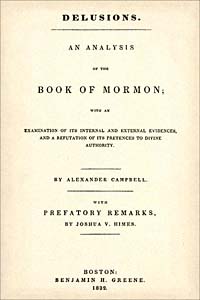
Vol. XIII. Boston, Mass., Friday, September 7, 1832. No. 36. THE MORMONITES. It is our humiliating duty to record the fact, that two of the preachers of this fanatical sect have visited our city, endeavouring to propagate their strange doctrines, and it is said that about fifteen persons here became converts, having been led away by their delusions. Rev. Joshua V. Himes, pastor of a Baptist church in this city has republished Mr. Cambell's Analysis of the pretended, "Book of Mormon," with prefactory remarks, for which service he merits the thanks of the public. Mr. Himes states that he has had several interviews with these men, and has examined their book, which they pretend is a revelation from God. He has acquainted himself with the details of their history and principles, and is satisfied of the delusion and absurdity of their system, and of its evil tendency. One of the leading tenets of these deluded people is, -- a positive contradition of the Scriptures -- that the promised land is not Palestine, but a tract of country situated in Jackson county, Missouri, ten miles from the town of Independence. Some of these enthusiasts have set out for "the promised land, the place of refuge for the house of Israel, and of the Gentile world, who will take warning and flee thither for safety." Mr. Himes says, in his preface, that "two individuals who have gone are defenceless females. They had acquired by their hard industry $2300, one of them having $800, the other 1500, which they have given up to the general stock. -- One of these females was in a consumption, and her friends thought she would not live to reach her destined place." Her afflicted sister told Mr. Himes, that if she had been buried here, before she had been led away by these errors, and had left satisfying evidence of grace, her grief would have been much lessened. |
Vol. VI. Haverhill, Mass., Saturday, Sept. 8, 1832. No. 37. Mormonism. Our readers are referred to the first page of our paper to-day, for the commencement of an exposure of one of the most impudent, disgusting and wicked impostures that ever the devil attempted to impose upon mankind. -- We understand that a couple of the agents of the arch-enemy of human happiness are inculcating the desulsions of Mormonism in the towns of Bradford and Rowley -- and, strange to relate, that they have made several proselytes, who will probably be swindled out of their property, and induced to remove to their "land of promise," in the State of Missouri. One of these proselytes, we understand, was recently an inhabitant of Haverhill, and a zealous professor of religion. A friend, speaking of the success of these fanatics, the other day, remarked, that "were some person to appear, advocating the expediency of walking and running on hands and feet instead of feet alone, he would not be wanting in proselytes." This is doubtless true -- so prone are men to run after new things. |
Vol. 1. Montpelier, Vt., Monday, Sept. 10, 1832. No. 46. Mormonism has broken out in Lynn, Mass. and has carried off several persons |
|
Devoted to Unitarian Christianity, Sound Morals, Literature and News -- David Reed, Editor. Vol. XXI. Boston, Mass., Monday, Oct. 6, 1832. No. ? Extracts from Mr. Campbell's Reviews of the Book of Mormon. ... However strange to relate, about fifteen persons, in this city [Boston] have been led away by these false doctrines, have been baptised and joined the Mormon church. And some of these persons have set out for the promised land, the place of refuge for the house of Israel, and for all the Gentile world, who will take warning and flee thither for safety (This place is situated in Jackson county, Missouri, ten miles from the town of Independence). Two individuals who have gone, are defenceless females. They had acquired by their hard industry $2300, one of them having $800, the other $1500, which they have given up to go into the general stock. One of these females was in a consumption, and her friends thought she would not live to reach her destined place. Her afflicted sister told me, that if she had been buried here, before she had been led away by these errors, and had left satisfactory evidence that she was prepared to die, her grief would have been far less than it is now. The remaining persons who were baptised and joined the church, and contemplate going to the west, possess between $3000 and $4000, which they also are going to put with the general fund, and which they can never draw out again, should they get sick of Mormonism and wish to return home to their friends.... |
Pub. by Nathaniel Willis. 11 Cornmill. Price $3.00 a year, or $2.50 in adv. Vol. XVI. Boston, Massachusetts, Wed., October 10, 1832. No. ? MORMONISM. We have not heretofore thought it necessary to occupy our columns with the rise and progress of this singular delusion. But we understand its abettors are sending out their agents, and actually making proselytes in different parts of the country. And therefore we have concluded to give a brief account of the matter. The leaders of the affair claim to have been selected as the medium of a new revelation from heaven. The Lockport, N. Y. Balance, published in the vicinity where it first began, has given a brief account of its origin from which we learn that |
|
NEW ENGLAND CHRISTIAN HERALD.
Vol. IV. Boston, Mass., Wednesday, November 7, 1832. No. 6. MORMONISM. We have before noticed the bare-faced and outrageous delusion abroad in the country, under the name of Mormonism; and though it is so shocking to common sense, to reflect upon such a silly, and egregiously absurd, though wicked system, yet the public mind ought to be informed of every circumstance connected with the history of these deceivers and disturbers of good order and decency. We understand that Smith is now in this city, or has been within a few days; and a Christian community ought to arise, and thrust him back to the den of his ignominy. A friend has requested us to insert the following account of the trial of Joseph Smith, Jr., for a breach of the peace, in "looking through a certain stone to find hid treasures, &c." The account was published in the Boston Christian Herald, some few weeks since; and the editor remarks: -- |
|
Vol. XXXIV. Keene, N. H., Thurs., November 8, 1832. No. 45.
The following article, taken from the New-York Evangelist is presented to the attention of the readers of this paper, and cannot fail of awakening, both interest and surprise. It gives a new proof that it is easy to mislead men by things that are novel and strange in religion; while it is extremely difficult to induce them, to receive and practice Christianity in its purity and spirituality. -- |
Vol. XIII. Boston, Mass., Friday, November 9, 1832. No. 45. Intelligence Respecting Mormonites. To the Editor of the Christian Watchman. |
ns Vol. III. Bennington, Vt., Tues., November 27, 1832. No. 46.
One of the Mormonite clergymen at Marietta, (Ohio,) has given out, that he is the comet, which has so long been calculated upon; and that, at a proper season he shall take occasion to blaze out. |
Vol. ? Boston, Mass., Thurs., November 29, 1832. No. ? THE MORMONITES. To the Editor of the Christian Watchman. |
Vol. ? Taunton, Mass., Friday, January 11, 1833. No. ?
THE MORMONITES. -- This singular sect, says the Ohio Atlas, now number about four or five hundred, at Mount Zion, their new Jerusalem in the West. There possessions are small compared with their numbers, being only about four sections of land. Twenty acres of the portion assigned for each family to improve, but they are to hold no property dhould they leave the community. Mount Zion is not elevated, and the settlement resembled "new beginnings" generally in the west. They are represented as already suffering for the neccaries of life, and by squallid poverty preparing for the reception of their expected Saviour. Their creed appears to have undergone but little change. -- Originally members of almost every sect, they cordially united in detesting all, save Mormons. They all pretend to the gift of miracles, of tongues, and of healing their sick, and of visions, although, like all modern miracles, often told but never seen. Their prophet, Smith, is now busy in restoring the present Bible to its primitive purity, and adding some lost books of great importance. A new Revelation is also forthcoming. The Mormons still profess to walk with angels, visit the third heaven and converse with Christ face to face. Their form of Baptism is changed to "I, John the Messenger, baptize thee," &c. The gift of impartinmg the Holy Ghost is yet professed. They pretend to have discovered where the Ark of the Covenant, Aaron's rod, the pot of Manna, &c. now remain hid. At no distant period they expect Christ will re-appear to live & reign on the earth a thousand years. Such are the present Mormons and such is the New Jerusalem. We believe their society now numbers something more than one hundred souls in this county, many of whom intend removing to Mount Zion in the Spring. Mormonism was introduced by a few illiterate disciples of Joseph Smith, in the Summer of 1831, a time when religious excitements were the order of the day. A sort of revival enthusiasm pervaded many neighborshoods, and wherever Mormonism obtained a footing, it spread like wild fire. Scores were awakened, converted, baptized, and endowed with the Holy Spirit in a few hours at a single meeting, in the midst of shoutings, wailing, fallings, contortions, trances, visions, speaking in unknown tongues and prophecying. The timid were frightened, the credulous believed, and we were frequently eye-witnesses to scenes of strange and unnatural conduct of Mormons, professedly under the influence of the spirit, that staggered the disbelief of the most stable and incredulous. But the storm passed, a calm followed -- reason triumphed -- and Mormonism waned. |
Vol. III. Boston, Mass., Sat., January 12, 1833. No. 2.
(From the Pittsburgh Advocate.)
The Board of Managers of the African Education Society of the City and vicinity of Pittsburgh, deem it necessary that the public should be made acquainted with the object of their association, and of the course they are now about to take. |
Vol. XXVI. New Bedford, Mass., Friday, April 5, 1833. No. 39.
Interesting American Antiquities. -- The editors of the N. Y. Daily Advertiser have translated the following extract of a letter from a correspondent in Tobasco, who has been engaged for some years in occasional investigations into the ruins of the ancient city of Palenque. |
|
Devoted to Unitarian Christianity, Sound Morals, Literature and News -- David Reed, Editor. Vol. XXII. Boston, Mass., Monday, April 6, 1833. No. 14.
(From the Baptist Weekley Journal)
Among the wonders of the present day, you may record the following. Many of the people called Mormons, have arrived at this place, and it is said, more are on the way. The condition of those that are here, must be very unpleasant, and their sufferings are, in no small degree, from the want of comfortable houses, and something on which to subsist. Their settlement extends to the West line of Missouri State, two miles and a half from this place; they manifest a disposition to, and no doubt soon would, go among the Indians, were they permitted; which by the way is not the case. They call this place the Mount Zion, or New Jerusalem, so often spoken of in Scripture; -- though it is not more elevated than the common face of the country, nor yet is there in it any thing strange or peculiarly prepossessing in its favor, more than any other portion of the West. |
Vol. XXXIII. Pittsfield, Mass., April 18, 1833. No. 1700.
The Mormons. -- Those people have established themselves at a place in Ohio, which they call Mount Zion. A writer in the Christian Watchman thinks that their system of religion is rather frail, and tending to dissolution. Respecting the "Golden Bible" he says that it is not even a cunningly devised fable. Every page bears the impress of its human authorship. Though free from vulgar obscenities, it is an absurd collection of dull, stupid, and foolishly improbable stories, which no person, unnless under the influence of powerfully excited feelings, can mistake for truth and inspiration. With its authors, the Book of Mormon cannot survive this generation. The next will remember it only to smile at the credulity of the present. Notes: (forthcoming) |
Vol. XXVI. New Bedford, Mass., April 19, 1833. No. 41.
Mormonism. -- We perceive by a letter from Independence, Missouri, to the editor of the Cincinnati Journal that difficulties have already begun in the Mormon community, at Mount Zion, in that quarter; one of the members having sued the Bishop, in a court of justice, for fifty dollars, for fifty dollars, which had been sent by plaintiff to said Bishop, from Ohio, "to purchase an inheritance for himself in Zion [in] these latter days." The jury found for the plaintiff; it appearing that though the Bishop had indeed appropriated the money "to the purchase of an inheritance," yet he had procured the deed to be drawn in his own name, to his heirs, &c. The writer states that on this decision several other members are ready to make similar demands on the Bishop. It appears by another letter from the same gentleman, (Mr. Pixley, a Baptist clergyman,) that since their settlement at Mount Zion -- or Jerusalem, as they sometimes term it -- four or five hundred, including men, women and children, have arrived there. Several others are said to be preparing to start there, from Cincinnati, in the course of a few weeks. -- |
Vol. XXXIII. Pittsfield, Mass., Thurs., April 25, 1833. No. 1701.
MORMONISM. -- By a letter to the Editor of a Cincinnati paper, from Independence, Mo., it appears that difficulties have already begun in the Mormon community at Mount Zion, in that quarter; one of the members having sued the Bishop, in a court of justice, for $50, which had been sent by plaintiff to said Bishop, from Ohio, "to purchase an inheritance for himself and the saints in Zion in these latter days." The jury found a verdict for the plaintiff; it appearing that though the Bishop had indeed appropriated the money "to the purchase of an inheritance," yet he had procured the deed to be drawn in his own name, to his heirs, &c. |
And Rockingham Gazette. Vol. XLIV. Portsmouth, N. H., Saturday, May 11, 1833. No. 10.
THE MORMONS. -- We have perused a pretty long and probably true account of this singular people, and their location in Mount Zion, contained in a letter published in the Christian Watchman from B. Pixley, and dated Independence, Jackson county, Mo. October [12], 1832, the very seat of the New Jerusalem. His account of their situation and prospects is [not very] flattering. About 4 or 5 hundred Mormons, men, women and children have collected at Zion. Their possessions are small compared with their numbers, being only about four sections of land. Twenty acres is the portion assigned for each family to improve, but they are to hold no property should they leave the community. [* * *] Their creed appears to have undergone but little change. Originally members of almost every sect, they now cordially unite in detesting all, save Mormons. -- They all pretend to the gift of miracles, of tongues, of healing the sick, visions, &c. though, like all other modern miracles, often told but never seen. Their Prophet, Smith, is now busy in restoring the present Bible to its primitive purity, and in adding some lost books of great importance. A new Revelation is also forthcoming. Elder Rigdon, pretty well known in this vicinity as an arch apostate, is now the first, best, and great preacher of Mount Zion. The Mormons still profess to talk with angels, visit the third heavens, and converse with Christ. [* * *] We believe their society numbers something more than one hundred souls in this county, many of whom intend removing to Mount Zion in the spring. [* * *] Mormonism was introduced by a few illiterate disciples of Joseph Smith, in the summer of 1831. [* * * ] |
Pub. by Nathaniel Willis. 11 Cornmill. Price $3.00 a year, or $2.50 in adv. Vol. ? Boston, Massachusetts, Wednesday, May 22, 1833. No. ? Mormonism and the Small Pox. There having been several cases of small-pox in the village of Jamestown, Chautauqua county, a committee of citizens was appointed to take measures to prevent its spreading. In their report the committee state that their efforts to prevent the spread of the disease have been hindered by a sect calling themselves Mormonites, who profess to believe that the disorder will not attack them, neither would they spread it, although they might come in contact with others not protected, even if the [smell] or matter covered them. Notwithstanding their belief, one of the Mormons had been seized with the disease, and it was feared that this sect would be the means of scattering the infection through the country. |
Vol. LI. Bennington, Vermont, Tues., May 28, 1833. No. 2599
The Mormons now prophesy the entire destruction of the wicked in 1837. |
Vol. XXVI. New Bedford, Mass., June 14, 1833. No. 49.
The Mormons. -- We have the last number of the 'Evening and Morning Star' printed at Mount Zion by the Mormons. It represents the society as flourishingly abundant 'in these last days.' It gives several commandments recently revealed to the prophets. Its style is affectedly ancient and scriptural. It commences a brief notice of 'worldly matters,' or foreign news, with this pretty exordium: 'Lo! there are great things near -- and while one nation rises to rejoice, behold another sits down to weep!' |
Vol. XXXIII. Pittsfield, Mass., Thurs., June 27, 1833. No. 1710.
The Mormons. -- One of the Mormonites has become dissatisfied with his new faith and brethren and has denounced them all, in a Westfield, N. Y. paper, in the words following: -- |
Vol. XXVI. New Bedford, Mass., Friday, June 28, 1833. No. 51.
Mormonites. -- A company of this modern and peculiar sect, comprising about one hundred persons, passed through Springfield, (Illinois) on Wednesday the 29th ult. on their way to the colony in Jackson county, Missouri. They were chiefly from the states of New York and Ohio. The appearance of most of them indicated that they had not been induced to change their faith to better their temporal condition, but had either been visited with some new light in scriptural matters, or been grossly deluded. |
ns Vol. V. Concord, N. H., August ?, 1833. No. ?
MORMONITES. -- It appears by a letter from Missouri, that the citizens of that state have broken up the Mormon establishment by force and arms, and tarred and feathered the leaders. These lawless proceedings of the people of Missouri are as blameworthy as any thing the Mormonites have done. It is pretended that the Mormonites "held out inducements for free negroes to settle in the county." This may be a great crime in Missouri, but will not be considered a very heinous one in this part of the country. It is also alleged that they "urged slaves to be unfaithful." This charge, coming as it does from their persecutors, may be set down as a falsehood. If the Mormonites had violated the laws of the state, why did not the people resort to the laws for redress? It will be said that the Mormonites are a set of visionaries and fools. This may be true, but this is no reason why they should be tarred and feathered. Fools, or persons not under the guidance of reason, are too numerous in the United States, and too obstinate, to be corrected and reformed by the Missouri process. |
|
Vol. XXXV. Keene, N. H., Thurs., August 22, 1833. No. 34. Correspondence of the New York Journal of Commerce. Lexington, Missouri, July 25, 1833. |
Vol. 31. Amherst, N. H., Friday, August 23, 1833. No. 51.
Riot and Outrage. -- Six hundred or more of the Mormonites have emigrated within the last two years to Jackson city [sic - county?] in Missouri, and have rendered themselves obnoxious to teh citizens, by holding out inducements for free negroes to settle in the country, and urging slaves to be unfaithful. -- Lately the citizens organized themselves for the purpose of breaking up the establishment. The Mormonite printing press was torn down; store and machine shop broken up; the leaders tarred and feathered, and a time set for their departure. What course may be pursued towards the followers, is yet unknown. |
Vol. XIV. Boston, Mass., Friday, August 23, 1833. No. 24.
For The Watchman.
Mr. Editor -- Some months since, "a Postscript" of a letter was published in your paper, stating in substance that two "Mormon" preachers were then in Bluffdale; -- that audiences, numerous beyond all former example, attended their preaching; -- that a powerful excitement in favor of their doctrines existed; -- and, finally, that one member of the Baptist church had already gone over to that order. Presuming that you feel an interest in learning more of this "Mormon excitement," as it is called, I will give you a brief history of its origin and progress. |
|
Vol. 69. Hartford, Ct., Monday, August 26, 1833. No. 3579. From the St. Louis Republican. Some very extraordinary proceedings have recently taken place in Jackson county, in this State... |
Vol. XIV. Boston, Mass., Friday, August 30, 1833. No. 25. MORMONITES. It appears by a letter from Missouri, that the citizens of that State have broken up the Mormon establishment by force and arms, and tarred and feathered the leaders. These lawless proceedings of the people of Missouri are as blame-worthy as any thing the Mormonites have done. It is pretended that the Mormonites "held out inducements for free negroes to settle in the county." This may be considered a great crime in Missouri, but will not be considered a very heinous one in this part of the country. It is also alleged they "urged slaves to be unfaithful." -- This charge, coming as it does from their persecutors, may be set down as a falsehood. If the Mormonites had violated the laws of the State, why did not the people resort to the laws for redress. It may be said that the Mormonites are a set of visionaries and fools. This may be true, but this is no reason why they should be tarred and feathered. Fools, or persons not under the guidance of reason, are too numerous in the United States, and too obstinate, to be corrected and reformed by the Missouri process. |
|
Vol. 31. Amherst, N. H., Saturday, August 31, 1833. No. 52.
Mormonites. -- Some extraordinary proceedings have lately taken place in Jackson County, in Missouri, in relation to a sect, known ny the name of Mormonites. A meeting of four or five hundred citizens was held, for the avowed purpose of driving these persons from that quarter of the country. In an address which was adopted by the meeting, it is stateed that the numbers of this sect are increasing, that there is danger of their obtaining the control of all offices in the county, and that the lives and property of others would be unsafe, if placed at the disposal of men so ignorant and superstitious. The address concludes with a declaration that no Mormonite shall in future be permitted to settle in the county; that those now residing there shall have time given them to remove, during which they shall remain unmolested; that the Editor of the Star, (a Mormonite paper) be required to close his office, and that if the owners of shops refuse to close them, prompt measures shall be taken to compell them to do so; that, the Mormon leaders be required to prevent further emigration to the county, and to counsel their brethren to comply with the above requisitions; and that those who shall refuse to comply with them, be referred to such of their brethren as possess the gift of divination, to ascertain the lot that awaits them. A committee was appointed to communicate information of these proceedings to the Mormon leaders, and the meeting was adjorned for two hours, at the expiration of which the committee reported, that they had waited on the Editor of the Star, who declined giving any definite reply until he could consult with his brethren. It was then resolved, that the printing office should be henceforth razed to the ground, which was immediately done by the members of the meeting. Three days afterwards the meeting again assembled, another committee appointed to hold an immediate conference with the Mormon leaders. -- In a few hours, this committee reported, that they had made an amicable arrangement with those leaders, who had agreed to leave the county, in consideration of which the committee had engaged on their part to prevent the use of farther violence. This report was unanimously adopted and the meeting was dissolved. |
Vol. III. Boston, Mass., Sat., September 7, 1833. No. 36.
Two Mormon preachers have been holding forth in Andover , Me. from the Mormon Book, and baptized nine persons, formerly members of the Free Will Baptist Church. |
Pub. by Nathaniel Willis. 11 Cornmill. Price $3.00 a year, or $2.50 in adv. Vol. XVIII. Boston, Massachusetts, Wed., September 11, 1833. No. 37.
THE MORMONS IN TROUBLE. -- The Mormonites have been banished from their Mount Zion, at Independence, Jackson Co. Missouri. We will not pretend to justify the severe measures, which have produced this result, but from what we have known of the deluded sect in this region, we are prepared to believe, that they were exceedingly troublesome in Missouri. Pity that some of the Mormon prophets had not foreseen, and foretold this disastrous result. It would have saved some of their simple, but well-meaning followers, much trouble and some property. Many of these deluded ones, will now regret that they gave so little heed to the counsel of friends, who saw where this matter would end. We would now advise those Mormons who have looked forward to the Land of Promise, (which has now become so unpromising,) as their home, to give up their dreams and fanaticism, and stay where they are. We would also advise the Mormon prophets at Missouri, to give up their wicked schemes. They cannot succeed. The intelligent portion of community, have always regarded them as a set of deceivers. Their 'miracles,' 'unknown tongues,' 'revelations,' &c. have always been considered as parts of a black-hearted scheme, to gull the ignorant. Now, their wickedness is manifest to all. Had they possessed common sense, or a thousandth part of the spirit of prophecy, which they claimed, they would have foreseen the result of their plan. If God had commissioned them to build a Mount Zion in Missouri, he would have given them favor in the sight of the 'people.' This he has not done. With 1200 of their deluded followers at their heels, they are now compelled to flee before an indignation which their hypocrisy, avarice and folly had excited. Let them now pause, confess their sins, beg pardon of the hundreds they have deceived and ruined, pray God to forgive their daring blasphemy, become honest men, and work for a livelihood. -- |
Pub. by Nathaniel Willis. 11 Cornmill. Price $3.00 a year, or $2.50 in adv. Vol. XVIII. Boston, Massachusetts, Wed., November 13, 1833. No. ?
THE MORMONITES. -- There is no religion or rather form of religion, no creed or system of politics, that will not find its advocates. A friend from the upper part of Oxford County informs us, that one Mormon preacher from Ohio, and another from New Hampshire, reinforced by a pair of preachers from Saco, have been making a great stir somewhere about Lake Umbagog. Nearly the whole of the Freewill Baptist Church, numbering thirty persons, with their pastor, have gone over to the Mormonites, and avowed their faith in the book of Mormon. -- The have all been re-baptized in the waters of the Lake. In Andover, the preachers have had some trouble with the citizens, and were rather unceremoniously dismissed. -- |
|
Vol. XXXV. Keene, N.H., Thursday, November 14, 1833. No. 46. From the Portland Advertiser. The Mormonites. -- There is no religion, or rather form of religion, no creed or system of politics, that will not find its advocates. A friend from the upper part of Oxford County informs us, that one Mormon preacher from Ohio, and another from New Hampshire, reinforced by a pair of preachers from Saco, have been making a great stir somewhere about Lake Umbagog, in the plantation of Letter B, in the vicinity of Lake Umbagog, nearly the whole of a Freewill Baptist Church, numbering 30 persons, with their pastor, have gone over to the Mormonites, and avowed their faith in the book of Mormon. They have all been re-baptized in the waters of the Lake. In Andover, the preachers have had some trouble with the citizens, and were rather unceremoniously dismissed. -- |
Vol. XIV. Amherst, N.H., Friday, December 6, 1833. No. 33. From the St. Louis Republican, Nov. 12.
|
|
Devoted to Unitarian Christianity, Sound Morals, Literature and News -- David Reed, Editor. Vol. XXII. Boston, Mass., Sat., December 7, 1833. No. ? M I S S O U R I. Some months since, it was resolved by a meeting held in Jackson County, Missouri, that the Mormonites should not be suffered to remain within its limits, and an agreement for their departure was said to have been formed. A letter from a Mormonite leader states, that a party of 40 or 50 persons on the 31st of October demolished many of the houses of the Mormonites, and beat some of them nearly to death. On the following night, the work of destruction was again commenced, and a conflict ensued, in which one of the assailants was severely wounded by a musket shot. Three days afterwards, An armed body to the number of 200, made a new attack, when two or three were killed, and several mortally wounded, by the Mormonites. This was on Monday: on Tuesday, in another conflict, about twenty of the assailants perished, and four of the Mormonites were killed or severely wounded. Among the assailants who were killed, were two lawyers by the names of Hicks and Breazeale |
Vol. ? Boston, Mass., Thurs., December 12, 1833. No. ?
The Mormonites. -- It appears that the Mormonites have determined to leave the county in Missouri, where they were recently attacked by the people; and have resolved to obtain redress, if possible, through the medium of the Courts of law. The statement of the number of persons killed in the conflict was exaggerated, according to the most authentic accounts, the number did not exceed six. |
Vol. XXXIV. Pittsfield, Mass., Thurs., December 12, 1833. No. 1734.
The War against the Mormonites. -- It appears from the following extract from the St. Louis Republican that the affrays between the Mormonites and other inhabitants of the western part of Missouri have not been so sanguinary as at first represented, and are supposed to be now at an end: |
|
Vol. XXXV. Keene, N.H., Thursday, December 12, 1833. No. 50. CIVIL WAR IN MISSOURI. The St. Louis Republican of the 12th inst. contains a letter from Orson Hyde, one of the Mormonites settled in Jackson county, giving the particulars of several rencontres between the Mormonites and a mob collected to destroy their property. Several were killed on both sides. Among the latter were two attornies named H. L. Breazeale and Mr. Hicks. |
Vol. XIV. Boston, Mass., Friday, December 13, 1833. No. 50. THE MORMONITES IN MISSOURI. The enemies of the Mormonites pulled down their printing office last summer, and in the recent disturbances they tore off the roofs from their houses. -- These were the first acts of violence in both cases, and the bloodshed which followed was the natural consequence of these acts. It may be very unpleasant to have such men as the Mormonites for neighbors, but so long as they do nothing worse than "invite free negroes to join them from all parts of the country," and merely publish the prophecy that the present inhabitants of the counties in their vicinity are destined "to be driven off, and that they, the Mormons, are to possess the country," we think they might have been safely left to themselves. There can rarely be a case in which the people need any other protection against "fanatics" than that which is afforded by the laws of the land, and we have not yet seen any reason for making this case an exception to the general rule. -- |
Pub. by Nathaniel Willis. 11 Cornmill. Price $3.00 a year, or $2.50 in adv. Vol. XVIII. Boston, Massachusetts, Wed., December 14, 1833. No. ?
THE MORMONITES. -- Some further particulars, relating to the conflict between the Mormonites and the people of Jackson connty in Missouri, are given in the St. Louis papers. It is said, that one of the Judges of the circuit, and several civlil officers, were thrown into prison in consequence of an attempt to interfere, and detained for some hours: and that the Lieut. Governor had been driven out of the county. Almost all the people of the county are concerned on one side or the other, so that it is supposed that the militia of the neighborhoring counties will be called out by the Governor, to enforce the laws. The treatment of the Mormonites is described as extremely outrageous, and they are commended in some of the papers of St. Louis for their resistance. |
|
Vol. LXIX. Hartford, Conn., Monday, December 16, 1833. No. 3595.
The Mormonites, who had located themselves in Jackson county, Missouri, have been assaulted by the people of that county in a most outrageous manner; many of their homes have been demolished, and the inmates, women and children, compelled to flee for their lives at midnight. They were attacked by mobs several successive days, and were finally obliged to arm themselves and fire upon their assailants, in self-defence, by which several were killed. Whatever may be the absurdity or extravagance of the religion of the Mormonites, it will furnish no justification of such proceedings, which are in the highest degree disgraceful to the State where they have been tolerated. |
Vol. XXXII. Amherst, N. H., Froday, December 20, 1833. No. 16.
The Fayette (Miss.) Monitor of Nov. 22, contains a long article in explanation of the recent conflicts between the Mormons and the citizens of Jackson county. The Mormons, about seventy in number, killed two and wounded several others of a party of seventeen citizens who visited their settlement for the purpose of making some arrangement in relation to their covenant to leave the county. After the first fire, which was ineffectual, Mr. Brazeale ascended an eminence, and proclaimed peace -- with these words in his mouth, he was shot. The conflict became general, and the citizens were driven off. |
|
Devoted to Unitarian Christianity, Sound Morals, Literature and News -- David Reed, Editor. Vol. XXII. Boston, Mass., Saturday, December 21, 1833. No. ?
(From the New York Observer)
INDEPENDENCE, (Missouri) Nov. 7, 1833. |
Vol. VIII. Haverhill, Mass., Saturday, Jan. 11, 1834. No. 3.
The Wayne Sentinel says -- "The original manuscript of the Book of Mormon was written some thirty years since, by a respectable clergyman, now deceased. It was designed to be published as a romance, but the author died soon after it was written; and hence the plan failed. The pretended religious character of the work has been superadded by some more modern hand -- believed to be the notorious Rigdon." |
|
Vol. II. N. Adams, Mass., Wednesday, January 22, 1834. No. 12.
The Wayne Sentinel states that the mysteries of Mormonism are about to be developed to the world. Dr. P. Hurlbert, of Kirtland, Ohio, who has given the matter a thorough investigation, intends publishing a history of this new faith. The Sentinel says -- "the original manuscript of the Book of Mormon was written some thirty years since, by a respectable clergyman, now deceased. It was designed to be published as a romance, but the author died soon after it was written, and hence the plan failed. The pretended religious character of the work has been superadded by some more modern hand -- believed to be the notorious Rigdon. These particulars have been derived by Dr. Hurlbert from the widow of the author of the original manuscript." |
|
Vol. II. N. Adams, Mass., Wednesday, February 12?, 1834. No. 15.
To the Editor of the Berkshire Advocate: |
|
Vol. VI. Hartford, Conn., February 17?, 1834. No. 310? MORMONISM. Mr. Editor: As the papers seem just at this time to be noticing the trounles of the Mormons. it may be interesting to some of our readers, to give a brief history of the rise and progress of this sect. |
Vol. IV. Boston, Mass., Saturday, February 22, 1834. No. 8.
TRAGICAL EVENT! -- The following tragical story of a Mormon preacher is given by the editor of the Independent Messenger, on the authority of a gentleman from the western part of the State of New-York. We shall expect to see it authenticated by the Western papers, if it be true. |
Vol. XXXIV. Pittsfield, Mass., Thurs., April 3, 1834. No. 1750. MORMONITES. Tragic Event. -- (see The Liberator of Feb. 22) |
Vol. XIII. Brattleboro, Vt., Thurs., May 9, 1834. No. 16.
TRAGICAL EVENT. -- A Mormon preacher announced some short time since, to the inhabitants of a town in the western part of N. York, that he would walk and preach upon the water. It was discovered previous to the day of miracles, that a line of plank had been laid over a shallow pond, four inches from the surface. The centre of the pond consisted of deep and soft mud; and some of the inhabitants, through mischief, sawed the plank in this dangerous spot. On the day appointed the preacher commenced his march across the water in the presence of a large and astonished assembly. Just as the miracle seemed to have wrought conviction on the multitude, of his divine power, he stepped upon one of the detached pieces, sallied sideways, and instantly plunged floundering and sinking into the watery mire. He sank, and before the confused assembly were in a condition to afford him relief, perished, a victim to his own imposture. |
Vol. XIII. Brattleboro, Vt., Thurs., May 23, 1834. No. 18.
The Mormon War in Missouri is about to be resumed. A fanatical leader, styled General Joe Smith, has sent forth, in the form of a circular, his pretended revelations from on high, requiring the aid of the faithful to "expel the infidels from the Holy Land." About 500 are said to be on the move, and they are armed with dirks, swords, pistols, guns, and other hostile weapons. The prophet, it is said, has a sword more than four feet long, and professes an expectation of [sharing the fall] of a martyr in the coming contest. |
|
Devoted to Unitarian Christianity, Sound Morals, Literature and News -- David Reed, Editor. Vol. XXIII. Boston, Mass., Monday, June 7, 1834. No. ? THE MORMONITES. The Mormon War in Missouri is about to be renewed. A fanatical leader, styled General Joe Smith has sent forth, in the form of a circular, his pretended revelations from on high, requiring the aid of the faithful to "expel the infidels from the holy land." About 500 are said to be on the move, and they are armed with dirks, pistols, guns, and other hostile weapons. The prophet, it is said, has a sword more than four feet long, and professes an expectation of sharing the fall of a martyr in the coming contest. |
Vol. IX. Haverhill, Mass., Saturday, July 4, 1834. No. 2.
From the Christian Advocate and Journal.
Messrs Editors: In a late tour through Ohio, Kentucky [&] Tennessee, I gleaned some information on the subject of ancient mounds, fortification[s], &c., which I transmit to your disposal. The most remarkable of those antiquated works is at Circleville, Ohio.... |
Vol. IV. Boston, Massachusetts, July 5, 1834. No. 27.
|
|
Vol. ? Hartford, Conn., Monday, July 7, 1834. No. ? THE MORMON WAR. We learn by the following article, and others in other papers corroborating it, that violence and bloodshed may be expected in Missouri between those fanatics the Mormonites and those, almost equally fanatic, who seek to put down their superstitions and delusions by force of arms: -- National Intelligencer. |
Vol. ? Danbury, Conn., Thurs., July 10, 1834. No. ? (article on Missouri ferry sinking & Mormons - under const.)
|
|
Vol. ? Hartford, Conn., Sunday, July 14, 1834. No. ?
From the National Intelligencer.
Current information from Missouri confirms the apprehensions entertained of the breaking out of a furious Civil War between the Mormons and the residents of Jackson county, in the State of Missouri. The Fayette Monitor, of the 21st, says "By our next number we anticipate something (on the Mormon controversy) in an authentic form. The people may look for the worst." |
Vol. XIII. Brattleboro, Vt., Thurs., July 18, 1834. No. 26.
THE MORMONS. -- The troubles about this sect look really ominous; we should not think it at all strange if a civil war should rage over a considerable portion of the far west before the difficulties are ended. It will be recollected that the Mormons were expelled from Jackson county in the state of Missouri by force. They have lately returned to that vicinity in large bodies, well armed; and on the other hand the inhabitants now in possession are preparing to resist them in a similar manner. -- A committee from each side recently met at Liberty in Jackson [sic] county, to arrange if possible the terms of a compromise. So impossible do the citizens of the county consider it, to occupy the same ground with the Mormons, that they proposed through their committee to buy all the property of the members of the sect, at a valuation of disinterested appraisers, with the addition of one hundred per cent to that valuation. If this did not meet the views of the Mormons, they offered to sell on the same terms. To neither of these propositions did the Mormons assent and the meeting broke up without coming to any terms. A most lamentable affair occurred immediately after the dissolution, which has greatly heightened the excitement already existing. Eight of the citizens of Jackson county, a majority of whom were a part of the committee before mentioned, on their return attempted to [cross] the Missouri at the ordinary ferry at 9 o'clock in the evening. The boat, upon their setting out, appeared perfectly sound and the weather was serene and cloudless, but ere they had proceeded a hundred yards the boat suddenly filled with water and sunk. Five men were drowned, the rest escaping with great difficulty. -- The survivors feel certain that the boat struck nothing, and that something had been done to the boat to sink [her], -- which something is of course referred to their enemies the infuriated Mormons. |
Vol. XV. Boston, Mass., Friday, July 18, 1834. No. 29.
THE MORMONS IN THE WEST.
It must give pain to every orderly citizen, who feels an honest pride in the fair fame of his native land to observe the discontents, which are ripening into petty civil wars, in different sections of our United States. Do not those occurrences admonish the wise and good to unite in the best measures to counteract these outbreakings of the worst passions? We give the following extract of a letter, because we believe it to be our duty to be aware of the internal dangers that threaten our national peace: -- |
Vol. XIII. Brattleboro, Vt., Thurs., July 25, 1834. No. 27.
A MORMON BATTLE. -- A letter received, by a gentleman in this neighbourhood, direct from Missouri, stating that a body of well armed Mormons, led on by their great prophet, Joe Smith, lately attempted to cross the river into Jackson county. A party of the citizens of Jackson county opposed their crossing, and a battle ensued, in which, Joe Smith was wounded in the leg, and the Mormons obliged to retreat: that Joe Smith's limb was amputated, but he died three days after the operation. -- |
Vol. XXVIII. New Bedford, Mass., Thurs., July 25, 1834. No. 3.
The Mormons have quietly retired, it is said, from the contemplated scene of action without striking a blow. They, however, contend that the spot is "Zion," and though not established, will, in the course of 100 years, become their "Holy land" and resting place. Nothing further with respect to the death of their general and leader, Joe Smith, who was reported to have fallen while leading on a column of his people to the rescue of their lands. |
ns Vol. XII. Salem, Mass., Tues., July 29, 1834. No. 60.
From the Baltimore American of Friday.
|
Vol. XXV. Newport, R.I., Wednes., July 30, 1834. No. ? From the Baltimore American of July 27th. A particular account of the last Mormon campaign in Missouri, is given in the Western papers. The belligerents seem to have been mutually exasperated, and to have approached very near to a general and bloody battle. The numbers engaged in the contest on both sides are much larger than we had supposed. The Mormons assembled late in June, in Clay county, (Mo.) and were reinforced by parties principally from Ohio, until they mustered from 800 to 1000 men, armed with "guns, tomahawks, knives, and from two to four braces of pistols each." Their design was to cross the river and take possession of Jackson county -- the 'Zion,' as they term it, of their faith. Their leader, the prophet Jo Smith, promised them to "raise again" all who should be slain in fighting the battle for the possession of this Holy Land. The Jackson county people were equally determined to resist the passage of the river, at all hazards. A letter from a person on the spot, published in Maysville, Ky, says that Jackson County raised 900, and Lafayette 400, and that several hundred more were ready to come at a moment's warning. The feeling of the people may be conjectured from the expression of opinion in the letters quoted, that had the Mormons attempted to cross the river, not one of them would have been "left to tell the tale." "No quarter would have been given, and we could have killed most of them before they got across the river." There were some attempts at negotiation. The Jackson county people offered to buy all the lands of the Mormons at a double price -- which was refused. The invaders professed peaceful intentions and a desire only to take quiet possession of their own lands -- professions which appear to have got a credit. In the end, however, they desisted from the enterprise, and postponed the crusade for the possession of their "Zion," for fifty or a hundred years. They will take up their intermediate residence somewhere else; and thus the battle, which must have been obstinate and very bloody, was avoided. It is to be hoped, for the sake of ordinary justice, that means will be found, for making compensation to those deluded men for the property they are forced to abandon, as well as for the damages they have sustained by being driven out. |
Vol. XXXIV. Pittsfield, Mass., Wed., July 31, 1834. No. 1767.
The Report that Joe Smith, the Mormon leader, had been killed in an engagement between the Mormons and the citizens of Jackson county, is not confirmed by the latest advice from the scene of action. |
Vol. 32. Amherst, N. H., Friday, August 1, 1834. No. 48.
The Mormons
|
|
Vol. ? Hartford, Conn., Sun., August 4, 1834. No. ? THE MORMON CONTROVERSY. The Report which reached us some time ago, in the shape of a private letter published in an Ohio paper, of a battle between the Mormons and the inhabitants of Jackson County, in Missouri, turns out to be untrue. How near they have been to a Battle, and a very bloody one, will appear from the following information, (which, as to facts, may be relied upon,) copied from a Kentucky paper. -- |
Vol. XIII. Brattleboro, Vt., Thurs., August 8, 1834. No. 29.
LIBERTY, July 2, 1834.
This desolating disease has at length made its appearance in the vicinity of this town. There remains now no doubt of its existence. We are informed by medical gentlemen of this place, that it exists to an alarming degree among the recent Mormon emigration to the upper country, and already has spread its ravages among their resident brethren of this county. It has been, we are informed, but three or four days, since it first broke out among them; and in that short time, so fatal has it generally proved, that out of eighteen cases, thirteen have resulted in death; of most of the surviving five, but little hope is entertained. We have not heard of any cases in this county, except among the Mormons. |
Vol. XIII. Brattleboro, Vt., Thurs., August 15, 1834. No. 30. BOWLING GREEN, Mo., July 15, 1834. MORMONS. -- We have been informed that a meeting of the Mormons, residents in this county, was held on Saturday, the 13th instant, about ten miles from this place; at which they resolved to renounce the doctrine of Mormon for the present, or in other words, to remain silent and neutral until something new shall have been revealed to them from heaven. -- Numbers of those, who some time since went to Jackson, are daily returning on their way back to the place from whence they started. It is said that the Cholera had broken out in their camp, and that many had died. Some of those returning express themselves much dissatisfied with their prophet, Gen. J. Smith. They said he has failed in all his attempts to cure the cholera, or to bring the dead to life. |
|
Vol. XXXVI. Keene, N. H., Thursday, August 28, 1834. No. 35.
Gen. Joe Smith has led his Mormon subjects back to Ohio. They have travelled nearly 1600 miles. |
|
Vol. XI. Boston, Ma., Thursday, December 4, 1834. No. 664. MORMONISM. We do not recollect to have seen any account of the origin of this vulgar humbug, so circumstantial as the following. The Sacket's Harbor Courier mentions that a lazy fellow, who had been county pauper, had lately attempted to raise recruits in that neighborhood, for "Joe Smith," one of the original Mormonites. The fellow pretended that he had a withered arm miraculously cured. In consequence of his attempt at imposition, a letter was addressed to a gentleman of high respectability in Palmyra, for the purpose of obtaining correct information on the subject of Mormonism. The reply gives the annexed history. |
|
Devoted to Unitarian Christianity, Sound Morals, Literature and News -- David Reed, Editor. Vol. XXIII. Boston, Mass., Monday, December 30, 1834. No. ?
(From the Sackets Harbor Courier)
A lazy fellow who was formerly a county pauper, has lately attempted to raise recruits far "Joe Smith," on Pillar Point, near this place. He pretended that he had a withered arm miraculously cured. From a knowledge of this bold attempt at imposition, and with a view of getting correct information an this subject of Mormonism, a person in this village addressed a letter to a gentleman of the first respectability in Palmyra and received the following answer: |
|
Vol. I. Barre, Mass., Friday, January 30, 1835. No. 37. "The Book of Mormon." Most of our readers may recollect reading some account of a sect denominated Mormonites, who are located somewhere in the vicinity of Palmyra, N. York. We have recently obtained the loan of a book with the above title, and of all ridiculous, unmeaning jargon that we ever read, this 'caps the climax' of the whole. It appears that the author of the book, and Captain-General of the whole tribe, consisting of some thousands, is one Joseph Smith, Jr. a mechanic [sic], and formerly, if not now, of dissolute habits. It is satated that on a certain night he dreamed a miraculous dream, which instructed him where were deposited (upon the side of a hill) in the town of Manchester, N. Y. several golden plates, on which was something written purporting to originate from the record of Nephi, and sealed by the hand of Mormon. It further appeared that the day subsequent to his dream, he proceeded to the 'side of the hill,' and sure enough found the golden plates! The writing upon these plates, is the foundation of the Mormon creed. |
|
Vol. I. Barre, Mass., February 6, 1835. No. 38. Mr. Editor -- I noticed some remarks in your paper in relation to the book of mormon, which I consider incorrect and unjust, and which, if unnoticed are calculated to prejudice the minds of your readers against the book, and that peaceable and pious sect of christians who believe it to be the work of inspiration. In order to make our doctrine appear as absurd as possible, it is reported that Joseph Smith was a man of "dissolute habits." That is incorrect. He was a pious farmer, of good moral chaarcter; when the existence of the plates containing the book of mormon was revealed to him, which was done by visions and such other direct communications from heaven as the bible declares should take place in these latter days; but was not permitted to obtain them till the lord prepared him for so great a work, which was done four years afterwards. As good a man as we believe Joseph Smith to be, I would inform your readers that we do not pin our faith on his sleeve as many suppose; but our doctrine is founded on the scriptures of the old and new testaments as well as on the records of Nephi, and contains nothing that cannot be proved from the bible. We do not expect, however, that we shall be able at once, to satisfy all of the truth of our doctrine, any more than the Apostles did in their day; but we are sure that if people had a correct knowledge of our doctrine they would not believe us to be such a deluded set of fanatics as we are represented. I hope therefore that men of candid minds will hear both sides of the question before they pass their judgment against us. |
Vol. ? Northampton, Mass., March ?, 1835. No. ?
Mormonism, strange as it may appear, has found votaries even in New England and in three or four neighboring towns they have regular exercises. The society in South Hadley is partially Perfectionists and partially Mormon, exhortations, dancing and all sorts of strange delusions and vagaries of the brain and contortions of the body being practised. This is the land of freedom and liberty, and we sometimes are disposed to think that the wildest extravagances and grossest absurdities spontaneously come up under its broad banner. No other country on earth can boast of such varied forms of religious sects and such palpable departures from the primitive simplicity and purity of the Gospel, as this country. We would place no restraints upon the conscience of any man. We would not forge chains nor bind fetters around any human mind, but we would gladly see public sentiment frown upon those mental hallucinations which disgrace christian lands, and shun communion with those preposterous forms of worship, which are merely solemn mockeries of Religion! The Mormons were disturbed in their assembly last week in South Hadley by some idle fellows, who were brought before Mr. Justice Wells in Northampton and bound over for trial. |
Vol. XXVIII. New Bedford, Ma., March 13, 1835. No. 36.
Mormonism. -- The Northampton Courier states that the Mormons have formed societies in several towns in that neighborhood, and have regular religious exercises after thier own creed. In South Hadley is a society partly Perfectionists and partly Mormons. The religious exercises [consist] of echortations, dances, &c. and the creed is a tissue of the wildest and grossest absurdities. We could not have believed that this new delusion would have found a dozen proselytes aming the highly intelligent citizens of old Hampshire but it seems the contrary is the fact. The Mormons were disturbed in their assembly last week in South Hadley by some idle fellows, who were brought before Mr. Justice Wells in Northampton and bound over for trial. |
Vol. 33. Amherst, N. H., Friday, March 13, 1835. No. 28.
The Northampton Courier states that the Mormons have formed societies in several towns in that neighborhood, and have regular religious exercises after their own creed. In South Hadley is a society partly Perfectionists and partly Mormons. |
|
Vol. LXXI. Hartford, Conn., Monday, March 16, 1835. No. 3660.
Mormonism, strange as it may appear, has found votaries even in New England and in three or four neighboring towns they have regular exercises. The society in South Hadley is partially Perfectionists and partially Mormon, exhortations, dancing and all sorts of strange delusions and vagaries of the brain and contortions of the body being practised. This is the land of freedom and liberty, and we sometimes are disposed to think that the wildest extravagances and grossest absurdities spontaneously come up under its broad banner. No other country on earth can boast of such varied forms of religious sects and such palpable departures from the primitive simplicity and purity of the Gospel, as this country. We would place no restraints upon the conscience of any man. We would not forge chains nor bind fetters around any human mind, but we would gladly see public sentiment frown upon those mental hallucinations which disgrace christian lands, and shun communion with those preposterous forms of worship, which are merely mockeries of religion! The Mormons were disturbed in their assembly last week at South Hadley by some idle fellows, who were brought before Mr. Justice Wells in this town, and bound over for trial. -- |
|
Vol. XXXVII. Keene, N. H., Thursday, March 26, 1835. No. 13.
A strange set of fanatics, calling themselves Mormons, have formed societies in the neighborhood of Northampton. The Courier of that place says; -- "The Society in South Hadley is composed partially of Perfectionists, and partially of Mormons; exhortations, dancing, and all sorts of strange delusions and vagaries of the brain and contortions of the body being practiced. They were disturbed in their assembly last week by some idle fellows, who were brought before Mr. Justice Wells in this town, and bound over for trial." -- Atlas. |
Of Literature & Politics. Vol. XLVI. Portsmouth, N. H., Saturday, July 4, 1835. No. 27.
An Angel caught. -- (see original article in NY paper) |
Vol. X. Haverhill, Mass., Saturday, August 22, 1835. No. 7.
JO SMITH. -- This Mormon impostor, it is said, has lately purchased three mummies which are now exhibiting through the country. He says that they are the bodies of Joseph the son of Jacob, King Ablimelech and his daughter. |
N. S. Vol. I. Concord, Monday, August 31, 1835. No. 48.
THE MORMONITES. On Tuesday and Friday evenings, one of this deluded sect held forth in the Town Hall in this village; and he proposes to continue his lectures, until he has given a full exposition of the doctrines, sentiments and practices of what he terms the "Church of the latter day Saints." A third will be given this (Monday) evening. |
Vol. XXXVI. Pittsfield, Mass., Thurs., September 3, 1835. No. 1824.
Jo Smith, the Mormon prophet, has bought 3 mummies, and has discovered that they are the bodies of Joseph (the son of Abraham) and King Abimeleck and his daughter. They are now carrying them about the country, with which to gull poor human nature. |
ns Vol. XIII. Salem, Mass, Friday, September 4, 1835. No. 71.
Cochran the Imposter. -- Some of our readers probably remember the abominable impositions of this scoundrel in Maine; on the discovery of which he was tried on three indictments for adultery, in Oct. 1819, and sentenced to the Massachusetts State Prison for three [sic - four?] years. -- The Springfield Journal says, that Cochran has recently figured in the vicinity of South Hadley, under the assumed name of "Jacob the Prophet," pretending to be a prophet of the Most High God, and to the power to work miracles. He succeeded there in making a number of proselytes and founding a small sect of religionists. As soon as his real name and character became known to the inhabitants, he absconded, and went to Stratham, N. H. taking with him some of his deluded followers, a number of whom were young females. He returned to South Hadley not long since, in female clothing! He thus escaped recognition, and the fact of his visit was not known until after he left. It is believed that he now occasionally visits Hadley, and holds secret meetings with his deluded followers, most of whom are females. He is said to be about 50 years of age. |
Of Literature & Politics. Vol. XLVI. Portsmouth, N. H., Saturday, Sepember 5, 1835. No. 36.
COCHRAN THE IMPOSTER. -- Our readers well recollect this scroundrel who flourished in our vicinity several years ago. In 1819 he was sentenced to the Massachusetts State Prison for three [sic - four?] years. He has recently been figuring in South Hadley, Mass. under the assumed name of "Jacob the Prophet," pretending to possess the power to work miracles. He succeeded there in making a number of proselytes and founding a small sect of religionists. As soon as his real name and character became known to the inhabitants, he absconded, and came to Stratham, in this state, taking with him some of his deluded followers, a number of whom were young females. The Springfield Journal states that he returned to South Hadley not long since in female clothing! It is believed that he now occasionally holds secret meetings with his deluded followers in that vicinity. He is a dangerous man, and should be held up to the same detestation as the notorious Mathias. If we could have the heart to see any man consigned to such a punishment, we should think his offences such as to entitle him to a residence in our new jail for a year -- perhaps however, some judge more merciful might be disposed to commute his punishmnet to hatd labor in the state prison for life. |
|
Vol. I. St. Albans, Vermont, Tuesday, September 15, 1835. No. 13.
MORMONISM IN NEW-ENGLAND.
The Mormon Society here is probably more numerous than in any other village in New England; between thirty and forty persons are included in the church. An old barn standing by the road side has been fitted up as a temporary place of assemblage, and on entering it we found quite a numerous audience collected, the majority of whom were females. On the scaffold of the barn were seated twelve Mormon Apostles, so called by believers, from Ohio. They looked fresh from the back woods. A brother of Joe Smith, the chief prophet, composed one of the number. We had been seated but a short time before the service commenced. After singing two or three hymns, one of the Apostles arose and commenced murdering the King's English, in an address on the abuse of gifts. He said that God in his mercy had vouchsafed "to the church of the latter day saints," i.e. the Mormons, certain peculiar gifts -- and among these were "the gift of tongues," and the "gift of healing." It was concerning the abuse of these two gifts especially, that he wished to address the audience at the present time; inasmuch as that through the abuse of them by the saints, great harm had resulted to the church. |
|
Vol. XXXVII. Keene, N. H., Thursday, October 8, 1835. No. 41.
The Cochranites at South Hadley, we learn, have, or are about to abandon their delusions and belief in miracles and give up their public meetings. This is as it should be. It is paying a suitable regard to public opinion, and acknowledging that they have labored under wretched infatution, which has done little else than to deprive the consecrated exercises of the Sabbath of their serious and devout character. We feel no sentiment but that of pity fro men or feeble minds who are wrought upon by artful and designing impostors. Hence we have felt deep regret that any of the sober and sedate people of South Hadley, should have been duped by that archknave Cochran. |
ns Vol. XIII. Salem, Mass, Tuesday, October 13, 1835. No. 82.
Heathen Temples on Lake Erie. That bold-faced imposter, Joe Smith, of Golden Bible and Mormon memory, has caused his followers to erect on the shores of Lake Erie, near Painesville, (Ohio,) a stone building 53 by 78 feet, with dormer windows, denominating the same the "Temple of the Lord." We should think this work of iniquity extorted out of the pockets of his dupes, as it reflects its shadows over the blue lake, would make the waters crimson with shame at the prostitution of its beautiful banks to such unhallowed purposes. -- N. Y. Star. |
Vol. XXV. Newport, R. I., Wed., November 4, 1835. No. 28.
Mormons. -- A correspondent of the 'Miami of the Lake' gives a short description of the Temple of Mormon, or, as it is called, the 'Temple of the Lord,' in Kirtland, (eleven miles south east of Painesville,) Geauga county. It is a stone ediface, 58 feet 8 inches by 78 feet 8 inches, two full stories high, with dormer windows in the roof, which give it a singular appearance. For the size and peculiar construction of the 'Temple,' and the addition of the extra 8 inches each way, the leaders of this infatuated people give no other reason, but, as they tell their following, that the Lord gave his direction. The house is rather an expensive one, the writer adds, built by the labor of the poor people, who in their delusion, follow Joe Smith and Rigdon. |
|
Vol. XXXVII. Keene, N. H., Thurs., December 10, 1835. No. 50.
Matthias went to join the Mormons -- but his ideas were too gross even for them.... |
Vol. XXXVI. Pittsfield, Mass., May 12, 1836. No. 1860.
The Mormons have erected in Kirtland, Ohio, a temple costing $40,000. The building by its description will no doubt make a beautiful place for imposture and deception. The Mormons are very eager to acquire an education. Men, Women and Children are studying Hebrew. They have remarkable revelations, work miracles, heal the sick, &c. Notes: (forthcoming) |
|
Vol. XXXVIII. Keene, N. H., Thursday, May 19, 1836. No. 20.
THE MORMONS. -- A gentleman living in Loraine County, (Ohio) writes that a more extraordinary sect has not sprung up since the days of Mahomet. In the town of Kirtland they have erected a stone temple at an expense of $40,000. It is 60 by 80 feet broad, and 59 feet high. It has two rows of Gothic windows. The first floor is the place of worship, with four rows of pulpits at each end, having three pulpits in a row. These twelve pulpits rise behind and above one another, and are designed, the uppermost row, for the bishop and his councellors, the third for the teachers, and the fourth or lowermost for the deacons. Over the division between each of the rows of pulpits is a painted canvass, rolled up to the ceiling; and to be let down at pleasure, so as to conceal the dignitaries from the audience. |
Vol. X. Haverhill, Mass., Saturday, June 11, 1836. No. 50.
The Mormons. -- A letter from Independence, Missouri dated May 3d states that the Mormons are moving from their present head-quarters in Kirtland county [sic - township?] Ohio, to attempt to obtain possession once more of their old 'Land of promise' in Jackson county Missouri. From 1500 to 2000 of them armed with muskets and headed by Jo Smith their prophet, are making their way 'Zionward' into upper Missouri. -- The Missourians are preparing to meet them and drive them back. Whatever may be the errors and follies of the Mormons, the conduct of the former in 1834 in destroying their property and driving them at the point of a bayonet out of the state, cannot be justified. |
N. S. Vol. II. Concord, N. H., Monday, June 13, 1836. No. 89.
THE MORMONS. -- A gentleman living in Loraine County, Ohio, writes that a more extraordinary sect has not sprung up since the days of Mahomet. In the town of Kirtkand they have erected a stone temple at an expense of $40,000. It is 60 by 80 feet broad, and 50 feet high. It has two rows of Gothic windows. The first floor is the place of worship, with four rows of pulpits at each end, having three pulpits in a row. These 12 pulpits rise behind and above one another, and are designed, the uppermost row, for the bishop and his counsellors, the second for the priest and his counsellors, the third for the teachers, and the fourth or lowest, for the deacons. Over the division between each of the rows of pulpits is a painted canvass, rolled up to the ceiling, and to be let down at pleasure, so as to conceal the dignitaries from the audience. The area can be divided into four apartments at pleasure to carry on the objects of imposture. The second and attic stories are for a theological and literary seminary, which is expected to have the manual labor system attached to it. The Mormons are very eager to acquire an education. Men, women and children are studying Hebrew. Some of the men in middle age persue their Hebrew till 12 o'clock at night and attend to nothing else. They pretend to have remarkable revelations -- work miracles, heal the sick, &c. |
Vol. XXX. New Bedford, Ma., July 1, 1836. No. 1.
The Mormons. -- A public meeting of the citizens of Jackson county, in Missouri, was held on the 7th ult., for the purpose of making preparatory arrangements respecting the anticipated disturbances by the Mormons; and subsequently, an address to the citizens of that and the adjoining counties was prepared and published, recommending the immediate organization of mounted and foot volunteer companies, to be held in readiness to act on the defensive at a moment's notice, and a petition was forwarded to the Governor, representing their grievances and claiming his protection. |
Vol. XXXVI. Pittsfield, Mass., Thurs., July 7, 1836. No. 1868.
ANOTHER WAR BREWING. -- The Far West, published at Independence, Missouri, says information has been received from Kirtland, Ohio, through various channels, of another movement among the Mormons to obtain possession of the "promised land," and to establish their Zion in Jackson County, the scene of their former disasterous defeat. They are said to be arming to the number of 1500 to 2000 and to be making their way in detached parties to the 'debateable ground.' The Far West also states that the people of Jackson and their friends in the surrounding counties are taking effective measures for resistance. -- |
Vol. XI. Haverhill, Mass., Saturday, July 9, 1836. No. 2.
==> The Mormon 'Angel,' Oliver Cowdery, has issued a proclamation as 'the words of the Lord,' for the choice of a new set of Congress men, and of himself as president of the U. States. We agree with Oliver as to the Congress men; but we are hardly prepared to consider him an 'available candidate' for the Presidency.' |
Vol. XXX. New Bedford, Mass., Fri., July 15, 1836. No. 3.
Van Buren has two new disciples now laboring in his cause. The high priest of the Mormons, and Mrs. Frances Wright, or Damsement, as she now calls herself, have both declared themselves in favor of his pretensions. The latter is delivering lectures at Cincinnati in behalf of infidelity and the candidate of her choice. -- Atlas. |
Vol. LXXV. Newport, R.I., Saturday, July 30, 1836. No. 3877.
THE MORMONS are giving the people of Missouri a good deal of trouble. There has been an immense influx of them into Clay county, where a public meeting of the citizens has been held, to adopt measures to prevent the evils anticipated from their incursion. A committee appointed for the purpose, reported that in their opinion a civil war could be avoided only the removal of the Mormons from the State as soon as possible; and the Mormons finally came to the same conclusion, and will move their quarters to Wisconsin Territory. Many serious charges were made against these deluded people. They are charged with keeping up a constant communication with the Indian tribes on our frontier -- with declaring, even from the pulpit, that the Indians are a part of God's chosen people, and are destined bu Heaven to inherit this land in common with themselves. The Committee say, "In times of greater tranquility, such ridiculpus remarks might well be regarded as the offspring of phrenzied fanaticism. But at this time our defenceless situation on the frontier, the bloody disasters of our fellow citizens in Florida and other and other parts of the south, all tend to make a portion of our citizens regard such sentiments with horror if not alarm. These and many other cases have combined to raise a prejudice against them -- and a feeling of hostility, that the first spark may, and we deeply fear will, ignite into all the horrors and desolations of a civil war, the worst evil that can befall any country." |
Vol. XI. Windsor, Vermont, Thurs., August 11, 1836. No. 32. THE MORMON BIBLE. The New-York Spectator of July 28, in a letter from a correspondent who writes from West Point, gives a more detailed history than we have seen of the Mormons. We extract below the history of their Bible. The subject is one of melancholy interest, as furnishing in this enlightened age and country, another instabce of blind fanaticism and the entire surrender of reason, pervading a considerable large body of well meaning people.... This heresy is remarkable for the grossness of its impositions; but it contains the essential ingredient of a false religion, viz. a claim to divine inspiration, an immediate communication with heaven. When the impostor succeds in producing this brlief and gaining this confidence, there is no absurdity which his followers will not swallow. |
Vol. XXXVII. Pittsfield, Mass., Thurs., August 11, 1836. No. ?
THE MORMONS. -- Among other charges against these people, they are accused of keeping up a constant communication with the Indian tribes on our frontier, and with declaring, even from the pulpit, that the Indians are a part of God's chosen people, and are destined by Heaven to inherit this land in common with themselves. -- |
Of Literature & Politics. Vol. XLVII. Portsmouth, N. H., Saturday, August 13, 1836. No. 33.
Agitation in Missouri. -- A gentleman in Richmond, in the State of Missouri, writes under date of July 8, to his friend in Philadelphia, that the town was all in commotion. Indian hostilities had commenced on the frontier of the State, about sixty miles from that place -- The Indians had killed two men, one of whom they literally cut to pieces. The Lowa is the only tribe that is yet known to be hostile, but there is no doubt in the minds of the people of that country, but there will be a general rise among the Potawatamies, Shawnees, and many other tribes. The Government had ordered out one thousand horsemen from the counties of Ray, Jackson, Fayette and Carrol. |
Vol. XI. Haverhill, Mass., Saturday, August 20, 1836. No. 8. MORMONISM. We take the following from a long and not instructive article in the New York Commercial Advertiser relative to the rise and progress of the sect of the Mormons. |
Vol. XXXVI. Salem, Mass., Monday, August 22, 1836. No. 67.
Mormonism. Notices were sent round on Saturday, that Mr. Rigdon of Ohio would preach at the Lyceum that afternoon, on the subject of the Christian religion. Having understood that he was a Mormonite, we went to the Lyceum, expecting to hear something on the subject of the peculiar doctrines of that sect, and perhaps to get a view of the "Mormon Bible," translated from the Golden Plates said to have been discovered by Jo. Smith, their prophet! The preacher was a man of very respectable appearance, apparently about forty years of age, and very fluent in his language. He commenced by reading the 1st chapter of the Epistle to the Galatians -- then followed a prayer -- he then began his discourse, founded upon Galatians i. 8; "Though we, or an angel from heaven, should preach any other gospel than that which we have preached to you, let him be accursed." He said we hear a great deal of want of charity in these days, by some sects, but if a strong attachment to truth, indicated a want of charity, he thought the Savior and his apostles were the most uncharitable persons he ever heard of. He said he did not come to discuss the authenticity of the Scriptures, or to engage in the religious disputes of the day -- he wished to divest himself and his audience of all the prejudices of education; he had been taught the orthodox faith, but had abandoned it, because he did not find it accord with the Bible, and for the same reason he rejected the other prevalent systems of faith -- he considered them all destitute of truth -- his object was to take the Bible as it is, and endeavor to ascertain what that particular thing was which the Apostle called THE GOSPEL. He then quoted and commented at some length on the commission given by the Savior to his apostles, as recorded in Mark xvi. 17, 18; and upon various declarations of the Apostles upon the subject, and the history of the first promulgation of Christianity, as given in the New Testament -- from all which he contended with great earnestness, that no man can preach the true gospel, unless the same signs and wonders follow those who believe it and are baptized, which did follow it in the days of the Apostles -- consequently, none can be true Christians, except those who have received the Holy Ghost, and who have power to see visions, dream dreams, look into futurity, utter prophecies, handle poisonous reptiles or drink any deadly thing, without receiving any injury, of healing the sick by laying their hands upon them, and the gift of speaking with other tongues, as on the day of Pentecost. Having laid down these principles, from which it would appear that there is no such thing as the true Gospel among us, he abruptly dismissed the audience, without giving any evidence that he himself possessed any of the above powers, or any intimation that he should continue the subject at any future time -- although, as it is understood that he and several of his brethren have taken up their residence in this city, for a time, he will probably give a further exposition of his views. |
ns Vol. XVI. Salem, Mass, Tuesday, August 23, 1836. No. 68.
Some Mormon apostles had one of their flummery meetings last Saturday afternoon, at the Lyceum Hall. |
Vol. XII. Boston, Mass, Tuesday, August 23, 1836. No. 16.
MORMONISM APPROACHING. -- A Mr. Rigdon, of Ohio, a professed Mormonite, is preaching in Salem, though his doctrines are not quite those of the ultra disciples of the old school. He discourses from texts in the common bible, and rejects every faith yet built upon it. He contends that no man can preach the true gospel, unless the same signs and wonders follow those who believe it and are baptised, which did follow it in the days of the Apostles -- consequently, none can be true Christians, except those who have received the Holy Ghost, and who have power to see visions, dream dreams, look into futurity, utter prophecies, handle poisonous reptiles, or drink any deadly thing without receiving any injury, of healing the sick by laying their hands upon them, and the gift of speaking with other tongues on the day of Pentecost. He gives his hearers no evidence that he possesses any of these miraculous powers, but labors to convince them that if he, like a guide board, points the way, and follows not, he is only imitating the example of some others who have been hailed as christian leaders. As it may be a matter of curiosity to many, we shall hereafter give some account of the Mormon bible, upon which this strange sect affect to build their faith. |
|
Vol. XI. Boston, Mass., Thursday, August 25, 1836. No. 851. MORMONISM. We do not perceive any thing stated in the following article from the New-York Commercial Advertiser, that may not have been placed before our readers at different times heretofore; but it is a summary history of the origin and progress of a religious sect, that we do not recollect to have seen put together in so readable a form. |
Vol. II. Boston Mass., Friday, August 26, 1836. No. 165.
Mormonism -- again. We understand that the Mormon brawler, Rigdon, took occasion during his holding forth night before last, to denounce the newspaper press in general, and the Daily Times in particular, for ridiculing his pretensions. This is what of course might be expected --since Note 1: The above item was one of several Mormon articles in the 1836 Times, See also the Aug. 24, 1836 issue. Richard Van Wagoner records the following information on pp. 180-181 of his 1994 Sidney Rigdon biography: "Four local [Salem] newspapers, the Register, Observer, Gazette and Commercial Advertiser, mentioned Rigdon's 20 August lecture at the lyceum. The Register of 22 August described Rigdon as "a man of very respectable appearance, apparently about 40 years of age and very fluent in his language." His stated topic was not Mormonism but "Christianity." And he introduced that topic by proclaiming he had not come "to engage in the religious disputes of the day" nor to "discuss the authenticity of the scriptures." Although Smith was present at this lecture, he remained silent. The 27th August Observer nerely noted that Rigdon was accompanied by "three or four of his disciples." And when the group left town the 25 August Register noted that "Mr. Rigdon, the Mormon preacher, who introduced himself at our Lyceum last week, has since left the city, with three or four of his associates." Note 2: The New York Christian Palladium of Dec. 15, 1836 reprints a Sept. 28, 1836 report, evidently written by Rev. Joshua Himes, in which the writer tells of a sermon recently delivered by Rigdon in Boston, "founded upon the confession of Peter: Matt. xvi. 13-18." In his Boston sermon, Sidney Rigdon argued that Peter's confession marked a turning point in religious history: "Here the church commenced. Blessed art thou, Simon Barjona, because thou hast got a revelation, and on this rock, (viz: this doctrine of direct, personal revelation, to all who believe and embrace the Christian religion, by which they shall know its truth, independently of other evidences.) On this rock, he said Christ had built the church." If this was Rigdon's topic in his Aug. 20, 1836 discourse at the Boston Lyceum, then he was preaching Mormon doctrine, albeit in a subtle sort of way. The Sept. 28th report goes on to say: "Moreover, he had given the keys of the kingdom to Peter; i. e. he had given him the power of obtaining revelations from heaven at any time. So that 'what he bound on earth was bound in heaven.'" These "keys" and this "binding power," the Mormons asserted had been passed on to them, as the only true successors to the original apostolic church. See James T. Cobb's remarks on Rigdon's preocuppation with this supposed power of "binding the heavens," as published in the Oct. 29, 1880 issue of the Salt Lake Tribune. Note 3: See also: "From New England to the Great Salt Lake: The Mormon Legacy of Faith," in The Journal of American History, LXXXVII:3 (Dec. 2000), in which a 2000 exhibition held at the Phillips Library of the Peabody Essex Museum, in Salem, Massachusetts is reviewed and mention made of "specifically Salem material," such as "a broadside, a pamphlet, and an 1836 Salem newspaper account of a speech by Sidney Rigdon in the Salem Lyceum." For more information on the 1836 Salem episode, See Richard L. Anderson, "The Mature Joseph Smith and Treasure Searching," in BYU Studies 24 (Fall 1984) pp. 489-560). Anderson's paper includes the following news item excerpt: "Mr. Rigdon, the Mormon preacher, who introduced himself at our Lyceum last week, has since left the city, with his three or four associates. It is said they retain possession of the tenement leased by them in Union Street, and intend to return to this city next spring. None knew the names, character, or object of these men, until the day Rigdon held forth, although they had been for a week or two in the city." (Salem, MA Essex Register, Aug. 25, 1836) |
Vol. XII. Boston, Mass, Friday, August 26, 1836. No. 19.
THE BOOK OF MORMON. -- The three hundred and sixty-five sects of divided and contending Christendom, were judged to be insufficient, and another must be formed. But something new was wanted. The Bible had been worked over in almost every practicable form, and it seemed nearly impossible to elicit from it any new doctrine, or to frame any new mode of worship. Smith, of Ontario [county], had exhausted all his ingenuity and all his patience, in searching for secret mines and hidden treasures of pirates in the forests of New York, and finding that the hazel rods, though they worked well in his hands, produced nothing to confer upon him either wealth, pleasure, or fame, determined to open a new battery upon the sensibilities of mankind, Having heard in ancient legends, or ascertained by his own shrewdness, that nothing is too absurd for the gullibility of the world, and that the more impossible a thing really is, the more easily it is believed, he resolved to make a new bible! But there must be something marvellous about it; so he told the credulous, who are easily found in every place, that an angel had appeared to him, and informed him that in a certain lonely place he would find certain golden plates hidden, on which were inscribed the records of many nations who lived in North America many centuries before its discovery by Columbus. The plates were said to have been discovered in 1827, and to have been written in "Reformed Egyptian" language, which Smith translated into English, by reading in a dark place, through a transparent stone! Such is the orthodox Mormon faith; but the apocryphal accounts say, that the book was written about twenty years ago, by Solomon Spalding, of Ashford, in Connecticut, who designed it as a sort of plausible romance, half serious and half fanciful, giving a fictitious account of a people separated from the Hebrews, who after a long voyage over the ocean, settled in America many centuries before Christ, where they planted, and buolded, and carried on great wars. The work was entitled "The Manuscript found" -- and in the hands of a greater genius, might have been a work of thrilling interest. |
Vol. XI. Haverhill, Mass., Saturday, August 27, 1836. No. 9.
MORMONISM. -- Notices were sent round on Saturday, that Mr. Rigdon, [from] Ohio, would preach at the Lyceum that afternoon, on the subject of the Christian religion. Having understood that he was a Mormonite, we went to the Lyceum, expecting to hear something on the peculiar doctrines of that sect, and perhaps to get a view of the 'Mormon Bible,' translated from the Golden Plates said to have been discovered by Jo. Smith, their prophet! The preacher was a man of very respectable appearance, apparently about 40 years of age, and very fluentin his language. He commenced by reading the first chapter of the Epistle to the Galatians -- then followed a prayer -- he then began his discourse, founded upon Galatians 1. 8; 'Though we, or an angel from heaven, should preach any other gospel than that which we have preached to you, let him be accursed.' He said we hear a great deal of want of charity in these days by some sects, but if a strong attachment to truth indicated a want of charity, he thought the Saviour and his apostles were the most uncharitable persons he ever heard of. He said he did not come to discuss the authenticity of the scriptures, or to engage in the religious disputes of the day -- he wished to divest himself and his audience of all the prejudices of education; he had been taught the orthodox faith, he had abandoned it because he did not find it accord with the bible and for the same reason he rejected the [other] prevalent systems of faith -- he considered them all destitute of truth -- his object was to take the Bible as it is, and endeavor to ascertain what that particular thing was which the apostle called THE GOSPEL. -- He then quoted and commented at some length on the commission given by the Saviour to his apostles as recorded in Mark xvi. 17, 18; and upon various declarations of the apostles upon the subject and the history of the first promulgation of Christianity, as given in the New Testament -- from all which he contended with great earnestness, that no man can preach the true gospel unless the same signs and wonders follow those who believe it and are baptized, which did follow it in the days of the Apostles -- consequently, none can be true Christians, except those who have received the Holy Ghost, and who have power to see visions, dream dreams, look into futurity, utter prophecies, handle poisonous reptiles, or drink any deadly thing without receiving any injury, of healing the sick by laying their hands upon them, and the gift of speaking with other tongues, as on the day of Pentecost. Having lad [sic - laid?] down these principles, from which it would appear that there is no such thing as the true Gospel among us, he abruptly dismissed the audience, without giving any evidence that he himself possessed any of the above powers, or any intimation that he should continue the subject at any future time -- although, as it is understood that he and several of his brethren have taken up their residence in this city for a time, he will probably give a further exposition of his views. -- |
Vol. XIV. Salem, Saturday, August 27, 1836. No. 35.
Mormonism. A Mormon preacher, (Sydney Rigdon, from Ohio,) held forth at our Lyceum last week. He was accompanied by three or four of his disciples. From the following article, (which we copy from the Boston Daily Times,) it seems Rigdon is now in that city. |
Vol. XI. Haverhill, Mass., Saturday, October 29, 1836. No. 18.
The best thing we ever heard in relation to Mahomet was his prohibition of intoxicating drinks among the faithful. To be 'drunk as a Christian' is one of the foulest offences that a good Musselman can commit. Joe Smith the Mormon prophet deserves credit in this respect. He allows no one to become a Mormonite unless he forswears the bottle. |
|
Vol. LI. Northampton, Mass., Wednesday, December 14, 1836. No. 16.
MORMONISM. I have just finished reading a book entitled 'Mormonism Unveiled.' I was at some trouble to get the reading of this book, that I might find out, if possible, who was the real author of the Mormon bible, which I read some four or five years ago, and furnishing a sketch of it for the press. Not believing that it was discovered in the earth by the help of an angel, as its friends pretended, I presumed it was written by some person of more literature and mental improvement, than Jo Smith, the professed finder, and prophet of the deluded sect, is said to be even by his dupes. Supposing some others might have the same curiosity with myself, I wish to give them the benefit of my inquiries on the subject. The book just read is well written, and a part of it is the result of the examination of many witnesses in different places, some of them under oath, and others fully credible. It is sufficiently attested to satisfy any impartial jury, that the historical part of the Mormon bible was written by Solomon Spalding, a native of Ashford. Conn. and a graduate of Dartmouth College, who was for a while a preacher, the writer of this article having heard him preach two sermons in his native town in Franklin county, by an exchange from Shelburne where he was supplying the pulpit, near fifty years ago; and was also at his house in the State of New York about thirty years since, where he was then in trade. He failed in business, and went to Ohio, where he had a second failure in a different kind of business. He spent his leisure time in writing different things; but was particularly engaged about one, which he entitled the 'Manuscript Found,' which was a kind of historical romance or novel, giving an account of the first settlement of this country by the Jews from Jerusalem, about the time of the Babylonish captivity, with their various and destructive wars, until most of them were destroyed, another colony from farther to the east having been entirely destroyed before these came. This had the appearance of explaining the unaccountable mounds, fortifications, &c. of the west; and the writer thought it would be very popular, and he should realize profits enough from the publication of it to pay his debts, and support his family. For that purpose he removed to Pittsburgh, but it was not published by him, he dying about four years afterwards. The religious part of said book of Mormon must have been inserted by a different hand, which is not so well ascertained. But it is made highly probable, that this was done by Sidney Rigdon, who was formerly a very popular Cambelite [sic] preacher, but is now a leading Mormonite, who resided at Pittsburgh three years about that time, probably found the manuscript there in a printing office, & says he left off preaching three years to study the Bible, in which time it is presumed he was employed in stuffing Spalding's Romance with scripture extracts, and sectarian notions, now amalgamated with it. Some arrangement must have been made between him and Smith, (who had been famous for looking into the earth through a stone in a darkened hat, and discovering treasures under ground,) that it might seem to be found miraculously. The book before me proves Jo Smith to have been a lazy, conjuring, money-digging, lying, profane, and occasionally drunken young man, and his family's character not any better. He, and the other witnesses respecting finding the golden bible, have told many contradictory stories about it. If any one wishes to see how easily ignorant and visionary people can be imposed on, in matters of religion, I advise them, if they have leisure, first to read the book of Mormon, and then Mormonism Unveiled. CLERICUS. |
AND BOSTON OBSERVER.
Devoted to Unitarian Christianity, Sound Morals, Literature and News. Vol. XV. Boston, Mass., December 24, 1836. No. 52.
(From the Hampshire Gazette.)
I have just finished reading a book entitled 'Mormonism Unveiled.' I was at some trouble to get the reading of this book, that I might find out, if possible, who was the real author of the Mormon bible, which I read some four or five years ago, and furnishing a sketch of it for the press. Not believing that it was discovered in the earth by the help of an angel, as its friends pretended, I presumed it was written by some person of more literature and mental improvement, than Jo Smith, the professed finder, and prophet of the deluded sect, is said to be even by his dupes. Supposing some others might have the same curiosity with myself, I wish to give them the benefit of my inquiries on the subject. The book just read is well written, and a part of it is the result of the examination of many witnesses in different places, some of them under oath, and others fully credible. It is sufficiently attested to satisfy any impartial jury, that the historical part of the Mormon bible was written by Solomon Spalding, a native of Ashford. Conn. and a graduate of Dartmouth College, who was for a while a preacher, the writer of this article having heard him preach two sermons in his native town in Franklin county, by an exchange from Shelburne where he was supplying the pulpit, near fifty years ago; and was also at his house in the State of New York about thirty years since, where he was then in trade. He failed in business, and went to Ohio, where he had a second failure in a different kind of business. He spent his leisure time in writing different things; but was particularly engaged about one, which he entitled the 'Manuscript Found,' which was a kind of historical romance or novel, giving an account of the first settlement of this country by the Jews from Jerusalem, about the time of the Babylonish captivity, with their various and destructive wars, until most of them were destroyed, another colony from farther to the east having been entirely destroyed before these came. This had the appearance of explaining the unaccountable mounds, fortifications, &c. of the west; and the writer thought it would be very popular, and he should realize profits enough from the publication of it to pay his debts, and support his family. For that purpose he removed to Pittsburgh, but it was not published by him, he dying about four years afterwards. The religious part of said book of Mormon must have been inserted by a different hand, which is not so well ascertained. But it is made highly probable, that this was done by Sidney Rigdon, who was formerly a very popular Cambelite [sic] preacher, but is now a leading Mormonite, who resided at Pittsburgh three years about that time, probably found the manuscript there in a printing office, and says he left off preaching three years to study the Bible, in which time it is presumed he was employed in stuffing Spalding's Romance with scripture extracts, and sectarian notions, now amalgamated with it. Some arrangement must have been made between him and Smith, (who had been famous for looking into the earth through a stone in a darkened hat, and discovering treasures under ground.) that it might seem to be found miraculously. The book before me proves Jo Smith to have been a lazy, conjuring, money-digging, lying, profane, and occasionally drunken young man, and his family's character not any better. He, and the other witnesses respecting finding the golden bible, have told many contradictory stories about it. If any one wishes to see how easily ignorant and visionary people can be imposed on, in matters of religion, I advise them, if they have leisure, first to read the book of Mormon, and then Mormonism Unveiled. CLERICUS. |
|
Vol. LXXIII. Hartford, Conn., Saturday, February 4, 1837. No. 3759.
|
|
VERMONT PHOENIX. Vol. III. Brattleboro, Vermont, Friday, February 24, 1837. No. 25.
Mormon Bank. -- This concern, we learn from the Cleveland papers, has stopped payment. The Ohio City Argus says, however, that Jo Smith will pay in real estate! -- The amount of bills in circulation is said to be about forty thousand dollars. |
|
Vol. LXXIII. Hartford, Conn., Saturday, June 17, 1837. No. 3778.
A PROPHET IN LIMBO! -- The Cleveland Gazette, of June 2, says that the Mormon Prophet, Jo Smith, has lately been arrested in Geauga county, as an accessory to an attempt to murder an unbeliever in his golden humbug. It seems that Jo had a revelation that a certain sceptic in the neighborhood of the "Holy Land" deserved martyrdom, and soon found a couple of his followers stupid and wicked enough to obey his ministrations. They were foiled in their attempt to shoot the individual; quarrelled with the Prophet, and are now exhibiting this fiend in the garb of a "Latter day Saint," in his true character. |
 Vol. VIII. Boston, Mass., Wednesday, June 21, 1837. No. ?
A Prophet in Limbo! The Mormon prophet, 'Jo Smith' has been arrested in Geauga County, Ohio as an accessory to MURDER [in a plot to kill someone who disbelieved] 'his golden humbug.' It seems that Jo had a revelation that a certain sceptic in the neighborhood of the 'Holy Land' deserved martyrdom, and soon found a couple of his followers stupid and wicked enough to obey his ministrations. -- They were foiled in their attempt to shoot the individual; quarelled with the Prophet, and are now exhibiting this fiend in the garb of a 'Latter day Saint,' in his true character. |
|
Vol. XXXIX. Keene, N. H., Thursday, June 22, 1837. No. 25.
NEWS. -- Joe Smith, the Mormon prophet, has been arrested for murder, or as an accessary... There is said to be a revival of religion in Texas! |
Of Literature & Politics. Vol. XLVIII. Portsmouth, N. H., Saturday, July 29, 1837. No. 30.
MORMONS. -- Those crazy fanatics have their grand tabernacle at a place they call Kirtland, 5 miles from the shore of Lake Erie, and 20 miles from Cleaveland, and count no less than 4000 persons under their leader, Joe Smith. -- They have been lately joined by a shrewd literary person, named Sydney Rigdon, formerly a preacher of the doctrine of Campbell. He is the Grand Vizer to Smith; and under their decision a banking house has been established, of which Smith is president and Rigdon cashier. The issues have been about $150,000. -- The bank failed. They have several mills on their property. The houses are small, including the prophet Joe's. The temple is a beautiful building of rough stone, three stories high, and 70 to 75 feet square. Each of the two principal apartments holds 1200 persons. The joists of the interior are supported by six fluted columns. Each apartment contains six pulpits, arranged, gradatim, 3 at each end of the "Aaronic priesthood," and 3 at the other end of the "priesthood of Melchisidec." The slips are so constructed, that the audience can face either pulpit, as may be required. -- In the highest seat for the "Aaronic priesthood," sits the reverend father for the prophet; the next below is occupied by 'Joe,' and his prime minister, Rigdon. The attic story is occupied as school rooms, five in number, where the various branches of English, Latin, Greek and Hebrew languages are taught to a great number of students. The actual cost of the temple is not known, but is estimated at not less than $60,000. |
Vol. XXXI. New Bedford, Mass., June 23, 1837. No. 1.
Joe Smith, the Mormon prophet who was sent to gaol a short time since on a charge of attempting to prophecy a backslider into eternity, or in other words, of instigating some of his disciples to assassinate a man who had become sceptical, has been discharged from prison on giving bonds in the sum of $560 for his appearance at court. We dare say this wretch will be suffered to go clear among the thousand and one scamps that infest the country by their pestilent fanaticism. |
Vol. 43. Amherst, N. H., Friday, June 23, 1837. No. 35.
Mormonism. -- The Cleaveland Gazette of June 2d says, that the Mormon prophet, Jo Smith, has lately been arrested in Geauga county, as an accessary to an attempt to murder an unbeliever in his golden humbug. It seems that Jo had a revelation that a certain sceptic in the neighborhood of the 'Holy Land' deserved martyrdom, and soon found a couple of followers stupid and wicked enough to obey his ministrations. They were foiled in their attempt to shoot the individual; -- quarrelled with the Prophet, and are now exhibiting this fiend in the garb of a "Latter day Saint" in his true character. So say reports. |
Vol. LXXVI. Newport, R.I., Saturday, July 1, 1837. No. 3925.
Joe Smith, the Mormon prophet who was sent to gaol a short time since on a charge of attempting to prophesy a backslider into eternity, or in other words, of instigating some of his disciples to assassinate a man who had become sceptical, has been discharged from prison on giving bonds in the sum of $500 for his appearance in court. |
Vol. XXXI. New Bedford, Mass., July 21, 1837. No. 5.
MORMONIA. -- We notice in a journal called The Miami of the Lake, a letter, containing some particulars respecting the Mormonites, which are not destitute of interest. The facts stated in the extract below it is presumed may be relied on. The writer appears to consider the subject with candor, and with a wish to present the character and conduct of these singular enthusiasts without false coloring, and with a desire to avoid the imputation of malevolence or favoritism. |
Vol. LXXVII. Newport, R.I., Saturday, February 24, 1838. No. 3959.
The Scioto (Ohio) Gazette states that the Mormons have dissolved their body, which had collected at Kirtland, in that State, under Joe Smith and Sidney Rigdon. Those leaders recently decamped with their families, in the night. |
|
Vol. XIII. Bellows Falls, Vermont, Wed., February 28, 1838. No. 9.
The Scioto (Ohio) Gazette states that the Mormons have dissolved their body, which had collected at Kirtland, in that State, under Joe Smith and Sidney Rigdon. The leaders recently decamped with their families, in the night. |
Vol. XXXII. New Bedford, Mass., August 31, 1838. No. 10.
THE MORMONS. -- A letter from Jeromesville, Ohio, dated August 8, 1838 published in the Philadelphia Daily Focus, gives the following account of the Mormons and their Prophet: -- |
|
The Burlington Free Press. Vol. XII. Burlington, Vt., Friday, September 7, 1838. No. 585.
THE MORMONS. -- The disturbance with the Mormons in Missouri, seems to be assuming a serious aspect. A letter from Buffalo City, under date of Aug. 11, published in the St. Louis Gazette, says, 'A disturbance has broken out in Caldwell county, between the Mormons and other citizens. I have not heard what was the commencement, but it is stated here that Smith is going round with a company of from 100 to 150 armed men, headed by Lyman White, for the purpose of getting those persons who do not belong to their Church to sign a paper promising not to molest them. I am told that they compel those to sign who are not willing. A deputation has left Richmond to request Smith and White to surrender to the civil authority. If they do not do so, it is the intention of the Militia of this county to go and bring them in.' |
|
THE CALEDONIAN. Vol. II. St. Johnsbury, Vt., Tuesday, September 11, 1838. No. 58.
THE MORMONS. -- Trouble in the West. -- A correspondent of the St. Louis Gazette, of August 15, furnishes the following information with regard to the Mormons who have settled in the interier of the State of [Missouri]: |
|
VERMONT PHOENIX. Vol. V. Brattleboro, Vermont, Friday, September 14, 1838. No. 2.
MISSOURI. -- The new or Western Counties of Missouri come in very strong for Mr. Benton and the Administration. The squatters are unanimous for Mr. B. on account of his advocacy of Pre-emption, Gradation, and other kindred projects. Some of the new Counties have gone for him with an unexpectedly heavy poll. Caldwell, the Mormon County, gives 351 Adm. to 2 Whig votes. Jo Smith, the Prophet, annouced a special revelation that all the Latter-Day Saints should vote after that fashion. The Mormons were always zealous 'hard money' men in profession, even while inssuing the swindling "KIRTLAND anti-BANKing Association" notes, which they never meant to redeem. We suspect, however, they had an additional motive on this occasion, which was to get on the strong side and make friends in anticipation of some Lynch operation against them. -- |
Vol. IX. No. 39. Boston, Wed., Sept. 26, 1838. Whole No. 469.
MORE MORMON DIFFICULTIES. -- A meeting was held by the people of Saline County on the 21st ult., at which, after expressing the opinion that a present the people of Carroll Co. do not need their services in expelling the Mormons, they resolve that they are ready and willing, whenever it shall be necessary, to assist in the work of expulsion. |
Vol. 37. Amherst, N. H., Wed., September 26, 1838. No. 5.
MORMONS IN MISSOURI -- TROUBLE IN THE CAMP. We learn from a late number of the St. Louis Republican that there exists considerable excitement in the upper part of Missouri, in consequence of the Mormons having again "raised their Ebenezer" in Jackson county. It appears from the proceedings of a public meeting of the citizens, that about eight years since these fanatics were driven from that country, as it is alleged "for improper conduct," and that they took refuge in Clay county, the good people of which looked upon them as the victims of religious persecution, and extended to them hospitality and protection. Experience, however, ere long demonstrated the impracticality of their "dwelling together in unity" with their benefactors, and they were expelled from Clay county also. A compact was then entered into between the Mormons and the citizens of the upper part of the State, in which it was stipulated that the former should select and settle peaceably upon some tract of uninhabited country, and abstain from and further intrusion into the adjoining counties. They did so, and located themselves in what is now known as Caldwell county. It appears, however, that they have recently violated the treaty, by buying lands and and making actual settlements in the eastern part of Carroll. Upon this a meeting was held and a committee deputed to request them to leave the country. The Mormons took this in high dudgeon, and returned for an answer language of the most insulting character; whereupon the meeting was again convened, and five persons appointed a Committee of Safety, vested with extraordinary powers. These persons are authorised to "adopt such measures as to them shall seem most expedient for the safety of the citizens of Carroll," and to "raise, by subscription or otherwise, a sufficient sum of money to defray any expense that may accrue" in carrying out the object of the meeting -- which is stated to be the expulsion of "Mormons, Abolitionists and other disorderly persons." By one of the resolutions adopted, the citizens of the adjoining counties are requested to form corresponding committees, "and hold themselves in readiness to give assistance, if the same should be required." From the foregoing we should judge that the breaking out of another Mormon War is no improbable event. |
|
Vol. VII. Boston, Mass., Tuesday, Oct. 9, 1838. No. 84.
From the St. Louis Republican.
|
Vol. ? Worcester, Mass., Wed., Oct. 10, 1838. No. ?
THE MORMONS. -- The Mormons have established a town in Missouri which they call the "Far West," and appear resolved to give various troubles to the people of the surrounding country. It was reported at St. Louis that they had fortified their towns, and was determined to hold out against all invaders. The people in the neighboring counties were very much alarmed, and are daily expecting an attack. By the following from the Missouri Jeffersonian of the 14th ult., it appears the Governor of the State has thought it necessary to call out the militia: |
|
Vol. XL. Keene, N. H., Wednesday, October 10, 1838. No. 41.
The Mormons have established a town on the western border of Missouri, which they call the "Far West." It is said they are fortifying it, and are determined to hold out against all invaders. What their consuct has been is not stated, but the people of that and the neighboring counties are, it seems, determined to drive them out of the State, as they did several years ago. The Mormons are said to be well armed, and to muster at least 1000 strong. The Governor of the State has called out 300 mounted men, "in consequence of the recent indications of Indian difficulties, and the civil disturbances in the counties of Davis and Caldwell." |
|
Vol. VII. Boston, Wednesday, Oct. 17, 1838. No. 91.
From the St. Louis Republican.
|
Vol. IX. No. 42. Boston, Wed., October 17, 1838. Whole No. 472.
(From the St. Louis Republican.
|
N. S. Vol. IV. Concord, Monday, October 22, 1838. No. 212. THE MORMONS IN MISSOURI. An article, which we copy from the St. Louis Republican, credited to the Western Star, printed at Liberty, Clay county, shows the origin and progress of the difficulty. |
Vol. ? Boston, Mass., Friday, October 26, 1838. No. ?
THE MORMON WAR.
|
Vol. VII. Boston, Saturday, Oct. 27, 1838. No. 100.
MORMON WAR.
|
|
The Burlington Free Press. Vol. XII. Burlington, Vt., Friday, November 23, 1838. No. 596. THE MORMON WAR. There seems to be every probability that the State of Missouri is about to be disgraced with a bloody and ferocious civil war, more disgraceful than any thing which has occurred within our limits since the United States existed as a nation. |
|
Vol. ? Boston, Mass., Sat., November 24, 1838. No. ? MORMONISM. We perceive by the London papers, received yesterday, that a number of Missionaries from the Mormons went on to England lately, in one of the packets, and they are preaching their doctrines with some considerable success. We copy a notice of this new religion. |
Vol. IX. No. 48. Boston, Mass., Nov. 28, 1838. Whole No. 478.
THE MORMONS are conquered. In consequence of the disturbances, Gov. [sic - Gen.?] Clark ordered out a force of 3000 troops, who invested the Mormons in their fortified town, Far West. Finding it useless to contend, notwithstanding their boasted invincibility, the Mormon leaders surrendered themselves, on condition that their people should be protected. Six or eight of them are now held in confinement. Some fighting has taken place since the surrender, between a small party who had fortified themselves in a house, and refused to yield, and the volunteers, and it is reported that forty or fifty of the prisoners have been killed in cold blood. |
|
Vol. XL. Keene, N. H., Wed., November 28, 1838. No. 48. THE MORMONS -- STRANGE DELUSION. We have no later accounts from the seat of war in Missouri, respecting these fanatics, than we published yesterday. They have about 800 efficient men under arms, and their numbers are daily increased by emigration from Canada and elsewhere. We learn from the St. Louis Bulletin that they have the firmest faith that they are the chosen people of God, that their leader, Joe Smith, has continual revelations from heaven, and they look upon him as the mouth piece of the Deity. When he issues his orders to his tribe, he always says, "The Lord sayeth so and so;" and we undferstand that his power is as absolute over this deluded people, as is the Emperor of Russia over his lowest serfs. The denominate every body else as heathens, and say that the time will come when their power will spread over the kingdoms of the earth. At their meetings, some of their men or women always pretend to be inspired, and go on jabbering something unintelligible, but some of their chief men pretend to understand it [by] means of inspiration, and translate it to their people. By such means they work upon the superstition of ignorant men, and as Joe makes them believe that they will immediately go to heaven if they fall in battle, it is probable that they will make pretty good soldiers. |
Vol. ? Worcester, Mass., November 28, 1838. No. ?
THE MORMONS. -- The St. Louis Bulletin of the 17th ult., publishes some extracts from the Far West of the 8th, which contain the latest intelligence in relation to the Mormon Disturbances. We make, says the Boston Patriot, the following selections. |
Vol. ? Worcester, Mass., December 5, 1838. No. ? THE MORMONS. The account of the bloody butchery of thirty-two Mormons, on Splawn's Creek, is fully confirmed. Two children were killed, we presume, from accident. Considerable plunder -- such as beds, hats, &c. were taken from the slaughtered. Not one of the assailants was killed or hurt. |
Vol. IX. No. 50. Boston, Mass., Dec. 12, 1838. Whole No. 480.
THE MORMONS. -- It is stated in the Boonville Emigrant of the 15th of Nov. that the trial of Joe Smith and forty seven other of the Mormons was to come on at the Circuit Court of Ray County, then in session at Richmond. It is further stated that it is not true that the Mormons are to be sent out of the state immediately. They are to be permitted to remain for the present, with the distinct understanding that they are not to make another crop in Missouri, but to leave it between this and next summer. |
Vol. V. Hartford, Conn., December 15, 1838. No. 22. MORMONISM. We copy the following notice of this new religion. |
Vol. XXIII. Newport, R.I., January 2, 1839. No. 16.
How a Mormon Preacher tried to walk the water, and how he got "sucked in." -- Some time ago, in a town in western N. York, where the Mormon delusion had made numerous converts, the disciples were summoned to assemble in a wild place, circumjacent to a pond, on the water of which a gifted elder announced that he should walk and preach. The believers notified their doubting friends, and great things were anticipated. But it seems there were a few wicked Lamanites, who secretly set themselves to make mischief. Choosing their opportunity, just before the appointed day of miracles, they ascertained by means of a raft. that the pond to be traversed was extremely shallow; a thin sheet of water covering a common swampy mire. This mire was found to be of a consistency nearly strong enough, except within a small central space, to sustain the weight of a man. They soon discovered a line of plank laid in a particular direction completely across the pond, sunk about four inches under the surface of the water. These were so fastened down, and locked together, and so daubed with mud as to be quite imperceptible from the neighboring declivities. They resolved on preventing the miracles by sawing the concealed bridge to pieces just where it crossed the deepest and most dangerous part of the pond. This was done, and every thing left apparently as they found it. The expected day arrived, the congregation placed themselves in an amphitheatre on the surrounding slopes, and the preacher appeared on the edge of the water. Presently he raised his stentorian voice, and as he passed his invisible bridge with steps apparently unearthly, taught and warned the people. All ears were open, and every eye strained from its socket with astonishment. But alas! just as the miracle worker seemed to have wrought conviction of his divine power in the wondering hearts of the multitude, he stepped upon one of the detached pieces of plank, sallied sideways, and instantly plunged, floundering and sinking in the watery mire. The mingling shrieks, screams and shouts of the spectators, all in a rush of commotion, were appalling. The scene was indescribable. Even those who had spoiled the miracle were filled with horror, when they actually saw the impostor finally disappear. They had not dreamed that their trick would cost him more than the fright, discomfort and disgrace of being submerged and afterwards struggling ashore; all along taking it for granted, that the plank would enable him to swim, however it might treacherously fail him to walk. But the tale closes with the loss of life, and the consequent close of Mormonism in that vicinity. He sank, and long before the counfounded assembly were in a condition to afford him relief, perished a victim to his imposture. -- |
|
The Burlington Free Press. Vol. XII. Burlington, Vt., Friday, January 4, 1839. No. 602. THE MORMONS. The Mormon War, from beginning to end, is renounced in letters from Missouri as disgraceful to the citizens of that state. It is said there were three Yankees, who offered their services as spies and took fourteen prisoners, which was more than were taken by the whole army besides on their march out. One of these prisoners was killed after he was brought into camp. The Yankee who brought him in reported the matter to the General, but nothing was done about it. Joe Smith and all the leaders will probably be sacrificed. |
3rd ser. Vol. I. Worcester, Mass., Wednesday, January 9, 1839. No. 51.
For the National Aegis.
More than 30 years since, what now constitutes the historical part of the Mormon Bible, was written by one Solomon Spaulding. At a very early age, Spaulding obtained the appellation of a close student from his acquaintances in Ashford, Conn. his native town. After the completion of his collegian course at Hanover, N. H. he was engaged in the ministry. He abandoned this profession in three years, removed to Cherry Valley, N. Y., and commenced the mercantile business. Being unfortunate he again removed, and built a forge in the state of Ohio. He was soon reduced to great poverty and commenced writing a book, with the expectation, or hope that the sale of it might enable him to pay his debts. The work was called 'The Manuscript Found,' and contained the fictitious history of the Aborigines of America, whom he proved to be descendants of the Jews. This narrative commenced with Lehi, who lived during the reign of Zedekiah, 600 years before Christ. This Lehi was warned by God to escape the calamities that were to befall Jerusalem. He, therefore, left the doomed city with his family, and fled to the wilderness. In a short time they embarked on board a small vessel on the Red Sea, and floating to the ocean, after some length of time reached America, and landed on the shores of Darien. -- His descendants became in a high degree civilized, but were again reduced to barbarism by the numerous wars in which they were engaged. This accounted for the mounds and fortifications found in the western states, and for the condition of the Indians at the time our fore-fathers landed. |
|
THE CALEDONIAN. Vol. II. St. Johnsbury, Vt., Tuesday, February 12, 1839. No. 80.
The Mormons. A letter from S. Rigdon, one of the Mormon chiefs confined in the Jail at Liberty, Missouri, gives the following affecting picture of the persecutions of his brethren: |
Vol. VII. Boston, Saturday, March 30, 1839. No. ?
MISSOURI AND THE MORMONS.
Dear Sir: -- You ask me for information concerning the Mormon trouble in Missouri. In giving it, I shall be compelled to state particulars, that will stagger your belief; and I shall be betrayed into a warmth of expression, which may be construed into the signs of partizan bitterness, but which will be in truth only the language of honest indignation. The series of wrongs and outrages perpetrated on the Mormons, and the closing acts of injustice, by which those wrongs and outrages were suffered to escape, not only unpunished but triumphant, form the elements of a Persecution, which in vain seeks a parallel in the history of our country. -- For examples of similar outrages on the rights of instice and humanity, I am compelled to resort to barbarous nations and dark ages, which alone furnish precedents to excuse the conduct of the people of Missouri. |
|
Vol. XLV. Rutland, Vermont, Tuesday, April 2, 1839. No. 15.
|
Pub. by Nathaniel Willis. 11 Cornmill. Price $3.00 a year, or $2.50 in adv. No. 16. - Vol. XXIV. Friday, April 19, 1839. Whole No. 1216. MORMONISM. HOLLISTON, APRIL 8, 1839. To the Editor of the Boston Recorder. 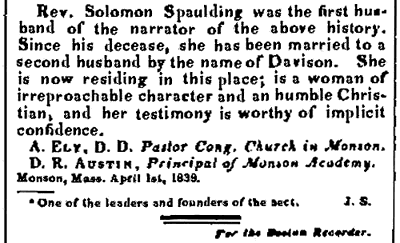 A scan of bottom of the original article from the Apr. 19, 1839 Boston Recorder, showing the names of Rev. Ely, Mr. Austin, and the initials of Rev. Storrs.
|
Vol. ? Boston, Mass., April 22?, 1839. No. ? THE MORMON BIBLE. The Boston Recorder of last week contains the following singular development of the origin and history of the Mormon Bible. It accounts most satisfactorily for the existence of the book, a fact which heretofore it has been difficult to explain. It was difficult to imagine how a work containing so many indications of being the production of a cultivated mind, should be connected with a knavery so impudent and a superstition so gross as that which must have characterized the founders of this pretended religious sect. The present narrative, which, independently of the attestations annexed, appears to be by no means improbable, was procured from the writer by the Rev. Mr. Stow [sic], of Holliston, who remarks that he has "had occasion to come in contact with Mormonism in its grossest forms." It was communicated by him for publication in the Recorder.... |
 Vol. X. Boston, Mass., Monday, April 29, 1839. No. 2683.
THE MORMON BIBLE. The Boston Recorder of last week contains the following singular development of the origin and history of the Mormon Bible. It accounts most satisfactorily for the existence of the book, a fact which heretofore it has been difficult to explain. It was difficult to imagine how a work containing so many indications of being the production of a cultivated mind, should be connected with a knavery so impudent and a superstition so gross as that which must have characterized the founders of this pretended religious sect. The present narrative, which, independently of the attestations annexed, appears to be by no means improbable, was procured from the writer by the Rev. Mr. Stow [sic], of Holliston, who remarks that he has "had occasion to come in contact with Mormonism in its grossest forms." It was communicated by him for publication in the Recorder -- Advertiser .... |
AND BOSTON OBSERVER.
Devoted to Unitarian Christianity, Sound Morals, Literature and News. Vol. XVIII. Boston, Mass., Saturday, May 4, 1839. No. 16. THE MORMON BIBLE. The Boston Recorder of last week contains the following singular development of the origin and history of the Mormon Bible. It accounts most satisfactorily for the existence of the book, a fact which heretofore it has been difficult to explain. It was difficult to imagine how a work containing so many indications of being the production of a cultivated mind, should be connected with a knavery so impudent and a superstition so gross as that which must have characterized the founders of this pretended religious sect. The present narrative, which, independently of the attestations annexed, appears to be by no means improbable, was procured from the writer by the Rev. Mr. Stow [sic -Storrs?], of Holliston, who remarks that he has 'had occasion to come in contact with Mormonism in its grossest forms.' It was communicated by him for publication in the Recorder. -- |
|
Vol. XLI. Keene, N. H., Wednesday, May 8, 1839. No. 19.
THE MORMONS' BIBLE. -- The origin of this work which it has puzzled many to account for, being evidently the production of a cultivated mind, yet found in the hands of exceedingly ignorant and illiterate persons, is at length explained. It was written in 1812, for amusement, as a historical romance of the lost race, the remains of whose numerous mounds and forts are found on the banks of the Ohio. The author was Rev. Solomon Spaulding, a graduate of Dartmouth College, who resided at New Salem, Ohio; and on the appearance of a Mormon preacher there, many of the friends of the deceased clergyman, recollected passages which he had read to them during the time he was engaged in composing it. On inquiry, the original manuscript was found among his papers. It also appeared that at one time he had some thoughts in relation to printing the work, and that it remained at a printing office for a long time. Sidney Rigdon, who has figured so largely in the history of the Mormons, was at that time employed in this printing office, and it was no doubt copied by him. -- |
|
Vol. XIII. Boston, Mass., Thursday, May 9, 1839. No. 1570. THE MORMON BIBLE. The Boston Recorder of last week contains the following singular development of the origin and history of the Mormon Bible. It accounts most satisfactorily for the existence of the book, a fact which heretofore it has been difficult to explain. It was difficult to imagine how a work containing so many indications of being the production of a cultivated mind, should be connected with a knavery so impudent and a superstition so gross as that which must have characterized the founders of this pretended religious sect. The present narrative, which, independently of the attestations annexed, appears to be by no means improbable, was procured from the writer by the Rev. Mr. Stow [sic -Storrs?], of Holliston, who remarks that he has "had occasion to come in contact with Mormonism in its grossest forms." It was communicated by him for publication in the Recorder. -- (Daily Advertiser.) |
AND BOSTON OBSERVER.
Devoted to Unitarian Christianity, Sound Morals, Literature and News. Vol. XVIII. Boston, Mass., Saturday, May 11, 1839. No. 19. FOR THE REGISTER AND OBSERVER. An acute observer of men and morals cannot avoid regarding the many speculative creeds -- hastily adopted and earnestly defended, by a small portion of our countrymen, -- with an anxiety nearly approaching to horror. Among those which have been most successfully promulgated, and most eagerly received, Mormonism stands preeminent. I cannot say, how strong a foundation it may find in either nature or revelation for its self constructed fabric; but a late correspondent of the Morning Post, describes the mormons as a people quiet, industrious, and conscientious -- surrounded by a bigoted populace, and the victims of its oppressive persecution. Their violated purity, their tainted honor, and their desecrated altars, have excited the pity and the sympathy of many of our citizens, and this circumstance renders it still more necessary, than it has hitherto been, that the origin of the Mormon Bible, the enigma of the age, should be satisfactorily explained. It is necessary both for the satisfaction and support of the Christian, and for the temporal well being and prosperity of the Mormons themselves. A letter appeared in your paper of yesterday, purporting to be a relation of facts connected with the origin of this singular volume, and as such it merits the consideration of every rational being. It is not my purpose, to carefully review this paper, or to ask what motives could have induced an individual to deceive the public in this matter. I am anxious that the truth or falsehood of this document, signed by Matilda Davison, should be proved, and as it involves a question of both political and religious moment, I would ask two or three questions, which as it seems to me, may be easily answered. In the first place, the document bears upon its face, marks of authenticity which it might appear indelicate and imprudent to doubt. It is written with modesty and by a female -- it is attested by two individuals, one a minister of the Gospel, the other the preceptor of youth -- and it was communicated to the Recorder for publication by the Rev. Mr. Stow [sic - Storrs] of Holliston. |
Vol. XII. Hartford, Conn., Saturday, July 27, 1839. No. 30.
Sidney Rigdon, one of the Mormon leaders, denies the truth of a statement made by a Mrs. Matilda Davidson, on the subject of the Mormon Bible. |
Vol. LIX. Bennington, Vermont, Tues., Dec. 31, 1839. No. 3015.
The Mormons have purchased a tract of 20,000 acres at the head of the Des Moines rapids of the Mississippi, on both sides of the river, including the town of Commerce. This name is changed to Nauvoo from the Hebrew. The whole purchase money amounts to 70,000, a large portion of it on long payments. |
|
THE CALEDONIAN. Vol. III. St. Johnsbury, Vt., Tuesday, December 31, 1839. No. 126.
The Mormons, now in Illinois, have deputed Joseph Smith, Jr., and Sidney Rigdon, to go to Washington, and lay a memorial representing their persecution before Congress; and the deputies are already in the district. |
Back to top of this page.
Articles Home Page | Newspaper Articles Index | History Vault
Oliver's Bookshelf | Spalding Studies Library | Mormon Classics
last updated: May 24, 2013