
READINGS  IN  EARLY  MORMON  HISTORY
(Newspapers of Ohio)


Painesville, Geauga County

Painesville Telegraph
1831 Articles
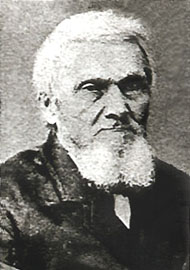


Eber Dudley Howe 1798-1885


P.T. article index  |  1822-30  |  1831  |  1832-33  |  1834-35  |  1836-44  |  1845-99


Jan 18   |   Feb 01   |   Feb 15   |   Feb 22   |   Mar 01
Mar 08   |   Mar 15   |   Mar 22   |   Mar 29   |   Apr 05
Apr 12   |   Apr 19  |   Apr 26   |   May 17   |   May 24
Jun 14   |   Jun 21   |   Jun 28   |   Jul 12   |   Sep 13
Oct 25   |   Nov 01   |   Nov 08   |   Nov 15   |   Nov 22
Nov 29   |   Dec 06   |   Dec 20   |   Dec 27


Works of Eber Dudley Howe   |   Crary's Pioneer & Personal Reminiscences
Articles Index  |  Early Ohio  |  Geauga Gazette & Chardon Spectator

 
Return to: last issue of 1830


Number 31.]                                    Friday, January 18, 1831.                                    [Vol. II.



Mormonism. -- A young gentleman by the name of Whitmer arrived here last week from Manchester, N. Y., the seat of wonders, with a new batch of revelations from God, as he pretended, which have just been communicated to Joseph Smith. As far as we have been able to learn their contents, they are a more particular description of the creation of the world, and a history of Adam and his family, and othe[r] sketches of the anti-deluvian world, which Moses neglected to record. But the more important part of the mission was to inform the brethren that the boundaries of the promised land, or the New Jerusalem, had just been made known to Smith from God -- the township of Kirtland, a few miles west of this, is the eastern line and the Pacific Ocean the western line; if the north and south lines have been described, we have not learned them. Orders were also brought to the brethren to sell no more land, but rather buy more. Joseph Smith and all his forces are to be on here soon to take possession of the promised land.


Note: The "young gentleman" here mentioned was John Whitmer, brother of the Peter Whitmer, Jr. whom the Ohioans had seen in company with Oliver Cowdery and Parley P. Pratt a few weeks earlier. Compare this news report with one written from the Whitmer's home town of Waterloo on Jan. 26, 1831 and published on Feb. 1, 1831 in the Palmyra Reflector. There the Mormons' "promised land" is reported to extend "from thence [Kirtland] to the Pacific Ocean, embracing a territory of 1500 miles in extent, from north to south." No mention is made at this early date of the fate of Cowdery, Pratt, et al. in their attempts at securing a dominion for the Mormons' "New Jerusalem" in the midst of the trans-Missouri "Lamanites." The Reflector item was reprinted in the Painesville Telegraph on Feb. 1st (see below).


Number 33.]                                   Tuesday, Feb. 1, 1831.                                   [Vol. II.


Mr. Editor:

Elder S. Rigdon left this village on Monday last in the stage, for the "Holy Land," where all the "Gold Bible" converts have recently received a written command from God, through Jo. Smith, Junior, to repair with all convenient speed, selling off the property. This command was at first resisted by such as had property, (the brethern from the neighboring counties being all assembled by special summons), but after a night of fasting, prayer and trial, they all consented to obey the holy messenger. -- Rigdon has for some time past been arranging matters with Smith for the final departure of the faithful for the "far west."

This man of many creeds, (Rigdon) appears to possess colloquial powers to a considerable degree, and before leaving this vicinity left us his blessing. He delivered a discourse at the Court House immediately preceding his departure, wherein he depicted in strong language, the want of "charity and brotherly love" among the prevailing sects and denominations of professing christians, and sorry I am to admit, that he had too much truth on his side with regard to this particular.

After denouncing dreadful vengeance on the whole state of New York, and this village in particular, and recommending to all such as wished to flee from "the wrath to come," to follow him beyond the 'western waters,' he took his leave. The prophet Spouse, and whole 'holy family' (as they style themselves) will follow Rigdon, so soon as their deluded or hypocritical followers shall be able to dispose of what little real property they possess in this region: one farm (Whitmar's) was sold a few days ago for $2,300. Their first place of destination is understood to be a few miles west of Painesville, Ohio, (the present place of the Elder's residence) which is just within the east bounds of this new land of promise, which extends from thence to the Pacific Ocean, embracing a territory of 1,501 miles in extent, from north to south.

Yours respectfully,
"Plain Truth"


Note: Although his previous letter on Mormonite activities was marked "Farmington," this correspondent evidently had a detailed knowledge of contemporary happenings between Palmyra and Fayette. Such an observer could well have been in public service, business or journalistic endeavors in a town like Waterloo, Geneva or Canandaigua (the latter village borders Farmington township). See notes appended to the Feb. 12, 1823 issue of the Palmyra Herald for Walter A. Norton's probable identification of the correspondent "Plain Truth" with Thomas B. Barnum, one of the two proprietors of the Canandaigua anti-clerical periodical, Plain Truth.


Number 35.]                                   Tuesday, Feb. 15, 1831.                                   [Vol. II.


COMMUNICATIONS.
_________________________
                      [For the Telegraph.

MORMONISM.

Forasmuch as many have taken in hand to set forth in order a declaration of those things which are most surely believed and done among the Mormonites, it seems good to me also (having had knowledge of many things from the beginning) to testify to my brethren of mankind, that they may know something certainly concerning these wonderful people.

About the last of October, 1830, four men, claiming to be divinely inspired, came from Manchester and Palmyra, Ontario county, N.Y., bringing a pretended revelation, entitled the "Book of Mormon." They came to the brethern of the reformation in Mentor, saluted them as brethern, and professed to rejoice at finding a people walking according to the scriptures of truth, and acknowledging no other guide. They professed to have no commands for them, nevertheless, they called upon them to receive their mission and book as from Heaven, which they said chiefly concerned the western Indians, as being an account of their origin, and a prophecy of their final conversion to christianity, and make them a white and delightsome people, and be reinstated in the possession of their lands of which they have been despoiled by the whites. -- When called upon for testimony, they appealed (like Mahomet) to the internal evidences of their book. The book was read and pronounced a silly fabrication. When farther pressed upon the subject, they required the brethern to humble themselves before God, and pray for a sign from heaven.

They took up their abode with the pastor of the congregation, (Sidney Rigdon,) who read their book and partly condemned it -- but, two days afterwards, was heard to confess his conviction of its truth. Immediately the subtlety and duplicity of these men were manifest -- as soon as they saw a number disposed to give heed to them, then it was they bethought themselves of making a party -- then it was they declared that their book contained a new covenant, to come under which the disciple must be re-immersed. When called upon to answer concerning their pretended covenant, whether it was distinct from that mentioned in Hebrews VIII, 10-13, they would equivocate, and would say, (to use their own words) "on the large scale, the covenant is the same, but in some things it is different." Immediately they made a party -- seventeen persons were immersed by them in one night. At this Mr. Rigdon seemed much displeased, and when they came next day to his house, he withstood them to the face -- showed them that what they had done was entirely without precedent in the holy scriptures -- for they had immersed those persons that they might work miracles as well as come under the said covenant -- showed them that the apostles baptized for the remission of sins -- but miraculous gifts were conferred by the imposition of hands. But when pressed upon the point, they justified themselves by saying, it was on their part merely a compliance with the solicitations of those persons. Mr. Rigdon again called upon them for proof of the truth of their book and mission: they then related the manner in which they obtained faith, which was by praying for a sign, and an angel was shown unto them. Here Mr. Rigdon showed them from the scriptures the possibility of their being deceived: "For Satan himself is transformed into an angel of light" -- but said Cowdrey, "Do you think if I should go to my Heavenly Father with all sincerity, and pray to him in the name of Jesus Christ, that he would not show me an angel -- that he would suffer Satan to deceive me?" Mr. Rigdon replied, "if the heavenly Father had ever promised to show you an angel, to confirm anything, he would not suffer you to be deceived, for, says the apostle John, 'this is the confidence we have with him, if we ask things according to his will, he hearkens to us.' "But," he continued, "if you ask the heavenly Father to show you an angel when he has never promised you such a thing, if the Devil never had an opportunity of deceiving you before, you give him one now."

However, about two days after, Mr. R. was persuaded to tempt God by asking this sign, which he knew to be contrary to his revealed will; he received a sign, and was convinced that Mormonism was true and divine. Wherefore, to make use of his own reasoning, we presume the Devil appeared to him in the form of an angel of light. The Monday following he was baptised. On the morning of the preceding day he had an appointment to preach in the Methodist chapel at Kirtland. He arose to address the congregation apparently much affected and deeply impressed. He seemed exceedingly humble, confessed the sins of his former life, his great pride, ambition, vainglory, &c. &c. After he was baptized, he professed to be exceedingly joyful, and said he would not be where he was three days ago for the universe. When reminded of the scriptural objection which he had made against praying for that which was not promised, he imputed his reasoning to pride, carnality, and the influence of the evil one. In short, the whole man seemed changed, so much so that Mrs. Rigdon said that Mr. Rigdon's appearance was enough to convince any one of the truth of their religion. Mr. R. and, indeed the whole of that sect, seem rather disposed to boast of their humility and piety. Mr. R. was formerly very irascible, but now thinks he cannot be ruffled, he was formerly haughty, but now affects great humility. The males among them wear a peculiar kind of hat[s], by which they distinguish themselves, and exhibit their humility; but while they are calling upon people, as it were, to come and see their humility, we cannot but call to mind an ancient anecdote: when Diogenes the Cynic, saw Plato with a richly embroidered cloak, he caught it from his shoulders, and cast it under his feet, saying "I trample upon the pride of Plato." --"Yes," said Plato, "but with a greater pride."

About three weeks after Mr. R. was baptized by Oliver Cowdery, he went to the state of New York, to see Joseph Smith, jr. while Cowdrey, with his three companions, proceeded on to the western Indians. Before they left us, however, they threw off their mask, and showed their cloven foot. They declared Joseph Smith to be that prophet predicted by Moses, Deut. xviii. 15, and applied to O. Cowdery prophetical declarations which are directly and particularly applied to John the Baptist, harbinger of the Messiah. When the apostle Peter and deacon Stephen were brought to confront them upon their application of Deut. xviii. 15, they would express wonder, saying, "do you think Christ was like Moses?"

Immediately after Mr. R. and the four pretended prophets left Kirtland, a scene of the wildest enthusiasm was exhibited, chiefly, however, among the young people; they would fall, as without strength, roll upon the floor, and, so mad were they that even the females were seen on a cold winter day, lying under the bare canopy of heaven, with no couch or pillow but the fleecy snow. At other times they exhibited all the apish actions imaginable, making grimaces both horrid and ridiculous, creeping upon their hands and feet, &c. Sometimes, in these exercises the young men would rise and play before the people, going through all the Indian maneuvers of knocking down, scalping, ripping open, and taking out the bowels. At other times, they would start and run several furlongs, then get upon stumps and preach to imagined congregations, baptize ghosts, &c. At other times, they are taken with a fit of jabbering after which they neither understood themselves nor anybody else, and this they call speaking foreign languages by divine inspiration. Again the young men are seen running over the hills in pursuit, they say, of balls of fire which they see flying through the air.

They say much about working miracles, and pretend to have that power. Cowdery and his fellows, essayed to work several while they tarried in Kirtland, one in particular, the circumstances of which I had from the Mormonites themselves. It was a young female who had been confined to her bed for two years -- they prayed over her, laying on hands, and commanded her in the name of Jesus Christ to rise up and walk; however, no effect appeared until the next day, when she was persuaded to leave her couch and attempt to walk. She arose, walked three or four steps, (which they told as a miracle) she then almost fainted, and was assisted back to her bed from which she's not since arisen. But as all their miracles have proved to be a mere sham, to speak vulgarly, the Mormonites have endeavored to save the credit of their prophets, by declaring that they never pronounced these people whole but only prayed for them -- but when confronted by one of the disciples in Kirtland upon the instance just mentioned, as it was so public they could not deny it, one of them said that he did not know but Cowdery did command her to arise, but if he did it was in a laughing, jesting way!!! --

Another of the Mormonites said Cowdery did not command her to arise, but merely asked her why she did not arise. Another instance of a man in Painesville, who was in the last stage of consumption, was attempted to be healed by Cowdery. A few days afterwards Mr. Rigdon was heard to say "that he would get well, if there was a God in Heaven!" He has since deceased. But these prophets had the policy to cover their retreat in these things, by saying that they would not recover immediately; the Lord would take his own time; and one of these people a few days ago, when put to the worst upon the subject, said that he did not think Cowdery would have attempted to do any miracles, had he have known how things would turn out.

Feb. 1. -- Mr. Rigdon just returned from the state of New York. His irascible temper only left him for a little season. Two friends went from Mentor to see him -- required of him a reason for his present hope, and for his belief in the Book of Mormon; he declined, saying he was weary, having just come off his journey; had lost much sleep, and the like. After a number of words had passed, by way of solicitation on one side, and refusal on the other, one of the friends from Mentor said he thought there was no more evidence to confirm the Book of Mormon than the Koran of Mahomet. At this Mr. Rigdon seemed very angry -- rose up and said, "Sir, you have insulted me in my own house -- I command silence -- If people that come to see us cannot treat us with civility, they may walk out of the door as soon as they please." The person then made some apology. Mr. R. said he had borne everything; he had been insulted and trampled upon by old and young; and he would bear it no longer. The other of the friends from Mentor expressed his astonishment, that a man who had just been exhorting others in so meek and humble a manner, as Mr. R. had been doing a few minutes before, should manifest such a spirit. Mr. R. denied that he was angry. The two friends bade him good night and departed. Two days after, I accompanied several friends to Mr. R.'s residence, we found him in conversation with a Methodist presiding elder -- that being soon broken off, one of my friends modestly approached Mr. R. and solicited him to give some reason for his present faith. Mr. R. with great show of good nature, commenced a long detail of his researches after the character of Joseph Smith; he declared that even his enemies had nothing to say against his character; he had brought a transcript from the docket of two magistrates, where Smith had been tried as a disturber of the peace, which testified that he was honorably acquitted. But this was no evidence to us that the Book of Mormon was divine. He then spoke of the supernatural gifts with which he said Smith was endowed; he said he could translate the scriptures from any language in which they were now extant, and could lay his finger on every interpolation in the sacred writings, adding, that he had proved him in all these things. But my friends knowing that Mr. Rigdon had no knowledge of any language but his own vernacular tongue, asked him how he knew these things, to which Mr. R. made no direct reply.

Mr. Smith arrived at Kirtland the next day; and being examined concerning his supernatural gifts by a scholar, who was capable of testing his knowledge, he confessed he knew nothing of any language, save the king's English.

Mr. R. asserted that our revelation came to us upon human testimony -- this we denied, and gave him reasons which he himself formerly urged against deists. He then said the old revelation was confirmed by miracles, but the Book of Mormon would never be; it was not designed to be thus confirmed. (And Mahomet said, nearly twelve centuries ago, "Moses and Jesus were empowered to work miracles, yet the people did not receive them; wherefore God had sent him without that attestation, to be the last and greatest prophet.") But in this Mr. R. contradicts his book, for that declares it is thus to be established.

We then asked Mr. R. what object we could have in receiving the Book of Mormon -- whether it enjoined a single virtue that the Bible did not, or whether it mentioned and prohibited a single additional vice, or whether it exhibited a new attribute of Deity? He said it did not. "The Book of Mormon," said he, "is just calculated to form and govern the millennial church; the old revelation was never calculated for that, nor could it accomplish that object; and without receiving the Book of Mormon, there is no salvation for anyone into whose hands it shall come." He said faith in the Book of Mormon was only to be obtained by asking the Lord concerning it. To this scriptural objections were made. He then said that if we had not familiarity enough with our Creator to ask of him a sign, we were no Christians; and, that if God would not condescend to his creatures, in this way, he was no better than Jaggernaut!!!!

Now, courteous reader, I have given a simple statement of facts for the purpose that you might not be deceived by the pretensions of these false prophets. They proclaim the ancient gospel, putting their own appendages to it. When they think it will best suit their purpose, they say nothing about the Book of Mormon, and at other times make it their chief topic. -- Mr. R. said to me, since he became a Mormonite, that it was no part of his religion to defend the Book of Mormon, he merely wished the people to give heed to the old revelation, to humble themselves, and enter into the privileges which it conferred upon its believing subjects. Again, there is no salvation without receiving the Book of Mormon! Mr. R. now blames Cowdery for attempting to work miracles, and says that it was not intended to be confirmed in that way. How then are we to obtain faith? Does the book offer any internal evidence of its divinity? If it does, it has not been discovered. It contains nothing but what might have been, and evidently was, borrowed from the sacred writings and from the history of the world. Was it so with the revelation that was from the beginning? far otherwise. A celebrated English writer, (Soam Jenyns) has proved to a demonstration, that the Christian religion is demonstrably divine, irrespective of any miracle that was ever wrought, from these premises, viz. that there were no writing or systems, then in the world, from which it could have been borrowed. Again, respecting Smith and his followers, do they give any proof of their honesty? They can give none but their own assertion; they have no sacrifice to make -- no loss of fortune or reputation to sustain -- they are in a land of liberty. Very different were the circumstances of those who first promulgated the "faith once delivered to the saints;" -- They had to forsake their relatives, leave their possessions, and forfeit their reputation. Scourging and torture, imprisonment and death, were often staring them in the face, and always in the prospective. Thirteen apostles, all, save one, sealed their testimony with their blood. So whether their religion was true or false, they proved their honesty. But Mormonism is to be proved from beginning to end by assertion, and this we have in whole numbers, without fractions. But we know that they cannot more roundly and positively assert than hundreds of impostors who have gone before them.

But we know who has said, "evil men and seducers will wax worse and worse, deceiving and being deceived," for which cause we are admonished to "continue in the things which we have learned, and been assured of, knowing from whom we have received them." The Pharisees said to the blind man, who had been healed by Jesus Messiah," we know that God spoke unto Moses, but as for this fellow we know not whence he is." So we say we know that "God has spoken unto us in these last days by his Son," but as for Joseph Smith we know not whence he is. But we know the scripture has said, "cursed is the man that trusteth in man, and maketh flesh his arm, and whose heart departeth from the Lord; for he shall be like the heath in the desert, and shall not see when good cometh, but shall inhabit the parched places in the wilderness, in a salt land not inhabited." But the contrast is, "blessed is the man who trusteth in the Lord, and whose hope the Lord is; for he shall be as a tree planted by the waters, that putteth out her root by the river, and shall not see when heat cometh, but her leaf shall be green, and shall not be careful in the year of drought, neither shall cease from yielding fruit."

Now let me conclude with the conclusion of that revelation which begins with the beginning of time and ends with the end of time: "If any man shall add unto these things, God shall add unto him the plagues that are written in this book; and if any man shall take away from the words of the book of this prophecy, God shall take away his part out of the book of life, and out of the holy city, and from the things which are written in this book." --
"And all the people shall say amen."
                               M. S. C.


Mr. Editor -- I herewith send you an extract from Martindale's Dictionary of the Bible, giving an account of a sect which rose up in France. It will be acknowledged, after reading this sketch that Mormonism is of a more ancient date than people have imagined, so exactly does it agree in predictions, conduct, and ideas of spiritual things. The old maxim, therefore, that "there's nothing new under the sun," still holds good.

FRENCH PROPHETS.

"They first appeared in Dauphiny and Vivarois. In the year 1689, five or six hundred Protestants of both sexes gave themselves out to be prophets, and inspired by the Holy Ghost. They soon became so numerous, that there were many thousands of them inspired. They were people of all ages and sexes without distinction, though the greatest part of them were boys and girls from six or seven to twenty-five years of age. They had strange fits, which came upon them, with tremblings and faintings, as in a swoon, which made them stretch out their arms and legs, and stagger several times before they dropped down. They struck themselves with their hands, they fell on their backs, shut their eyes, and heaved with their breasts. They remained awhile in trances, and, coming out of them with twitching, uttered all that came into their mouths. They said, they saw the heavens open, the angels, paradise, and hell. -- Those who were just on the point of receiving the spirit of prophecy dropped down not only in their assemblies, crying out mercy, but in fields, and their own houses. The least of these assemblies made up four or five hundred, and some of them amounted even to as many thousands of persons. When the prophets had for a while been under agitations of body they began to prophesy, the burden of their prophecies was, Amend your lives; repent ye; the end of all things draws nigh! The hills resounded with their loud cries for mercy, and imprecations against the priests, the church, the pope, and against the anti-christian dominion, with predictions of the approaching fall of popery. All they said at these times was heard with reverence and awe.

In the year 1706, three or four of these prophets came over into England, and brought their prophetic spirit along with them, which discovered itself in the same ways and manners, by ecstasies and agitations, and inspirations under them, as it had done in France; and they propagated the like spirit to others, so that, before the year was out, there were two or three hundred of these prophets in and about London, of both sexes, of all ages; men, women and children: and they had delivered under inspiration four or five hundred prophetic warnings.

The great things they pretended by their spirit was, to give warning of the near approach of the kingdom of God, the happy state of the church, and the millennial state. Their message, (and they were to proclaim it as heralds to the Jews, and to every nation under heaven, beginning with England,) was, that the grand Jubilee, acceptable year of the Lord, the accomplishments of those numerous Scriptures concerning the new heavens and the new earth, the kingdom of Messiah, the marriage of the Lamb, the first resurrection or the new Jerusalem descending from above, were now even at the door; that this great operation was to be wrought on the part of man by spiritual arms only proceeding from the mouths of those who should, by inspiration, or the mighty gift of the spirit, be sent forth in great numbers to labour in the vineyard; that this mission of the servants should be witnessed by signs and wonders from heaven, by a deluge of judgment on the wicked universally throughout the world, as famine, pestilence, earthquakes, &c., that the exterminating angel shall root out the tares, and there shall remain on earth only good corn; and the works of men being thrown down, there shall be but one Lord, one faith, one heart, and one voice among mankind. They declared that all the great things they spoke would be manifest over the whole earth within the term of three years.

These prophets also pretended to the gift of languages, of discerning the secrets of the heart, the gift of administration of the Spirit to others, by the laying on of hands, and the gift of healing. To prove that they were really inspired by the Holy Ghost, they alleged the complete joy and satisfaction they experienced, the spirit of prayer which was poured upon them, and the answer of their prayers. Such were these wild enthusiasts, and where are they now?


To the Editor of the Telegraph.                              

THE  MORMON  CHALLENGE.

The following letter was elicited by a public challenge, given by SIDNEY RIGDON on the 30th ulto. in a public meeting held in Kirtland, at which persons from different States were present, in which he defied the world to refute the divine pretensions of the Book of Mormon. The said letter was respectfully presented on the 6th inst. by Nathan P. Goodell, accompanied by Isaac Moore, Esq. both respectable citizens of Kirtland, who inform me, that when he had read about half a dozen lines, till came to the epithet "infernal." which he found applied to his beloved book, he committed it to the flames, as Jehoiskim, the pious, mock and lowly King of Judah did Jeremiah's roll -- (Jer. 36, 23). Had Mr. R's boasted humility, meekness and patience not been so quickly exhausted, he would have been duly informed, that the writer meant neither to insult him, nor yet to depreciate his beloved author, more than Christ did the cavillous Jews, when he said to them, "ye are from beneath" -- (Jno. 8, 23.), not meaning that they were from hell, as he after explains himself in the following words, "ye are of this world." Had Mr. R. exercised as much patience as did those proud infidel Jews, he would have learned from my explanation in the very next sentence, that I applied the word infernal to the Book of Mormon, in a just and appropriate sense, according to the claims of the book itself, as being dug up out of the bowels of the earth, or from the bottom of a hill; and, therefore, justly styled infernal, taken in its primary literal sense, as I have explained and applied it in my letter. This, however, Mr. R. knows to be the easiest way to get rid of the matter, having no intention to verify his challenge, as he declared to the above named persons before my letter was presented. It also afforded him an opportunity of gratifying his proud resentment by a consequential high-blooded act of indignant retaliation, the most severe that was in his power to inflict; and which, in the mean time, I accept as a just expression of that spirit, which the Book of Mormon is calculated to inspire, and which has been as abundantly expressed in its murderous, scalping inspirations.

Without further preface or apology, the letter and the answer are hereby submitted to the public, whose right it is to form their own judgments of the merits of the cause at issue. And although the various topics of argument stated below, and designed to have been urged in the refutation of Mormonism, have not been argued, illustrated, and applied for that purpose, through Mr. R.'s failure to make good his empty, boastful challenge, which it appears he has no intention of hazarding, for he fears the light, and therefore cautiously avoids investigation -- they, nevertheless, stand as the pillars of Hercules, the insuperable barriers to the feigned pretentions of Mormonism, for the defence of all who do not willfully and blindly submit to become dupes of a shameless combination of unprincipled religious swindlers -- whose unhallowed design is to rob the simple both of their salvation and their property.
                                                          THOMAS CAMPBELL.


                                                                      MENTOR, Feb. 4, 1831.
Mr. Sidney Rigdon:
     Dear Sir -- It may seem strange, that instead of a confidential and friendly visit, after so long an absence, I should thus address, by letter, one of whom, for many years, I have considered not only as a courteous and benevolent friend, but as a beloved brother and fellow laborer in the gospel -- but alas, how changed, how fallen! Nevertheless, I should now have visited you as formerly, could I conceive that my so doing would answer the important purpose both to ourselves, and to the public, to which we both stand pledged, from the conspicuous and important stations we occupy: you, as a professed disciple and public teacher of the infernal book of Mormon; and I, as a professed disciple and public teacher of the supernal book of the Old and New Testaments of our Lord and Savior Jesus Christ -- which you now say is superseded by the book of Mormon -- is become a dead letter -- so dead, that the belief and obedience of it, without the reception of the latter, is no longer available to salvation; to the disproof of this assertion, I understand you defy the world. I here use the epithets infernal and supernal in their primary and literal meaning, the former signifying from beneath, the latter from above, both of which are truly applied, if the respective authors may be accredited; of the latter of which, however, I have no doubt. But, my dear sir, supposing you as sincere in your present, as in your former profession, (of the truth and sufficiency of which you have frequently boasted with equal confidence) neither yourself, your friends, nor the world, are therefore bound to consider you as more infallible in your latter than in your former confidence, any further than you can render good and intelligible reasons for your present certainty. This, I understand from your declaration on last Lord's day, you are abundantly prepared and ready to do. I, therefore, as in duty bound, accept the challenge, and shall hold myself in readiness, if the Lord permit, to meet you publicly in any place, either in Mentor or Kirtland, or in any of the adjacent towns, that may appear most eligible for the accommodation of the public.

The sooner this investigation takes place, the better for all concerned; therefore, it is hoped you will not protract the time beyond what may justly be deemed necessary for giving sufficient publicity to the proposed discussion -- say one week after your reception of this proposal to accept the challenge you have publicly given, for the vindication and eviction of the divine authorship of Mormonism, which, if your assertion be true, that there is no salvation for any that do not embrace it; and not only so, but I am credibly informed you have asserted, that even those who have lived and died in the faith and obedience of the old book, in the triumphant assurance of a glorious resurrection and a blissful immortality, may be in hell for aught you know; therefore, I say again, the sooner this matter is publicly settled, the better. For my part, I do cordially assure you, sir, that if I were in the possession of a nostrum, upon the knowledge and belief of which, the salvation of every soul of man depended, I should consider myself responsible to the whole world for the speedy and effectual confirmation and publication of it; and if it be at all a revelation from God for the salvation of man, he must be wonderful changed since he gave the former revelation of his will for that important purpose, if he do[es] not require you so to do, for he was then willing that all men should come to the knowledge of the truth and be saved; and, therefore, he not only charged all to whom he made it known, by special revelation, to go into all the world and declare it to every creature, but also furnished them with such potent and evincive arguments, both prophetic and miraculous, as no candid inquirer could mistake, without abandoning both his senses and his reason. If then, the book of Mormon, which you assume to vindicate as a divine revelation, upon the belief and obedience of which the salvation of all men stands suspended, be such, then surely the unchanged and unchangeable author, who, it seems, has communicated it to you and others by special revelations, has, doubtless, furnished you with such special, intelligible, and convincing arguments, as are abundantly sufficient to convince every candid inquirer, as he did the heralds of the former dispensations. -- Therefore, woe is unto you if you preach not your gospel. But why should I seem to doubt the philanthropy of my former friend and brother, more than I do my own, or that of the Apostle Paul, that I should thus appear to urge his performance of a challenge, which, no doubt, the purest and most benevolent motives excited him to propose, for the purpose of promoting, as fast as possible, the benign intentions of his mission?

Taking this for granted, I shall further add, in relation to the manner of conducting this all-important investigation, that, seeing it is purely for the discovery and confirmation of the truth, upon the belief and obedience of which, depends the salvation of the world, the parties realizing the deep and awful responsibility of the undertaking, and having no private and personal interest at stake, separate from the rest of mankind, will not only afford each other every facility of investigating and exhibiting the truth by all manner of fairness, both of argument and concession, but also by the mutual allowance of any assistance that can be contributed by the friends on each side, either suggesting matter to the speakers, or by correcting any mistakes that may occur in quotations, references, &c, in an amicable and an obliging manner, without giving or taking offence on these accounts; that for these purposes, each party shall be at liberty to select as many of his intelligent friends as he pleases to assist him as prompters; and if any difficulty occur, respecting time, order, &c, it shall be referred to a competent board of moderators, equally chosen by the parties, that the whole investigation may be conducted without the least shadow of disorder or partiality.

According to the spirit and tenor of the above proposals on my part, for the speedy and effectual determination of the momentous question at issue, I shall candidly inform you of the course I intend to take, for the confirmation and defence of my side of the question, that you may be the better prepared to meet my arguments with a solid & unanswerable refutation, if possible; as I can have no wish, nor can any man in his common senses, where the salvation of the soul is at stake, but to know and embrace the saving truth. The proposition that I have assumed, and which I mean to assume and defend against Mormonism and every other ism that has been ismed since the commencement of the Christian era, is -- The all-sufficiency and the alone-sufficiency of the holy scriptures of the Old and New Testaments, vulgarly called the Bible, to make every intelligent believer wise to salvation, thoroughly furnished for all good works. This proposition, clearly and fully established, as I believe it most certainly can be, we have no more need for Quakerism, Shakerism, Wilkinsonianism, Buchanism, Mormonism, or any other ism, than we have for three eyes, three ears, three hands, or three feet, in order to see, hear, work, or walk. This proposition, I shall illustrate and confirm by showing,
    1. That the declarations, invitations, and promises of the gospel, go to confer upon the obedient believer the greatest possible privileges, both here and hereafter, that our nature is capable of enjoying.
    2. That there is not a virtue which can happify or adorn the human character, nor a vice that can abase or dishappify, which human heart can conceive, or human language can express, that is not most clearly commanded or forbidden in the holy scriptures.
    3. That there are no greater motives, that can possibly be expressed or conceived, to enforce obedience or discourage and prevent disobedience, than the scriptures most clearly and unequivocally exhibit.

These propositions being proved, every thing is proved that can affect our happiness, either here or hereafter.

We shall, however, if deemed necessary, next proceed to expose the blasphemous pretensions of Mormonism, by examining both its external and internal evidences.
    1. By examining the character of its author and his accomplices, as far as documents for that purpose may have come to hand.
    2. Their feigned pretensions to miraculous gifts, the gift of tongues, &c.; a specimen of the latter we shall afford them an opportunity of exhibiting in three or four foreign languages.
    3. We shall next proceed to expose the anti-scriptural assertion, that there has been none duly authorized to administer baptism, for the space of fourteen hundred years up to the present time, by showing that the church or the kingdom of Christ, must have been totally extinct during that period, provided its visible administration had actually ceased during that time, is an express contradiction of the testimony of Jesus, Matt. xvi. 18.
    4. We are prepared to show that the pretended duty of common property among Christians is anti-scriptural, being subversive of the law of Christ, and inimical to the just rights of society.
    5. We shall next proceed to show, that re-baptizing believers is making void the law of Christ; and that the imposition of hands for communicating the Holy Spirit, is an unscriptural intrusion upon the exclusive prerogative the primary apostles.
    6. We shall also show that the pretensions of Mormonism, as far as it has yet been developed, are in no wise superior to the pretensions of the first Quakers, of the French Prophets, of the Shakers, of Jemima Wilkinson, &c. That all these pretended to as high degrees of inspiration, to prophecyings, to visions, to as great humility, self-denial, devotion to God, moral purity, & spiritual perfection; declaimed as much against sin, denounced as heavy judgments against their neighbors, and against the professing world at large, for their corruptions of Christianity, &c. &c. as the Mormonites have done or can do; the two latter have also insisted as much upon the supposed duty of common property, and have spoken as certainly of the near approach of the millennium, and of their relation to that happy state, as any of the Mormonite prophets, especially the Shakers, who pretend to be living subjects of that happy period, and who have also given us an attested record of their miraculous operations. --------- The obvious conclusion of this sixth argument is evident, that if the Mormonite prophets & teachers can show no better authority for their pretended mission and revelations than these impostors have done, we have no better authority to believe them than we have to believe their predecessors in imposition. But the dilemma is, we can't believe all, for each was exclusively right in his day, and those of them that remain are still exclusively right to this day; and if the Shakers be right, the whole world, the Mormonites themselves not excepted, are in the gall of bitterness and bonds of iniquity -- quite as far from salvation as you yourself have pronounced all the sectarians on earth to be, namely, in a state of absolute damnation.

In the last place, we shall examine the internal evidence of the Book of Mormon itself, pointing out its evident contradictions, foolish absurdities, shameless pretensions to antiquity, restore it to the rightful claimant, as a production beneath contempt, and utterly unworthy the reception of a schoolboy.

Thus, my dear sir, I have given you a fair and full statement of my intended method of defence and attack, of the principal topics of argument pro and con, which I shall use, provided you stand to your proposed challenge. I have also used great plainness of speech, and spoken of things just as I believe they deserve, as you yourself are in the habit of doing; and who can do otherwise upon a subject of such vast importance if he duly realize them? Nevertheless I would not have you think, although I consider things just as I have spoken, that I suppose myself more infallible than you do yourself; but I should blush to fall short of any one, of any sect whatever, in my expressions of confident certainty of the truth of my profession, which has stood the test of most rigorous investigation for nearly eighteen hundred years, and which I have scrupulously examined for upwards of forty, especially when the investigation is with sectarians of little more than three months standing.

But though I have spoken as positively as you have done, and we have I both spoken positive enough, I will yet venture to assure you that you will find me as changeable as yourself, provided you afford me evidence paramount to the evidence which I have proposed to produce for the ground which I at present occupy, for it has ever been with me a fixed principle, that the less should give way to the greater. But in case I should fail to convince you, or that you should fail to convince me, others may be benefited; and we shall have the consolation of having discharged our duty, both to each other and the public; for no man liveth to himself.

In the mean time I wait for your reply, which you will please to forward per bearer. I hope you will be as candid and plain with me as I have been with you. My best respects to Mrs. Rigdon, and sincerest wish for the happiness of your family.

I remain, with grateful remembrances of the past, and best wishes for the future, your sincere friend and humble servant,

THOMAS CAMPBELL.      


Note 1: The correspondent "M. S. C." was undoubtedly the Rev. Matthew S. Clapp, son of the Campbellite Deacon, Orris Clapp. Matthew was Sidney Rigdon's first convert in Mentor, Ohio, to the new Campbellite "reformation" of Baptist doctrine. Rigdon baptised Matthew in Mentor during the late spring of 1828, effectively beginning the transformation of Rigdon's Baptist congregation in that town into a group fully supporting the religious views of the Rev. Alexander Campbell. See Matthew's biographical sketch on page 197 of Amos S. Hayden's Early History of the Disciples... Matthew's brother, Henry H. Clapp (1812-1897), also furnished some personal reminiscences of Rigdon, Mormonism, etc. in 1879.

Note 2: For Sidney Rigdon's and Joseph Smith's less than positive opinion regarding Matthew and his family, see the Dec. 1835 issues of the LDS Messenger & Advocate.

Note 3: The Rev. David Staats Burnet reprinted the 1831 Matthew S. Clapp article, along with other material from Howe's newspaper, in the Mar. 7, 1831 issue of his Campbellite paper, the Evangelical Inquirer. Burnet's compilation, entitled "Something New -- The Golden Bible" was a sort of precursor to Eber D. Howe's own 1834 book, Mormonism Unvailed. The Rev. Clark Braden, in 1891, credited his fellow Campbellite minister, Matthew S. Clapp, for furnishing a considerable portion of the material published in Howe's book. See chaps. 8 & 9 of that book for most of the material apparently supplied or confirmed by Mr. Clapp.

Note 4: Dan Vogel, in the fifth volume of his Early Mormon Documents, assigns the probable date of Sidney Rigdon's Mormon baptism to Monday, Nov. 8, 1830, basing his calculation largely upon Matthew S. Clapp's words: "The Monday following he [Rigdon] was baptised. On the morning of the preceding day he had an appointment to preach in the Methodist chapel at Kirtland." Rigdon's biographer, Richard S. Van Wagoner concurs on these dates and they are very likely the correct ones for Rigdon's first public preaching of Mormonism among his followers in Kirtland and his baptism there the following day.

Note 5: Rev. Rigdon's reported remark, "The Book of Mormon is just calculated to form and govern the millennial church; the old revelation was never calculated for that, nor could it accomplish that object," evidently states, in a nutshell, Rigdon's reason for promulgating the book and its message. Rigdon's sentiments in this regard were also recollected by several of his auditors, through the years, and additionally they can be found scattered through the pages of his own paper, the Messenger and Advocate, published at Pittsburgh in later years. Rigdon's basic argument seems to have been that the gathering of Israel upon the American continent, the rise of the millennial church there, and the re-establishment of the "ancient gospel" in latter days is not clearly spelled out in the Christian Bible -- and that additional revelation/scripture was required "to form and govern the millennial church" he so much desired to create and promote.


Number 36.]                                     Tuesday, Feb. 22, 1831.                                     [Vol. II.


Mr. Howe, Sir: Be so kind as to say to the public, through the medium of your paper, that the Saviour of the world has said: -- "Blessed are ye when men shall revile you, and persecute you and speak all manner of evil against you falsely for my sake. Rejoice and be exceeding glad, for great is your reward in Heaven, for so persecuted they the prophets who were before you."

So says the God whom we worship, and so we say, evenso, amen."

  For the Saints of the Most High God in Kirtland.

{The above was handed us by one who has enlisted under the banner of Smith, the pretended prophet; but whether it bears the sanction and approbation of all concerned, we are not able to say. We take it, however, to be a general reply to matters and things in our last. The passage quoted by the writer, we believe has always been considered a sufficient shield to cover all the fanaticism and false pretensions, if they should be opposed, or even should the truth be spoken of them, which have sprang up since the Christian era. The Muhomotan, the Pope, the French Prophets, the Swedenborgians, the followers of Ann Lee, Joanna Southcote, Jemima , and the fellow at Leatherwood, (who about two years since proclaimed himself to be Christ, and ordered his disciples to build him a throne to sit upon and judge the world) have all quoted the same passage to prove their divinity. And why not the followers of Jo Smith? We hope they will point out any thing that has been spoken "falsely," before deriving too much consolation from the words of the Saviour.}


From the Palmyra, N. Y. Reflector.

GOLD BIBLE.

Since we have had any knowledge of the habits or propensities of the human species, we find that man has been prone to absurdities; and it too often happens that while we carefully attempt to detect them in others, we fondly cherish some gross inconsistencies within our own bosoms. The lust of power, doubtless stimulates the few, while ignorance binds the many, like passive slaves to the car of superstition.

It is passing strange, that in all ages of the world, gross stupidity in an impostor should be considered among the vulgar, irrefragible proof of his divine mission, and the most bungling piece of legerdemain, will receive from them all the credit of a well attested miracle.

Joanna Southcote published a book in the city of London, in 1804, in which her first prophecies were detailed. She declares that she did not understand the communications given her by the spirit, till they were afterwards explained to her. The spirit informed her how she could foretell the weather and other events. She declares that the death of Bishop Buller, was foretold her in a dream. One night she heard an iron ball roll three steps down stairs, which the spirit told her was the sign of three great evils, about to fall upon the land -- the sword, the plague, and famine. She relates that she foretold the extraordinary harvest which happened in 1800. She was often ordered to read the Bible, when the spirit would interpret its meaning. She informs her readers that Jacob's warning to his sons is applicable to our times -- mentions frequent contests with various preachers, and talks much about the marriage of the Lamb.

The following is from one of her communications. "As wrong they are in saying thou hast children brought up by the parrish, and that thou art Bonaparte's brother, and that thou hast been in prison; so false is their sayings, thy writings come from the devil, or any spirit but the spirit of the LIVING GOD; and that every soul in this nation shall know before the FIVE YEARS I mention to the people in 1800 are expired, and then I will return as a DIADEM of beauty to the residence of my people, and they shall praise the GOD OF THEIR SALVATION."

In 1805, Joanna published a pamphlet, attempting to confute the "five charges," which had been made against her and published in the newspapers. First, sealing her disciples. Second, on the invasion. Third, on famine. Fourth, her mission;and fifth, her death. Sealing is an important point among these people. Joanna gives those who profess a belief in her mission, and will subscribe to the things revealed in her "Warning," a sealed paper with her signature, by which they are led to think, that they are sealed against the day of redemption, & that all those who possess these seals, would be signally honored by the Messiah when he should come in the spring (of 1807). Her followers believed her to be the bride, the Lamb's wife, and that as man fell by a woman, he will be restored by a woman. Many of her followers pretended to have visions and revelations.

At present it would appear that both warning, and sealing have subsided; and they are waiting in awful suspense for the commencement of the thousand years reign on earth, when peace will universally prevail. They now pretend that Christ will not come in person, but in spirit, and all the dead who have been sealed, will be raised from their graves, to partake of this happy state.

If an imposture, like the one we have so briefly noticed, could spring up in the great metropolis of England, and spread over a considerable portion of that kingdom, it is not surprising that one equally absurd, should have its origin in this neighborhood, where its dupes are not, or ever will be numerous.

In the commencement, the imposture of the "Book of Mormon," had no regular features. At a time when the money digging ardor was somewhat abated, the elder Smith declared that his son Jo had seen the spirit, (which he then described as a little old man with a long beard,) and was informed that he (Jo) under certain circumstances, eventually should obtain great treasures, and that in due time he (the spirit) would furnish him (Jo) with a book, which would give an account of the ancient inhabitants (antediluvians) of this country, and where they had deposited their substance, consisting of costly furniture, &c. at the commencement of the deluge, which had ever since that time remained secure in his (the spirit's) charge, in large and spacious chambers, in sundry places in this vicinity, and these tidings corresponded precisely with revelations made to, and predictions made by the elder Smith, a number of years before.

The time at length arrived, when young Jo was to receive the book from the hand of the spirit, and he repaired accordingly, alone, and in the night time, to the woods in the rear of his father's house, (in the town of Manchester about two miles south of this village) and met the spirit as had been appointed. This rouge of a spirit, who had baffled all the united efforts of the money diggers, (although they had tried many devices to gain his favor, and at one time sacrificed a barn yard fowl,) intended it would seem to play our prophet a similar trick on this occasion; for no sooner had he delivered the book according to promise, then he made a most desperate attempt to regain its possession. Our prophet, however, like a lad of true metal, stuck to his prize, and attempted to gain his father's dwelling, which it appears was near at hand. The father being alarmed at the long absence of his son, and probably fearing some trick of the spirit, having known him for many years, sallied forth in quest of the youthful adventurer. He had not, however, proceeded far before he fell in with the object of his kind solicitude who appeared to be in the greatest peril.

The spirit had become exasperated at the stubborn conduct of the young prophet, in wishing to keep possession of the book, and out of sheer spite, raised a whirlwind, which was at that particular juncture, throwing trunks and limbs of trees, about their ears, besides the "elfish sprite" had belabored Jo soundly with blows, -- had felled him once to the ground, and bruised him severely in the side. The rescue however, was timely, Jo retained his treasure, & returned to the house with his father, much fatigued and injured. This tale in substance, was told at the time the event was said to have happened by both father and son, and is well recollected by many of our citizens. It will be borne in mind that no divine interposition had been dreamed of at the period.


Note: The "Gold Bible" article (the fourth in an original series about the origin of Mormonism) was originally published in the Feb 14, 1831 issue of Abner Cole's Palmyra Reflector.


Number 37.]                                     Tuesday, March 1, 1831.                                     [Vol. II.


Mr. Howe -- We hear much these days about the Mormonites, the Mormon Bible, the Book of Mormon, and people are very desirous of knowing what Mormon signifies. In answering their enquiries, I would refer them to Bailey's Dictionary, where they will find that the word Mormon comes from the Greek word mormoo, and by that author is said to signify, "bugbear, hobgoblin, raw head and bloody bones."

{The above has been furnished us by a correspondent in the country, for which he is entitled to some credit for the discovery. Bailey's Dictionary is an English work of quite ancient date, but a very few copies are now extant, and those printed in London, some fifty or sixty years ago. We have, however, seen a copy, and find the above definition correctly stated, as given by that author. It seems therefore, that the writer of the new bible, intentionally or otherwise, gave the book not only an appropriate, but a classical name. This was no doubt done for the purpose of carrying out his experiment on human credulity to the greatest extent -- even to give the book a name, in addition to its contents, which would carry on the very face of it the nature of its true character -- a fiction of hobgobblins and bugbears.}


We have received a pamphlet of 12 pages, containing a review of the "Book of Mormon" from the able pen of Alexander Campbell, of Va. It unequivocally and triumphantly sets the question of the divine authenticity of the "Book" forever at rest, to every rational mind. We shall endeavor to lay it before our readers in two or three subsequent numbers.


Note 1: The submitter of the above lexicographic information may have been the Rev. Matthew S. Clapp of Mentor. A consultation of large dictionaries from that period shows that the spelling and pronunciation entry they generally provided was the English transliteration MORMO followed by the symbol showing that the word is a noun. The resulting image, meeting the eye of the casual browser through the dictionary pages, looks like this: MORMOn.

Note 2: The published identification of the name "Mormon" with Greek spectres and Latinized designations for certain baboons, was not one that met with Latter Day Saint approval. Joseph Smith, jr. later provided a Reformed Egyptian original for the name, which, when coupled with a shortened form of the English word "more," came out as Mor-Mon or, "more good." For the publication of a dictionary example more in keeping with the above 1831 news item, see the short article published in various newspapers during 1843, entitled: "Mormon." Its reprint in the Sept. 13, 1843 issue of the Wellsboro, PA Tioga Eagle makes this conclusion: "... [the word was] used by the Greek author Theocritus, and... Aristophanes the comic poet. Solomon Spalding... being a classic Greek scholar... wrote... what he called 'Book of Mormon' i.e., as he understood it, the Book of Spectres... [although people] have attempted to clothe the word Mormon with a sacred meaning... [this] is the true definition and origin of the world, as well as of the book."

Note 3: The "pamphlet of 12 pages" referred to above was Campbell's 1831 Delusions, the text of which first appeared in the Feb. 7, 1831 issue of Campbell's Millennial Harbinger. Howe serialized the text in his paper, beginning on March 8th (see below).


Number 38.]                                     Tuesday, March 8, 1831.                                     [Vol. II.


Joseyism.

From the Palmyra (N. Y.) Reflector -- Printed
abo[u]t two miles from Smith's Bible quarry.

It is well known that Jo Smith never pretended to have any communion with angels, until after a long period after the pretended finding of his book, and that the juggling of himself or father, went no further than the pretended faculty of seeing wonders in a "peep stone," and the occasional interview with the spirit, supposed to have the custody of hidden treasures; and it is also equally well known, that a vagabond fortune-teller by the name of Walters, who then resided in the town of Sodus, and was once committed to the jail of this county for juggling, was the constant companion and bosom friend of these money digging impostors.

There remains but little doubt, in the minds of those at all acquainted with these transactions, that Walters, who was sometimes called the conjurer, and was paid three dollars per day by the money diggers in this neighborhood for his services, first suggested to Smith the idea of finding a book. Walters, the better to carry on his own deception with those ignorant and deluded people who employed him, had procured an old copy of Cicero's orations, in Latin, out of which he read long and loud to his credulous hearers, uttering at the same time an unintelligible jargon, which he would afterwards pretend to interpret, and explain, as a record of the former inhabitants of America, and a particular account of the numerous situations where they had deposited their treasures previous to their final extirpation.

So far did this impostor carry this diabolical farce, that not long previous to the pretended discovery of the 'Book of Mormon,' Walters assembled his nightly band of money diggers in the town of Manchester, at a point designated in his magical book, and drawing a circle around the laborers, with the point of an old rusty sword, and using sundry other incantations, for the purpose of propitiating the spirit, absolutely sacrificed a fowl, Rooster) in the presence of his awe-stricken companions, to the foul spirit, whom ignorance had created, the guardian of hidden wealth; and after digging until daylight, his deluded employers retired to their several habitations, fatigued and disappointed.


Mormonism.
_____________________
The Book of Mormon reviewed, and its Divine
pretensions exposed. -- By A. CAMPBELL.


DELUSIONS.

Every age of the world has produced impostors and delusions. Jannes and Jambres withstood Moses, and were followed by Pharaoh, his court, and clergy. They for some time supported their pretensions, much to the annoyance of the cause of the Israelites and their leader Moses.

To say nothing of the false prophets of the Jewish age, the diviners, soothsayers, magicians, and all the ministry of idols among the Gentiles, by which the nations were so often deceived, the impostors which have appeared since the Christian era would fill volumes of the most lamentable details ever read. The false Messiahs which have afflicted the Jews since the rejection of Jesus of Nazareth, have more than verified all the predictions of the Faithful and True Witness. No less than twenty-four distinguished false Messiahs have disturbed the Jews. Many were deceived, and myriads lost their lives through their impostures. Some peculiar epochs were distinguished for the number and impudence of these impostors. If the people had fixed upon any year as likely to terminate their dispersions, and as the period of their return, that year rarely failed to produce a Messiah. Hence in the twelfth century no less than ten false Messiahs appeared.

The year 1666, was a year of great expectation, and gave birth to one of the most remarkable of the false Christs. "Great multitudes marched from unknown parts, to the remote deserts of Arabia, and they were supposed to be the ten tribes of Israel, who had been dispersed for many ages. It was said that a ship was arrived in the north part of Scotland, with sails and cordage of silk, that the mariners spoke nothing but Hebrew, and on the sails was this motto; 'The Twelve Tribes of Israel.' Then it was said that Sabati Levi appeared at Smyrna and professed to be the Messiah." The Jews gave up their business and attended to him. He obtained one Nathan in Jerusalem to pass for his Elias, or forerunner. Nathan prophecied for him, and the Jews became very penitent, and reformed under the expectation that the Messiah would appear in two years. Some fasted so long that they died -- some endured melted wax to be dropped on their flesh -- some rolled in snow -- many whipped themselves. Superfluities in dress and household were dispensed with; property was sold to large amounts, and immense contributions were made to the poor. Tho' he met with much opposition, his followers increased, and began in large numbers to prophecy and fall into ecstacies. Four hundred men and women prophecied of his growing kingdom, and young infants who could hardly speak, would plainly pronounce 'Sabatai, Messiah, and Son of God.' The people were for a time possessed, and voices were heard from their bowels. Some fell into trances, foamed at the mouth, recounted their future prosperity, their visions of the Lion of Judah, the triumphs of Sabatai."

When he was brought before the magistrates, some affirmed they saw a pillar of fire between him and the cadi or magistrates, and others actually swore that they saw it. This the credible Jews believed; -- those who would not believe him were shunned as excommunicated persons, and all intercourse with them was prohibited.

"The grand seignor, determined to try his faith by stripping him naked and setting him a mark for his archers; but rather than subject himself to this test, he turned Mahometan, to the great confusion of the Jews."

We have been thus particular in giving a view, of the incidents of the life of this impostor, as a specimen of the others; and because of some remarkable analogies between him and the present New York impostor.

Numerous have been the impostors among Christians since the great apostacy began; especially since and at the time of the reformation. Munzer, Stubner and Stork, were conspicuous in the beginning of the 16th century. "These men taught that among Christians, who had the precepts of the Gospel to guide them, and the Spirit of God to direct them, the office of magistry was not only unnecessary, but an unlawful encroachment on their spiritual liberty; that the distinctions occasioned by birth, rank, or wealth, should be abolished; that all Christians should put their possessions into one common stock, and live together in that state of equality which becomes members of the same family; and that polygamy was not incompatible with either the Old or New Testament. They related many visions and revelations which they had from above, but failing to propagate their views by these means, they attempted to propagate them by arms. Many Catholics joined them, and in the various insurrections which they effected, 100,000 souls are said to have been sacrificed."

Since the Millennium and the evils of sectarianism have been the subjects of much speaking and writing, impostures have been numerous. In the memory of the present generation, many delusions have been propagated and received. The Shakers, a sect instituted by Anna Lee, in 1774, have not yet quite dwindled away. This elect lady, as they styled her, was the head of this party, and gave them a new bible. "They assert that she spoke seventy-two languages, & conversed with the dead. Through her all blessings flow to her followers -- she appointed the sacred dance and the fantastic song, and consecrated shivering, swooning and falling down, acts of acceptable devotion. They are for a common stock, and rank marriage among the works of the flesh -- They are plain in their apparel, and assume the aspect of the friars and nuns of Catholic superstition."

The Barkers, Jumpers, and Mutterers of the present age, need not be mentioned here. Nor need we detail the history of Miss Campbell, who, in good old Scotland a year or two since came back from the dead and had the gift of tongues; who was believed in by several ministers of the church of Scotland, and some distinguished members of the Scotch bar. But we shall proceed to notice the most recent and the most impudent delusion which has happened in our time. The people that have received this imposture are called

THE  MORMONITES.

I have just examined their bible, and will first notice its contents. It is called "The Book of Mormon, an account written by the hand of Mormon, upon plates taken from the plains of Nephi; wherefore it is an abridgement of the Record of the people of Nephi, and also of the Lamanites, written to the Lamanites, which are a remnant of the House of Israel, and also to Jew and Gentile; written by way of commandment, and also by the spirit of prophecy and of Revelation." -- "By Joseph Smith, Junior, Author and Proprietor." -- From plates dug out of the earth, in the township of Manchester, Ontario county, New York. -- "Palmyra, printed by E. B. Grandin, for the Author, 1830." It is a collection of Books said to have been written by different persons during the interval of 1020 years -- the 1st and 2nd Books of Nephi occupy 122 pages; the book of Jacob the brother of Nephi occupies 21; that of Enos 3; that of Jarom 2; that of Omni 4; the Words of Mormon 3; the Book of Mosiah 68; that of Alma 186; that of Helaman 44; that of Nephi the son of Helaman, 66; that of Mormon 20; that of Ether 35; and that of Moro[ni] 14 pages; making in all 588 octavo pages.

This romance -- but this is for it a name too innocent -- begins with the religious adventures of one Lehi, whose wife was Sariah, and their four sons, Laman, Lemuel, Sam, and Nephi. Lehi lived in Jerusalem all his life, up to the first year of Zedekiah, king of Judah; and when the prophets appeared foretelling the utter destruction of Jerusalem, Lehi humbled himself, and after various visions and revelations, started with his sons into the wilderness. Lehi, before his departure, forgot to bring with him the records of his family, and that of the Jews; but Nephi, his younger son, with much pious courage returned, and succeeded in getting upon plates of brass the records of the Jews from the creation down to the first year of Zedekiah, King of Judah -- and also the prophets including many prophecies delivered by Jeremiah.

From the records it appeared that this Lehi was a son of Joseph. He prevailed on one Ishmael and his family to accompany him into the wilderness, whose daughters the sons of Lehi took for wives.

Lehi was a greater prophet than any of the Jewish prophets, and uttered all the events of the Christian era, and developed the records of Matthew, Mark, Luke, and John, 600 years before John the Baptist was born. -- These pilgrims travelled several days journey in some wilderness, "a south, south-east direction, along the borders of the Red Sea." A ball with pointers on it, inscribed with various intelligence, legible at proper times, was the pillar and index in passing through the wilderness for many, very many days. -- By their bow and arrow they lived for eight years, travelling an easterly course from Jerusalem, until they came to a great sea. By divine revelation Nephi constructed a ship, and although opposed by his unbelieving brethren, being greatly assisted by the Holy Spirit, he succeeded in launching her safely, and got all his tribe, with all their stock of seeds, animals, and provisions, safely aboard. They had "a compass" which none but Nephi knew how to manage; but the Lord had promised them a fine land, and after many perils and trials, and a long passage, they safely arrived in the land of promise. -- Nephi made brazen plates soon after his arrival in America, for that was the land of promise to them, and on these plates he marked their peregrinations and adventures, and all the prophecies which God gave to him concerning the future destinies of his people, and the human race.

After his father's death, his brethren rebelled against him. They finally separated in the wilderness, and became the heads of different tribes, often in the lapse of generations making incurations upon each other. The Nephites, like their father, for many generations were good Christians, believers in the doctrines of the Calvinists and Methodists, and practising baptism and other Christian usages hundreds of years before Jesus Christ was born!

Before Nephi died, which was about 55 years from the flight of Lehi from Jerusalem, he had preached to his people every thing which is now preached in the state of New York, and anointed or ordained his brother Jacob priest over his people, called the Nephites. Jacob brought up his son Enos "in the nurture and admonition of the Lord," gave him the plates, and left him successor in office over the people of Nephi. Enos says "there came a voice to me, saying, Enos, thy sins are forgiven thee, and thou shalt be blessed." "And, I sayeth, Lord how it is done? And he sayeth unto me, Because of thy faith in Christ, whom thou hast not heard nor seen." p. 143. Enos died 179 years from the hegira of Lehi; consequently, this happened 421 years before Jesus Christ was born. He was a contemporary with Nehemiah, and may we not say how much wiser and more enlightened were the Nephites in America than the Jews at their return to Jerusalem!

Enos gave the plates to Jarom, his son. In his time "they kept the law of Moses and the Sabbath day holy to the Lord." During the priesthood and reign of Enos, there were many commotions and wars between his people and the Lamanites. -- Then the sharp pointed arrow, the quiver, and the dart were invented. Jarom delivered his plates to his son Omni, and gave up the ghost 238 years from the flight of Lehi. Omni died 376 years from the hegira, and gave the plates to his son Amaron, who, in the year 320, gave them to his brother Chemish; he to his son Abinadom; and he to his son Amaleki; and he having no son, gave them to the just and pious king Benjamin.

King Benjamin had three sons, Mosiah, Helorum, and Helaman, whom he educated in all the learning of his fathers. To Mosiah he delivered up the plates of Nephi, the ball which guided them through the wilderness, and the sword of one Laban, of mighty renown. King Benjamin addressed his people from the new temple which they had erected, for they had, even then, built a temple, synagogues, and a tower, in the new world.

King Benjamin assembled the people to sacrifice according to the law around the new temple; & he enjoined upon them, at the same time, the Christian institutions, and gave them a patriarchal valedictory.

After they had heard him speak, and had offered up their sacrifices, they fell down and prayed in the following words: "O have mercy, and apply the atoning blood of Christ, that we may receive forgiveness of our sins, and our hearts may be purified; for we believe in Jesus Christ the son of God, who created heaven and earth and all things, who shall come down upon the children of men." Then the Spirit of the Lord fell upon them and they were filled with joy, having received a remission of their sins." p. 162.

King Benjamin ordered his people to take upon them the name of Christ, and in these remarkable words, -- "There is no other name given whereby salvation cometh; therefore I would that you should take upon you the name of Christ, all you that have entered into the covenant with God that ye should be obedient unto the end of your lives." p. 166. They all took upon them the name of Christ; and he having ordained them priests and teachers, and appointed his son, Mosiah, to reign in his stead, gave up the Ghost 476 years after Lehi's escape from Jerusalem, and one 124 years before Christ was born, Mosiah gave up the plates of brass and all the things which he had kept" to Alma, the son of Alma, who was appointed "chief judge and high priest," the people willing to have no king, and Mosiah died 569 years from the time Lehi left Jerusalem.

In the 14th year of the judges, and 69 years before the birth of Jesus, they sent out missionary priests who preached thro' all the tribes of the country against all vices; "holding forth the coming of the Son of God, his sufferings, death and resurrection -- and that he should appear unto them after his resurrection: and this the people did hear with great joy and gladness." -- p. 268.

Alma's book reaches down to the end of the 39th year of the judges. These were wonderful years -- many cities were founded, many battles were fought, fortifications reared, letters written, and even in one year a certain Hagoth built an exceeding large ship, and launched it forth into the West Sea. In this embarked many of the Nephites. This same ship builder the next year built other ships -- one was lost with all its passengers and crew. p. 406.

Many prophecies were pronounced -- one that in 400 years after the coming of Christ, the Nephites would lose their religion. During the time of the judges, many were called Christians by name, and "baptism unto repentance" was a common thing. "And it came to pass that they did appoint priests and teachers throughout all the land, and over all the churches." p. 349. "And those who did belong to the church were faithful, yea all those who were true believers in Christ took upon them gladly the name of Christ, or Christians, as they were called, because of their belief in Christ." -- p. 301. "And it came to pass that there were many who died, firmly believing that their souls were redeemed by the Lord Jesus Christ; thus they went out of the world rejoicing." -- p. 353. The word was preached by Helaman, Shiblon, Corianton, Am[m]on, and his brethren, &c. yea and all those, who had been ordained by the holy order of God, being baptized unto repentance, and sent forth to preach unto the people." p. 362. This happened in the 19th year of the judges, 72 years before the birth of Jesus. Before this time synagogues with pulpits were built, "for the Zoramites," a sort of Episcopalians, "gathered themselves together on one day of the week, which day they called the day of the Lord" -- "and they had a place which was high and lifted up, which held but one man, who read prayers every week; and this high place was called rameumptom, which being interpreted, is the Holy Stand." p. 311.

The book of Helaman reaches down to the 90th year of the Judges, and the year preceding that in which the Messiah was born. During the period embraced in Helaman's narrative, many ten thousands were baptized. "And behold the Spirit of God did come down from Heaven, and did enter into their hearts, and they were filled as with fire, and they could speak forth marvellous words." -- p. 421. Masonry was invented about this time; for men began to bind themselves in secret oaths to aid one another in all things, good or evil. p. 424. Powers of loosing and binding in heaven were conferred upon Nephi, the son of Helaman, and all miraculous powers such as the apostles possessed. One Samuel, also foretold that the Christ would be born in five years, and that the night before should be as light as day; and that the day of his death should be a day of darkness like the night. p. 445.

The book of this Nephi commences with the birth of the Messiah, 600 years from the departure of Lehi from Jerusalem. In the midst of the threats of the infidels to slaughter the faithful, the sun set; but lo! the night was clear as mid-day, and from that period they changed their era, and counted time as we do. A star also appeared, but it is not stated how it could be seen in a night as bright as day -- but it was universally seen throughout all the land, to the salvation of the pious from the threats of their enemies.

The terrors of the day of his death are also stated, and in the 34th year from his nativity, after his resurrection, he descended from heaven and visited the people of Nephi. Jesus called upon them to examine his hands and his side, as he did Thomas, though none of them had expressed a doubt. Two thousand five hundred men, women and children, one by one, examined him, and then worshipped him. He commanded Nephi to baptize, and gave him the words which he was to use, viz: "Having authority given me, of Jesus Christ, I baptize you in the name of the Father, and of the Son, and of the Holy Ghost. Amen." He commissioned 11 others, who with Nephi, were his twelve American apostles, and promised himself to baptize their converts "with fire and with the Holy Spirit."

He delivers them the sermon upon the Mount, and some other sayings recorded in Matthew, Mark, Luke, and John. He healed all their diseases, and prayed for their children; but the things spoken were so great and marvellous that they could not be spoken nor written.

He ordained one to administer the supper, who alone had authority to dispense it to the disciples baptized in his name. The only new commandments which were given to the American Christians on his occasional visits which were repeated, were -- "Pray in your families unto the Father, always in my name, that your wives and your children may be blessed." -- "Meet often, and forbid no man from coming unto you when you shall meet together." p. 492.

Nephi was chief among the twelve apostles: he baptized himself, and then baptized the eleven, whose names were Timothy, Jonas, Mathoni and Mathoninah, Kumen, Cumenohi, Jeremiah, Shimnon, Jonas, Zedekiah, and Isaiah. "They were baptized in fire and the Holy Ghost." Not a new word, however, could be written in addition to those found in the New Testament; for although he spoke for several days to these American disciples, none of the new and marvellous sayings could be uttered or written!! He inspected the plates of Nephi, and only found one omission, which was that he failed to mention the resurrection of many saints in America at the time of the tempest and earthquake. He commanded these Nephites to be called Christians.

The book of Nephi the son of Nephi, gives, in four pages, the history of 320 years after Christ. In the 36 year, all the inhabitants of the land were converted. There was a perfect community and no disputations in the land for 170 years. Three of the American apostles were never to die, and were seen 400 years after Christ; but what has become of them no one can tell, except Cowdery, Whitmer and Harris, the three witnesses of the truth of the plates of Nephi, be these three immortal men. Towards the close of the history of Nephi or the record Ammaron, sects and divisions and battles became frequent, and all goodness had almost left the continent in the year 320.

Mormon appears next in the drama, the recording angel of the whole matter, who, by the way, was a mighty general and great Christian, he commanded in one engagement 42,000 men against the Lamanites!!! He was no Quaker! This dreadful battle was fought A. D. 330. The Lamanites took South America for themselves, and gave North America to the Nephites. Mormon was very orthodox, for he preached in these words, A. D. 362: -- "That Jesus was the very Christ and the very God." He must have heard of the Arian controversy by some angel!!

Moroni finishes what Mormon his father, left undone, and continues the history, till A. D. 400. He pleads that no one shall disbelieve his record because of its imperfections!! and declares that none who receive it will condemn it on account of its imperfections, and for not doing so, the same shall know greater things. p. 532. "He that condemneth it shall be in danger of hell fire." He laments the prevalency of free masonry in the times when his book should be dug up out of the earth, and proves that miracles will never cease; because God is the same yesterday, to day, and forever -- consequently must always create suns, moons, and stars, every day!! He exhorted to take heed that none be baptized without telling their experience, nor "partake of the sacrament of Christ unworthily?"!! p. 537.

Moroni, in the conclusion of his book of Mormon, says, if his plates had been larger he would have written in Hebrew; but because of this difficulty he wrote in the "Reformed Egyptian," being handed down and altered to us according to our manner of speech." p. 538. "Condemn me not," says he, "because of mine imperfections; neither my father, because of his imperfections, neither them which have written before him; but rather give thanks unto God that he hath made manifest unto you our imperfections, that you may learn to be more wise than we have been." p. 538. A very necessary advice, indeed!!

Moroni writes the book of Ether, containing an account of the people of Jared, who escaped from the building of the tower of Babel unconfounded in his language. These people of Jared God marched before [in] cloud, and directed them through the wilderness, and instructed them to build barges to cross seas; and finally they built eight barges, air-tight, and were commanded to make a hole in the top to admit air, and one in the bottom to admit water; in them were put 16 windows of molten stone, which when touched by the finger of Jesus, became as transparent as glass, and gave them light under "the mountain waves," and when above the water. He that touched these stones, appeared unto the brother of Jared, and said, "Behold I am Jesus Christ; I am the Father and the Son." Two of these stones were sealed up with the plates and became the spectacles of Joseph Smith, according to a prediction uttered before Abraham was born. It was also foretold in the Book of Ether, written by Moroni, that he that should find the plates should have the privilege of showing the plates unto those who shall assist to bring forth the work; "and unto three shall they be shown by the power of God: wherefore they shall of a surety know that these things are true." p. 548.

And the eight barges, air-tight, made like ducks, after swimming and diving 334 days, arrived on the coasts of the land of promise. The Book of Ether relates the wars and carnage among these people. In the lapse of generations, they counted two millions of mighty men, besides women and children, slain; and finally, they were all killed but one, and he fell to the earth as if he had no life. So ends the book of Ether. p. 573.

The Book of Moroni details the manner of ordaining priests and teachers, the manner of administering ordinances, and the epistles of Mormon to his soon Moroni. Moroni seal up the record A.D. 420, and assures the world that spiritual gifts shall never cease, only through unbelief. And when the plates of Nephi shall be dug out of the earth, he declares that "men should ask God the Eternal Father, in the name of Christ, if these things were not true." -- "If with a sincere heart and real intent, having faith in Christ, such prayers are made, ye shall know the truth of all things." p. 586.

The testimony of Oliver Cowdery, David Whitmer, and Martin Harris, asserting that they saw the plates, is appended. They also testify that they know that they have been translated by the gift and power of God, for his voice has declared it unto them.

Another testimony is appended signed by four Whitmers, one Hiram Page, and three Smiths, affirming that they saw the plates, handled them, and that Smith has got the plates in his possession.

Such is an analysis of the Book of Mormon, the bible of the Mormonites. For noticing of which I would have asked forgiveness from all my readers, had not several hundred persons of different denominations believed in it. On this account alone has it become necessary to notice it, and for the same reason we must examine its pretensions to divine authority; for it purports to be a revelation from God. -- And in the first place, we shall examine its internal evidences.

(To be concluded  next week.)


Note: The article entitled "Joseyism" is actually an excerpt from "Gold Bible, No. 5" -- originally published in the Feb. 28, 1831 issue of Abner Cole's Palmyra Reflector.


Number 39.]                                     Tuesday, March 15, 1831.                                     [Vol. II.


Martin Harris, another chief of the Mormon impostors, arrived here last Saturday from the bible quarry in New York. He immediately planted himself in the bar-room of the hotel, where he soon commenced reading and explaining the Mormon hoax, and all the dark passages from Genesis to Revelations. He told all about the gold plates, Angels, Spirits, and Jo Smith. -- He had seen and handled them all, by the power of God! Curiosity soon drew around thirty or forty spectators, and all who presumed to question his blasphemous pretentions, were pronounced infidels. He was very flippant, talking fast and loud, in order that others could not interpose an opinion counter to his. Every idea that he advanced, he knew to be absolutely true, as he said, by the spirit and power of God. In fine, the bystanders had a fair specimen of the Mormon slang, in this display of one of their head men. The meeting was closed, by a request of the landlord that the prophet should remove his quarters, which he did, and declaring, that all who believed the new bible would see Christ within fifteen years, and all who did not would absolutely be destroyed and dam'd.


Mormonism.
--------------------------------

The Book of Mormon reviewed, and its Divine
pretensions exposed. -- By A. CAMPBELL.
(Concluded.)


INTERNAL  EVIDENCES.

It admits the Old and New Testaments to contain the revelations, institutions and commandments of God to Patriarchs, Jews, and Gentiles, down to the year 1830 -- and always, as such, speaks of them and quotes them. This admission at once blasts its pretensions to credibility. For no man with his eyes open can admit both books to have come from God. Admitting the Bible now received to have come from God, it is impossible that the Book of Mormon came from the same author. For the following reasons: --

I. Smith, its real author, as ignorant and impudent a knave as ever wrote a book, betrays the cloven foot in basing his whole book upon a false fact, or a pretended fact, which makes God a liar. It is this: -- With the Jews, God made a covenant at Mount Sinai, and instituted a priesthood and a high priesthood. The priesthood he gave to the tribe of Levi, and the high priesthood to Aaron and his sons for an everlasting priesthood. He separated Levi, and covenanted to give him this office irrevocably while ever the temple stood, or till the Messiah came. Then, says God "Moses shall appoint Aaron and his sons, and they shall wait on their priest's office, and the stranger, (the person of another family) who cometh nigh, shall be put to death." -- Numbers iii. 10. "And the priests, the sons of Levi, shall come near; for them the Lord thy God hath chosen to minister unto him, and to bless in the name of the Lord, and by their word shall every controversy and every stroke be tried." -- Deut. xxi. 5. Korah, Dathan, and Abiram, with 250 men of renown, rebelled against a part of the institution of the priesthood, and the Lord destroyed them in the presence of the whole congregation. This was to be a memorial that no stranger invade any part of the office of the priesthood. Num. xvi. 40. "Fourteen thousand and seven hundred" of the people were destroyed by a plague for murmuring against this memorial.

In the 18th chapter of Numbers the Levites are again given to Aaron and his sons, and the priesthood confirmed to them with this threat -- "The stranger that cometh nigh shall be put to death." Even Jesus, says Paul, were he on earth, could not be a priest; for he was of a tribe concerning which Moses spake nothing of priesthood. Heb. vii. 13, 14. So irrevocable was the grant of the priesthood to Levi, and of the high priesthood to Aaron, that no man dare approach the altar of God which Moses established. Hence, Jesus himself was excluded from officiating as priest on earth according to the law.

This Joseph Smith overlooked in his impious fraud, and makes his hero Lehi spring from Joseph. And just as soon as his sons return with the roll of his lineage, ascertaining that he was of the tribe of Joseph, he and his sons acceptably "offer sacrifices and burnt offerings to the Lord." p. 15. Also it is repeated, p. 18. Nephi became chief artificer, ship-builder and mariner; was scribe, prophet, priest and king unto his own people, and "consecrated Jacob and Joseph, the sons of his father, priests to God and teachers" -- almost 600 years before the fullness of the times of the Jewish economy was completed. p. 72. Nephi represents himself withal "as under the law of Moses," p. 105. They build a temple in the new world, and in 55 years after they leave Jerusalem, make a new priesthood which God approbates. A high priest is also consecrated and yet they are all the while teaching the law of Moses, and exhorting the people to keep it!!! p. 146. Thus God is represented as instituting, approbating and blessing a new priesthood from the tribe of Joseph, concerning which Moses gave no commandment concerning priesthood. Although God had promised in the law of Moses, that if any man, not of the tribe and family of Levi and Aaron, should approach the office of priest, he would surely die; he is represented by Smith as blessing, approbating, and sustaining another family in this approbated office. The God of Abraham or Joseph Smith must then be a liar!! And who will hesitate to pronounce him an imposter? This lie runs through his records for the first 600 years of his story.

II. This ignorant and impudent liar, in the next place, makes the God of Abraham, Isaac and Jacob, violate his covenants with Israel and Judah, concerning the land of Canaan, by promising a new land to the pious Jew. If a company of reprobate Jews had departed from Jerusalem and the temple, in the days of Zedekiah, and founded a new colony, it would not have been so incongruous. But to represent God as inspiring a devout Jew and a prophet, such as Levi and Nephi are represented by Smith, with a resolution to forsake Jerusalem and God's own house, and to depart from the land which God swore to their fathers so long as they were obedient; and to guide by a miracle and to bless by prodigies a good man in forsaking God's covenant and worship -- is so monstrous an error, that language fails to afford a name for it. It is to make God violate his own covenants, and set at nought his own promises, and to convert his own curses into blessings. Excision from the commonwealth of Israel, and banishment from Jerusalem and the temple, were the greatest curses the law of Moses knew. But Smith makes a good and pious Jew the subject of this curse, and sends him off into the inhospitable wilderness, disinherits him in Canaan, and makes him more happy in forsaking the institutions of Moses, more intelligent in the wilderness, and more prosperous in adversity, than even the Jews in their best days, in the best of lands, and under the best of all governments!!! The imposter was too ignorant of the history of the Jews and the nature of the covenants of promise to have even alluded to them in his book, if he had not supposed that he had the plates of Moses in his own keeping as he had his "molten plates" of Nephi. To separate a family from the nation of Israel, was to accumulate all the curses of the law upon that family, Deut. xxix. 21.

III. He has more of the Jews, living in the new world, than could have been numbered any where else, even in the days of John the Baptist; and has placed them under a new dynasty. The sceptre, with him, has departed from Judah, and a lawgiver from among his descendants, hundreds of years before Shiloh came; and King Benjamin is a wiser and more renowned king than King Solomon. He seems to have gone upon an adage which saith -- "the more marvellous, the more credible the tale," and the less of fact, and the more of fiction, the more intelligible and reasonable the narrative.

IV. He represents the temple worship as continued in his new land of promise contrary to every precept of the law, and so happy are the people of Nephi as never to shed a tear on account of the excision, nor turn an eye towards Jerusalem or God's temple. The pious Jews in their captivity turned their faces to Jerusalem and the holy place, and remembered God's promises concerning the place where he recorded his name. They hung their harps upon the willow trees, and could not sing the songs of Zion in a foreign land; but the Nephites have not a single wish for Jerusalem, for they can, in their wigwam temple, in the wilderness of America, enjoy more of God's presence than the most righteous Jew could enjoy in that house of which David had rather be a door-keeper, than to dwell in the tabernacles of men. And all this too, when God's only house of prayer, according to his covenant with Israel, stood in Jerusalem.

V. Malachi, the last of the Jewish prophets, commanded Israel to regard the law of Moses till the Messiah came. And Moses commanded them to regard him till the Great Prophet came. But Nephi and Smith's prophets institute ordinances and observances for the Jews, subversive of Moses, 500 years before the Great Prophet came.

VI. Passing over a hundred similar errors, we shall next notice his ignorance of the New Testament matters and things. The twelve apostles of the Lamb, are said by Paul to have developed certain secrets which were hid for ages and generations, which Paul says were ordained before the world to their glory -- that they should have the honor of announcing them. But S. makes his pious hero Nephi, 600 years before the Messiah began to preach, disclose these secrets concerning the calling of the Gentiles, and the blessings flowing through the Messiah to Jews and Gentiles, which Paul says were hid for ages and generations --"which in these ages was not made known unto the sons of men, as it is now revealed unto us the holy apostles and prophets, by the Spirit; that the Gentiles should be fellow heirs, and of the same body, and partakers of his promise in Christ by the gospel." Eph. iii. 5, 6. Smith makes Nephi express every truth found in the writings of the apostles concerning the calling and blessing of the Gentiles, and even quotes the 11th chapter of Romans, and many other passages before he had a son grown in the wilderness able to aim an arrow at a deer. Paul says these things were secrets and unknown until his time; but Smith makes Nephi say the same things 600 years before Paul was converted! One of the two is a false prophet. Mormonites, take your choice!

VII. This prophet Smith, through his stone spectacles, wrote on the plates of Nephi, in his Book of Mormon, every error and almost every truth discussed in New York for the last ten years. He decides all the great controversies -- infant baptism, ordination, the trinity, regeneration, repentance, justification, the fall of man, the atonement, transubstantiation, fasting, penance, church government, religious experience, the call of the ministry, the general resurrection, eternal punishment, who may baptize, and even the question of free masonry, republican government; and the rights of man. All these topics are repeatedly alluded to. How much more benevolent and intelligent this American apostle than were the holy twelve, and Paul to assist them!!! He prophesied of all these topics, and of the apostacy, and infallibly decided, by his authority, every question. How easy to prophecy of the past or of the present time!!

VIII. But he is better skilled in the controversies in New York than in the geography or history of Judea. He makes John baptise in the village of Bethabara, (page 22) and says Jesus was born in Jerusalem, p. 240. Great must be the faith of the Mormonites in this new Bible!!! The mariners compass was only known in Europe about 300 years ago; but Nephi knew all about steam boats and the compass 2400 years ago.

IX. He represents the Christian institution as practised among his Israelites before Jesus was born. And his Jews are called Christians while keeping the law of Moses, the holy Sabbath, and worshipping in their temple at their altars and by their high priests. 

But not to honor him by a too minute examination and exposition, I will sum up the whole of the internal evidence which I deem worthy of remark, in the following details:

The book professes to be written at intervals and by different persons during the long period of 1020 years. And yet for uniformity of style, there never was a book more evidently written by one set of fingers, nor more certainly conceived in one cranium since the first book appeared in human language, than this same book -- If I could swear to any man's voice, face or person, assuming different names, I could swear that this book was written by one man. And as Joseph Smith is a very ignorant man and is called the author on the title page, I cannot doubt for a single moment that he is the sole author and proprietor of it. As a specimen of his style the reader will take the following samples -- Page 4th, in his own preface: -- "the plates of which hath been spoken." In the last page, "the plates of which hath been spoken." In the certificate signed by Cowdery and his two witnesses, he has the same idiom, "which came from the tower of which hath been spoken;" page 16, "we are a descendant of Joseph." "The virgin which thou seest is the mother of God." "Behold the Lamb of God, the Eternal Father," p. 25. "Ye are like unto they," "and I saith unto them," p. 44. "We did arrive to the promised land;" p. 49. "Made mention upon the first plate," p. 50.

Nephi 2400 years ago hears the saying of a Pagan who lived 634 years after him -- "The God of nature suffers." p. 51. "The righteous need not fear, for it is they which shall not be confounded," p. 58. Shakespeare was read by Nephi 2200 years before he was born -- "The silent grave from whence no traveller returns," p. 61. "Salvation is free" was then announced. "That Jesus should rise from the dead" was repeatedly declared on this continent in the reign of Nebuchadnezzar. And at the same time it was said, "Messiah cometh in the fulness of time that he might redeem the children of men from the fall." p. 65. "The fall" was frequently spoken of at the Isthmus of Darien 2400 years ago.

"I had no object," says Nephi, in the reign of Zedekiah, "but the everlasting salvation of your souls," 66. "I had spake many things" -- "for a more history part are written upon mine other plates," 69. "Do not anger again because of mine enemies," p. 70. "For it behoveth the Great Creator that he die for all men." "It must needs be an infinite atonement." "This flesh must go to its mother earth." "And this death must deliver up its dead," 79, were common phrases 2300 years ago -- "for the atonement satisfieth the demands upon all those who have not the law given them," 81. The Calvinists were in America before Nephi. "The Lord remembereth all they," 85. "The atonement is infinite for all mankind," p. 104. The Americans knew this on the Columbo 2400 years ago. "His name shall be called Jesus Christ the Son of God." An angel told this to Nephi 545 years before it was told to Mary, 105. "And they shall teach with their learning and deny the Holy Ghost which giveth them utterance;" this prophecy was at that time delivered against us, p. 112. "My words shall hiss forth unto the ends of the earth," 115. "Wherein did the Lamb of God fill all the righteousness in being baptized by water," 118. This question was discussed 2300 years ago. The "baptism by fire and the Holy Ghost" was preached in the days of Cyrus, p. 119. "The only true doctrine of the Father and of the Son and of the Holy Ghost which is one God without end. Amen," p. 120. This was decided in the time of Daniel the prophet. "I glory in plainness," says Nephi. -- "Christ will show  you that these are his words in the last day," p. 122.  Too late to prove your mission, Mr. Nephi!

"After that ye have obtained a hope in Christ, ye shall obtain riches if you seek them." So spoke Jacob in the days of Ezekiel the prophet. "They believed in Christ and worshipped the Father in his name," p. 129. This was said by Jacob in the time of Daniel. "Do as ye hath hitherto done," says Mosiah, page 158. These Smithisms are in every page. "And his mother shall be called Mary," p. 160. "The Son of God and Father of heaven and earth," p. 161. "The infant perisheth not, that dieth in his infancy." "For the natural man is an enemy of God and was from the fall of Adam, and will be forever and ever,' p. 161. This was spoken by King Benjamin 124 years before Christ. He was a Yankee, too, for he spoke like Smith, saying, "I who ye call your king." "They saith unto the king," p. 182. This was another Joseph Smith called Mosiah. "They were baptised in the waters of Mormon, and were called the church of Christ," p. 192. This happened 100 years before Christ was born. "Alma, why persecuteth thou the church of God," p. 222. "Ye must be born again; yea, born of God -- changed from their carnal and fallen state to a state of righteousness," 214. This was preached also 100 years before Christ was born. "These things had not ought to be," p. 220.

"I, Alma, being consecrated by my father Alma to be a high priest over the church of God, he having power and authority from God to do these things (p. 232) say unto you, except ye repent ye can in no wise enter into the Kingdom of Heaven." p. 237. "He ordained priests and elders, by laying on his hands, to watch over the church" -- "Not so much as a hair of the head shall be lost in the grave" -- "The holy order of the high priesthood." p. 250. The high priesthood of Alma was about 80 years before Christ. "The Lord poured out his spirit to prepare the minds of the people for the preaching of Alma, preaching repentance." p. 268. Alma was a Yankee of Smith's school, for he says: "The light of everlasting light was lit up in his soul." p. 277.

During the pontificate of Alma, men prayed thus: "If there is a God, and if thou art God wilt thou make thyself known unto me." p. 286. "Alma clapped his hands upon all they which were with him." p. 313. "Instruments in the hand of God" were the preachers of Alma, p. 323. Modest and orthodox men, truly!! "If ye deny the Holy Ghost when it once hath place in you, and ye know that ye deny, behold this is the unpardonable sin." p. 332. So Alma preached. "And now my son, ye are called of God to preach the Gospel." p. 340. "They were high priests over the church." p. 350. "The twenty and second year of the Judges this came to pass," p. 364. "They were valiant for courage," p. 376.

These are as but one drop out of a bucket compared with the amount of Smithisms in this book. It is patched up and cemented with "And it came to pass" -- "I sayeth unto you" -- "Ye saith unto him" -- and all the King James' haths, didsts, and doths, in the lowest imitations of the common version; and is, without exaggeration, the meanest book in the English language; but it is a translation made through stone spectacles, in a dark room, and in the hat of the prophet Smith, from the reformed Egyptian!!! It has not one good sentence in it, save the profanation of those sentences quoted from the Oracles of the Living God. I would as soon compare a bat to the American eagle, a mouse to a mammoth, or the deformities of a spectre to the beauties of Him whom John saw in Patmos, as to contrast it with a single chapter in all the writings of the Jewish or Christian prophets. It is as certainly Smith's fabrication as Satan is the father of lies, or darkness the offspring of night. So much for the internal evidences of the Book of Mormon.

Its external evidences are, first, the testimony of the prophets Cowdery, Whitmer, and Harris; who saw the plates and heard the voice of God; who are disinterested retailers of the books. I would ask them how they knew that it was God's voice which they heard -- but they would tell me to ask God in faith. That is, I must believe it first, and then ask God if it be true!! 'Tis better to take Nephi's proof, which is promised to us in the day of final judgment! They say that spiritual gifts are continued to the end of time among the true believers. They are true believers -- have they wrought any miracles? They have tried, but their faith failed. Can they show any spiritual gift? Yes, they can mutter Indian and traffic in new bibles.

"But Smith is the wonder of the world." So was the Apocalyptic beast! "an ignorant young man." That needs no proof. Gulliver's Travels is a heroic poem in comparison of this book of Smith. "But he cannot write a page." Neither could Mahomet, who gave forth the Alcoran. -- "Smith is an honest looking fellow." So was Simon Magus, the sorcerer. "But he was inspired." So was Judas, by Satan.

Its external evidences are also the subscriptions of four Whitmers, three Smiths, and one Page, the relatives and connexions of Joseph Smith, junior. And these men "handled as many of the brazen or golden leaves as the said Smith translated." So did I. But "Smith has got the plates of which hath been spoken." Let him show them. Their certificate proves nothing, save that Smith wrote it, and they signed it. But Smith gives testimony himself. There is one who says, "If I bear testimony of myself, my testimony ought not to be regarded."

If this prophet and his three prophetic witnesses had aught of speciosity about them or their book, we would have examined it and exposed it in a different manner. I have never felt myself so fully authorized to address mortal man in the style in which Paul addressed Elymas the sorcerer as I feel towards this Atheist Smith. His three witnesses, I am credibly informed, on one of their horse-swapping and prophetic excursions in the Sandusky country, having bartered horses three times for once preaching, represented Walter Scott and myself as employed in translating these plates, and as believers in the book of Mormon. If there was any thing plausible about Smith, I would say to those who believe him to be a prophet, hear the question which Moses put into the mouth of the Jews, and his answer to it -- "And if thou say in thine heart, How shall we know the word which the Lord hath not spoken?" -- Does he answer, "Ask the Lord and he will tell you?" --

Does he say "Wait till the day of judgment and you will know?" Nay, indeed; but - 'When a prophet speaketh in the name of the Lord, if the thing follow not nor come to pass, that is the thing which the Lord hath not spoken; the prophet hath spoken it presumptuously: thou shalt not be afraid of him." Deut. xviii. 8. Smith has failed in every instance to verify one of his own sayings. Again, I would say in the words of the Lord by Isaiah, "Bring forth your strong reasons, saith the King of Jacob: let them bring them forth and show us what shall happen: let them show the former things what they mean, that we may consider them, and know the latter end of them -- show the things which are to come hereafter, that we may know that you are prophets: yea, do good or do evil, that we may be dismayed and behold it together. Behold you are nothing, and your work of naught: an abomination is every one that chooseth you." Is. xli. 21- 23.

Let the children of Mormon ponder well, if yet reason remains with them, the following passage from Isaiah 44; and if they cannot see the analogy between themselves and the sons of ancient imposture, then reason is of as little use to them as it was to those of whom the prophet spoke:

"The carpenters having chosen a piece of wood framed it by rule and glued the parts together, and made it in the form of a man, and with the comeliness of a man, to set it in a house. He cut wood from the forest which the Lord planted -- a pine tree, which the rain had nourished, that it might be fuel for the use of man: and having taken some of it he warmed himself; and with other pieces they made a fire and baked cakes, and of the residue they made gods and worshipped them. -- Did he not burn half of it in the fire, and, with the coals of that half bake cakes: and having roasted meat with it did he not eat and was satisfied; and when warmed say, 'Aha! I am warmed, I have enjoyed the fire?' Yet of the residue he made a carved god, and worshipped it, and prayeth to it, saying, 'Deliver me, for thou art my god.'

"They had not sense to think; for they were so involved in darkness that they could not see with their eyes, nor understand with their hearts: nor did any reason in his mind, nor by his understanding recollect, that he had burned half of it in the fire, and on the coals thereof baked cakes, and had roasted flesh and eaten, and of the residue had made an abomination; so they bow themselves down to it. Know thou that their heart is ashes, and they are led astray and none can deliver his soul. Take a view of it, will you not say, 'There is indeed a lie in my right hand?'

"Remember these things, O Jacob, even thou Israel, for thou art my servant. I have made thee my servant; therefore O Israel do not thou forget me. For, lo! I have made thy transgressions vanish like a cloud -- and thy sins like the murky vapor. Return to me, and I will redeem thee."

                                   A. CAMPBELL.  
Feb. 10, 1831.                                    


Notes: (forthcoming)


Number 40.]                                     Tuesday, March 22, 1831.                                     [Vol. II.


Our neighbor-in-law, Billy Perkins, says that Mormonism is the Antimasonic religion, because all who have embraced it are antimasons. This is quite a random shot, Billy. But your great eagerness to draw from any source, however filthy, a little help for the handmaid, has probably led you into this error. You appear not to be aware that some "zealous masons" and several "republican jacks," have beset Jo Smith for more light." And perhaps you have yet to learn that the Mormon bible was printed and sent forth to the world, from a masonic printing office, under a masonic, or some other injunction of secrecy. You may also discover a very striking resemblance between masonry and mormonism. Both systems pretend to have a very ancient origin, and so possess some wonderful secrets which the world cannot have without submitting to the prescribed ceremonies, and appropriating a portion or all of their property, as common stock. The secrets of masonry are kept from the world by blasphemous oaths, under a penalty of death -- the secrets of mormonism by making the candidate believe that it will be violating the "express command of Heaven," and the penalty is the eternal displeasure of God, and all "worthy and well qualified" mormons.

Billy seems willing to encourage and support any thing that he thinks will be calculated to divert public attention from the iniquitous character of Freemasonry. Mormonism, Billy, will fail in doing it, unless you give it a hoist with your press, which it is rumored you are half inclined to do, as another Bible is in a state of forwardness for the press.


We have received the following letter from Palmyra
