
READINGS IN EARLY MORMON HISTORY
(Newspapers of New England)

Misc. New England Newspapers
1780-1829 Articles
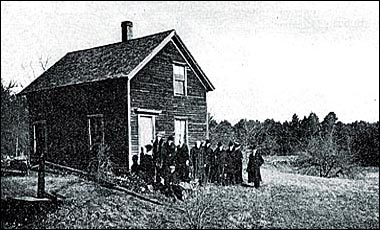
Joseph Smith, Sr., Ancestral Home -- Topsfield, Massachusetts
1780-1829 | 1830-1839 | 1840-1844 | 1845-1879 | 1880-1920
1780-1819
MSpy Oct 06 '85 | SIR Sep 15 '00 | CCn Jul 20 '02 | NSt Nov 06 '16 | ABM May '18 | AmM May 19 '18
WV May ? '19 | NbHr Jun 04 '19 | NEG Jun 04 '19 | ChHr Jul '19 | BRec Jul 24 '19 | NbHr Jul 27 '19
MSpy Oct 13 '19 | FCab Nov 20 '19
1820-1824
ChW Jan ? '20 | PSun Feb 09 '20 | WdOb Feb 15 '20 | VtIn Jun 26 '20 | NbHr Apr 13 '21 | NbHr May 01 '21
NHSnt Apr 13 '22 | WdOb Apr 16 '22 | NHSnt May 04 '22 | PGaz Apr 16 '23 | SGz Aug 15 '23 | NBM Aug 15 '23
USLG Oct 01 '24
1825-1829
WJour Jan 17 '25 | ZHrl Feb 09 '25 | ABM Feb '25 | PPat Feb 25 '25 | HopM Mar '25 | ChHr Mar '25
ABM Apr '25 | NHGz Nov 01 25 | VWat Jan 03 '26 | VRg Nov 15 '27 | EGz Nov 17 '27
NHSnt Nov 23 '27 | SGz Dec 07 '27 | SGz Feb 22 '28 | VAmr May 07 '28 | VAmr Aug 06 '28
ABM Apr '29 | FCab May 02 '29 | BMsg Sep 25 '29 | SGz Oct 02 '29
Note: All Maine newspaper articles have been moved to a separate web-page.
Massachusetts Spy: Or, the Worcester Gazette.  Vol. XV. Worcester, Mass., October 6, 1785. No. 757. Miscellanies. For Thomas's Massachusetts Spy. |
Vol. I. Salem, Mass., September 15, 1800. No. 37.
Another Richard Brothers! MEMORIAL to be presented to the General Assembly of the State of Connecticut, at their sessions at Newhaven, in Octover, 1800. |
Vol. XXIX. Norwich, Conn., July 20, 1802. No. 1479.
For the CONNECTICUT CENTINEL. The Machine of the prophetic design took up the American Nation in seventy-six. It hath borne the Nation through various toils, until its deliverance is complete: The names of different performers have been but as the names of the different classes of labours, |
Vol. IV. Middlebury, Vt., Nov. 6, 1816. No. 11. DIVINING ROD. The Divining or Magic Rod for finding water, is known to be an instrument frequently used, by the settlers in Kentucky and the state of Ohio. Until late years, the experiment was laughed at by every man of understanding; and only regarded as a trick or imposture. Since the discovery of Galvanism and the wonderful effects produced by invisible fluids, the experiment of the Divining Rod has been investigated both in the schools of Paris and London -- it has been ascertained as a matter of certainty, that the twigs of various trees, such as peach, cherry, plum, etc. when held in a certain position by the human hand, are attracted by water not exceeding a certain depth below the surface of the earth. Anon. |
American Baptist Magazine. AND Missionary Intelligencer. NS No. 9. Boston, Mass., May, 1818. Vol. I.
Missionary Intelligence.
Extract of a Letter from Rev. Ira Chase, to the Secretary of the Massachu. Bap. Miss. Society, dated |
Vol. XXXIV. Hartford, Conn., May 19, 1818. No. 1768.
|
Vol. XI. Kennebunk, Mass. [Me.], May ?, 1819. No. ? IMPOSTOR PUNISHED.
|
Vol. XXIII. Newburyport, Mass., June 4, 1819. No. 19.
COCHRANISM. Mr. Shirley, |
Vol. II. Boston, Mass., Friday, June 4, 1819. No. 86. HYPOCRISY DETECTED. The last Portland Gazette announces the trial of Jacob Cochran, before the supreme court at York. Five indictments were found against him, for adultery and crimes of a similar nature, on one of which he was found guilty. While the jury were making up their verdict, Cochran absconded, thus leaving his bondsmen in the suds and cheating the state prison of a pious labourer. The Gazette states that Cochran had for two years made great pretensions to religion as a free will Baptist in the towns of Buxton, Hollis and Kennebunk. This "winding up of the drama," is not surprising to us, nor to any others who have seen and known how often the greatest pretensions to religion are masks to cover the grossest vices or the meanest villanies. If some who have lately made "these benighted regions," echo with their GRATITUDE and their RELIGIOUS ZEAL, should "wind up their drama" by a catastrophe similar to that above mentioned, no living being ought to be surprized. |
CHRISTIAN HERALD. No. 8. Portsmouth, N. H., July, 1819. Vol. I. JACOB COCHRAN. The career of this person has excited much agitation for about two years past in the eastern country, particularly in the county of York. He made his appearance under the guise of a Freewill Baptist preacher, and succeeded in collecting a considerable party. Those who have entured to expose his conduct, in any measure have been branded as persecutors, &c.; however, the mystery of iniquity has been discovered, and a final check put to its progress. Having had five several charges found against him by the Grand Jury, for adultery and crimes of a similar nature he was brought to trial before the Supreme Court held in York, in May last. He was first tried for lascivious behaviour connected with supposed adultery, and though the specifications were substantiated to the satisfaction of the court, yet the jury did not agree, one of them being, as it was supposed, a disciple of Cochran. He was then tried on a second indictment for adultery and the Jury after sitting about an hour found him gulity. At this time not having been given up by his bondsmen, Cochran absconded leaving his bondsmen accountable, for the sum of 1800 dollars. |
Vol. IV. Boston, Ma., July 24, 1819. No. 30.
The St. Louis Gazette, after giving some account of the testimonies existing in support of the opinion that there is now inhabiting the southern branches of the Missouri a race of men descended from the Welch emigrants, who embarked to the number of 323 persons, in ten vessels under Prince Madoc, in the year 1170 from north Wales, mentions that an expedition is now on foot for a thorough investigation of the fact. The persons engaged in the undertaking are Messrs. Roberts and Parry, Welchmen, who speak the language of north and south Wales. It is said that they are industrious persevering men, and that they will pursue the search as long as the probability of a discovery exists. -- |
Vol. XXIII. Newburyport, Mass., July 27, 1819. No. 34. From the St. Louis Gazette, June 16. Welsh Indians. -- Among the many interesting subjects of inquiry, which at present engage the public attention, we are pleased to see it once more directed to discover the remnant of an interesting emigration. -- The idea may appear fanciful to many, and has been much ridiculed, but still we entertain falttering hopes of the existence of a race of men descended from the ancient Welsh emigrants. It is a fact well extablished in history, and we conceive beyond doubt, that in 1169 and 1170, Prince Madoc ab Owain Gwynedd, emigrated from NorthWales taking with him, as is said, 323 persons in 10 ships. The present inquiry originated with the Cymreiggdon Society of London. They adopted resolutions and proceedings on the subject, and they state the departure of Madoc and his landing on the coast of America as facts well known and undoubted; they also state that the Welsh or White Indians, as they are sometimes called, are spoken of by the following authors and writers, among others, viz: -- the Rev. Morgan Jones, of Wales, who said, that he had been amongst them four months in 1660, during which he preached to them; Rev. W. Wynne, in 1696; William Penn, in 1700; the Rev. Theophilus Evans of St. Davids, Brecknockshire, in 1740; John Filson, of Kentucky, in 1783; the Rev. Dr. Williams of Sydenham, in 1791; the Rev. John Hoekewalder, a Dutch Moravian Misionary, in 1792; William Owen Pugh, Esq., in 1798; John Roberts, of Howarden, Flint City, who saw one of the Welsh Indians in Washington City, in 1801; Mr. Childs of Jessamine City, (Ky.) who relates the account of Morris Griffiths, who had been amongst them 8 months in 1804. The society suggest that the present descendants of the emigrants are settled on the southern branches of the Missouri, and are called Padoucas or Padouciad, which they imagine to be derived from Madoc, by a usual change in the Welsh language. The like add, that several Welshmen from time to time have seen and conversed with them in the Welsh language, and others of different nations, who have seen them, say, they bear a great resemblance to the neighboring Indians, except in their colour, countenance and morality. |
Vol. 48. Worcester, Ma., October 13, 1819. No. 33. Extract of a Letter from Saco, (Me.) Oct 8th. "I congratulate you, with the community, by informing, that the notorious culprit, Jacob Cochran, is in custody of the Commonwealth, (in Alfred Jail.) He was taken in this town, near his establishment, last evening, about 9 o'clock, by Mr. Rishwarth Jordan and Mr. John Banks, who deserve great credit for their spirit and perseverance. They pursued him, over fences and into swamps, and finally took him, though not without great trouble. He aimed several blows at Mr. Jordan's head; but fortunately only one hit him, and that on the arm, with a green maple stick, four inches round. I am happy to add, it did not injure him much." |
Vol. XVIII. Amherst, N. H., November 20, 1819. No. 9.
Jacob Cochran was sentenced last week at Alfred for the crimes of adultery and gross ludeness, to 13 days solitary confinement in the State Prison and 4 years hard labor. |
Vol. ? Boston, Ma., January ?, 1820. No. ?
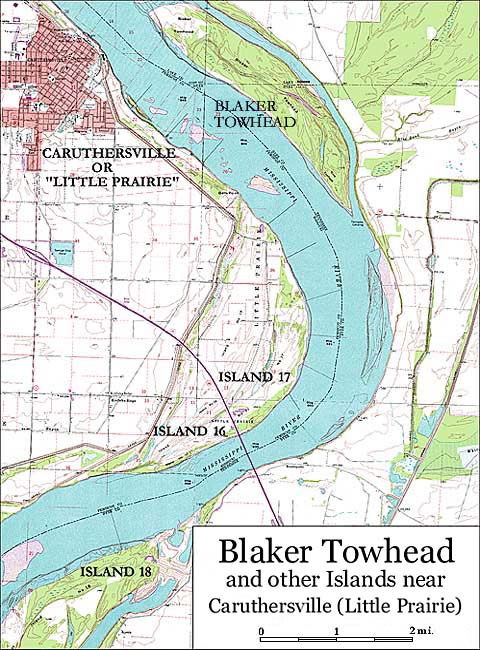
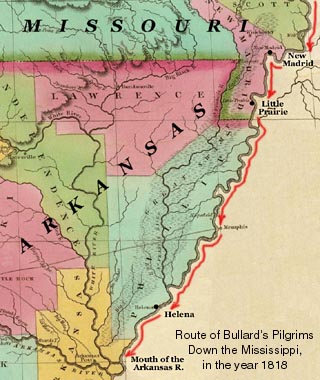
Extract of a letter from a gentleman in the interior of New York Passing near Dryden, I was induced to enquire after news from the 'Pilgrims,' who were visited at their encampment in that town, by Mr. Chase, missionary, whose account of them was published in the Am. Baptist Magazine a year ago. |
|
Vol. XX. Pittsfield, Mass, Tuesday, February 9, 1820. No. 1012. The Pilgrims, Who, two or three years ago, rose up in Canada and Vermont, were led by their prophet to the Allegany river, where they took boat, descended the stream to an island, and dismebarked. The prophet and his priest made some excuse for a short absence, took the treasury box of the company, left them destitute of provisions, and never returned. -- The company, amounting to about 70 in number, thus abandoned, returned to their several homes. So that the new sect is dispersed. |
Vol. I. Woodstock, Vt., Tues., February 15, 1820. No. 6. Pilgrims. Among those deluded people that went from this town two or three years ago, calling themselves pilgrims, was Mr. Joseph Ball, well known as a preacher, before he became a pilgrim. |
Vol. ? Bellows Falls, Vermont, June 26, 1820. No. ?
We have heard many marvelous tales of the efficacy of the Divining Rod, but have given them no more credit than we have to the feats of the Seven Champions of Christendom, or Monk Lewis' Tales of Terror. The following, however, from the British Quarterly Review, places the subject in a point of view, which is to us entirely novel, and cannot fail to be interesting to the curious and philosophical reader. |
Vol. XXV. Newburyport, Mass., April 13, 1821. No. 4.
Communication
There is in Salisbury a Methodist Preacher who publicly professes to have the gift of prophecy and discerning of spirits -- to have the faith of Abraham -- believes he could stop the mouths of lions if cast into their den as was Daniel, or that he could go into the fiery furnace without injury -- asserts that he is one of the prophets that was to come in the latter days -- that the dawn of the millennium has commenced -- he being spiritual judgeth all things, himself being judged of no man -- speaking of himself he says he can tell whether a man is possessed of a good or bad spirit by looking him in the face -- says he speaks the truth in Christ, and lies not. His followers are daily increasing, firmly believing and confirming his words. F. G. |
Vol. XXV. Newburyport, Mass., May 1, 1821. No. 9. ITEMS. A female has been tried in N. York, for having two husbands. The magistrate who married her last time not being able to identify her, she was acquitted... |
 Vol. XIX. Portland, Me., March 26, 1822. No. 993.
|
 Vol. ? No. ? ] Keene, N. H., Sat., April 13, 1822. [ $1.75 per ann. Money Diggers, -- A Hallowell paper states that 12 or 14 men are now engaged in digging for pots of money in Pittston on the Eastern bank of the Kennebec river. The digging was commenced in 1817, and a vast excavation has been made 75 feet deep. The leader of the "visionary gang," is said to be a substantial farmer in the neighborhood, who dreamed for three successive nights that much treasure was deposited there by the bucanners who visited the coast in its early settlement. Many of the original partners in the concern are said to have sold out at an advance -- but the few whose faith is yet strong preserve a profound silence, expecting momentarily to seize the treasure, their last shilling being nearly expended. Quere, Did Michael Martin disclose the secret to his Executor, who made his will, so that the treasure buried in Ireland can be discovered. If so, Mississipi, or South Sea Stock never sold better than this would, if exposed in shares, in this enlightened age and country. -- There is almost enough rusting, according to his own account, to fit out Capt. Symmes on his expedition to the interior world. |
Vol. III. Woodstock, Vt., Tues., April 16, 1822. No. ?
From Professor Silliman's Journal of Science.
On the Divining Rod, with reference to the use made of it in exploring for springs of water -- in a letter to the Editor, dated Norfolk, (Conn.) Oct. 23, 1820. |
|
Vol. ? No. ? ] Keene, N. H., Sat., May 4, 1822. [ $1.75 per ann. Every country has its money diggers, who are full in the belief that vast treasures lay concealed in the earth. So far from being a new project, it dates its origin with the first man who ever weilded a spade. 'Tis as old as Adam. Even in these latter days, we find men so much in love with the "root of all evil." and so firm in the belief that it may be dug up, that they will traverse hill and dale, climb the loftiest mountain, and even work their way into the bowels of the earth in search of it. Indeed digging for money hid in the earth, is a very common thing; and in this State, it is even considered an honorable and profitable employment. We could name, if we pleased, at least five hundred respectable men, who do, in the simplicity and sincerity of their hearts, verily believe that immense treasures lie concealed upon our Green Mountains, many of whom have been for a number of years, most industriously and perserveringly engaged in digging it up. Some of them have succeeded beyond their most sanguine expectations. One gentleman in Parkerstown, on the summit of the mountain, after digging with unyielding confidence and untiring diligence, for ten or twelve years, found a sufficient quantity of money to build him a comodious house for his own convenience, and to fill it with comforts for the weary traveller. On stopping lately to refresh, we were delighted with the view of an anchor on the sign, emblematical of his hope of success, while we left him industriously digging for more. Another gentleman on the east shore of Lake Champlain, we are credibly informed, has actually dug up the enormous sum of fifty thousand dollars! The incredulous and unbelieving may stare at this assertion, but it is nevertheless true, and we do not hesitate to declare our belief that digging for money is a most certain way of obtaining it. Much, however, depends on the skillful use of the genuine mineral rod. Don't dig too deep, is an appropriate maxim with all who are versed in the art. Wood's Iron Plough, skillfully guided, is sure to break the enchantment, and turn up the glittering dust in every furrow. Countless treasures yet remain hid in the earth. Speed the plough -- ply the hoe -- 'Twill all come to light. |
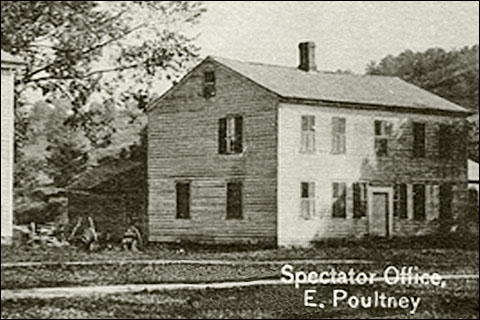
 Vol. I. Poultney, Vt., Wednesday, April 16, 1823. No. 25.
|
ns Vol. I. Salem, Mass., Friday, August 15, 1823. No. 35. CAPTAIN KIDD. A late Albany paper relates the following facts of this celebrated freebooter, who was once the terror of the ocean; and whose fame will probably be handed down to a thousand succeeding generations, through the old ballad of "As I sailed, as I sailed," &c. Mrs. Goeway, the wife of Gerrit Goeway, a grave and elderly matron, affirms, that her mother, who lived at a very advanced age, has frequently stated to her while a mere girl, that Kidd remained at Coeymans during part of two seasons, secreted ina barn belonging to one of the name of Coeymans; and afterwards in a mill, called Livingston's mill. Whether these stories can be relied on for accuracy, I will not undertake to say; but this much can be said with truth, it is appears from the records, that on the 24th of March, 1691, captain Kidd complained to the governor and council of New York, that one of his men had been pressed from the vessel by captain Hicks, and the governor and council ordered, "upon the consideration of the good service performed by captain Kidd, not only to their majesty's forces, but others, their majesty's good subjects," that the man be restored to him. On the 17th of August, 1691, he brought a prize into the port of New York, and the governor and council resolved, that "paying the king's tenths, and the governor's fifteenths," no other duty to be paid for the prize. Would not the piratical deeds by Kidd -- the treasure he has buried -- and the incantations he has performed in those midnight orgies, which were celebrated by him and his kindred spirits, form as good foundation for an historical novel as any contained in the Waverley novels, so much sought after and admired? [notice of recent publications, "no. vii."] ...A Letter to Hull Barton, an excommunicated member from the Society of Friends, now a New Light Preacher. By Notus Nemini. Note: See Glyndon G. Van Deusen's article, "A Young American..." in the Jan. 1944 issue of Rochester History, for a summary of the early years of Thurlow Weed's autobiography. Weed grew up at Catskill, thirty miles south of Albany. The village of Coeymans is located on the Hudson, about half-way between the two towns. Van Deusen provides this paraphrase from Weed's account: "Sometimes the older men let an active, willing youngster [Thurlow] go with them when they hunted for Captain Kidd's treasure, a youth who watched not a little terrified as they cut a black cat's throat so that the spurt of blood would mark the place to dig." The sacrifical blood meant to propitiate the spirits of the murdered guardians Kidd had supposedly left in the New York soil to protect his buried chests of gold. However, Kidd's hidden fortune proved to be an elusive prize for money-diggers: some believed that Kidd's buried chests could "slip away" and propel themselves for many miles underground, until they reached new hiding places, safe from the treasure seekers' picks and shovels. |
Vol. XVII. New Bedford, Mass., August 15, 1823. No. 5. Hull Barton. Just received, and for sale at the Store occupied by Andrew Gerrish, jun. |
|
Vol. I. Boston, Mass., Friday, October 1, 1824. No. 12.
REVIEWS. View of the Hebrews; exhibiting the Destruction of Jerusalem; the certain Restoration of Judah and Israel; and an Address of the Prophet Isaiah relative to their Restoration. By Ethan Smith, A. M., Pastor of a Church in Poultney, Vt. Poultney, Vt. 1823. 12mo. pp 187. |
Vol. I. Portland, Me., November 1, 1824. No. 10.
|
|
Vol. ? Windsor, Vermont, Friday, January 17, 1825. No. ?
Money digging.-- We are sorry to observe even in this enlightened age, so prevalent a disposition to credit the accounts of the Marvellous. Even the frightful stories of money being hid under the surface of the earth, and enchanted by the Devil or Robert Kidd, are received by many of our respectable fellow citizens as truths. We had hoped that such a shameful undertaking would never have been acted over our country, till the following event occurred, not not long ago in out vicinity. |
|
AMERICAN BAPTIST MAGAZINE. Vol. V. Boston, Mass., February, 1825. No. 2.
REVIVALS OF RELIGION. Avon, Dec. 20th, 1824. |
 Vol. III. Boston, Mass, Tuesday, February 9, 1825. No. ? MORAL AND RELIGIOUS. More than two hundred souls have become the hopeful subjects of Divine grace in Palmyra, Macedon, Manchester, Phelps, Lyons and Ontario, since the late revival commenced. This is a powerful work; it is among old and young, but mostly among young people. -- Many are ready to exclaim, What God hath wrought! The cry is yet from various parts, "Come over and help us." There are large and attentive congregations in every part, who hear as for their lives. Such intelligence must be pleasing to every child of God, who rightly estimate the value of immortal souls, and wishes well to the cause of Zion. -- |
N.S. Vol. VII. Providence, R. I., February 25, 1825. No. 10.
Money Digging. -- We are sorry to observe, even in this enlightened age, so prevalent a disposition to credit accounts of the marvelous. Even if the frightful stories of money being hid under the surface of the earth, and enchanted by the Devil or Ribert Kidd, are received by many of our respectable fellow-citizens as truths. We had hoped that such a shameful transaction would have never been acted over again in our country, till the following event occurred, not long ago, in our vicinity: -- "A respectable gentleman in Tunbridge, was informed, by means of a dream that a chest of money was buried on a small island in Ayer's brook, at Randolph. No sooner was he in possession of this valuable information, than he started off to enrich himself with the treasure. After having been directed by the mineral rod where to search for the money, he excavated the earth about 15 feet square to the depth of 7 or 8; and all the while it was necessary to keep his pumps working to keep out the water. Presently he and his laborers came |
HOPKINSIAN MAGAZINE. Vol. I. Providence, R. I., March, 1825. No. 15.
Religious Intelligence.
Extract of a letter from a lady at Saratoga Springs, to a friend in Rochester, N. York. |
"Behold I bring you good tidings." Vol. VIII. Portsmouth, N. H., March, 1825. No. 1. REVIVALS. Some mercy drops have been experienced in this town, of late; a good number have been renewed by the grace of God, which bringeth salvation, and are now faithful in his cause... |
|
AMERICAN BAPTIST MAGAZINE. Vol. V. Boston, Ma., April, 1825. No. 4.
REVIVALS OF RELIGION. Bristol, (N. Y.) March 9, 1825. |
Vol. LXX. Portsmouth, November 1, 1825. No. 50.
For the N. H. Gazette. "The thing that hath been, is that which shall be; and there is no new thing under the sun." |
|
Vol. XX. Montpelier, Vermont, January 3, 1826. No. 1092.
MONEY DIGGING. If General Report is a man of truth, and his assertions to be relied upon, there are at the present day and in our own vicinity, many who are not making hay while the sun shines, but making haste to be rich, by digging in the bowels of the earth and in the caverns of Camel's Rump for shining guineas and rusty dollars, supposed to have been deposited there by some misely fellows of a former generation at a period anterior to the existence of Banks, unless it be banks of snow. For this purpose, we are told, the very natives, old sooth-sayers, and astrologers, with pick axes, bog hoes and mineral rods, have been virorously at work, until old Boreas has given them a blast and forced them into winter quarters, from whence it is supposed they will sally out in the spring, with a fair prospect of getting an abundance of -- "labor for their pains." |
|
AND NORFOLK COUNTY ADVERTISER. Vol. IX. Dedham, Mass., November 15, 1827. No. 5.
Jacob Cochran, who figured rather conspicuously as a false teacher in Maine, a few years since, and underwent a short probation in Massachusetts State Prison for some of his misdeeds, is now living in Hollis, Me., where he has collected around him a number of fanatics, who profess to have every thing in common. Their doctrines admit of a plurality of wives. |
Vol. I. Haverhill, Mass., November 17, 1827. No. 44.
It appears by an article in the last Saco Palladium, that the notorious Jacob Cochrane, who was sentenced to the State Prison a few years since for the vile impositions which he practiced in several towns in the county of York, is again holding forth in that section of our State, and has drawn around him several fanatics. He ought to be provided with quarters in the State Prison for life -- or, with "a halter gratis." -- |
|
Vol. XXIX. Keene, N. H., November 23, 1827. No. 47. Jacob Cochrane, who figured rather conspicuously as a false teacher in Maine, a few years since, and underwent a short probation in the Massachusetts State Prison for some of his misdeeds, is now living in Hollis, Me. where he has collected around him a number of fanatics, who profess to have every thing in common. Their doctrines admit of a plurality of wives. |
ns Vol. V. Salem, Mass., December 7, 1827. No. 96.
From the Saco Palladium.
JACOB COCHRAN. This strange man, who a few years since, threw a part of New-England in commotion with fanaticism, and who, in the midst of his supernatural power and light, found a check to his holy zeal, as he called it, by a few years contemplation in the State Prison at Charlestown, is still a wonder in the land of the living, with a few fanatics at his heels. |
ns Vol. VI. Salem, Mass., February 22, 1828. No. 16.
KENNEBUNK, Feb. 16. Ordination Extra. -- Ordained in this town on Monday, 4th inst. the "notorious" Hull Barton, as pastor over the church and society recently gathered by the Rev. Jacob Cochrane. -- The services were performed by a few of the deluded followers of Cochrane. |
Vol. ? Middlebury, Conn., May 7, 1828. No. ?
Middlebury THE RODSMEN. Instances of great delusion or fanaticism have been rare thro' our country, and particularly so, among the intelligent yeomanry of New England. Since the days of the Salem witchcraft, and the times of the Connecticut Blue Laws, probably nothing has occurred in our states exhibiting such complete fanaticism , and so utter a destitution of propriety and common sense, as the origin and operations of the of a Fraternity of Rodsmen, (formerly existing in this state,) whose character it is now our purpose to briefly sketch. |
Vol. ? Middlebury, Conn., Wednesday, August 6, 1828. No. ? To the Editor of the American. -- |
|
AMERICAN BAPTIST MAGAZINE. Vol. IX. Boston, Ma., April, 1829. No. 4.
MISSIONARY REGISTER. With pleasure we present our readers with the following extract of a communication from Rev. Adamson Bentley, a minister at the West. |
Vol. 27. Amherst, N. H., May 2, 1829. No. 34.
Some of the Baptist Churches in Ohio have enjoyed the year past special tokens of divine favor. Mahoning Association has received an addition of 512 converts; and 500 were baptized who had not joined the Association. The number added to the churches under the care of the Presbyterian synod during the year is said to be about two thousand. -- |
Vol. VIII. Brattleboro, Vermont, September 25, 1829. No. 35.
'Golden Bible.' -- The Palmyra Freeman says -- The greatest piece of superstition that has ever come within our knowledge, now occupies the attention of a few individuals of this quarter. -- It is generally known and spoken of as the 'Golden Bible.' Its proselytes give the following account of it: -- In the fall of 1827, a person by the name of Joseph Smith, of Manchester, Ontario county, reported that he had been visited in a dream by the spirit of the Almighty, and informed that in a certain hill in that town, was deposited this Golden Bible, containing an ancient record of a divine nature and origin. After having been thrice thus visited, as he states, he proceeded to the spot, and after having penetrating "mother earth" a short distance, the Bible was found, together with a huge pair of Spectacles! He had been directed, however, not to let any mortal being examine them, "under no less penalty" than instant death! They were therefore nicely wrapped up, and excluded from the "vulgar gaze of poor wicked mortals!" It was said that the leaves of the bible were plates of gold, about 8 inches long, 6 wide, and one eighth of an inch thick, on which were engraved characters or hieroglyphicks. By placing the spectacles in a hat, and looking into it, Smith could (he said so, at least,) interpret these characters. |
ns Vol. VII. Salem, Mass, October 2, 1829. No. 79.
GOLDEN BIBLE. -- The Palmyra Freeman says -- The greatest piece of superstition that has ever come within our knowledge now occupies the attention of a few individuals of this quarter. -- It is generally known and spoken of as the "Golden Bible." Its proselytes give the following account of it: -- In the fall of 1827, a person by the name of Joseph Smith, of Manchester, Ontario county, reported that he had been visited in a dream by the spirit of the Almighty, and informed that in a certain hill in that town, was deposited this Golden Bible, containing an ancient record of a divine nature and origin. After having been thrice thus visited, as he states, he proceeded to the spot, and after having penetrating "mother earth" a short distance, the Bible was found, together with a huge pair of Spectacles! He had been directed, however, not to let any mortal being examine them, "under no less penalty" than instant death! They were therefore nicely wrapped up, and excluded from the "vulgar gaze of poor wicked mortals!" It was said that the leaves of the bible were plates of gold about 8 inches long, 6 wide, and one eighth of an inch thick, on which were engraved characters or hieroglyphics. By placing the spectacles in a hat, and looking into it, Smith could (he said so, at least,) interpret these characters. |
Back to top of this page.
Articles Home Page | Newspaper Articles Index | History Vault
Oliver's Bookshelf | Spalding Studies Library | Mormon Classics
last updated: Oct. 1, 2010