
READINGS IN EARLY MORMON HISTORY
(Newspapers of California)

Misc. California Newspapers
1860-1899 Articles
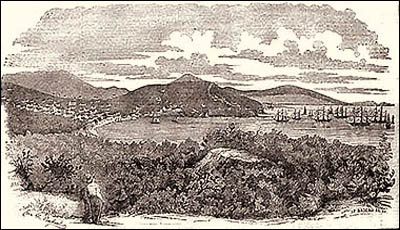
Early View of San Francisco and the Bay
1845-1856 1857-1859 1860-1899 1900-1979
1860-1866
MDm Jan 21 '60 | VWD Feb 11 '60 | SFB Feb 20 '60 | Alt Feb 23 '60 | SFB Mar 27 '60 | SFB Mar 28 '60
Alt Apr 06 '60 | SFB May 15 '60 | Alt May 31 '60 | SFB Jul 17 '60 | Alt Oct 28 '60 | Alt Feb 10 '61
SFB Feb 14 '61 | SFB Aug 02 '61 | SFB Aug 10 '61 | Alt Dec 04 '61 | SFB Jul 18 '66 | SFB Jul 19 '66
1867-1869
SFB Jan 04 '67 | Alt Jun 02 '67 | Alt Apr 07 '68 | Elv Oct 02 '68 | Alt Oct 22 '68 | SDU Jan 19 '69
SDU Feb 19 '69 | SDU Mar 15 '69 | SDU Apr 17 '69 | SDU Jul 31 '69 | SDU Aug 10 '69 | SDU Aug 11 '69
SFB Aug 12 '69 | SDU Aug 14 '69 | SFB Aug 17 '69 | SFB Aug 18 '69 | Alt Aug 20 '69 | Alt Aug 24 '69
SFB Sep 01 '69 | Alt Sep 04 '69 | SFChr Sep 07 '69 | SDU Sep 14 '69 | SDU Nov 11 '69 | SFB Nov 16 '69
SFB Dec 03 '69
1870-1875
SDU Mar 17 '70 | SDU Apr 02 '70 | SFB Oct 21 '70 | EvExp Oct 07 '71 | SFB Jun 14 '72 | SFB Sep 20 '72
SFB Sep 24 '72 | SDR Sep 24 '72 | SFB Sep 26 '72 | SFB Sep 27 '72 | SFB Nov 27 '72 | SFB Nov 17 '74
SFB Dec 01 '74 | SDU Feb 08 '75 | SDU Mar 12 '75 | SDU Apr 10 '75 | SDU Apr 15 '75 | DMC May 13 '75
SBA Jul 10 '75 | SFB Jul 26 '75 | MDm Aug 14 '75 | SFB Sep 27 '75
1876-1879
SFB Apr 24 '76 | SFB Aug 04 '76 | SBA Oct 14 '76 | OTr Mar 22 '77 | SFB Mar 24 '77 | SDU Mar 24 '77
SFB Mar 26 '77 | OTr Apr 09 '77 | ScB Apr 30 '77 | SDU May 01 '77 | SFB May 03 '77 | SDU May 07 '77
SDU May 10 '77 | SDU May 11 '77 | SDU May 16 '77 | SFC May 29 '77 | SDU May 16 '77 | SDU Jun 02 '77
SFB Sep 08 '77 | SDU Dec 29 '77 | SFB Sep 27 '78 | SFB May 31 '79
1880-1889
GVU Jul 30 '81 | SDU Feb 23 '82 | LAH Apr 25 '84 | KCC May 31 '84 | SFB Dec 13 '84 | TExp Feb '85
TExp Apr '85 | TExp May '85 | TExp Jul '85 | TExp Oct '85 | TExp Nov '85 | TExp Jan '86
TExp Mar '86 | TExp Apr '86 | TExp May '86 | TExp Sep '86 | LAT Oct 03 '86 | LAT Oct 17 '86
LAT Oct 24 '86 | TExp Jan '87 | TExp Jun '87 | LAT Jul 29 '87 | LAT Aug 03 '87 | LAT Oct 19 '87
SFB Jan 25 '88 | TExp Feb '88 | TExp Mar '88 | LAH Mar 18 '88 | TExp Apr '88 | TExp May '88
TExp Jun '88 | TExp Aug '88 | TExp Oct '88 | MDm May 11 '89
1890-1899
MDm Oct 04 '90 | LAT Oct 29 '90 | OTr Mar 30 '91 | RDP Jul 28 '91 | WDD Aug 06 '91 | SFChr May 14 '93
DMC Mar 04 '94 | SFC Apr 07 '95 | SDU Apr 10 '95 | SFC Apr 11 '95 | BGaz Apr 12 '95 | FWR Nov 12 '97
Articles Index | 1888 Oakland Naked Truths
 "Our Country -- Always Right, but Right or Wrong, Our Country."  Vol. VI. Placerville, Calif., Saturday, January 21, 1860. No. 45.
NEVADA TERRITORY. -- On the 4th instant, Mr. Kirkpatrick of Sierra, introduced the following concurrent resolutions in the State Senate... |
|
Visalia Weekly Delta. Vol. I. Visalia, Calif., Saturday, February 11, 1860. No. 34. [Communicated.] The Danite organization among the Mormons in 1838, when the missionaries began to threaten to expell the mormons for incroachments upon their property, there was a Death Society organized under the direction of Sidney Rigdon, with the approbation of Jo Smith. Its first Captain was Capt. "Fearnot" alias David Patton, an Apostle. Its avowed object was the destruction of the obnoxious. There was a difficulty among them relative to a suitable name. They wanted one expressive of Spirtual Authority. "Arise and thresh, O daughter of Zion; for I will make thy horn iron, and thy hoof brass, and thou shall beat in pieces many people; and I will consecrate their gain unto the Lord of the whole earth," (Mich. 4, 13) furnished them a pretext, as it described their bloody intention, and they were called, "Daughters of Zion." But these bearded and bloody daughters were so ridiculed that they changed their name to the "Big Fan" that should thoroughly purge the floor. -- This too was finally dropped, and the name "Destroying Angels," by which they are now known, was adopted. But the XIX chapter of Genesis and 17th verse, furnish them a full idea of the design of the organization. "Dan shall be a serpent by the way; an adder in the path, that biteth the horses heels, so that his rider shall fall backward," and as a thousand bloody tragedies floated before their midnight visions, they exclaimed: We are the "Sons of Dan;" hence "Danites" was the style they adopted. Many a rider has fallen, backwards by the machinations of the serpent in the path. |
 Vol. IX. San Francisco, February. 20, 1860. No. 113.
Letter from St. Louis.
|
 Vol. XII. San Francisco, Thurs., February 23, 1860. No. 53.
LETTER FROM A CALIFORNIAN
|
|
Vol. IX. San Francisco, Tuesday, March 27, 1860. No. 144.
Letter from St. Louis.
|
|
Vol. IX. San Francisco, Wednesday, March 28, 1860. No. 145.
Letter from Washington.
|
|
Vol. XII. San Francisco, Fri., April 6, 1860. No. 96. Utah. The Washington correspondent of the New York Tribune says that a majority of the House is in favor of the anti-polygamy bill. |
|
Vol. X. San Francisco, May 15, 1860. No. 32.
The Great Mistake of Buchanan's Administration. When President Buchanan, after going to the immense expense of sending an army to Utah, issued his pardon-proclamation, just as that army was in position to conquer submission from the traitors, we said it was a mistake. We thought it clear that sooner or later the Mormons would have to be dealt with by force; and therefore could not understand the policy of postponing the conflict, after our Government had placed itself in a hostile attitude toward the Saints, and got a military expedition on the ground, strong enough to make a favorable result almost certain. To bring that expedition over a thousand miles of desert country, in sight of the Mormons -- all armed, provisioned and equipped for a long campaign, and then, just as the serious work should have commenced, to offer the Mormons peace on terms so easy that they would have been mad not to have accepted them, seemed to us one of those blunders that could only be explained by referring to the inexplicable workings of the circumlocation office at Washington, which appeared anxious to give the country one more startling example of "how not to do it." Instead of whipping the Mormons, as the troops should have been allowed to do, and hanging Brigham Young, and a dozen other of the "Apostles," the army was quietly quartered in their territory, and the Federal Government undertook to pay the Saints handsomely for supporting the soldiers. This their presence was turned into a godsend to the Mormons; each soldier was only a good customer -- and doubtless that arch-politician Young has gained an immense amount of additional popularity among his brethren, for his wisdom in provoking the "war," and his adriotness in evading the fighting, and turning the event into a gold mine, for the enrichment of his people. That all the "glory" of the campaign was carried off by the Mormon leader, there can be no question; and that he gathered into his impoverished coffers the best portion of the millions wasted by our Government upon it, is also clear. If it were possible, we have no doubt that Brigham would pay, to-day, as much as a million, cash for just such another expedition against the Mormons as President Buchanan sent out two years ago. |
|
Vol. XII. San Francisco, Thur., May 31, 1860. No. 151.
OUR SALT LAKE CORRESPONDENCE.
|
|
Vol. X. San Francisco, Tuesday, July 17, 1860. No. 85. (Per Pony Express)
|
|
Vol. XII. San Francisco, Sun., October 28, 1860. No. 3911.
The Utah Judgeship. The present administration appointed an Associate Justice of the Territory of Utah. The commission continues for the period of four years, and yet he has already been removed by President Buchanan. This usurpation of authority, on the part of the president, is regarded as wholly illegal and unwarranted by the Judge, who refuses to yield to his named successor, Mr. Flenniken. The law says that the incumbents shall hold fir four years, and that all the Judges appointed for Territories shall be commissioned for that period. Per contra, the contestant alleges that the right to appoint carries with it the right to remove, and that unless this were the case in the Territories, the President would be powerless to protect the people against abuses. And the new appointees and friends insist that Cradlebaugh has been guilty of heinous offences. It will be a long time, probably, before this disputed question is settled. Flenniken will duly present his commission to the holding Judge. He will disregard the demand to abdicate. The former will apply for a writ of quo warranto before another Judge, and if this is decided adversely to Cradlebaugh, he will appeal to the Supreme Court. |
|
Vol. XIII. San Francisco, Sun., February 10, 1861. No. 4014.
CRADLEBAUGH vs. BUCHANAN. -- The Territorial Enterprise of the 2d inst. says: |
|
Vol. XI. San Francisco, February 14, 1861. No. 109.
(BY PONY EXPRESS.)
(EDITORIAL CORRESPONDENCE.)
The Pony Express that arrived here on Tuesday night last brough us two letters from Washington, of the date of the 22d and 19th of January... we here extract from it such passages as have a special California interest... |
|
Vol. XII. San Francisco, August 2, 1861. No. 100.
PROFANING THE GRAVE. -- An expedition was sent from Fort Tejon, in April 1859. to bring [together] the remains of the large train that was lost in the Mountain Meadows massacre. This was done and a monument erected on the spot. By late arrival from Potosi, it appears that of that mausoleum not one stone now stands upon another, and that thebones interred at its base again lie bleaching on the desert! The Star remarks that ladt May Brigham Young visited Mountain Meadows, the outer boundary of his dominions; two days after he left the mausoleum was destroyed. For the slaying of the "Apostle" Parley Pratt, in Arkansas, his particular friend in Mormonism, he Prophesied at Salt Lake that vengeance should be executed upon Arkansas, and that "the bones of her children should bleach on the plains without burial, so help me God!" Has Brigham's visit any connection with the erasure of that pile? |
|
Vol. XII. San Francisco, August 10, 1861. No. 107.
RUFFIANISM IN SAN BERNARDINO. -- A private letter to the Star says that a wonton and unprovoked attack was made upon a most respectable citizen lately, in the city of San Bernardino, at a locality known as Whisky Point. It seems, adds that journal, that a Mormon spy or worse named Batron, with a gang of Salt Lake outlaws, attacked the gentleman alluded to in the most ferocious manner, which but for his presence of mind would have resulted in a bloody tragedy. Major Carleton, the commander of this district was up in San Bernardino lately and we are very sorry he did not take charge of these fellows. We have no doubt they are the gang who razed the monument built by Major Carleton at the scene of the Mountain Meadow massacre, as we are satisfied they took part in that fearful tragedy. We wish our military commander would send a party to San Bernardino and arrest this gang of desperadoes. |
|
Vol. XIII. San Francisco, Wed., December 4, 1861. No. 4307.
NEWS OF THE 2d DECEMBER.
|
|
Vol. XXII. San Francisco, July 18, 1866. No. 86.
From Pahranagat to the Colorado.
|
|
Vol. XXII. San Francisco, July 19, 1866. No. 87.
The Mountain Meadows Massacre. In the letter of an occasional correspondent from Callville in yesterday's Bulletin it was intimated that the Mormons were exciting the United States authorities to punish the Indians for the massacre known by the above name. The Mormons having their own troubles with the Indians are now accusing those collected in the neighborhood of Muddy river of being the murderers, and in possession of the cattle and other plunder obtained by the crime. It will be remembered that in 1857 a large train of emigrants from Arkansas were attacked at Mountain Meadows by a band of Indians or white men, and every adult, numbering 144 persons of both sexes, slain, and a large quantity of stock, wagons, carriages, jewelry, clothing and other property carried off. After the massacre, 18 children, from eight years of age down to eight months, were picked up amongst the bushes into which they had crawled for shelter. James Lynch, formerly Superintendent of the United States post as Camp Floyd, has informed us that he was instructed by the United States authorities to inquire into this matter while stationed at the above post, and he had communications with John De. [sic - D.?] Lee, Hamlin, Bishop Smith and other Mormons, and they all acknowledged that the attack was made by Mormons, assisted by five Piute Indians, John De. Lee boasting that he was the leader of the attacking party. They admitted also the finding of the children and that there had been a consultation about them, one Mormon brute advocating their death on the ground that "they should destroy the nits while killing the lice." More humanr counsels, however, prevailed, and Hamlin took charge of 16 and John De Lee of 2. These children were found by the United States authorities, in Santa Clara, in 1859, in miserable condition, and were given up to our informant. The eldest, a sharp, intelligent child of 10 years old, named Mary Dunlap, remembered distinctly the occurrences of two years before, and pointed out to Mr. Lynch the men who had taken part in the massacre. Mary Dunlap also testified to articles of dress, and jewelry worn by John De Lee's wife and other persons as being part of the plunder which she recognized; also carriages and wagons which formed part of the train then in possession of the Mormons with whom she had been loving. Over 30 witnesses testified to facrs proving the guilt of the Mormons in this matter before Judges Cradlebaugh and Eckell[s], Territorial Judges in Utah. |
|
Vol. XXIII. San Francisco, Jan. 4, 1867. No. 74.
BRIGHAM YOUNG MAKES A SPEECH. -- December 23d. Brigham Young made a speech at the Tabernacle, Salt Lake City, which is thus reported by the Vedette. |
|
Vol. XIX. San Francisco, Sunday, June 2, 1867. No. 6288.
LETTER FROM "MARK TWAIN."
|
|
Vol. XX. San Francisco, Tuesday, April 7, 1868. No. 6597.
MORMONISM.
A writer in the Santa Cruz Sentinel gives the following synopsis of the Mormon faith, and their indifference to the Government of the United States. He commences with an explanation of "sealing:" |
Vol. IV. San Francisco, Calif., Friday, October 2, 1868. No. 27.
THE MORMONS claim that their sacred writings, embraced in the "Book of Mormon," and upon which their faith is founded, were written by Mormon, the last of an alleged line of Hebrew prophets, existing among the Israelites, who are said to have emigrated from Jerusalem to America about six hundred years before Christ. They also maintain that these writings were traced upon tablets which were hidden for manj years, until they were revealed to Joseph Smith, the founder of the sect of Mormons or Latter Day Saints, to which person alone was vouchsafed the power to transcribe them, as it was maintained that they were written in such characters that no one, unless specially commissioned by heaven, could read them. But the "Gentiles" affirm that the real author of these "Scriptures" was one Solomon Spalding, a kind of renegade American clergyman, who was born in 1761 and died in 1816, and that in the form of ordinary manuscript they fell into the hands of Joseph Smith, who, by the way, has certainly made an effective use of them. |
|
Vol. XX. San Francisco, Calif., Thursday, October 22, 1868. No. 6793. AFFAIRS AT SALT LAKE CITY. The Salt Lake Reporter appears to be sharp after the Latter Day Saints, and thus fulminates against "One Man Power": |
Vol. XXXVI. Sacramento, Tuesday, January 19, 1869. No. 5558.
MORMONISM ILLUSTRATED. -- This phase of Mormon life is described by the Salt Lake Reporter of January 9th: |
Vol. XXXVI. Sacramento, Friday, February 19, 1869. No. 5585. MORMON AND GENTILE DIFFICULTY. The Mormon and Gentile papers at Salt Lake have another choice bone of contention. It appears that the keeper of a Gentile hash-house paid attention to the wife of a Saint, and had "a job put up on him" by which he was properly punished for his impudence. We give the Gentile account of the affair, as it is the only one that contains the correspondence. Here it is from the Reporter of February 6th: |
Vol. XXXVI. Sacramento, Monday, March 15, 1869. No. 5605.
POLYGAMY NOT THE ONLY EVIL
The Salt Lake Reporter of March 5th says: |
Vol. XXXVII. Sacramento, Saturday, April 17, 1869. No. 5634.
AN OUTRAGE AT SALT LAKE. -- The annexed performance of a Mormon, or [Danite] spy, is related by the Salt Lake Reporter of March 24th: |
Vol. XXXVII. Sacramento, Saturday, July 31, 1869. No. 5723.
Corinne (U. T.), Reporter of July 24th has the following: |
Vol. XXXVII. Sacramento, Tuesday, August 10, 1869. No. 5731.
Mormon Feeling. -- The Salt Lake correspondent of the Corinne Reporter writes to that paper, under date of August 2d, as follows: |
Vol. XXXVII. Sacramento, Wednesday, August 11, 1869. No. 5732.
Salt Lake, August 9th. -- David and Alexander Smith, sons of Joe Smith, the founder of Mormonism, preached to large congregations in opposition to Brigham Young. Numerous converts are made, and Brigham finds it necessary to denounce the Smiths openly and in strong terms. There is great excitement among the Saints on the subject. Joseph F. Smith, one of Brigham's apostles, and cousin of David and Alexander, is preaching against them and endeavoring to destroy their influence among the people. A great schism is anticipated in the Mormon Church. |
|
Vol. XXVIII. San Francisco, Calif., Thursday, August 12, 1869. No. 106.
The Prophets at Variance.
It is clear that more serious difficulties have broken out among the Mormons of Salt Lake than have ever occurred in that community before. An outside persecution would rather strengthen than weaken the sect, but a difference among prophets and revelations, including fanatical beliefs, and the right to speak and rule by Divine authority is quite another matter. In fact the Mormon problem presents a new phase, not only to outsiders, but to the Mormons themselves. Joseph Smith, at the time of his tragic death, was the acknowledged prophet and leader of the Mormon church. Previous to his death, he foretold the birth of a son, whose name was to be called David, and whom he consecrated before birth, as his successor by revelation, to all the prophetic gifts, and to the headship of the church. As the revelation ran, he was "to be President and leader of this people." Five months after the death of Joe Smith, this son of revelation was born, and the tradition has ever since been cherished that in due time, according to revelation, the son was to succeed the father. Now, if the Mormons don't go back on revelation, here is a very serious case. David is now 23 years old, and, with his brother Alexander, has arrived in the city of the Saints, and has set up his claim as the true prophet and leader of the people. He held forth every Sunday and frequently on week days, drawing crowded houses. We have private advices that there is great excitement. An intense ferment is the result. Brigham forbids the faithful from going to hear the young prophet, on the pains and penalties of the church. But young and old flock to hear him. Young Smith denounces polygamy, exhorts loyaly to the Federal Government, and repudiates the despotism and tithing of Brigham. How is the latter going to kick against a revelation which in other days he has acknowledged as a true one, as well as holding now that the revelator was a true prophet! There is one way out of the difficulty, and that is to get a Iater revelation, and one which includes the taking off of Smith. The Mormons have a convenient way among themselves of stopping the wind of a man when his absence is more desired than his presence. |
Vol. XXXVII. Sacramento, Saturday, August 14, 1869. No. 5735.
Salt Lake, August 12th. -- During a Josephite meeting yesterday, Alexander Smith characterized Brigham Young's system as the vilest iniquity that ever blurred the earth. Brigham announces meetings every Sunday night in opposition to the preaching of the Smiths. |
|
Vol. XXVIII. San Francisco, Calif., Tuesday, August 17, 1869. No. 110.
PROGRESS OF THE MORMON SCHISM. -- The sons of Joseph Smith, the founder of Mormonism, are still holding forth in Salt Lake, and calling many to their standard. The Corinne Reporter publishes the following extract from a private letter written from Salt Lake on the 2d. inst: |
|
Vol. XXVIII. San Francisco, Calif., Wednesday, August 18, 1869. No. 111.
The War in the Mormon Church.
|
|
Vol. XXI. San Francisco, Friday, August 20, 1869. No. 7092.
The Bulletin prints the following telegrams: |
|
Vol. XXI. San Francisco, Tuesday, August 24, 1869. No. 7096.
The Bulletin prints the following telegrams: |
|
Vol. XXVIII. San Francisco, Calif., Wednesday, Sept. 1, 1869. No. 123.
The Mormon Church War.
|
|
Vol. XXVIII. San Francisco, Saturday, Sept. 4, 1869. No. 126.
The Book of Mormon -- Solomon Spalding the
|
 Vol. ? San Francisco, California, Tuesday, September 7, 1869. No. ?
Anna Dickinson's Lecture on
The audience that attended Miss Dickinson's lecture at the Metropolitan Theatre, on Sunday evening, was in marked contrast to that of the evening before at Piatt's Hall. With the exception of the upper gallery, the house was crowded with an intelligent and appreciative audience, whom, as Miss Dickinson afterwards said, "it was a pleasure to lecture to." At 8:15 o'clock, accompanied by her brother, the Rev. J. Dickinson, the lecturer made her appearance and commenced as follows: "See Rome and die" is an old and well-known proverb. "See Salt Lake City and live" is the new proverb of the day. Live to work and work earnestly. And I know full well that the matter of labor is not commended in this world as it ought to be, particularly where one tries to reform it. Take the world easily and let it move on its destined course. Think you that God will do all the work and let us lay idle here below? Out, here, on these California plains, are oases and patches of vegetation, manzanita wood and barren, profitless herbage. There are places, up and down all the Pacific coast, where God has made beautiful gardens and perfect paradises without the hand of man being used at all in them. But for that reason man must not be idle and wait. We must all work, more or less, each in his place. "Stand still and see the salvation of God" may do very well for these who have worked, who have lived with profit. But "stand by and see the salvation of God" is blasphemy for the man who lets his hands hang idle at his sides and does nothing. And why, my friends here to-night, should we think we must not work to help mankind and our fellow creatures generally? As I trod the streets of this new Sodom, the thoroughfares of this City of the Plains, this oasis in a desert, and as I saw the faces of the men and women of the city, and saw the brutality and debasement of their natures that was stamped on them, and as I saw little children growing up amid all the wickedness of this great city, I stood still and cried out, with my heart if not with my lips, "Oh, God! inspire us all, that we may work for the reform and good of our fellow creatures and the amelioration of such things as these!" |
Vol. XXXVII. Sacramento, Tuesday, September 14, 1869. No. 5761.
SALT LAKE, September 12th. -- David and Alexander Smith returned from the Josephite Conference at Malade City, Idaho, and yesterday recommenced preaching against Brigham's authority and the orthodoxy of his Church. While at Brigham City, a Mormon town, they were watched by a secret police, and the names of parties conversing with them taken down. After leaving, the man they stopped with was reprimanded by a Mormon bishop. |
Vol. XXXVIII. Sacramento, Calif., Friday, November 11, 1869. No. 5811.
AFTER THE MORMONS. -- The Corinne Reporter keeps up its lick on the Mormon question, notwithstanding the brutal assault on one of the editors recently. The last number contains an advertisement for three or four Mormon canvassers. We hear that Beadle, the editor, is out of danger. |
|
Vol. XXVIII. San Francisco, Calif., Tuesday, November 16, 1869. No. ?
The Doom of Mormonism -- Brigham's
Samuel Bowles, the editor of the Springfield Republican, recently made a visit to Salt Lake City, and has written a letter to his paper giving an interesting account of the present condition of affairs among the Mormons, He visited Salt Lake in 1865; and this second trip enabled him to judge intelligently of the progress made there during the past four years. |
|
Vol. XXVIII. San Francisco, Calif., Friday, December 3, 1869. No. ?
The Mormon Manifesto.
We have given a pretty full account of the differences which have arisen in the Mormon Church at Salt Lake, including the excommunication of Godbe, Kelsey, and others. It is evident that these differences have now become so radical that the Mormon community is destined for a time to be completely divided; The men to whom fellowship has been denied are not likely to be put down, or to be driven into, exile: They are men of standing and influence, and have taken account of the cost of opposing the despotism of Brigham Young. |
Vol. XXXVIII. Sacramento, Calif., Thursday, March 17, 1870. No. 5919.
THE PRESIDENT AND THE CULLOM BILL. -- A private letter from J. H. Beadle, who has been so long identified with the "Gentile" press of Utah, is published in the Utah Reporter, at Corinne. Beadle has been in Washington, giving special attention to the various anti-Polygamy bills before Congress. After speaking of his interviews with the Senate Committee on Territories and its semi-favorable views of the Cullom bill, he speaks of the President's position as follows: "The President has promised to thoroughly execute whatever bill is passed. I talked with Shaffer last night (February 12th): The President had just promised to fully sustain him, but thought it would t ake 10,000 men. Shaffer says be needs but a few hundred, if he can have arms and authority to call for volunteers at Corinne and from Idaho, etc. But there is one difficulty yet. The Senate Committee tell me there are four important bills now before the Senate, which will occupy at least one week each; so this one cannot be reached till about March 20th." |
Vol. XXXIX. Sacramento, Calif., Saturday, April 2, 1870. No. 5933.
THE MOUNTAIN MEADOWS
J. H. Bradley, late of Utah, who is a Gentile, and like most of the non-Mormon population of that Territory, very violent against Young and his fellow fanatics, writes in the Cincinnati Commercial, in answer to a screed from Don Piatt: |
|
Vol. XXXI. San Francisco, Friday, October 21, 1870. No. 12.
A correspondent of a Utah Gentile paper has interviewed Martin Harris, who saw the angel give to Joe Smith the golden plates of the Book of Mormon. He says: "Martin Harris is as sincere as any lunatic in Bedlam. He knows he saw the angel, as clearly as Potter Christ knows himself to be the 'Messenger of the New Covenant;' as surely as the conventional mad woman of daily experience knows she is the rightful heir to the throne of Victoria; as definitely and positively as the incurable hypochondriac knows he has a live snake in his stomach. The matter is beyond mere belief or reason; they know it, by interior knowledge -- 'by the spirit.'" |
|
EVENING [ ] EXPRESS. Vol. II. Los Angeles, Calif., Saturday, October 7, 1871. No. ?
MORMONISM.
The late telegraphic dispatches inform us that the abomination known all over the civilized world, the center of which, at the present time, is Salt Lake City, is about to receive the attention of the United States Government. The history of this so-called religion is a sad commentary upon the weakness and credulity of human nature, as well as of the base, selfish and sensual ends the leaders and high priests of this flimsy delusion had in view, and have always maintained to the present time. About forty or fifty years since, in a small country village called Palmyra, in the State of New York, Joseph Smith -- the original head of the Mormon Church -- laid the foundation of this now wide-spread delusion, which numbers its converts from all nations of the civilized world. After becoming the resort and refuge of horse-thieves and robbers from, all the Northwestern States, the city of Nauvoo became too obnoxious to the surrounding country, and the Saints, they called themselves, were obliged, to flee to new, fresh pastures. Salt Lake and the surrounding country offered the necessary inducements, and the Mormons finally made an exodus from Illinois, and settled at Salt Lake. Here, for a long time, undisturbed by the proximity of neighbors, they soon found themselves in a self-sustaining situation, and emigration to the gold fields of California brought money in abundance, and a market for their products at their own door. The experience of the early emigrants across the plains soon taught them that dishonesty and crime, were protected by the Mormon power, when committed by their own people, and no redress was obtainable from the so-called authorities, who acted on the principle that to rob a Gentile was to serve God. |
|
Vol. XXXV. San Francisco, Calif., Friday, June 14, 1872. No. 59.
Mormon Doctrine of Human Sacrifices. The Salt Lake Tribune has received from T. H. B. Stenhouse advance sheets of his book on Mormonism, and gives extracts on the subject of "human sacrifice," one of the peculiar doctrines once preached by Brigham Young and his hugh priests, but now ignored. Brigham's plans could not be fully carried out by his "avenging angels," the Danites, who were bound to put his enemies out of the way; he wanted to reach a class of Mormons for whose murder there was no reasonable excuse. He therefore proclaimed that he had received a revelation that sinners might escape everlasting torture in the life to come by voluntarily offering themselves as a sacrifice to appease the wrath of an angry God. He declared the doctrine to be founded on scripture, and in harmony with the fundamental principles of the Christian faith. Jedediah Grant, Brigham's High Counsellor, first preached the doctrine, and was followed by Brigham in the Tabernacle, September 21st, 1856, the sermons being published in the Deseret News of October 1st, 1856. Stenhouse's book will undoubtedly make known to the world many facts heretofore confined to the Mormons themselves, but this particular doctrine was freely ventilated in "The Mormon Prophet," by Mrs. C. V. Waite, published six years ago. The same extracts given by Stenhouse from Brigham's sermon we find in Mrs. Waite's book, and give them here, including a portion omitted by the Tribune. Jedediah Grant, in his sermon expounding the doctrine, said: "You who have committed sins that cannot be forgiven through baptism, let your blood be shed, and let the smoke ascend, that the incense thereof may come up before God as an atonement for your sins, and that the sinners in Zion may be afraid." He then affectionately advised certain ones to go to President Brigham and ask him to appoint executioners to shed their blood in some place that Brigham might select. So far as known, those that Brigham was most anxious to get hold of never volunteered to sacrifice themselves, so the doctrine had no practical effect, the Prophet dismissing all other self-sacrificing devotees with the assurance that they were not the ones who had committed the mortal sin. Here is the doctrine, as Brigham himself expounded it: |
|
Vol. XXXV. San Francisco, Friday, Sept. 20, 1872. No. 142.
U T A H. Salt Lake, September 19th. -- A report from Washington of a fight with Indians near Beaver, and the consequent interruption of the Wheeler expedition, is without foundation... |
|
Vol. XXXV. San Francisco, Tues., Sept. 24, 1872. No. 145.
U T A H. Salt Lake, September 23d. -- Rev. Norman Mcleod lectured last night against polygamy to an immense audience, the same gentleman lectures Wednesday night; subject "Brigham unmasked." |
Vol. ? Sacramento, Tuesday, Sept. 24, 1872. No. ?
MOUNTAIN MEADOWS. SALT LAKE CITY, Sept. 13, 1872. -- The following is the affidavit in full by one of the least guilty among the participants in the affair, showing conclusively that the terrible Mountain Meadows massacre was the act of Mormon authorities. It will be remembered that a large company of emigrants on their way to California was known to have been killed, with the exception of the small children. When their massacre was discovered, the Mormons set afloat the story that they had perished by the hands of the Indians; but from time to time circumstantial evidence has appeared indicating that they were murdered in cold blood by the Mormons, in revenge for previous outrages upon the latter perpetrated in Illinois and Missouri. A competent witness now states, under oath, that the Mormon militia attacked the emigrants, and, after a fight of several days without result, sent in a flag of truce, offering them protection if they would lay down their arms. These terms being complied with, the entire party was butchered by their captors. |
|
Vol. XXXV. San Francisco, Thurs., Sept. 26, 1872. No. 147.
U T A H. Salt Lake City, September 25th. -- Affidavits have been taken to-day on the Mountain Meadow Massacre, fully corroborating the testimony of Bishop Smith and giving further details, showing still more positively the guilt of the Mormon leaders. Testimony is also being obtained proving the identity of the assassins of Dr. Robinson.... |
|
Vol. XXXV. San Francisco, Fri., Sept. 27, 1872. No. 148.
U T A H. Salt Lake City, September 26th. -- A dispatch to Mayor Wells to-day from Spring City says: "The Indians were upon us this morning, and a man was shot dead while driving a load of lumber, and his little son badly wounded." |
|
Vol. XXXVI. San Francisco, Wed., Nov. 27, 1872. No. 44.
THE SITUATION IN UTAH. The Rev. Norman McLeod, pastor of the Congregational Church at Great Salt Lake City, who is so uncomfortable a thorn in the side of Brigham Young, lectured before an audience of about one hundred ladies and gentlemen at Howard Presbyterian Church last night. Dr. McLeod is in the prime of life, apparently; his address is pleasing, his style earnest and his diction good... By request, the speaker briefly recited the blood curdling horror of |
Vol. XXXIX. San Francisco, Tues., Nov. 17, 1874. No. 35.
MOUNTAIN MEADOWS MASSACRE. For several weeks the telegraphic dispatches from Salt Lake City and other points in Utah Territory have contained allusions to the Mountain Meadows massacre, and only a few days since it was announced that John D. Lee had been arrested and that he would in due time tell all. Whether he will do so remains to be seen, but the writer ventures to predict that he never will tell all, for if he did, his auditors would become so outraged by the confession that they would tear him limb from limb. Having resided during the years [1858-9] among the Mormons, and, while in the discharge of duties, traveled into almost every settlement, I was brought in constant communication with all classes, at a time when the Mountain Meadows massacre was a tragedy of recent occurrence; and also, having been one of the Grand Jury who investigated the massacre in the town of Fillmore in 1859, I feel that I can furnish the public with an account of this dreadful tragedy which, while it will read like a page from the "Pirate's Own Book," will contain nothing but what I believe to be true, for God knows that the real sins of the Mormon people are heavy enough without their being held accountable for imaginary offenses. |
Vol. XXXIX. San Francisco, Tues., Dec. 1, 1874. No. 47.
MOUNTAIN MEADOWS MASSACRE.
At the age of 20 years, two years after going to Galena, he left and returned to Kaskaskia and followed gambling for two years. At the age of 21 he married a Miss Agatha Ann Woolsey, a poor farmer's girl. Speaking of this match, Lee said: "My uncle was poor, had married a rich wife, and they fought each other so desperately that I concluded I would marry a poor girl." |
Vol. XLVIII. Sacramento, Monday, February 8, 1875. No. 7440.
MRS. STENHOUSE'S LECTURE. -- Mrs. Stenhouse delivered her lecture on the "Mountain Meadows Massacre" at the National Guard Hall last evening. The audience was large and select. Mrs. Stenhouse is a fine, matronly appearing lady, with an earnest and intellectual face, upon which there seems to be detected a continual shade of sadness. She has a full, clear and distinct voice, and her delivery is easy and controversial, without any attempt at display. Her lecture of last evening embraces the complete history of the Mountain Meadows massacre -- a deed of almost unexampled barbarity, which for eighteen years has been wrapped in mystery. She points out the instigators of the butchery, and gives the names of a few of the Mormons who were present and participated in it. Although she does not charge that Brigham Young ordered the massacre, she attributes it to a fanaticism for which he was responsible. She points to Major Lee, now under arrest for the crime, as the leading spirit in the butchery. Many of the incidents of the slaughter, gathered from the Mormons, are of thrilling interest, and she was listened to throughout with rapt attention. -- |
Vol. I. Sacramento, Friday, March 12, 1875. No. 17.
LETTER FROM SALT LAKE CITY.
|
Vol. I. Sacramento, Saturday, April 10, 1875. No. 42.
From Beaver, U. T. -- Cases in Court --
|
Vol. I. Sacramento, Thursday, April 15, 1875. No. 46.
The Trial of John D. Lee —
|
Vol. ? San Francisco, Calif., Thursday, May 13, 1875. No. ?
MORMON OUTRAGES.
Captain J. W. Tobin, formerly of the United States Army, and until lately a resident of Salt Lake City, delivered a lecture last evening at Dashaway Hall, on the atrocities associated with the Mormon settlement of Utah. The attendance was miserably small; nevertheless, Capt. Tobin persevered. It was the intention of the lecturer to narrate the story of the Mountain Meadows massacre, but finding that the introductory matter occupied him an hour, he postponed this part of the subject for another occasion. In 1853 Capt. J.W. Gunnison set out from Kansas in charge of an expedition to survey the most practicable route to the Pacific. A military escort accompanied the party. No opposition was encountered until the party came in contact with the Utah Indians, who declared themselves hostile by saying, "Mormons good; Americans no good." Toward the close of October Capt. Gunnison went with a dozen men to explore the region of Sevier Lake. The military escort under Maj. Morris and Captain Beckwith, moved down the river to a point on the forks about twenty miles distant from Captain Gunnison's camp. On the morning of the 27th October a man rode into the camp of the escort with the intelligence that the Gunnison party had been surprised at daybreak by a party of savages led by white men, and all but this man and a private massacred. The lecturer was one of the relief party sent out, and with three others badly mounted got separated from the party and wandered around aimlessly. A party of Mormons on the third day of their wanderings came upon them, under the command of F. P. Richards, a leading dignitary of the Mormon church. This man upon learning their situation, drew a revolver and said, "If any one of you utter a word or give a look of anger at any one of those Indians I will deal out summary punishment. I will blow your brains out." He ordered them into a wagon where were several Indians in war costume. After a short ride they were told to alight and were directed into camp. No pursuit was attempted by the officers of the Gunnison party, although the circumstances were reported, and for this inertness the lecturer threw blame on those who had the command. The massacre he attributed entirely to the fanaticism of the Mormons. He passed on to describe his honorable discharge from the army in 1856, and his march over the plains in company with a large party. In the Wahsatch Mountains the party ran short of provisions, and he volunteered to go in quest of relief. He proceeded to Salt Lake City, where he found it impossible to effect anything, and he entered into a contract to drill Territorial militia for Brigham Young. The object for which these militia were raised was to resist United States authority -- so he afterward discovered. A party of immigrants, westward-bound, happened to come along, and the lecturer consented to act as guide. Whilst they were leaving the Territory, a son of Brigham Young, in charge of some cavalry, rode up, and some words he dropped led Captain Tobin to infer danger. It came a day or two afterwards. The party was caught in ambush on the Santa Clara River, and most of its members perished or were wounded. Among the latter was the lecturer, who received two shots, one in the eye, and who was afterwards brought on to California for treatment. The circumstances of this massacre leave no doubt on Captain Tobin's mind that the massacre was deliberately planned by the Mormons, to prevent the outside world from knowing what was transpiring in Utah. |
Vol. ? San Benitio, Calif., July 10, 1875. No. ? MOUNTAIN MEADOWS MASSACRE. On Monday next, John D. Lee will be tried for the part he took in the massacre of emigrants passing through the southern part of Utah en route to California several years ago. It is stated that LEE has consented, by advice of his counsel, to turn State s evidence and that many prominent men in Mormondom begin to quake with fear over anticipated developments. |
Vol. XL. San Francisco, Mon., July 26, 1875. No. 92.
MOUNTAIN MEADOWS MASSACRE.
|
|
Vol. XXII. Placerville, August 14, 1875. No. ?
ANOTHER VINDICATION. -- The trial of John D. Lee, for participation in the "Mountain Meadow Massacre," has resulted in a disagreement and discharge of the jury. They are reported as standing 9 for acquital, 2 for conviction, and one ready to vote either way. This is an exact counterpart of the stand of the jury in the Beecher case, which... Wherefore we are justified in claiming that Lee has been "fully vindicated," and we cannot see why a grand ovation to this maligned apostle would not be in order. |
Vol. XL. San Francisco, Mon., Sept. 27, 1875. No. 142.
THE END OF ELDER PRATT. Fort Smith, Ark., September, 9th. -- A reader of the Sun having seen an account of the killing of Parley P. Pratt, second elder in the Mormon Church, in 1855 or 1856, by the husband of the woman he abducted and made his seventh wife, and knowing it to be erroneous in many particulars, has requested me, as an eye-witness of the tragedy, to write something in regard to it. |
Vol. ? San Francisco, Mon., April 24, 1876. No. ?
The Old Mormon Stamping Ground --
Having recently visited Caldwell county, I was at "Far West." memorable in Missouri history as the rendezvous of the Mormons, and at which place they surrendered to the State militia in November, 1838 and '39, and went to trouble our sister State. |
Vol. XLII. San Francisco, Friday, August 4, 1876. No. 101.
Death of Jo. Smith's Successor. On Friday last there died at Friendship, Allegany county, N. Y., Sidney Rigdon, in the eighty-fourth year of his age. He was a person who had a peculiar history, and one not without interest to Pittsburghers. He was born near Piney Fork, this county, and reached maturity near the place of his birth. When about 25 years old, he entered the ministry in the Baptist Church, and was for some time pastor at the First Baptist Church, corner of Third and Grant streets. Becoming dissatisfied with the faith, he with Alexander Campbell and a Mr. Church, of this city formed the "Campbellite" or "Christian" church, which at one time had a considerable number of adherents in this section of the country. Some time after he went to Ohio and organized a congregation according to the new faith. There he met Elder Parley Pratt, of the Mormon church, in debate, and becoming worsted joined the Mormons, and took his congregation with him. They went to Courtland [sic - Kirtland?], Ohio, where a Mormon congregation was organized. Then they were forced to go to Western Missouri, and finally, by persecutions, were driven to Nauvoo. There Mr. Rigdon stayed until within six or seven months of Joe Smith's death, when, becoming dissatisfied with polygamy, he returned to Pittsburgh. Hearing of Smith's death, and that he was appointed his successor, Mr. Rigdon returned to Nauvoo. On the day appointed for choosing Smith's successor, Mr. Rigdon told the congregation that, if he was elected he would not only prohibit polygamy, but expel every one who practiced it. He then asked the audience if they desired to have him for President that each man hold up his right hand. Not a hand was raised. Brigham Young then told the audience that he was Smith's successor, and if elected he would carry out his ideas. He was unanimously elected. Mr. Rigdon again returned to Pittsburgh, and tried to establish a church. Not succeeding he moved to the Genesee Valley, N. Y., and has there remained up to the time of his death, a period of about thirty years. After abandoning his religious ventures, he devoted himself to the study of geology, and supported himself in a great measure by lecturing upon that science. He is said to have been much respected in his community, as a law-abiding, conscientious citizen. |
Vol. ? San Benitio, Calif., October 14, 1876. No. ?
Salt Lake City, Oct. 10th -- At Beaver, Utah, Judge Boremen passed sentence upon John D. Lee, for participating in the Mountain Meadow massacre, 19 years ago. In doing so, he called attention to the atrocity of the crime, the inability heretofore of the authorities to procure evidence, that the conspiracy to murder was widespread, that Lee was finally offered up as a sacrifice to popular indignation, but that others equally guilty might hereafter expect punishment. The prisoner having the right, under the laws of the Territory, to chose death by hanging, shooting, or beheading, and having chosen to be shot, was sentenced to be shot to death on Jan. 26th, 1877. |
Vol. XIII. Oakland, Calif., March 22, 1877. No. 867.
BRIGHAM YOUNG.
The telegraph brings a full statement if John D. Lee, under sentence to be shot to death to-morrow... Following are its important parts: |
Vol. XLIII. San Francisco, Sat., Mar. 24, 1877. No. 142.
JOHN D. LEE.
|
Vol. III. Sacramento, Saturday, March 24, 1877. No. 26.
ENTIRE STORY OF THE MASSACRE.
The Mormon religion has ever been a mystery to the world. People find it difficult to clearly realize the extent and strength of the power of the Mormon priesthood over the devotees of that creed, exercising, as it does, absolute control over all things temporal, holding the balances of life and death, and assuming to appoint the spiritual condition hereafter. The history of the Mormons, especially since their seizure upon the Territory of Utah, has been one of constant outrage, blood and perjury. The chiefest crime of all will be herein fully detailed, and serves to present the aim and power of that Church in a strong light, which has a people so deluded as to be led to crime in the name of religion, and yet hospitable, kind, frugal, industrious, generous and generally virtuous and temperate. From time immemorial there have existed men who have practiced upon the superstitious in man's nature to secure absolute control of his daily life, and establish in him a belief that they can also pronounce the welfare or doom of his soul. None have been more crafty, cold blooded and successful -- save in the number of followers deluded -- than |
Vol. XLIII. San Francisco, Mon., Mar. 26, 1877. No. 143.
The Death of Parley P. Pratt. The date of the killing of Parley P. Pratt, the Mormon Elder, by Hector H. McLean, has now become a matter of some historical value. The execution of John D. Lee for the part he took in the massacre of the Arkansas emigrants at Mountain Meadows has revived the stiry of that horrible affair and all antecedent events bearing upon it. Parley P. Pratt was killed by McLean within eight miles of Van Buren, Arkansas, about the middle of May, 1857, the exact date we have been unable to obtain. The Bulletin of July 1, 1857, contained an elaborate account of the affair. The Mountain Meadows massacre occurred on the 8th of September in the same year. But it was not until a long time afterward that the news of the butchery was received here. Then, the only cause assigned for the massacre was the killing of Pratt, some of the members of the Arkansas company having, it was said, aided McLean in wreaking vengeance on the destroyer of his domestic happiness. When the Mormons became conscious that the finger of suspicion was pointed unmistakably in their direction, they endeavored to justify the horrible deed by accusing the emigrants of boasting in the streets of Salt Lake City that they had participated in the death of Jo. Smith and threatened to kill Brigham Young. Lee speaks of the same thing in his last confession. Those who are most familiar, however, with the history of the massacre, remember well enough that this was an after-thought, trumped up to suit the occasion by the Mormon leaders. The story that Pratt was not killed until two years after the massacre is a stupid misrepresentation, invented in the over fertile brain of a newspaper reporter, who is evidently ignorant of facts which are a matter of record. About the middle of July, 1857, Mrs. McLean, then known as Mrs. Pratt, passed an Indiana emigrant train as a passenger in the Mormon express, at Fort Bridger, on her way to Salt Lake. An attache of the Bulletin was connected with that train, on his way to California, and the killing of Pratt was the current topic of conversation among the emigrants after the departure of the Mormon express. |
Vol. XIII. Oakland, Calif., April 9, 1877. No. 882. Evidences of Brigham's Guilt. A correspondent writing to a San Francisco journal from Kernville, Kern county, under date of 2d instant, avers that the contents of the dispatch recently sent from Tucson, giving the military order issued by the Mormon General D. H. Wells and approved by the signature of Brigham Young, directing the Mormon militia under Haight and Lee to slaughter the Texas [sic - Arkansas?] emigrants at Mountain Meadow, is substantially correct. The writer alleges that he was at that time (1857) a Lieutenant in the Mormon militia; that he wasresent with Lee and Haight at the foundry when the order was read (as related in Lee's confession), and that he heard the order read and saw it, and saw Brigham Young's signature attached to it. The writer further alleges that at the time he remonstrated with his superiors and attempted to prevent the butchery, but was told he had better keep quiet, for "the penalty of death was meted out to all for disobedience to the orders of the Holy Prophet of the Lord." |
Vol. ? Sacramento, Calif., Apr. 30, 1877. No. ?
SALT LAKE. Salt Lake City, April 30. -- Brigham Young preached in the Tabernacle yesterday a sermon justifying the Mountain Meadow massacre, on the ground that the Gentiles had killed the original Mormon Prophet, Joe Smith, and had driven the Mormons from Missouri and other States by Force of arms. He concluded by defying any power on earth or in hell to overthrow his Church, and assured his hearers that the Mormons would continue their practices and dot the whole of Utah with their temples. |
Vol. III. Sacramento, Tuesday, May 1, 1877. No. 58.
BRIGHAM YOUNG'S DEFIANCE.
A dispatch from Salt Lake City states that Brigham Young preached in the Tabernacle there on Sunday, a sermon justifying the Mountain Meadows massacre, on the ground "that the Gentiles had killed the original Mormon Prophet, Joe Smith, and had driven the Mormons from Missouri and other States by force of arms. He concluded by defying any power on earth or in hell to overthrow his Church, and assured his hearers that the Mormons would continue their practices, and dot the whole of Utah with their temples." In view of this audacious defiance, not only of the United States, but of humanity, it may well be asked how long the Government preopses to tolerate Brigham Young? This sermon appears to be a deliberate avowal of his personal responsibility for the Mountain Meadows massacre, and as deliberate a justification of it. We shall not waste time in pointing out the monstrous nature of the defense set up by the hoary old scoundrel who burlesques the prophetic character in Utah, and whose success in one of the most humiliating evidences in existance of the low intellectual condition of thousands of so-called human beings. But when an impostor who is also a chief of assassins, and whose record is crimsin with innocent blood, gets up in the pulpit and thus publicly glories in his infamous crimes, at the same time that he defies the authority of the United States, it really seems to us that he is unconsciously pointiug a moral -- to the effect that the execution of John D. Lee was in no sense an atonement tor the Mountain Meadows massacre. That bloody deed will never be adequately avenged until the villain who authorized and directed it has met the fate accorded by law to all murderers, and unless the Government desires that Brigham Young should go down to Mormon posterity as a demigod, whose unprecedented powers enabled him to defy all earthly authorities, it is time some vigorous measures wore taken to bring him to the gallows he has so abundantly merited. It is a burning disgrace to American civilization that such a wretch lives to-day, but when we consider that he not only lives, but lives as head of the Mormon Church, and lives to defy the Government and the nation, the criminal negligence which has rendered this possible seems almost inconceivable. |
XLIV. San Francisco, Calif., Thursday, May 3, 1877. No. 22. THE BOOK OF MORMON. One of the rarest books printed in the nineteenth century is the first edition of the "Book of Mormon," published at Palmyra, New York, in 1830. Lord Macaulay tried in vain for years to procure a copy of it. -- Literary Notes. |
Vol. III. Sacramento, Monday, May 7, 1877. No. 63.
RUMORS FROM UTAH.
The Deseret News, a Mormon organ, states that the dispatch sent from Salt Lake City to California some days ago, to the effect that Brigham Young had justified the Mountain Meadows massacre, and defied the Government of the United States, was fabricated, and that Young made no remarks of the kind attributed to him. If that dispatch was false, as alleged, it is possible that the more recent statements, to the effect that the Mormons were arming to resist the apprehended arrest of Brigham Young, are also untrue, though they have been very circumstantially made. As, however, it is barely possible that a Mormon journal might be guilty of concealing or denying the truth itself, in the interests of Brigham Young, we give the denial of the _News_ for whatever it is worth, and call the attention of our correspondents in Salt Lake to the accusation made against them by the Deseret paper. We have no intention of doing Brigham Young an injustice, nor shall we knowingly print misstatements concerning the Mormons generally but having some acquaintance with the extent to which the service of the Mormon Church is supposed to justify or excuse deceit and concealment, we must decline to accord full credence to the statements of the Mormon organ until advices from less biased sources confirm them. |
Vol. III. Sacramento, Thursday, May 10, 1877. No. 66.
Failure of the Attempt to Misrepresent New York. May 9th. -- The Herald says, editorially: "Re-reading the Gilman affidavit in the light of District Attorney Howard's statement, we are led to the conclusion that the attempt to misrepresent Howard had its rise in Mormon quarters, and was intended to procure the removal and disgrace of an officer who apparently knows too much, and is too zealous for justice to be liked by the Mormon authorities. This attempt has failed. We are glad to see Howard relieved of suspicion, and we trust that be will proceed fearlessly and euergeticallv with his task of bringing to justice all who had a share in the Mountain Meadows massacre. No matter how high he strikes, he may depend on the strong sympathy and support of the whole public. |
Vol. III. Sacramento, Friday, May 11, 1877. No. 67.
Matters In Utah -- New York, May 11th -- A. M. -- The Herald's Salt Lake special says: At present there is more real danger to the tenure and necks of the Mormon chiefs in this Territory than ever impended over them before, and they strive by all the means available to stimulate their followers and drive tbe pepole of the United States away. During the last three weeks the counsels of the priesthood throughout Utah have been belligerent, and orders from the commanders of the old Nauvoo Legion have been issued summoning that body to get ready for action. Brigham Young has indicated to an immense congregation of Mormons at the tabernacle in paraphrase, which necessity long ago taught him to use, a willingness that, they should be ready to defend him and the church from impending danger; yet he dislikes to have this meaning conveyed to the outside world while the Mormons are arming. He desires the authorities at Washington and the people beyond Utah to believe that they are organizing merely for a holiday, and tbe newspapers here which are edited in the interest of the Mormon Church describe an opposite view as sensational. Governor Emery, who has had his attention called to the fasts, still deliberates whether or not to take action in regard to them. One fact before him is that the Nauvoo Legion is a military organization utterly dissimilar to any other in the United States, composed exclusively of Mormons, who were branded for treasonable resistance to the United States troops under Geneta! Johnston, and it was subsequently disbanded, or rather forbidden to assemble without his order by Governor Shafer in 1870. |
Vol. III. Sacramento, Thursday, May 16, 1877. No. 71.
THE REPORTS FROM UTAH.
Curiously enough there is just now a good deal of difficulty in ascertaining the state of things in Utah. If that Territory were separated from us by an ocean, and lay as far off as the banks of the Danube, and all our news of it had to be filtered through Russian or Turkish agencies it would not be much harder to discover the truth, in fact. On the one hand we are persistently assured that the Mormons are arming, mobilizing their forces, in short. The most wonderful accounts come over the wires of Nauvoo Legions, of breech-loading rifles, of secret drillings, and of extensive warlike preparations. We have not yet heard of any monitors upon Salt Lake, or of any Krupp guns in battery along the Wasatch mountains, but it has been intimated that the Czar of Utah has made a Moscow speech, in which he openly threatened to chastise the United States if it did not cease persecuting the Saints. On the other hand there have been denials of all these belligerent preparations, and what is most perplexing, these denials proceed from Gentile as well as from Mormon sources. The Corinne Record, for example, which cannot be suspected of favoring Brigham Young, has declared that the stories about the Mormons arming are all nonsense, and there is no vestige of any truth whatever in them. The New York Herald's Salt Lake correspondent, however, continues to send ominous dispatches, and to insist more and more strenuously upon the necessity of occupying the Territory with Federal troops. It certainly does not seem probable that the Mormons contemplate armed resistance to the authority of the United States, and perhaps it may be well to wait until Governor Emery makes some representation to the Government at Washington. It is true the Governer is himself accused of being a Mormon, but in the absence of testimony we roust decline to take any stock in that charge. On the whole the situation is decidedly muddled, and perhaps the best way to bring out the truth would be for the United States Marshal to arrest some of the Mormon leaders who are charged with complicity in the Mountain Meadows massacre. Such a stop would no doubt at once demonstrate whether the Mormon masses had any hostile intentions or not, and for other reasons it is desirable that the prosecution should be proceeded with energetically. |
Vol. ? San Francisco, California, Tuesday, May 29, 1877. No. ?
"IDAHO BILL."
I now come to the statement made at the Penitentiary yesterday afternoon by a convict called "Idaho Bill," who is reputed to be as freakish and slippery a scamp as there is in all this Western region. The claim that he was one of the seventeen juvenile survivors of the Mountain Meadows Massacre has been repeatedly disputed and impeached, yet he sticks to it with extraordinary pertinacity; and his story to me, which I have submitted to the United States District Attorney and one or two others who have kept some account of Idaho Bill's career, is much longer, more specific and contains a greater number of forward allegations than any he ever told before. |
Vol. III. Sacramento, Tuesday, May 29, 1877. No. 82.
THE MORMON SITUATION.
The evidences of a Mormon uprising are accumulating. Either the news reporters in Utah have chosen to become absurdly sensational or some unusual movement is on foot in this American Zion. The country will be slow to believe that the reorganization of the Nauvoo Legion imports a menace to the safety of Gentiles residing in the Territory. The Mormon leaders know that the murder of a Gentile by a Mormon, no matter what the real provocation may have been, is interpreted by the country to mean a religious assassination. Brigham Young has been and will continue to be held responsible for all the bloodshed in the Territory, and his hierarchy would not at this day survive another Mountain Meadows massacre. Of all persons, it would seem he is the most interested in preventing violence. The latest phase of the situation, as reported from Salt Lake, is to the effect that Brigham intends to gather 10,000 Indians in Thistle Valley, "to do the will of the Lord." To this end, Mormon settlers in that valley have been notified to leave, which would seem to indicate that they are not willing the Indians should do the will of the Lord upon them. This may afford a clue to what Brigham means by the "will of the Lord," but it is already understood that in this modern Judea, as in the ancient, the worst atrocities -- those of which devils should have been ashamed -- are ascribed to tbe Lord. It is not clear, however, where Brigham is to gather his 10,000 Indians from, and it is still less clear how they can do the will of the Lord on any extended scale in a depopulated valley, for it is evident that the advent of the Indians and the hegira of the Mormons will be sufficient warning to the Gentiles. Some things, however, are very clear. Among them may be noted the fact that if 10,000 or any other number of Indians are gathered in any valley of Utah, and make any hostile demonstrations, the United States troops will do the will of the Government upon them summarily, and if it were plainly apparent that Brigham Young had designed any evil work for them, it would work the utter confusion and overthrow of Mormonism in this country. The stories bear a closer resemblance to an attempt to prejudice the Mormon people before the country, and excite and enrage popular sentiment against them, than the sober report of any existing facts. |
Vol. III. Sacramento, Saturday, June 2, 1877. No. 86.
ASSASINATION IN UTAH.
An attempt has been made to assassinate a New York Herald correspondent, at Salt Lake City. There appears to be no doubt as to the facts, and the conclusions to be drawn are not such as would be justifiable elsewhere. When, in an ordinary community, an attempt at assassination occurs, we naturally inquire into the motives of the individual who made the assault. But in Utah this line of inquiry would be ineffective, for the reason that individuals in the Mormon Church are always more likely to be the agents of the Church than to be acting for themselves. In the present case the presumption is strong that the removal ot the Herald correspondent had been arranged by the heads of the Church, and very probably it was intended to deter other persons from writing up the situation. The Herald has lately been very emphatic in its denunciations of the Mormon leaders, and has followed up the Mountain Meadows massacre with so much patient perseverance as to alarm the guilty survivors. The correspondent has also called attention to the drilling and arming which has been going on, and altogether he and his employers have rendered themselves extremely disagreeable to the Mormons. There is little doubt that the attempted murder has grown out of these conditions, and it shows the necessity of still more prompt and vigorous action against the nest of cut-throats that rule the Church of Latter Day Saints. |
XLIV. San Francisco, Calif., Saturday, September 8, 1877. No. 22.
The Origin of Mormonism.
Remarkable local testimony has been discovered by the Republican sustaining the charge that the religion of Joe Smith and Brigham Young had its origin in a romance written by Rev. Solomon Spaulding of Ohio of half a century or more ago. The story is furnished by Mr. J. A. McKinstry of Longmeadow, a son of the late Dr. McKinstry of Monson, and grandson of Rev. Mr. Spaulding. Mr. McKinstry is employed in the Main street store of Newsdealer Brace. Rev. Mr. Spaulding's widow, who afterward became Mrs. Davidson, came East from Ohio to live with her daughter at Monson many years ago, bringing the manuscript of his romance with her. She died some 25 years ago, but before her death a plausible young man from Boston came to Monson to see and get the Spaulding writing. It was a time of considerable excitement concerning the Mormons, and he claimed to represent some Christian people who wanted to expose Mormonism. He therefore begged the loan of the manuscript for publication. Much against the wishes of Mrs. Dr. McKinstry, Mrs. Davidson consented to let her husband's unpublished romance go. Nothing was ever heard from it again, and the family have always considered that the bland young gentleman was an agent of Brigham Young's to destroy the convicting evidence that Joe Smith's Mormon Bible was of very earthly origin. |
Vol. III. Sacramento, Saturday, Dec. 29, 1877. No. 271.
JOE SMITH.
|
XLVI. San Francisco, Friday, September 27, 1878. No. 147.
THE BOOK OF MORMON.
The Richmond, Mo., Conservator of last week mentions a visit made to that place by Elders Orson Pratt and J. F. Smith, two high dignitaries in the Mormon Church, and in connection with it reminds us of an important historical manuscript which the world had almost forgotten. Elders Pratt and Smith arrived at Richmond, Saturday, the 7th, and inquired for David Whitmer, "the only living witness of the translation of the Book of Mormon, and the custodian of the original manuscript as taken down by Oliver Cowdery." The visitors were directed to Mr. Whitmer's residence, and on meeting him, announced the object of their visit, which was to secure the manuscript for keeping in the archives of the church at Salt Lake City. Mr. Whitmer declined to give up the book on any terms. He had had it in his possession for nearly half a century, and regarded himself as the proper custodian of it. He intended to hold it till the proper time shall arrive for its surrender to those authorized to receive it, when he will give it up. |
Vol. ? San Francisco, Saturday, May 31, 1879. No. 48.
JOE SMITH'S "REVELATIONS."
Salt Lake City, may 10th. -- The recent trials of Mormon dignitaries in the Territorial and United states Courts, and the conviction of a prominent saint on charges of bigamy, have given a fresh impetus to the perpetual agitation going on here for the overthrow of the social system founded on the revelations of Joe Smith and his successor, Brigham Young. The discussion in the Gentile press is, if possible, more vigorous than ever, and much interesting matter has been added to what might be called the inside history of the Mormon Church. The Tribune of this city publishes the following exposure of the character of Joe Smith and his partners in the "revelations" on the authority of a prominent Mormon -- Elder Hyde: |
Grass Valley Daily Union. Vol. XXIX. Grass Valley, Nevada Co., Cal., July 30, 1881. No. 4441.
HISTORIC MOUNTAIN MEADOWS. News has reached Pioche that Bishop Philip Klingon Smith, at one time a man of high standing and great influence in the Mormon Church, and the exposer of the Mountain Meadows Massacre, and the names of the men who participated in the bloody deed, is dead. His body was found in a prospect hole in the State of Sonora, Mexico, and a letter from there, which was received in the vicinity of Pioche, states that the mystery surrounding the body indicates that Smith had been murdered. Smith died just as he expected, for on his return from Beaver in 1876, after testifying in the trial of John D. Lee, we met Smith in town, in a sort of secluded spot, and during the conversation Smith remarked: "I know that the Church will kill me, sooner or later, and I am as confident of that fact as that I am sitting on this rock. It is only a question of time; but I'm going to love as long as I can." Immediately after Smith's return from Lee's trial, as his wife at Panaca refused to have anything to do with him, being so ordered by the Church, he started southward, and loved in Arizona for some time, following prospecting. During his residence in the mountains of that Territory two attempts were made upon his life, and by whom he was never able to discover. Smith made the exposure of the butchery at Mountain Meadows more for self protection than anything else. In the early days, when Hiko was the county seat of Lincoln and the flourishing and only prominent mining camp in this southern country, the Mormons used to haul all the freight from Salt Lake to Hiko. Smith was engaged in freighting. Smith was engaged in freighting, and his son, Bud Smith, was assisting him. During one of these trips father and son had a quarrel, and Bud went to Hiko and obtained employment. It was during the winter of 1867-68, when Klingon Smith arrived in Hiko with a load of freight, his son pointed him out to the people, and told them that just after the massacre his father pointed out a young girl to him and ordered him to kill her, saying that if "he (Bud) did not kill her he (his father) would kill him." Bud told his father that he would not kill the girl and that he might kill him. Then Bishop Smith turned upon the poor girl himself, and knocked her brains out with a club. This was the first inkling to anything authentic in connection with the massacre, and caused considerable excitement among the settlers of Hiko. Wandell, one of the county officials at that time, informed Bishop Smith what his son exposed, and hurried him out of town. After that, while engaged in handling freight, upon his arrival at Panaca, Smith would always hire some one to drive his team over to Hiko. In 1871 Bishop Smith made affidavits before the Clerk of Lincoln county, making the exposure of the massacre and the names of those connected therewith, which was published in the Record and made public for the first time. Mrs. Smith is now living at Bullionville, and is married to a man named Dolf Laundrich. Mrs. Smith is an intelligent old lady, and is the mother of seventeen children by Smith, the last two being twin girls, who are now about sixteen years of age. Most of the Smith family reside in Lincoln county. |
Vol. XV. Sacramento, Calif., Thursday, February 23, 1882. No. 2.
ANTI-POLYGAMY.
In accordance with the circular of the Chicago committee, extracts of which document appeared in the Record-Union yesterday, a meeting of citizens was held at the Westminster Presbyterian Church last evening to memorialize Congress to enact laws for the suppression of polygamy. The meeting was quite large, the church being comfortably filled. The attendance of men much exceeded that of women. |
|
Daily [ Los Angeles ] Herald. Vol. XXI. Los Angeles, Calif., Friday, April 25, 1884. No. 59.
Authorship of the Book of Mormon.
The Presbyterian Observer throws new light on the authorship of the Book of Mormon. The book, it says, has commonly been credited to the Rev. Solomon Spalding, a Presbyterian minister -- a romance purporting to give the origin and history of the American Indians. He sought to find a publisher for this story in Pittsburgh, but was unsuccessful. The author died a few years later. The manuscript of this story unaccountably disappeared, though it was generally believed that one Sidney Rigdon, a printer, afterward a Mormon Bishop, got possession of the same, altered and added to it, and thus altered and emended, was sent forth to the world as the Mormon Bible. This point is explained by the following letter from Mr. James Jeffries, of Harford county, Md., whose boyhood was spent a few miles from Pittsburgh. He says: "I know more about the Mormons than any man east of the Alleghanies, although I have given no attention to the matter for twenty-five years. I did not know I was in possession of any information concerning the origin of the Book of Mormon unknown to others. I supposed that as Rigdon was so open with me, he had told others the same things. Forty years ago I was in business in St. Louis. The Mormons then had their temple in Nauvoo, Ill. I had business transactions with them. Sidney Rigdon I knew very well. He was general manager of the affairs of the Mormons. Rigdon, in course of conversation, told me a number of times that there was in the printing office with which he was connected in Ohio, a manuscript of Rev. Spalding's, tracing the origin of the Indian race from the lost tribes of Israel; that this manuscript was in the office for several years; that he was familiar with it; that Spalding had wanted it printed, but had not the means to pay for the printing; that he (Rigdon) and Joe Smith used to look over the manuscript and read it over on Sundays. Rigdon and Smith took the manuscript and said: 'I'll print it,' and went off to Palmyra, N. Y. I never knew this information was of any importance; thought others were aware of these facts. I do not now think the matter is of any importance. It will not injure Mormonism. That is an 'ism,' and chimes in with the wishes of certain classes of people. Nothing will put it down but the strong arm of the law." |
|
Vol. V. Bakersfield, Calif., Saturday, May 31, 1884. No. 25.
Apology for the Book of Mormon.
This book condemns polygamy. It is not a travesty, as is proved by its collateral work, Doctrine and Covenants," which contain revelations made to Americans by one claiming to be Jesus Christ of he New Testament. It is attested to by miraculous occurrences. It is in no single instance discordant with the teachings of the Bible. It is opposed to the idea that miracles have ceased or that the canon of Scripture was ever closed. Its diction is Christ-like, very pure, thoroughly exact; extremely penetrating and deeply solemn. It no doubt fulfills the cleansing of the sanctuary fortold by Daniel. As the seventy weeks meant 490 years, so it is 2300 years from the death of Zachariah, the son of Barachias, who was slain between the temple and the altar, to [the] showing forth of this book, the stick of Ephraim, the stone literally cut out of the mountains (Cumorah, N. Y.) without human hands. The church of God's Israel, the latter day saints, was re-established in 1830 and re-organized in 1873. Christ sums up the Jewish ceremonial economy with tbe death of Zachariah. The ceremonial law was added because of transgression. The plan of salvation has always been the same, and covers the three heavens of the earth in its allotments. The fall of angels from one of these heavens is the cornerstone of the whole plan. The daily sacrifice was taken away at the death of Zachariah, for Malachi says it was not acceptable to God in his day. There is reason for belief that the Bible and Swedenborg'a writings are both allnded to. This book is both Catholic and Protestant, Baptist and Sabbatarian, also Lord's day (first-day). It is essentially Methodist in its spirit and thoroughly opposed to the spirit of super-eminence in national rulership. It relates the ancient history of this continent from a Biblical standpoint, and explains the overthrow of its buried cities. It is correct in chronology and uniform in topography. It shows the fullfilments of Old Testament prophecies and the words of Christ -- "other sheep I have, which are not in this fold." The use of the word senine is remarkable, as the original was in Egyptian characters. It predicts the near restoration of the Jews and a literal resurrection, never denying the power of the Holy Spirit. There was deuteronomy, why should there not be a deuterevangel? Its predictions are deeply affecting: "Paul's words, 'Thou sowest not that body, that shall be,' explains any apparent contradiction between Swedenborg and the book of Mormon. Swedenborg wrote from the standpoint of the third heaven; he denies that one devil rules hell, but not the imputation of Christ's goodness. The book of Mormon relates almost entirely to the future of this planet. The capabilities of the resurrected will be all-embracing. Spiritualism and its one-sided ideas followed the martyrdom of the Smiths. There is reason to believe that the last days will not extend beyond a century. |
Vol. ? San Francisco, Saturday, Dec. 13, 1884. No. 58.
Who Wrote the Mormon Bible?
The remarkable growth of Mormonism in Utah and other parts of the United States, and the efforts made by the ablest statesmen to check the growth of polygamy, have brought the Mormon problem so prominently before the minds of the people that an investigation of the original Mormon Bible manuscript by scientific men will be had next Monday. This manuscript, which is declared to be the translation of some hieroglyphics inscribed upon metal plates, whose hiding place in the soil of Ontario county, N.Y., had been revealed to Joseph Smith by an angel of the Lord, is in the possession of David Whitmer, of Richmond, Mo. Mr. Whitmer is now quite an aged man, and the only surviving member of the little band who assisted Joseph Smith in the founding of the Mormon Church. He is said to lead an almost "blameless life," and is a firm believer that the manuscript entrusted to his care is of Divine origin. Whitmer, Oliver Cowdery and Martin Harris were the witnesses who testified when Smith published the Mormon Bible, that an angel of God came down from heaven and laid before their eyes the plates that bore the character[s] of which the manuscript is said to be a translation. The investigation is being pushed by Prof. Clark Braden, formerly President of Abington College. The judges appointed for the occasion are Col. J. T. Childs, of The Richmond Conservator, Mr. Ethan Allen, of The Lexington Observer, and Mr. Harrison, of The Richmond Democrat. One of the principal witnesses to appear before the Examining Board is Maj. J. H. Gilbert, of Palmyra, N. Y., he being the printer who set the type for the Mormon Bible. The points to be considered are: |
 Vol. I. Oakland, February 1885. No. 2.
Correspondence. A letter from Wm. B. Smith, the last remaining brother of Joseph Smith the founder of the Church of Christ of Latter Day Saints and one of the Twelve Apostles, at the date of the death of his brother, and who repudiated the leadership of Brigham Young, and his false doctrines and has ever since stood aloof from Brighamism, and who is a staunch defender of the claims of the Reorganized Church. |
|
Vol. I. Oakland, April 1885. No. 4.
THE MORMON ANNIHILATOR, The most interesting exchange we have is the Blue Valley Blade, published by L. L. Luse at Wilber, Neb. It seems Mr. Luse brought out and groomed the Rev. Clark Braden as the great Mormon annihilator, and fed and clothed him, and gave him $110 out of $150 for his services in the first Braden-Kelley debate on Mormonism. It further appears that Braden is an inbred scoundrel of the first water, having been advertised by his own church at Perry, Pike county, Ill., as unworthy of Christian confidence, and signed by five members of that church. But that made no difference; he was just the man to annihilate Mormonism with. Being completely whipped by Kelley, he made his friends believe if he could only get on the classic grounds of Kirtland, Ohio, where the Mormons first settled, he could bury Kelley and the Mormons under the load of dirt and filth so deeply that forever after he would be recognized as the "Mormon Annihilator." |
|
Vol. I. Oakland, May 1885. No. 5.
THE "MORMON ANNIHILATOR," The Blue Valley Blade of April 16th, after quoting a portion of our editorial under the above caption, and giving us due credit, says: |
|
Vol. I. Oakland, California, July 1885. No. 7.
"STORY" OF THE ORIGIN Many accounts have been printed of the true source of the Book of Mormon which forms the foundation stone of the Church of the Latter Day Saints, and which is accepted as a genuine revelation by thousands of Mormons scattered throughout our western territories; but in "New Light on Mormonism" Mrs. Ellen E. Dickinson has brought together a mass of new information, which added to the facts already known, makes her book the most complete exposure of the great fraud of the century. The book was written in 1882, and this new edition continues the history of Mormonism down to the present time, and contains a good summary of the effects of the Edmunds law when enforced by such men as Judge Zane. The writer, Mrs. Dickinson, is a relative of the Rev. Solomon Spaulding, who, while at Conneaut, O., wrote a romance called "The Manuscript Found" -- the true source of the Book of Mormon. Spaulding was a man of much literary ability, whose curiosity in regard to the mound builders was deeply stirred by the discovery of the remains of an early race in a mound near his home. He conceived the idea of writing a book, founded on the discoveries made in this earth-mound, and attributing this work to the descendants of the immigrant Jews, who started from Jerusalem with Levi [sic] and his four sons under divine guidance. He was a semi-invalid, and it was his custom to read chapters as they were completed to the members of his family and neighbors who chanced to call. Several of these people recall the peculiar names which he gave to the wandering tribes -- Mormon, Moroni, Lamenite and Nephi -- words which he coined, and which Joseph Smith afterward appropriated. Mrs. Dickinson, with much detail, tells of the disappointment of Spaulding in failing to secure the publication of his work at Pittsburg, where he went with the manuscript. In the printing-house, where the manuscript was left for months, worked a young printer named Sidney Rigdon, who became a preacher among the Mormons, and who was accused in after years by Spaulding of copying his book while it remained in the printer's hands. Certain it is that the names, the plot and much of the imagery of Spaulding's romance is found in the Book of Mormon, which was given to the world by Joseph Smith as an inspired work. There is no positive proof that Rigdon stole the romance, as Spaulding removed his original manuscript, but there is proof of the efforts made by the Mormons to get possession of the original manuscript story. Through trickery one Dr. D. P. Hurlburt obtained possession of the coveted book for the purpose, as he claimed, of comparing it with the Book of Mormon. The owners of the manuscript never heard of it again, although they tried frequently to regain possession of it. The natural assumption is that Hurlburt sold it to the Mormons, as he was known soon after to purchase a farm at Gibsonburg, O., where he lived to the day of his death. The destruction of this evidence of the fraudulent character of the Mormon Bible was absolutely necessary, as its publication would have seriously injured the growth of the new religion. Mrs. Dickinson paid a visit to Hurlburt in 1880, but although he showed signs of great uneasiness when questioned on the subject, he denied the charge that he had sold the manuscript to the Mormons. He died two years after, and with his death ended all prospect of any direct evidence to denote the literary larceny by Rigdon and Hurlburt, which proved of so much value to the Mormons. |
|
Vol. I. Oakland, California, October 1885. No. 10.
AGAIN -- BOOK OF MORMON. In the July number of the EXPOSITOR we reprinted from the S. F. Chronicle, with comment, a review of a book just then published and entitled "New Light on Mormonism," by Mrs. Ellen E. Dickinson, which was entirely dependent upon and drawn from the Solomon Spaulding romance of "Manuscript Found." We also presented the letter of Mr. L. L. Rice to President Joseph Smith in exposition of the absurdity of the whole story, which has been refuted time and again. Now comes the Rev. Dr. C. M. Hyde, of the North Pacific Missionary Institute at Honolulu, H. I., who in his correspondence to the Boston Congregationalist, of July 30th, last, makes the question the text of his whole letter, which we present in its entirety as follows: |
|
Vol. I. Oakland, California, November 1885. No. 11.
THE POLYGAMY QUESTION.
It is very difficult, yes, next to impossible, to convert from the error of their ways a people who have been joined to their false doctrines by an oath-bound covenant with the death penalty attached. And such is the condition of these polygamous Mormons of Utah. |
|
Vol. II. Oakland, California, January 1886. No. 1.
SUBLIMINITY OF IGNORANCE AND BIGOTRY. M. H. DeYoung, proprietor of the S. F. Chronicle, has a scribbler who writes editorials for his paper whose ignorance of the Book of Mormon and the great Mormon problem and how to solve it is only equaled by his bigotry. |
|
Vol. II. Oakland, California, March, 1886. No. 3.
A Prophesy And Its Fulfillment. ... After Joseph Smith's death Sidney Rigdon his counselor, mot comprehending the rejection of the Church and the consequent nullification of all quorum power, made an attempt to assume the leadership of the Church, but on being battled by the intriguing Brigham Young, repaired to Chambersburg, Pennsylvania and organized a Church, whose history is redolent with doctrines and practices the recital of which would arouse the unpleasant memories of all who were associated with it. |
|
Vol. II. Oakland, California, April, 1886. No. 4.
A Prophesy And Its Fulfillment. About 1850 William B. Smith appeared upon the scene, claiming that by virtue of the lineage law, he being the last surviving brother of Joseph Smith, became the lawful successor to the position of his deceased brother. His headquarters were at Palestine Grove, Illinois, now called Amboy. An organization was effected, and numbers associated with it, more we presume, on account of the relationship of its leader to the martyred brother than any other reason. |
|
Vol. II. Oakland, California, May, 1886. No. 5.
Letter from Uncle William. Brother Editor: Some time since I noticed in the Expositor a prayer, made by the editor, that some good brother or sister would donate or contribute a few hundreds or thousands of dollars to purchase a power press, office fixtures, etc., which would be a more effective means to publish and spread the Gospel in its fullness and purity which is so much needed in this day and age of the world. |
|
Vol. II. Oakland, California, September 1886. No. 9.
Available. The following answer to an article published in the Chicago Tribune by one C. E. Henry, of March 27, 1886, was sent to the office of that paper by its author, Elder M. T. Short, with the request to publish it. But the managing editor, with more bigotry than brains, declined to do Mr. Short and the people with whom he labors in the Gospel the simple justice of refuting that old, threadbare, defunct, and exploded lie, started by P. D. [sic] Hulburt and E. D. Howe, and told and retold by almost every Protestant minister in the land with the inspiration of the devil, and published by both the religious and the secular press throughout the civilized world. |
|
Vol. X. Los Angeles, Calif., Sunday, October 03, 1886. No. 107.
The Book of Mormon.
After many trials and failures, a representative of the Times in New York, has secured an interview with David Whitmer, the only surviving witness of the divine origin of the Book of Mormon, who has in his possession all the early records of the church, including the original manuscript of the Book of Mormon. In this interview, Whitmer describes how the Utah Mormons or Latter Day Saints have departed from the original faith. He claims that the doctrine of polygamy is a corruption of the original faith, and shows how Joseph Smith and his adherents manufactured "Revelations" to suit their own designs; he describes the organization of the Danites or the avenging Angels and their purposes. He gives fac-simile tracings from the original book of Mormon in the handwriting of Oliver Cowdery, the only scribe, condemning polygamy; also a fac-simile tracing from a copy of one of the gold plates as transcribed by Joseph Smith in his own handwriting. The article will be accompanied by these tracings, with cuts of David Whitmer and his house at Richmond, Missouri. This article will be published in the Times October 27th. Now that the public are greatly interested in the subject of polygamy, and what measures will be taken to suppress it, the article will be highly interesting. |
|
Vol. X. Los Angeles, Calif., Sunday, October 17, 1886. No. 114.
THE BOOK OF MORMON.
|
|
Vol. X. Los Angeles, Calif., Sunday, October 24, 1886. No. 120.
THE MORMON FAITH.
The article which appeared in The Times last Sunday on "The Book of Mormon: the Story of its Supposed Divine Origin," was read with interest by a great many people in Los Angeles, but by none more so than by a venerable lady who resides on Hill street. |
|
Vol. III. Oakland, California, January 1887. No. 1.
THE BOOK OF MORMON. The above named production is an emanation from the Divine mind, or solely of human origin. It could not have a satanic fatherhood, for a polluted fountain can only send forth turbid and impure waters. The would-be wise of the age have advanced incongruous and contradictory theories in regard to the coming forth, as well as the subject matter, of the work under consideration. Some have thought it a silly batch of stuff, while others have claimed it is a wise mystery. It has been branded as desperately wicked upon its very face and also extremely pious, so as to be a dangerous counterfeit. The pulpit and the press have called it the child of one Rev. Solomon Spaulding. This defunct, or sickly clergyman, did write a romance, which was dubbed "The Manuscript Found," in 1811 and 1812 while residing in northern Ohio. He removed to Pittsburgh, Pennsylvania, somewhere about 1814. It is now surmised he left this, his manuscript, in the printing office of Messrs. Patterson & Lambdin. It is further claimed that while it was in their custody Sidney Rigdon an employee in said office, either copied or stole the original manuscript. In after years, with this stolen Presbyterian thunder, he is supposed to have constructed an underground railroad, or formed the secret acquaintance of Joseph Smith, of New York State, while his well known home was in Mentor, Ohio. Thus Rigdon is made the scape goat, or the black pope of the entire plot of Mormonism. |
|
Vol. III. Oakland, California, June 1887. No. 6.
We have read Father Whitmer's pamphlets very carefully; and while we love and honor him as a witness to those things of which he was chosen to testify, yet we see clearly that Brother Whitmer has set forth many errors in his pamphlet, but which he no doubt honestly believes to be correct. One statement he makes we wish to call his attention to, so he can correct it. That is where he states that Oliver Cowdery came to his place in the winter of 1848. We visited Oliver Cowdery with Elder John E. Page in the winter of 1848 at Elkhorn, Wisconsin, where he then lived, and know that he did not leave that place until after his nomination for the assembly in the fall of 1849, when he purchased a press and started a paper. The same press afterward went to Janesville, Wisconsin, and was used to publish the Gazette on. The reason he was defeated in his election to the Wisconsin legislature was, because when a Democratic committee visited him to know if he was the Oliver Cowdery who was one of the three witnesses to the Book of Mormon, upon which he informed them that he was, and that his testimony was true when he gave it and was true then, his party dropped him, and he was defeated, although his party was at the time largely in the majority in his county. He then left Wisconsin. |
 Vol. XII. Los Angeles, Friday, July 29, 1887 No. 56. "The Mormon Problem." Following is an abstract of Rev. Selah Brown's interesting lecture: |
Vol. XII. Los Angeles, Wednesday, August 3, 1887 No. 61.
Latter-Day Saints.
Los Angeles, Aug. 2. -- (To the Editor of the Times.) My attention was drawn to an article published in The Times of Friday, July 29th -- entitled "The Mormon Problem," an abstract of Rev. Selah Brown's interesting lecture delivered at Long Beach. After reading said article I was satisfied that the reverend gentleman based the greater portion of his statement upon false premises, giving them as they appear before the world, and not from a true account of history. |
Vol. XII. Los Angeles, Wednesday, October 19, 1887 No. 139.
THE MORMON BIBLE.
Amity is a town of about forty houses at present. It was located by Daniel Dodds in the year 1790. Here Mormonism was introduced in the year 1816 by Rev. Solomon Spalding, a graduate of Dartmouth College. He died here, and was buried close to the Presbyterian Church. The gravestone bears marks of relic seekers, as the stone is chipped and almost carried away. Last evening, when looking upon the grave, what a field of thought came upon my mental vision. Rev. Spalding settled here in the hope of banishing ennui. At this time he was not able to preach, and was notorious in hunting and investigating American antiquities, such as Indian mounds, for the purpose of tracing out the aborigines to their original source -- a portion of the lost tribes of ancient Israel. While pursuing these investigations, and to wile away the tedious days, he wrote a romance founded entirely on fiction, leaving the reader under the impression that he had gained his knowledge from plates found in the mounds, and the hieroglyphics of which he had deciphered. He often amused his friends in Amity by reading parts of his fabulous story. |
Vol. LXV. San Francisco, Wednesday, Jan. 25, 1888. No. 92.
LAST OF THE MORMON WITNESSES.
David Whitmer, the last survivor of the witnesses who bore testimony to the effect that they had seen with their own eyes the Golden Plates which Joseph Smith, the founder of the Mormon faith, claimed to have discovered under under Divine guidance, is reported to be dying at Richmond, Mo. Whitmer was a fellow-townsman of Joseph Smith when the latter was a resident ofPalmyra, N. Y., and engaged in the uncertain and visionary occupation of a money-digger. In the fall of 1827 Smith claimed to be directed by Divine revelation to dig at a certain spot, on what is now known as Mormon Hill, near Manchester, N. Y., where he would find the Golden Plates which would give a new spiritual revelation to the world; and that underer the special protection of an angel he drew from their place of concealment what he called the Golden Bible and the Urim and Thummim, or miraculous spectacles, by means of which he was enabled to translate the mystic record engraven on the Golden Plates. |
|
Vol. IV. Oakland, California, February 1888. No. 2.
"Naked Truth." We were fully impressed with the truthfulness of the above old proverb, while reading a dirty sheet recently issued from the Pacific Press office of this city, that bright luminary of the Seventh Day Adventists, for one A. B. Deming & Co., under the amazing head of "Naked Truths of Mormonism." Had this vulgar, lying sheet been issued from the office of a worldly-minded man, we should never have paid any attention to it; but having been cradled in the nursery of that extremely pious society, who would not publish a single article in favor of the Latter Day Saints, and whom they essay to despise, but who are willing to print any amount of filth, we deem it our duty to notice a few things appearing in Deming & Co.'s dump pile of filth. And as our paper is not the organ of the church to which we belong, but belongs to us individually we intend to call things by their right name, plainly if not elegantly, and hold ourselves responsible for what we say; and as we have been lied about and abused by the enemies of our religion, from our boyhood to the present time, we intend to treat these subterfuges, and their authors as they deserve.
Deming's Witnesses Christ once said: "That which cometh out of a man, that defileth the man, For from within, out of the heart of man, proceed evil thoughts, adulteries, fornications, murders, thefts, covetousness, wickedness, deceit, lasciviousness, an evil eye, blasphemy, pride, foolishness." Mark vii:20-22. Let us now examine some of the statements of Deming's witnesses, and see whether they are worthy of credit; for when a person offers a witness he by so doing vouches for their honesty and integrity, and says they are worthy of credit. |
|
Vol. IV. Oakland, California, March 1888. No. 3.
Seventh-Day Adventist Duplicity. The following duplicity, and which was intended to mislead its readers, was published in the Seventh-day Adventist Signs of the Times of the 17th inst., page 112: |
|
Daily [ Los Angeles ] Herald. Vol. XXIX. Los Angeles, Calif., Sunday, March 18, 1888. No. 168.
KIRTLAND MORMONS.
After several attempts to settle in various parts of the State of New York, the first real colony of the Mormons drifted into Kirtland. They were guided thither by Sidney Rigdon, who was the most wonderful preacher of their early days. The arrival of several hundred Mormons in this little village was an event of no mean importance, even in the days when immigration was so rapidly seeking the favored spot of the West -- the northern part of Ohio. And yet, in those days of rapid development, the building of such a temple as that of the Mormons was the cause of wonder. Even at this day a building of such size would be a severe tax upon villages that are tenfold the size of Kirtland. But the Mormons who built it gave cheerfully each one his tenth to the labor, material or money, for the four years from 1832 to 1836, the entire cost being estimated at $40,000. No matter from which direction the visitor may come, he is reminded of one of the earlier meeting-houses of New England on a larger scale. It is said that Smith had a revelation, which give him the exact measurements and proportions. The size upon the ground is 80 feet by 60, and the eastern gable runs up into a square tower surmounted by a domed belfry to the height of 12 feet. Two lofty stories above a low basement are covered by a shingled roof pierced, by dormer windows. Large Gothic windows of the Henry III shape are filled with 7 by 9 glass and afford relief to the solid walls of stone and stucco that have so well survived the ravages of quite half a century, though the ironrust streaking the exterior, the moss-grown shingles, the wasps nest under the eaves, and the two immense chimneys, already tottering to their fall, gave evidence of the approaching ruin. At least this was the case until a very few years ago, when the building was partially renovated and put into a much more habitable shape. During the years of its semi-ruinous condition it was often visited as a matter of curiosity, and a small entrance fee was charged by whichever of the villagers was lucky enough to be custodian for that particular year. Directly under the pediment is the inscription, in golden letters upon a block of white marble: "House of the Lord. Built by the Church of Christ, 1834." The original inscription had the words "of the Latter Day Saints" in place of the words "of Christ." A small plot is railed off by a light fence, passing through which we stand upon the broad stone steps that lead to the solid green doors, paneled in old-fashioned shapes and opening into a vestibule which extends across the entire front. At either end of the vestibule is a semi-circular stairway, and the floor above is cut away from the wall far enough to allow the light to enter from above, thus giving the effect of the cabin of a steamer. The temple register-room is at the rigbt, under the stairway. Here is a very interesting record of visitors to the place. To the left is the library, with a curious collection of whale-oil chandeliers, reminders of the days before the discovery of kerosene. On the blank wall, parallel with the front, is the "Ladies' Entrance" at the right and the "Gentlemen's Entrance" at the left. The following inscriptions decorate the vail between the doors: "LausDeo," "Crux Mihi Anchora," "Magna Verita et Prevalebit." |
|
Vol. IV. Oakland, California, April 1888. No. 4. A. B. DEMING & Co. have again unloaded their dump-cart of filth and vulgarity. But they are so evidently fabrications, and of no account that we will not waste our paper and ammunition upon such subterfuges. Their bare recital is their refutation among sensible people; and any one who is weak enough or corrupt enough to believe such frothy nonsense is not worth the expense of their conversion to the truth. When Christ said, "except you eat my flesh and drink my blood ye have no life in you," many apostatized from him; and thousands might have gone in all sincerity and made oath that Christ taught cannibalism, and have been precisely as truthful as the witnesses against Joseph Smith and others of whom Deming's witnesses testify. |
|
Vol. IV. Oakland, California, May 1888. No. 5.
We saw, a few days ago, our friend A. B. Deming. He has concluded that as a financial venture his "Naked Truths about Mormonism" is a failure. He will hereafter devote his physical energies to the sale of his charcoal; and his spiritual to the study of Mr. Simpson's faith cure. He is a great admirer of Simpson. |
|
Vol. IV. Oakland, California, June 1888. No. 6. Here is something that is old, but it ought to be repeated until everybody has learned it by heart, and until everybody who has a conscience has learned its full meaning: "Calumny would soon starve and die of itself, if nobody took it in and gave it lodging."... |
|
Vol. IV. Oakland, California, August, 1888. No. 8. William B. Smith. The Brighamite Mormons' Pretended Biography of William V. Smith, as Published by Andrew Jensen of the Utah Mormon Church, in Vol. V. No. 3, of "Historical Record," of March, 1886, Together with the Reply thereto by William B. Smith, Exposing their Lying, Slandering Record of Himself, and Explaining the Reason of the Brighamite Animosity Against Him. |
|
Vol. IV. Oakland, California, October, 1888. No. 10.
William B. Smith. After attending the council composed of the "twelve," and some others, official members of the church, who had voted to place Joseph Smith's name before the public as a candidate for the presidency of the United States, and it was nearing the time of my departure on my mission to the east, I concluded to call on my brother Joseph and spend a few moments in a good bye, which I accordingly did. On going into his office quite early in the morning, to my surprise, I found my brother walking to and fro across the room, as in great trouble of mind. "Well," said I, "Joseph, what is the trouble? You seem to be in great trouble." "Well," said Joseph, "I was in the council of the 'twelve' last night, and they advised me to place my signature or name to the ordinance just passed by the city council, for the removal of the Expositor press," "Well, Joseph" said I, "it is not my province to dictate what you shall do in the case, but it is my opinion, that the mobocrats in Hancock county will seek revenge, in case you suffer that press to be destroyed, and they will hide behind every bush in the country until they kill you, and bullets will kill prophets as well as other men." |
|
Vol. XXXVI. Placerville, Calif., Saturday, May 11, 1889. No. 20.
THE BOOK OF MORMON.
The argument that the "Book of Mormon" was derived from a story written by Rev. Solomon Spalding, called the "Manuscript Found," you can obtain by referring to the American Cyclopedia, vol. xi., article "Mormons." The Josephite Mormons at Lamoni, Iowa, claim to have obtained the original manuscript of Spalding's story, which they have published in pamphlet form. Whether it is Spalding's or not, we do not know. To our view, the "Bible of Mormon" was probably written by Smith, aided probably by Sidney Rigdon and others. It bears internal evidence of being a fabrication. It is a clumsy piece of work, modeled on the Biblical style, written by one who had no knowledge of languages. Its pretended history is clearly false, for a people as numerous and as civilized as the race whose history it purports to give, would have left traces of their habitations, their implements, etc. The claim of the book that the Indians are descended from them will not stand for an instant against the simple fact that the traditions of the Indians show no trace of such descent, nor does their rude religion show descent from Christianity, as it assuredly would. Religious traditions are remarkable for preserving their form for ages, even among the rudest savages; and as the Book of Mormon brings its pretended history down A. D. 384, the time would be short to bridge over by tradition. The fire-worshipers of Persia have a religion that has come down for at least four thousand years. At the time Smith produced the Book of Mormon the West was full of religious discussion and ferment, and the topics then debated among the people are conspicuous in the Book of Mormon, showing its modern origin conclusively. No man of any learning has ever examined the book but pronounces it an impudent forgery. Smith once gave a paper, purporting to be an exact copy of the inscriptions on one of the golden plates he pretended to have found (but which nobody ever saw), to a friend, who took it to Prof. Anthon, of New York, one of the best linguistic scholars of the time, who, under date of February 17, 1834, said the characters "consisted of all kinds of crooked characters, disposed in columns and had evidently been prepared by some person who had before him at the time a book containing various alphabets. Greek and Hebrew letters, crosses and flourishes, Roman letters inverted and placed sideways, were arranged in perpendicular columns." The authenticity of the Book of Mormon is disproved by itself, and the Spalding manuscript matter is of little consequence, in reality. It is certain the Book of Mormon is a fraud, and it matters little how the fraud was perpetrated. -- Toledo Blade. |
|
Vol. XXXVIII. Placerville, Calif., Saturday, October 4, 1890. No. 40.
George Schweich, of the firm of Ringquist & Schweich, Richmond. Mo., owns the table upon which the book of Mormon was written. David Whitmer, the grandfather of Mr. Schweich, formerly owner of the table, was one of the three witnesses to the divine authenticity of the book above named. |
Vol. ? Los Angeles, Wednesday, October 29, 1890. No. ?
SPIRITUAL WIVES.
"Dost think because thou art virtuous there will be no more cakes and ale?" was the emphatic question put by one of Shakespeare's characters. The inference was, No! For thirty-eight years, to wit, since the autumn conference of 1852, the "Church of Jesus Christ of Latter Day Saints." as the Mormons call themselves, have been taunting the United States in the same way. They have all the time insisted that no monogamic people could be virtuous, that in "celestial marriage" only could humanity do its prettiest. |
Vol. XXXI. Oakland, Calif., Monday, March 30, 1891. No. 74.
AS AN EXHIBIT.
Cleveland, O., March 30. -- On April 6th, the anniversary of the day on which Joseph Smith Jr. is said to have received his revelation to found the Mormon Church, the annual conference of the Church of Latter-Day Saints will be held at Kirtland, in Lake county, near Painesville. Kirtland was the first home of the Mormon Church, and the membership of the local church has increased from sixty-eight to one hundred. This was the original organization of the Mormon Church and is non-polygamous. The Bishop, Apostles, and the minor officers will be chosen by the conference. Among the delegates will be the younger Joseph Smith, who was born at Kirtland. One of the interesting items of the business to be disposed of, will be an offer of $100,000 for the Temple by parties who desire to remove it to Chicago for exhibition at the World's Fair. |
|
Riverside Daily Press. Vol. ? Riverside, California, Tuesday, July 28, 1891. No. ?
Converted to Mormonism.
If the following dispatch to the Chronicle is true, it is evident the fool-killer has been very derelict in his duty. Really, it seems impossible that men with ordinary intelligence could be such infernal idiots. The dispatch is from Pomona, and it says: |
Vol. XXVIII. Woodland, Calif., Thursday, August 6, 1891. No. 32.
AMONG OHIO MORMONS.
There has recently been held at Kirtland, twenty-two miles from Cleveland, a conference of much interest. The mention of the name Mormon is usually sufficient to give the people the horrors, yet in attending this contention I found as interesting and as devout a class of people as any denomination can show. |
|
Vol. ? San Francisco, California, Sunday, May 14, 1893. No. ?
ORIGIN OF MORMONISM.
The completion of the great Mormon temple at Salt Lake city and the renewed interest taken all over America in the birth, growth and vicissitudes of Mormonism has made the reminiscences of Daniel Hendrix, a visitor in Rincon, in San Bernardino county, the more interesting. He is 82 years of age and is one of the four men now living who were actual witnesses of the very earliest days of Mormonism, and one of the two persons living who had an acquaintance with Joseph Smith previous to and at the time of the promulgation of the Mormon faith in Western New York. Mr. Hendrix has in his possesion some of the rough proof sheets that were taken in the work upon the famous "Book of Mormon," Smith's Bible, in Palmyra, N. Y. |
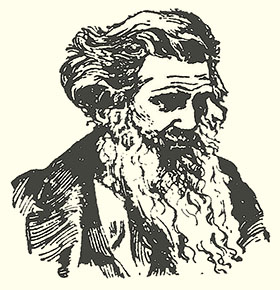
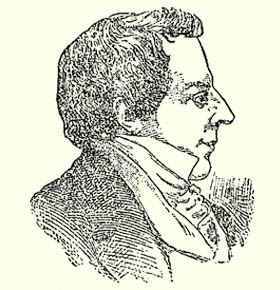
Vol. LXXV. San Francisco, Calif., Sunday, March 4, 1894. No. 94.
THEIR EDEN ASSURED.
Kansas City, March 3. -- The famous "Temple Lot," a sacred piece of Mormon soil in Independence, for which the Mormons have been fighting in the courts, has been decided to be the property of the Independence branch of the Mormon church. The decision was given by Judge Phillips in the District Court this afternoon. The Independence faction of the Mormons is by the opinion enjoined from asserting title to the property. The cloud is removed and full possession allotted to the plaintiff. |
Vol. LXXXVII. San Francisco, Calif., Sunday, April 7, 1895. No. 118.
THE LATTER-DAY SAINTS.
KANSAS CITY, Mo., April 6. -- ln their new stone church at Independence the members of the Reorganized Church of Latter-day Saints met in annual conference to-day. It will last ten days. About 600 members are present. The conference was called to order by Elder Alexander Smith. He at once read a resolution that Joseph Smith Jr., son of the great prophet, act as first vice-president of the conference. It was adopted without debate, and the venerable head of the reorganized church, Joseph Smith Jr., assumed charge. F. L. Sheehy of Massachusetts, M. H. Bond of Pennsylvania and Robert Elden of Missouri were named as a committee on credentials. |
Vol. 89. Sacramento, Calif., Wednesday, April 10, 1895. No. 41. The Message Did Not Come. Kansas City, April 9. -- The expected message from Heaven was not received at the Mormon Conference at Independence to-day. President Joseph Smith, Jr., spent the entire day with the twelve apostles and delegates to the conference, momentarily expecting to hear that revelations from on high had been made. There are two vacancies among the apostles which have existed for many years, and which cannot be filled until it is revealed from God to Joseph Smith the apostles who are to be. Not having come after to-day's long sitting, revelations aro not now expected at this meeting. |
Vol. LXXXVII. San Francisco, Calif., Thursday, April 11, 1895. No. 122.
WEARY OF JOSEPH, JR.
Kansas City, Mo., April 10. -- Contrary to expectations, the quorum of twelve and Joseph Smith did not bring any revelations from the other world to-day. If the quorum does not have a revelation soon concerning some great matters of church government some of the saints and all the laity will grow very weary. Since the beginning of this conference the most intense interest has been shown in all of these sessions, the principal attraction being Joseph Smith, son of the great prophet, and himself a seer of highest standing. But the head of the church has not revealed anything. |
|
BERKELEY GAZETTE. Vol. I. Berkeley, Calif., Friday, April 12, 1895. No. 119. No. 119. The Book of Mormon. Kansas City, April 11. -- The story of Joseph Smith's conversation with the angel Mormoni [sic], from which sprang the Mormon Church, was the main feature of today's session of the conference of the Latter Day Saints. The story was told by Mrs. Catherine Salisbury, Joseph Smith's sister, and the last survivor of his immediate family. |
Vol. XXI. Fresno, Friday, Nov. 12, 1897. No. 92.
MORE ABOUT MORMONS.
Editors Republican -- Before proceeding with the "Mormon Articles of Faith Explained," we will call the attention of your readers to the interview of your reporter with the Mormon elders, Poulter and Bushnell, publisherdin the Republican of Octoher 30th. They say: |
Back to top of this page.
Articles Home Page | Newspaper Articles Index | History Vault
Oliver's Bookshelf | Spalding Studies Library | Mormon Classics
last updated: Sept. 30, 2014