READINGS  IN  EARLY  MORMON  HISTORY
(Newspapers of Ohio)



Misc. Ohio Newspapers
1910-1959 Articles


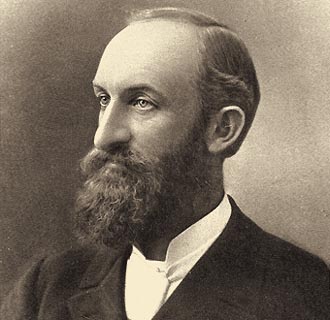
Mormon Church President Heber J. Grant


1800-29  |  1829-31  |  1832-34  |  1835-39  |  1840-49
1850-59  |  1860-79  |  1880-99  |  1900-09  |  1910-59


CStd Mar 16 '15  |  CStd Jul 03 '15  |  CStd Sep 25 '15
JfGz 1925?  |  ASB Aug 18 '40  |  CPD Mar 05 '50
ECT Jul 12 '58


Articles Index   |   Painesville Tel.  |   Painesville Rep.  |   Gazette/Spec.

 

CHRISTIAN  STANDARD.

Vol. 50.                           Cincinnati,  March 16, 1915.                           No. 23.


THE  TACTICS  OF  MORMONISM.

CHARLES A. SHOOK.

Author of "Cumorah Revisited," "The True Origin of Mormon Polygamy,"
"The True Origin of the Book of Mormon," etc., etc.
Published by The Standard Publishing Company, Cincinnati, O.
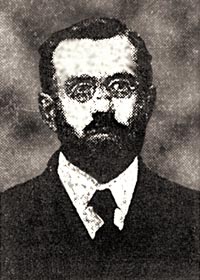


C. A. SHOOK.
The Church of Jesus Christ of Latter-day Saints, so called, was founded by Joseph Smith, the Mormon "prophet," at Fayette, Seneca Co., N. Y., Apr. 6, 1830, with six members. From this small beginning it continued to grow until, at the time of its prophet's death in 1844, there were twenty thousand Mormons in Nauvoo, Ill., and vicinity, who are declared to have been the "great bulk of the Saints" in the United States, and 7,797 in the British Isles. According to the statistics compiled by Dr. Carroll in 1913, there were 356,000 Latter-day Saints in this country, with 3,560 ministers and 2,520 churches, a gain for the year of 3,500 communicants, 200 ministers and 100 churches.

Within the ten years following the assassination of the prophet, Mormonism found some troubled seas, and dissensions and revolts split the body into no fewer than fourteen factions. Most of these, however, were small and soon went to pieces, the main body, nearly twenty thousand strong, adhering to Brigham Young and his polygamous coadjutors. Most of the members of those factions that became defunct rallied under the banner of the "new organization," which was founded in 1852, and which has latterly been known as the "Reorganized Church of Jesus Christ of Latter-day Saints," the inveterate foe of the pretentious and polygamous practices of the Mormon Church of Utah.

After seventy years of contention and dissension, the number of Mormon sects has been reduced to three: those who acknowledge Brigham Young as having been a lawful prophet and leader, and who are known as the "Brighamites," or the "Church of Jesus Christ of Latter-day Saints," those who acknowledge Joseph Smith the Third, the son of the original prophet, as the lawful head, and who are known as "Josephites," or the "Reorganized Church of Jesus Christ of Latter-day Saints," and those who have followed Granville Hedrick, and who are called the "Hedrickites," or the "Church of Christ." Among these three bodies there is a constant and incessant warfare, one charging the other with having departed in faith and practice from the original ideal.

The main differences between the Brighamites and Josephite branches are five in number. (1) The Josephites maintain that the head of the church must be of the lineage of Joseph Smith, while the Brighamites hold that any individual, called of the Lord, may so act; (2) the Brighamites teach that polygamy is a true and righteous principle, and that it originated in a revelation which came through Joseph Smith, all of which is strongly denied by the Reorganizers; (3) the Brighamites have been accused of teaching that the shedding of an apostate's blood is an atonement for the sin of apostasy, which the Josephites also condemn; (4) the doctrine of Adam-god-ism, according to which Adam was God, is affirmed by the first and denied by the second; and (5) the two bodies disagree on the gathering-place of the Saints, the Brighamites maintaining that it is in Utah, the Josephites denying it. There are also certain other points of difference, but these are the most important. The Hedrickites, the third faction, reject all of Smith's revelations received after February, 1834, claiming that in that year he became a fallen prophet.

Several influences have contributed to the growth and spread of Mormonism. Among these may be mentioned the ignorance of the people in respect to the character of the new faith, the perfect organization of its missionary propaganda, the intense zeal of its missionaries, the startling and specific interpretations which it gives to the Scriptures, and the element of credulity which seems to be ever present in most of us, and which has been taken into good account by the propagators of the Mormon faith. These are a few of the causes which have contributed to the growth and spread of that ecclesiastical system which had its inception in the minds and lives of the "Prophet of Palmyra" and his coadjutors.

It is the purpose of this paper to call the attention of the reader to some of the methods and tactics employed by the Mormon Church and its missionaries to spread the tenets of their peculiar faith among the nations of the earth. The understanding of these methods and tactics will better equip the opponents of this delusion to counteract its influence.

1. Mormonism tells only a part of the truth in regard to its own history; the remainder, as far as possible, is carefully concealed from the eyes and ears of the general public. With streaming eyes, it recounts its sacrifices and privations; with manifested pride it points to its rapid growth and great advancements, and with sanctimonious fervor it declares the holiness of its doctrines and practices. But it is as silent as the tomb upon the questionable character of its originators, the Kirtland Bank swindle, the licentiousness of Joseph Smith and the Mountain Meadows massacre. And, if these facts are referred to, it either assumes an air of injured innocence or indignantly shouts "Falsehood." Yet the charges that its originators were men of poor reputation, that the Kirtland "Safety" Bank was a swindle pure and simple, that Joseph Smith was a man of poor moral character, and that the Mormons were the instigators of the massacre of over one hundred Gentiles at Mountain Meadows in 1857, are susceptible of the clearest proof.

2. Mormonism tries to draw heavily upon the sympathies of the public. The peripatetic elder, as he "hoofs" it over the country, pours his tale of woe into every willing ear. He has left home without purse or scrip, he has been maligned, his church has been lied about, his ministry have been tarred and feathered and shot, and his prophet has been assassinated. This is the same old song that all the elders sing and it does not always fall unpleasantly upon non-Mormon ears. But is this appeal for sympathy well founded? I have gone over Mormon history carefully; I have read it in their own books and papers and in the works put out by their opponents, and I have not been able to find a single instance in which their persecutions were not brought on by their own bigotry, greed and licentiousness. Take, as an example, their treatment at the hands of the people of Illinois. When, in 1839, half-starved and half-naked, they fled from the vengeance of Missouri, they were welcomed, fed and clothed by the citizens of Quincy. And, when they settled in Nauvoo, it was with the best wishes of their Gentile neighbors. But what did they do? They betrayed every confidence that had been imposed [on] them; they played fast and loose in the game of politics; they sheltered criminals fleeing from justice, and in one instance the municipal court discharged a man under indictment for high treason against the United States and assessed the costs against the Government; they railroaded a charter through the State Legislature which granted them the right to make any ordinance that they saw fit, provided it did not conflict with the Constitution of the State and nation, although it might render null and void every statute that had ever been enacted in that State; they sent out Danites to rob and plunder those who had befriended them; they practiced the grossest immorality, and they maintained a standing army of over two thousand men, armed to the teeth, to fulfill the mandates of their prophet. When these things are known, the public should stop contributing funds, in the shape of meals and lodging, to the hierarchy of Utah. If the Mormon Church sees fit to send its missionaries into the field, which it has a perfect right to do, let it support them like other religious bodies support their missionaries, or else let it keep them at home.

3. Mormonism resorts to deception and misrepresentation in order to win its way into the good graces of the public. Whoever heard of a Mormon elder, going into a new community, and beginning his work by preaching upon the prophetic mission of Joseph Smith or the Book of Mormon? These principles of his faith are reserved to the last. He begins with those things upon which all Christians agree, and introduces his "strong meat" only when he thinks his congregation can stand it. If he goes into an Adventist community, he will seek to disarm suspicion by telling Adventists that William Miller obtained his doctrines from the Mormon apostle -- Jared Carter -- who is said to have preached in Miller's neighborhood in 1832; or, if he is preaching in a "Disciple" community, he will tell them that Alexander Campbell was right as far as he went, but that he did not go far enough, and then will proceed to argue baptism for the remission of sins, and, by misapplying passages from our historical works, will prove that we believe that Campbell was a prophet, that he taught an universal apostasy, and that he claimed to refound the church or kingdom in the last days. The facts are that Miller held every view from which the Mormons claimed he obtained from Carter, in 1818, and, as for Campbell, nothing could be further from our thoughts than to claim that he was a prophet, in the inspirational sense, or that he refounded the church, or that he taught an universal apostasy.

4. Mormonism quotes a plenty of Scriptures to sustain its positions. If you admit its applications, the entire Mormon system is elaborated in the Bible to a nicety. This continent is described; the tribes who were to inhabit it are mentioned; the coming out of the Book of Mormon is foretold, and some contend that even Smith is mentioned by name in Isa. 54:16. But, under careful examination, these applications negate themselves to that class to which belongs the theory that Nahum's chariots are the railroad trains, and are found to be evidences of great ingenuity, but not of sound reasoning. In presenting their Scriptural evidences, Mormon preachers and writers ignore every legitimate rule of Biblical exegesis. Often the context would give a different meaning to that which they attach to their quotations, but what do they care for the context just so long as the jingle of the passage harmonizes with the Mormon story. I say fearlessly that every passage of Scripture which they bring forward to prove their peculiar beliefs, is misapprehended and misapplied, and, when rightly understood, bears to the reader an entirely different message than that derived from it by Mormonism.

5. Scientific facts are misrepresented by the Mormons in order to establish their claim of the historical credibility of the Book of Mormon. Mormon preachers and writers tell us with great emphasis that American archaeology and ethnology are certainly and surely proving their claims. And yet not a single authority on these sciences to-day holds to the theory that the American Indians are of Jewish descent, advocates that the Christian religion was preached upon this continent in pre-Columbian times, or places the ancient Americans in the iron age, while the large majority now deny the exotic origin of American culture, the racial distinction between ancient and modern inhabitants and scores of other positions taken in the Book of Mormon. The book is built upon theories in vogue in 1830, most of which have passed away before the light of modern research as the mists dissipate before the rising sun. The old temples, palaces, mounds and fortifications of this continent tell to the practiced eye an entirely different story to that written on the pages of the record of Nephi.

6. Mormonism is ever on the lookout for sensational archaeology "finds," and presses them into its service to bolster up its false theory of the historical credibility of its sacred book.

In April, 1843, six copper plates were found in a mound at Kinderhook, Ill. These plates were bell-shaped and had engravings on them. Within a few weeks after their discovery, the Times and Seasons, with a translation of them, according to which the individual buried with them was a son of Ham, who had received his kingdom from the Lord of heaven and earth. It was afterwards ascertained that these plates had been made by the village blacksmith, and that the characters on them were Chinese, copied from the lid of a Chinese tea-chest! In 1850 a number of tablets were found in the mounds near Newark, O., with Hebrew writing upon them. Joseph Smith was dead, but his followers took hold of these things with zeal, and have repeatedly introduced them to prove that the ancient Americans were Israelites. It is not saying much in their favor when it is remarked that these tablets were made and buried in the mounds by "Dave" Wyrick, the county surveyor, who had gone crazy over the belief that the American Indians are of Jewish origin, and after repeated attacks of rheumatism! In 1890 two pieces of copper musical instruments were found in a mound at Mendon, Ill. There had been pounded out flat, and on one of them were engraved in a number of characters like those said to have been inscribed on the Palmyra plates of Joseph Smith. The Mormons immediately got busy, and this find was heralded through their books and papers as a confirmation of the Book of Mormon. Rev. S. D. Peet, the noted archaeologist, who examined them, wrote me that the plates were parts of a fiddle that some one had tried to make out of sheet copper, and that the farm on which the mound stands was formerly owned by a Mormon! Today a certain class are exercising themselves over certain reported "finds" in Michigan, consisting of clay caskets with sphinxes on them, slate tablets and copper plates -- all containing designs and hieroglyphics. Of course the Mormons are in the field, and the two leading Josephite papers carried an advertisement of these wares for nearly two years, while one of their leading men, with the full knowledge of the church, is going over the country selling a book describing them for $1 per copy, "or more." I have written archaeologist after archaeologist and have failed to find one who has any faith in these things. The lid on one of the caskets was found to have been dried on a machine-sawed board, while others were so soft that they readily disintegrated in water, which shows that they could not have withstood the test of the elements for centuries. A stone with curious marks upon it will throw some Mormons nearly into a spasm, when it may be nothing but a fake or a natural production.

7. Mormonism resorts to the slander and abuse of every man who dares to give up the faith and expose its secret workings. It assumes that "pure, honest, virtuous men do not apostatize and turn against the principles of the gospel;" therefore it brands all apostates as impure, dishonest and unvirtuous. Smith would come out one day with a revelation commending certain of his followers, and the next publish them through his papers as liars, knaves and rascals. No man stood higher with the Mormons at Nauvoo in 1840-41 than Dr. John C. Bennett. They showered their favors upon him. He lived in the prophet's family. And to him was largely due, as the Mormons themselves admitted, the advancement and progress of their city. But when he and Smith fell out, he was published to the world as all that was vile and dishonest. Such men as Williams, Cowdery, Harris and Whitmer, the Laws, Fosters and Higbees, Cowles and Johnsons were high members of the Mormon Church, and were the recipients of Smith's favors until they apostatized and told what they knew about the prophets, when Smith turned upon them and denounced them in unmeasured terms. The fact is that most of these men were decent, and when they discovered his sins they opposed them and were cut off. Today Mormonism hates no man with a more bitter hatred than it does Frank J. Cannon -- he has given away its secrets.

Thus, wherever you may turn, Mormonism will present to you the evidences of its own falsity.

  Eddyville, Neb.


Notes: (forthcoming)


CHRISTIAN  STANDARD.

Vol. 50.                           Cincinnati,  July 3, 1915.                           No. 40.


WAS  SIDNEY  RIGDON  THE  ORIGINAL
"AUTHOR"  AND  PROPRIETOR"
OF  THE  WHOLE  MORMON  CONSPIRACY?


R. B. NEAL.
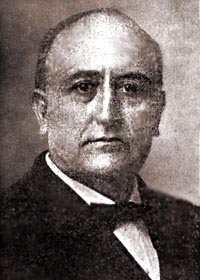


R. B. NEAL.
When was "Mormonism" planted on earth?

Answer -- May 15, 1829.

Proof -- Section 13 "Book of Doctrine and Covenants."

"Words of the angel (John the Baptist) spoken to Joseph Smith, Jr., and Oliver Cowdery, as he (the angel) laid his hands upon their heads and ordained them to the Aaronic priesthood, in Harmony, Susquehanna County, Pa., May 15, 1829."

"Upon you, my fellow-servants, in the name of Messiah, I confer the priesthood of Aaron, which holds the keys of the ministering of angels, and of the gospel of repentance, and of baptism by immersion for the remission of sins; and this shall never be taken again from the earth, until the sons of Levi do offer again an offering unto the Lord in righteousness." Joseph Smith baptized Oliver Cowdery. Oliver was the first person to enter the Latter-day Saints' kingdom or church. He then baptized Joseph, and he was the second Latter-day Saint. They then "ordained" each other, no doubt at the same time, by "the laying on of hands," each on the head of the other. Then and there was "Latter-day Saintism" planted. Sidney Rigdon's name is not mentioned in this -- the "infancy" or birth of the church. Was he there? He must have been, for he said, on Apr. 6, 1844, at Nauvoo, Ills., before the largest assembly the Mormons ever had; "I have known the history of this church from its infancy." Was he there? I have before me a copy of that rare and most valuable book, by E. D. Howe, "History of Mormonism," the very first book published exposing the Mormon fraud. It ought to be republished. It would be profitable to the publisher and most helpful to the cause of truth. He gathered facts, known facts, in the early days of this "Latter-day" conspiracy. Here's the concluding sentence of this wonderful work: "We, therefore, must hold out Sidney Rigdon to the world as being the original 'author and proprietor' of the whole Mormon conspiracy, until further light is elicited upon the lost writings of Solomon Spalding." Significant that the first men who seriously and industriously gathered facts while they were fresh. would reach such a conclusion. The "further light" has come to hand, and confirms and clinches the conclusion that Sidney Rigdon was the original "author and proprietor" of the whole base fraud. He soon lost the "proprietorship," but neither men, devils nor angels can cheat him out of the "authorship."
  Grayson, Ky.


Notes: (forthcoming)


CHRISTIAN  STANDARD.

Vol. 50.                           Cincinnati,  Sept. 25, 1915.                           No. 52.


Neals'  Notes.

I would gently remind a number of the members of the Gospel Dollar League that their dues are long past due, and the money is badly needed...

W. A. Jackson, Como, Tex., is soon to hold a debate with a "Josephite" Mormon. He is loading up carefully for the "scrap." The "Brghamites" are "skerry" about meeting a "Josephite," and a "Josephite" dreads most meeting a "Hedrickite" like Satan dreads Holy Water. It is hard for "Mormons," in fact, impossinle, to decide what original Mormonism was.
    Grayson, Ky.
    Sept. 13, 1915.


Notes: (forthcoming)


JEFFERSON  GAZETTE.

Vol. ?                           Jefferson, Ashtabula Co., Ohio, 1925?                           No. ?


MORMON  BIBLE  ORIGINATED
IN  CONNEAUT.

_______

BASED OM "THE MANUSCRIPT FOUND,"
WRITTEN BY REV. SOLOMON SPAULDING.

_______

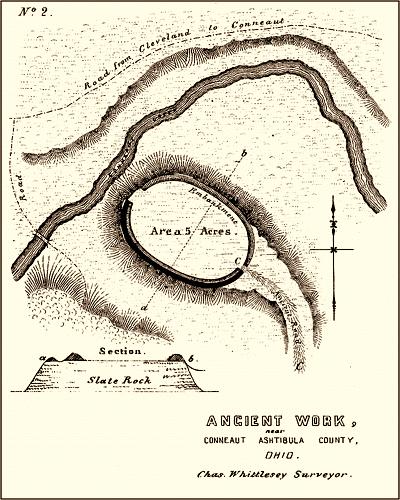
When the first settlers came to Conneaut, then called Salem or New Salem, they found many evidences of a large population that once inhabited that section. There were mounds or fortifications made by a race long before extinct. There was a grave yard in which were over 3000 graves.

A minister, Rev. Solomon Spaulding wrote a story about the mounds and ascribed them as having been made by the Lost Tribes of Israel. He pretended to find a manuscript in one of the graves telling about the people. He translated the find and from time to time read his alleged translation to friends.

A few days ago the Gazette editor secured a copy of "History of the Mormons" published in 1853 and in it was the following complete story of the Spaulding manuscript and a letter from the old Conneaut minister's wife, which we herewith publish.

It is stated by them that, in the year 1809, a man of the name of Solomon Spaulding, who had formerly been a clergyman, failed in business at a place called Cherry Valley, in the State of New York. Being a person of literary tastes, and his attention having been directed to the notion which at thaf time excited some interest and discussion, namely, that the North American Indians were the descendants of the lost ten tribes of Israel, it struck him that the idea afforded a good groundwork for a religious tale, history, or novel. For three years he labored upon this work, which he entitled The Manuscript Found."Mormon" and his son "Moroni," who act so large a part in Joseph Smith's Book of Mormon,were two of the principal characters in it. In 1812 the MS. was presented to a printer or bookseller, named Patterson, reiding at Pittsburgh, Pennsylvania, with a view to its publication. Before any satisfactory arrangement could be made, the author died, and the manuscript remained in the possession of Mr. Patterson, apparently unnoticed and uncared for. The printer also died in 1856, having previously lent the manuscnpt to one Sidney Rigdon, a compositor in his employ, who was at the time a preacher in connection with some Christian sect, which the proper designation is not very clearly stated. This Rigdon afterwards became, next to Joseph Smith him-self, the principal leader of the Mormons. How Joseph Smith and this person became connected is not known, and which of the two originated the idea of making a new Bible of Solomon Spaulding's novel is equally uncertaini The wife, the partner, several friends, and the brother of Solomon Spaulding, affirmed, however, the identity of the principal portions of the Book of Mormon with the novel of The Manuscript Found, which the author had from time to time, and in seperate portions, read over to them. John Spaulding, brother to Solomon, declared upon oath that his brother's book was an historical romance of the first settlers in America, endeavoring to show that the American Indians are the descendants of Jews, or the lost ten tribes. He stated that it gave a detailed account of their journey from Jerusalem by land and by sea, till they arrived in America under the command of Nephi and Lehi; and that it also mentioned the Lamanites. He added that 'he had recently read the Book of Mormon, and, to his great surprlse, he found nearly the same historical matter and names as in his brother's writings. To the best of his recollection and belief, it was the same that his brother Solomon wrote, with the exception of the religious matter.'

The widow of Solomon Spaulding afterwards married a Mr. Davison; and a statement, purporting to have been made by her in the following words, was published in a Boston newspaper in May, 1839: --

"As the Book of Mormon, or Golden Bible (as it was origlnally called) has excited much attention, and is deemed by a certain new sect of equal authority the Sacred Scriptures, I think it a duty which I owe to the public to state what I know touching its origin.

"That its claims to a divine origin are wholly unfounded needs no proof to a mind unperverted by the grossest delusions. That any sane person should rank it higher than any other merely human composition is a matter of the greatest astonishment; yet it is received as divine by some who dwell in enlightened New England, and even by those who have sustained the character of devoted Christians. Learning recently that Mormonism had found its way into a church in Massachusetts, and has impregnated some with its gross delusions, so that excommunication has been necessary, I am determined to delay no longer doing what I can to strip the mask from this monster of sin, and to lay open this pit of abominations.

"Solomon Spaulding, to whom I was united in marriage in early life, was a graduate of Dartmouth College, and was distinguished for a lively imagination, and a great fondness for history. At the time of our marriage he resided in Cherry Valley, New York. From this place we removed to New Salem, Ashtabula County, Ohio, sometimes called Conneaut, as it is situated on Conneaut Creek. Shortly after our removal to this place, his health sunk, and he was laid aside from active labors. In the town of New Salem there were numerous mounds and forts supposed by many to be the dilapidated dwellings and fortifications of a race now extinct. These ancient relics arrest the attention of the new settlers, and become objects of research for the curious. Numerous implements were found, and other articles evincing great skill in the arts. Mr. Spaulding being an educated man, and passionately fond of history, took a lively interest in these developments of antiquity; and in order to beguile the hours of retirement and furnish employment for his lively imagination, he conceived the idea of giving an historical sketch of this long lost race. Their extreme antiquity led him to write in the most ancient style, and as the Old Testament is the most ancient book in the world, he imitated its style as nearly as possible. His sole object in writing this historical romance was to amuse himself and neighbors. This was about the year 1812. Hull's surrender at Detroit occurred near the same time, and I recollect the date well from that circumstance. As he progressed in his narrative the neighbors would come in from time to time to hear portions read, and a great interest in the work was excited among them. It claimed to have been written by one of the lost nation, and to have been recovered from the earth, and assumed the title of 'Manuscript found.' The neighbors would often inquire how Mr. Spaulding progressed in deciphering the manuscript; and when he had sufficient portion prepared, he would inform them, and they would assemble to hear it read. He was enabled from his acquaintance with the classics and ancient history, to introduce many singular names, which were particularly noticed by the people, and could be easily recognized by them. Mr. Solomon Spaulding had a brother, Mr. John Spaulding, residing in the place at the time, who was perfectly familiar with the work, and repeatedly heard the whole of it read. From New Salem we removed to Pittsburgh, in Pennsylvania. Here Mr. Spaulding found a friend and acquaintance, in the person of Mr. Patterson, an editor of a newspaper. He exhibited his manuscript to Mr. Patterson, who was very much pleased with it, and borrowed it for perusal. He retained it for a long time, and informed Mr. Spaulding that if he would make out a title-page and preface, he would publish it, and it might be a source of profit. This Mr. Spaulding refused to do. Sidney Rigdon, who has figured so largely in the history of the Mormons, was at that time connected with the printing-office of Mr. Patterson, as is well known in that region, and as Rigdon himself has frequently stated, became acquainted with Mr. Spaulding's manuscript, and copied it. It was a matter of notoriety and interest to all connected with the printing establishment. At length the manuscript was returned to its author, and soon after we removed to Amity, Washington County, &c., where Mr. Spaulding deceased in 1816. The manuscript then fell into my hands, and was carefully preserved. It has frequently been examined by my daughter, Mrs. M'Kenstry, of Monson, Massachusetts, with whom I now reside, and by other friends.

After the book of Mormon came out, a copy of it was taken to New Salem, the place of Mr. Spaulding's former residence, and the very place where the Manuscript found was written. A woman-preacher appointed a meeting there; and in the meeting read and repeated copious extracts from the book of Mormon. The historical part was immediately recognized by all the older inhabitants as the identical work of Mr. Spaulding, in which they had all been so deeply interested years before. Mr. John Spaulding was present and recognized perfectly the work of his brother. He was amazed and afflicted that it should have been perverted to so wicked a purpose. His grief found vent in a flood of tears, and arose on the spot, and expressed in the meeting his sorrow and regret that the writings of his deceased brother should be used for a purpose so vile and shocking. The excitement in New Salem became so great, that the inhabitants had a meeting, and deputed Dr. Philastus Hurlbut, one of their number, to repair to this place and to obtain from me the original manuscript of Mr. Spaulding, for the purpose of comparing it with the Mormon Bible, to satisfy their own minds, and to prevent their friends from embracing an error so delusive. This was in the year 1834. Dr. Hurlbut brought with him an introduction and request for the manuscript, which was signed by Messrs. Henry Lake, Aaron Wright, and others, with all of whom I was acquainted, as they were my neighbors when I resided at New Salem. I am sure that nothing would grieve my husband more, were he living, than the use which has been made of his work. The air of antiquity which was thrown about the composition, doubtless suggested the idea of converting it to the purposes of delusion. Thus, an historical romance, with the addition of a few pious expressions, and extracts from the sacred Scriptures, has been construed into a new Bible, and palmed off upon a company of poor deluded fanatics as Divine. I have given the previous brief narration, that this work of deep deception and wickedness may be searched to the foundation and the authors exposed to the contempt and execration they so justly deserve.

"MATILDA DAVISON."    


Note: The date of the above article is uncertain. It evidently appeared on the front page of a mid-1920s issue of the Jefferson Gazette.


ASHTABULA  STAR-BEACON.

Vol. ?                           Ashtabula Ohio, Aug. 18, 1940                           No. ?


ORIGINAL  BOOK  OF  MORMON.

Many believe, and historical evidence supports a claim that the original Mormon Bible was written by a Conneaut forge owner, Solomon Spaulding. Such origin, however, is disclaimed by adherents of the Mormon faith.

Solomon Spaulding, a regularly ordained minister, came to Conneaut from the east in 1809 and built a home and forge in the creek valley, where he lived for many years. He neglected his business to write a book and the family was reduced to dire want. Col Robert Harper was a friend of Mr. Spaulding and, in a communication to the Ashtabula Telegraph, printed in the issue of February 22, 1873, he stated that when he was a young man he spent much time in Conneaut and knew the Spauldings well.

He wrote:

"They lived in a long, low, shanty-like building of boards. In one end was his forge, and in the other he lived with his wife, and kept a kind of grocery store. I often spent evenings playing cards with the Spauldings, and once, when I asked for paper to wrap up the cards, Mrs. Spaulding gave me a leaf of manuscript, which she said was a piece of the doctor's novel about early races of residents in this vicinity."

A brother, John Spaulding, wrote that he had read the Book of Mormon, and that it was almost identical with the historical data in the work which Mrs. Spaulding referred to as the doctor's novel.


Notes: (forthcoming)


Vol. ?                       Cleveland, Ohio, March 5, 1950.                       No. ?


Ohio Scenes and Citizens.

OId Manuscript by Conneaut Pastor, Which Mormons Resented.
Now Rests Behind Locked Doors in Oberlin College Library.


By Grace Goulder.


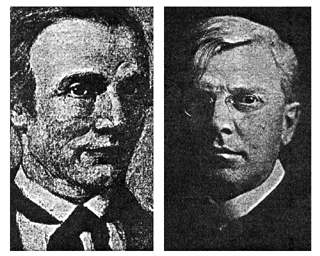
OLIVER COWDERY, (left), who prepared all the Book of Mormon for the printer and swore that he saw the golden plates from which it was said to have been translated, thus denying the allegation that Rev. Spaulding could have inspired the Mormon "Bible." Prof. Kirke K. Cowdery (right), who taught French at Oberlin until his death a few years ago, was a non-Mormon great nephew of Oliver Cowdery.

IN the dignified and inviting library of Oberlin College, Oberlin, O., the most famous volume is a battered manuscript that has been the cause of bitter controversy for more than a century. Kept securely behind locked doors, is a novel written about 1810 by Rev. Solomon Spaulding, Conneaut, O. For years it has been tagged by non-Mormons as the basis of the Book of Mormon, a claim violently denied by all followers of the Prophet Joseph Smith.

It is an innocent-appearing document, without a title, the difficult script faded almost to illegibility. The Oberlin Library has had it bound carefully in fine leather, and prefers that the many persons who come to study it use the photostatic copy. Looking at it, one is amazed that it could have stirred such heated invectives and such ardent advocates. Sermons, books, quantities of paper and ink, as well as hours of earnest scholarly research have been expended on it alike by the Latter Day Saints themselves and by "Gentiles" -- the Mormon name for all outside their sect.

For all this probing search-light, mystery still clings alluringly to the old pages, and people like myself always are turning up asking to see it -- while I was handling it, a long distance telephone call came to Librarian Julian S. Fowler, its custodian, from a man in Philadelphia, who was planning a special trip to Oberlin. to study it. Mr. Fowler, like most of :those who have gone into the story in late years, believes with the Mormons, that it could not have been the inspiration for their Book of Mormon, their "bible" that Joseph Smith insisted had come to him on golden tablets he found buried in the 1820s in Palmyra, N. Y.

Such sober disclaimers cannot rob the book of its fascinating history, its long connection with the Mormons and the points of resemblance between it and the Mormon work .Though originating along Conneaut Creek, which Author Spaulding. spells "Coneaught," Oberlin College obtained the manuscript 75 years later in Honolulu. The college's president, James H. Fairchild, was visiting L. L. Rice, a former Painesville and Oberlin resident. They were sorting. out Rice's papers, searching for anti-slavery material when they came upon a package containing about 175 loose pages, labeled "Writings of Solomon Spaulding." Rice had not realized he had the work. Spaulding's name was famous, made so by a Painesville newspaper man, E. D. Howe, whose plant, it happened, Rice had bought. In 1835 [sic] Howe wrote an anti-Mormon book, its main argument being that the. foundation for the Book of Mormon was not the golden plates as Joseph Smith claimed, but an unpublished novel by Spaulding. Howe based his statements on testimony of neighbors who swore that Spaulding had read many passages of his book to them, which were similar to; the Book of Mormon which came out later.

Spaulding had died in 1816 and Howe made contact with Spaulding's widow, hoping to locate that manuscript. She did send him one of her husband's manuscripts, which Howe, when he examined it, realized did not resemble the Book of the Mormon closely enough to be the work he sought. That one, he concluded was lost, and he went ahead and put: out his book anyway. It received wide attention since it bolstered the strong trends of Mormon persecution developing in Ohio at that time. Fairchild and Rice knew all this, and concluded they had come upon the missing Spaulding writing that Howe had looked for. News dispatches gave the story wide circulation, calling the old novel the "Manuscript Found." Closer scrutiny of the quarto convinced President Fairchild that it differed too radically in style and subject matter to have been the basis for the Mormon work. But no matter. The name, Manuscript Found, persisted, probably because actually there are some startling points of resemblance. Spaulding, much interested in Indian and Mound Builder lore, confides to the reader that he "discovered" the original text in a golden [sic] box hidden deep in a tunnel which he stumbled upon when excavating a mound near his Conneaut home. (Joseph Smith had found his plates buried too.) The writing was in Latin -- Smith's tablets were in what he termed "reformed" Egyptian hieroglyphics. The tale is about a Roman, Fabius, living in the time of the Emperor Constantine. Fabius, Spaulding imparts, hid the chronicle that recounts the Roman's experiences with the Indians after he and his companions landed here in, a storm -- their destination had been Great Britain. The Book of-the Mormon is about Christ's coming, after His resurrection, to bring the gospel to the American Indians, the record of those events preserved for 400 years in golden plates that a descendant of those aborigines, one Mormon, handed down to his son, the angel Moroni. It was Moroni who hid the plates near Joseph Smith's home in New York State, and led him t o them in a vision. Beyond these points the similarity ends. The so-called Manuscript Found is not written in the biblical language of the Book of Mormon and has none of the characters that appear in it.

Particularly interested and well informed about the Spaulding manuscript is one Oberlin resident, Mrs. Kirke L. Cowdrey, 184 Woodland Avenue. Her husband, until his death a few years ago, was a long-time French professor at the college. He was a grandnephew of Oliver Cowdrey, by whose hand nearly all of the printer's copy of the Book of Mormon was written. Prof. Cowdrey, from a line that never espoused Mormonism, spent much time in Mormon research, following the footsteps of the Cowdreys and the Smiths from their birth places, both in Vermont, on through New York, Ohio, the Middle West, Utah and the Southwest into every spot in this country where Mormonism flourished. Mrs. Cowdrey accompanied him on these journeyings, which became a kind of hobby for them both. I found her in the sunny bay window of her living room, surrounded by luxuriously blooming African violets and blue-flowered morning glory vines climbing up the curtains. She showed me her husband's collection of Mormon papers, among these a deed from a local farmer, bearing Oliver Cowdrey's signature, for land given Joseph Smith where the Kirtland Temple. now stands. Oliver, about Joseph's age, came under the "prophet's" spell when he went to teach school near Palmyra, and the two baptised. each other, Oliver becoming the second convert. Oliver, along with Smith; was the only one permitted to see God in person in blinding spectacle during temple dedication rituals -- this according to Smith's journal. Oliver broke with the prophet . following the failure of the Mormon bank at Kirtland, but later he rejoined the. sect. His greatest fame rests on the fact that he is one of the Three Witnesses whose testimony that they saw the sacred tablets, is carried in the front of every Book of Mormon -- a refutation of any claims for Spaulding. How annoyed Oliver would be to know that: the queer old Spaulding document is getting all this care and attention in Oberlin's Library!


Note 1: The above article was published on two pages in the Plain Dealer's "Periodical Magazine," and distributed with the paper for March 5, 1950. The article, as published, also features photos of Mrs. Kirke Cowdery and Oberlin Librarian Julian S. Fowler, as well as one of the Spalding manuscript.

Note 2: Goulder's article contains a numer of small errors. The most noteworth of them is that she thought many people believed that the Oberlin Spalding manuscript served as the basis for the Book of Mormon. Very few published writers have ever advocated such a nation, though the LDS and RLDS apologists very often tried to make it appear as though anti-Mormons were advocating this idea. In fact, from 1834 forward, the great majority of non-Mormons who have written upon the subject have advanced the claim that Solomon Spalding wrote another, entirely different, fiction story which served as the core text for the first book of Mormon scripture. Goulder also errs in providing only a couple of thematic resemblances betwen the Book of Mormon story and the Oberlin story. There are numerous other textual similarities between the two works, and on this basis alone several researchers have concluded that Spalding wrote parts of the Mormon volume.

Note 3: Oliver Cowdery's LDS biographer, Stanley R. Gunn, met and interviewed Professor Kirke L. Cowdery, prior to the Professor's death. See Gunn's 1962 book, Oliver Cowdery, Second Elder and Scribe, for more on Kirke L. Cowdery.

Note 4: For an account of how the Oberlin manuscript was preserved at the College, five decades previous to Goulder's visit, see "Solomon Spaulding Manuscript," in the May 26, 1900 issue of the Salt Lake City Deseret News.

Note 5: Professor Kirke L. Cowdery probably did not find employment at Oberlin College totally by accident. A senior professor at the college, (and for many years its president) was the Rev. Dr. James H. Fairchild. Fairchild had family ties to Benjamin Franklin Cowdery, a cousin of Oliver Cowdery and a cousin to Kirke's grandfather, Lyman (who was Oliver Cowdry's brother). Thus it was that Kirke Cowdery was a not too distant relative of James H. Fairchild. For more information on ties between the Fairchilds of Oberlin and the Cowdery family, see the notes attached to the online text of William B. Fairchild's 1845 article, "Mormonism and the Mormons."


THE  CHRONICLE-TELEGRAM
Vol. ?                           Elyria, Ohio, July 12, 1958.                           No. ?


3 Elyria Churches Pioneer in Religious
Life of Village


By Grace H. Tulk

What kind of a place was Elyria where religion was concerned at the time of its incorporation in 1833?

Here was a frontier area, a community of some 700 persons in the part of Connecticut Western Reserve which was still unbroken forest when Ohio came into the Union in 1803....

In general the people here were not much different from those in the east where religion was concerned. There were, of course, some who held fast to the stern principles of their New England Pilgrim forefathers but, for the most part, a "take it or leave it" attitude had developed among the many.

New York Revivals

West from Vermont and along the Mohawk in New York State where the influx of New England settlers had preceded that in the Western Reserve, such indifference led to a great religious revival in the early 1830's. Spear-heading the movement was Charles Vrandison Finney, lawyer turned preacher, who later became a president of Oberlin College.

Hypnotic, dynamic, arresting, Finney with the persistence of an Old Testament prophet took his "new measures" revivals into the various areas. Hostile audiences he met first with denouncement, then with pleading and everywhere he achieved phenomenal success.

From New York State the dispersive spirit of revival spread back into New England and even into the growing metropolis, New York City, called by a well known preacher of the day the "head-quarters of Satan." More important to the history of Elyria, however, was the fact that many Finney followers felt the call to the religion-poor frontier area to the west....

One notable frontier orator in those days of "skepticism and bigotry" was Alexander Campbell. Alarmed over the increasing development of sects due to doctrinal differences, Campbell implored his listeners to return to the ways of the very early followers of Jesus, suggesting they take the name of "Christian" as the followers of Christ were first called at Antioch. This effort at unity led to the development of the church body known in various areas as the Disciples of Christ, the Church of Christ, or the Christian Church. His followers, too, found their way into the Elyria area.

From New York State in this period the Mormons came west to the Kirtland area. They spread their teachings into surrounding areas and there is evidence that some of it reached Lorain County.

"Elyria Disciples"

For facts about the third church group in those days, the best source is the first chapter of a history of the Washington Avenue Church of Christ, "Elyria Disciples," written in 1956 by Dr. Henry K. Shaw, then minister of the church.

Calling the chapter "Forgotten Pioneers of a Forgotten Church," Dr. Shaw wrote:

"In 1829, twelve years after the first settlers came to Elyria, two youthful Baptist preachers who had been influenced by the religious views of Alexander Campbell, were preaching in this small community. This was one year prior to the formal separation of Baptists and Dsciples. These freelance preachers were Matthew Clapp and Sidney Rigdon. Clapp was a brother-in-law of Alexander Campbell. Rigdon, who didn't stay with the Disciples for long, is better known for his connection with the Mormon movement.

"At this time Clapp was challenged to a public debate in defense of the faith. His challenger was Joel Tiffany who is described as a shrewed, accomplished, and eloquent attorney.... Following the debate which was probably the first of its kind in the community, Tiffany is reported to have said, 'That is the last time I will ever stand in opposition to the Christian religion.'

40-Member Group

"Three years later, in 1832, other ministers of the Disciples made their appearance in Elyria. They were A. B. Green, William Moody. William Hayden, and R. Jones. A congregation was formed with 40 members among whom were Herrick Parker, H. Reddington, Ashael Parmley, and Dr. Butler. Judson D. Benedict, Lorain County prosecutor, became one of the early converts..."


Note 1: Matthew S. Clapp was one of the first Campbellites to write anything substantial regarding the Mormons in Ohio. See his letter to editor Eber D. Howe, in the Feb. 15, 1831 issue of the Painesville Telescope.

Note 2: Early Mormon activities in and around Elyria were not well documented. One local newspaper, the Lorain Gazette, published a small piece in its issue for May 21, 1830, and a news report concerning Parley P. Pratt appeared in a Dec. 1830 issue of the Milan Free Press, but the other area newspaper, The Huron Reflector, is not known to have published any local news about the Mormons in Ohio.

Note 3: Dr. William H. Whitsitt, who researched the life of Sidney Rigdon, had a special interest in the early Mormons of Lorain and Huron counties -- see his mention of this in his Feb. 16, 1886 letter to Oberlin College President James H. Fairchild.


Back to top of this page.


Articles Home Page    |    Newspaper Articles Index    |    History Vault
Oliver's Bookshelf    |    Spalding Studies Library    |    Mormon Classics


last updated: Jan. 12, 2006